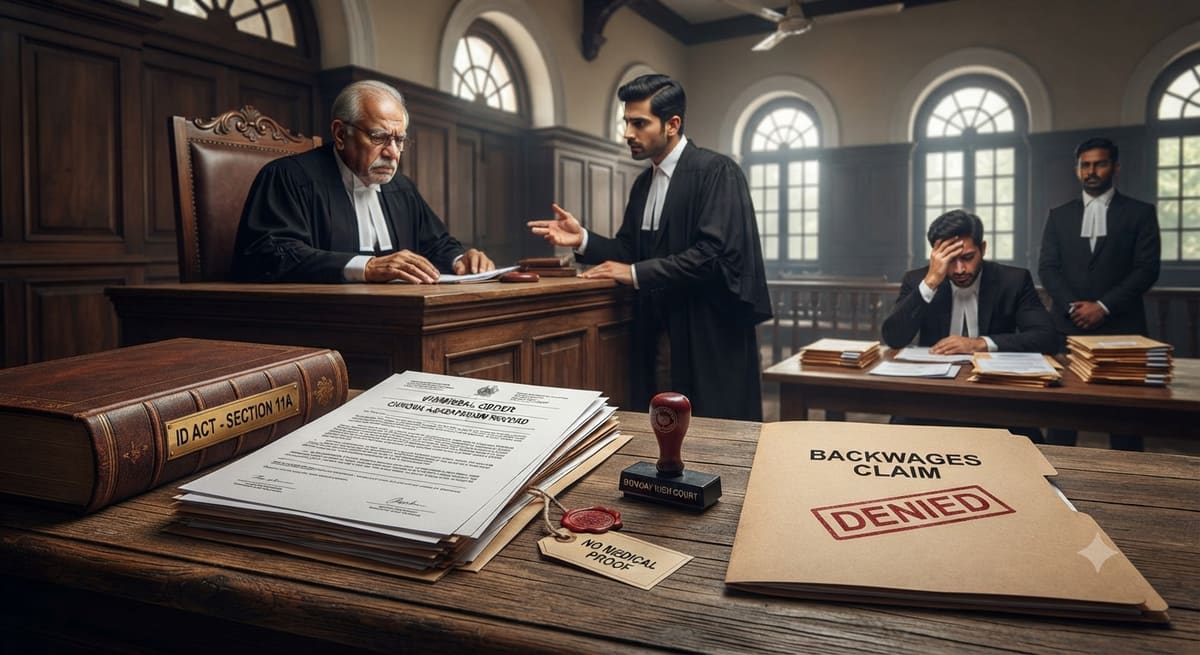
The Karnataka High Court recently set aside a Labor Court award that had reinstated an employee dismissed for unauthorized absence, reaffirming that absence without leave constitutes misconduct warranting disciplinary action under service law. The judgment underscores the principle that employees cannot claim leave as a matter of right and that disciplinary proceedings must consider the severity of misconduct and the employee's service history.
Background & Facts
The Dispute
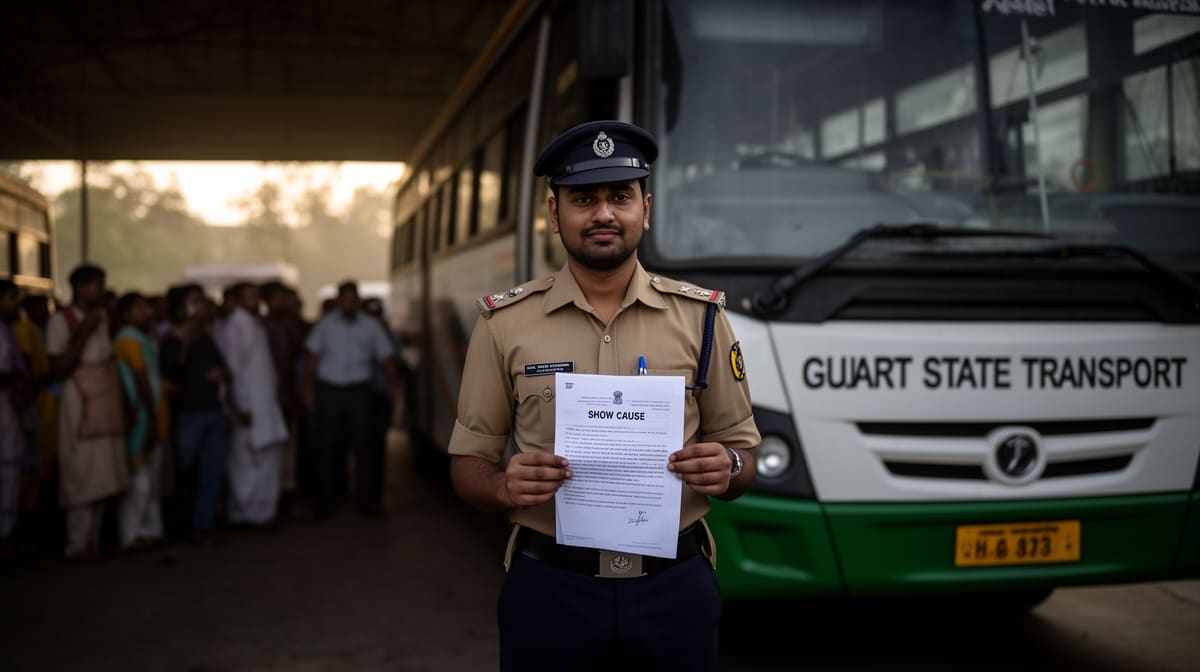
The respondent, Sri. H.R. Ananda Reddy, was employed as a driver in the Bengaluru Metropolitan Transport Corporation (BMTC). He remained unauthorizedly absent from duty for a period of over five months, from 25.01.2010 to 30.06.2010. Following disciplinary proceedings, the petitioner, Senior Divisional Controller, BMTC, dismissed the respondent from service on 01.10.2012. Aggrieved by the dismissal, the respondent challenged the punishment order before the Labor Court, Bengaluru.
Key Facts
- The respondent was employed as a driver in BMTC
- He remained unauthorizedly absent from 25.01.2010 to 30.06.2010 without submitting any leave application
- The Corporation contended that even if leave was sought on health grounds, it should have been accompanied by a Medical Certificate
- Articles of Charge were issued, and an inquiry officer was appointed, who submitted a report holding the charges proved
- The disciplinary authority imposed the punishment of dismissal from service on 01.10.2012
- The respondent argued before the Labor Court that he was suffering from ill-health and produced medical documents (Exs.W5 to W8)
Procedural History
- 25.01.2010 to 30.06.2010: Respondent remained unauthorizedly absent from duty
- 01.10.2012: Respondent dismissed from service by BMTC
- Reference No. 21/2014: Respondent raised a dispute before the Labor Court, Bengaluru
- 17.02.2016: Labor Court set aside the punishment order and reinstated the respondent
- WP No. 42872 of 2016: BMTC filed a writ petition before the Karnataka High Court challenging the Labor Court's award
- 03.06.2026: High Court allowed the writ petition and quashed the Labor Court's award
Relief Sought
The petitioner sought quashing of the Labor Court's award dated 17.02.2016 and confirmation of the dismissal order dated 01.10.2012. The petitioner also submitted a memo highlighting that the respondent remained unauthorizedly absent even after reinstatement pursuant to an interim order.
The Legal Issue
The central question before the High Court was whether the Labor Court erred in setting aside the dismissal order imposed for unauthorized absence, and whether the punishment of dismissal was disproportionate to the misconduct committed.
Arguments Presented
For the Petitioner
- Contended that unauthorized absence without leave constitutes misconduct under industrial employment law, warranting disciplinary action
- Argued that the respondent failed to submit a leave application or a valid Medical Certificate during the period of absence
- Submitted that the Labor Court erred in placing reliance on medical documents that were irrelevant to the period of absence
- Highlighted that the respondent remained unauthorizedly absent even after reinstatement pursuant to an interim order, demonstrating a lack of diligence in discharging duties
For the Respondent
- Argued that he was suffering from ill-health during the period of absence and produced medical documents before the Labor Court
- Contended that the Labor Court's award was justified as the punishment of dismissal was discriminatory and disproportionate to the misconduct
- Relied on Exs.W5 to W8 to support his claim of ill-health
The Court's Analysis
The High Court examined the principles governing disciplinary proceedings in cases of unauthorized absence. The Court reiterated that absence without leave constitutes misconduct in industrial employment, as an employee is under an obligation not to absent himself from work without good cause. The Court emphasized that no employee can claim leave of absence as a matter of right, and remaining absent without leave violates discipline, justifying disciplinary action.
"An employee is under an obligation not to absent himself from work without good cause during the time at which he is required to be at work. Absence without leave is misconduct in industrial employment, warranting disciplinary punishment. No employee can claim leave of absence as a matter of right, and remaining absent without leave will constitute a violation of discipline."
The Court further observed that the quantum of punishment in cases of misconduct depends on the facts of each case, including the severity of the misconduct and the employee's service history. The Court held that the Labor Court erred in placing reliance on medical documents that were irrelevant to the period of absence, as they were not accompanied by clinical prescriptions. The Court also noted that the Labor Court failed to consider that each case of misconduct must be evaluated on its own merits, and a uniform yardstick cannot be applied to all cases.
"The Labor Court has failed to notice that there cannot be a similar yardstick in all cases of disciplinary matters. Each case differs as the misconduct also varies from case to case. It is perhaps well to note that each case depends on the severity of the misconduct, coupled with the worker's history."
The Court also took note of the respondent's conduct post-reinstatement, observing that he remained unauthorizedly absent even after being reinstated pursuant to an interim order. This conduct, the Court held, demonstrated a lack of interest in discharging duties diligently, and such an employee does not deserve sympathy.
The Verdict
The Karnataka High Court allowed the writ petition and quashed the Labor Court's award dated 17.02.2016. The Court confirmed the punishment order dated 01.10.2012, dismissing the respondent from service. All pending interlocutory applications and interim relief, if any, were disposed of.
What This Means For Similar Cases
Unauthorized Absence Constitutes Misconduct
- Practitioners must note that absence without leave is a serious misconduct under industrial employment law, warranting disciplinary action
- Employees cannot claim leave as a matter of right, and failure to submit a valid leave application or Medical Certificate (where applicable) will be construed as a violation of discipline
- The judgment reinforces that disciplinary proceedings must be conducted fairly, but the ultimate punishment depends on the severity of the misconduct and the employee's service history
Labor Courts Must Apply Case-Specific Yardsticks
- Labor Courts and tribunals must avoid applying a uniform yardstick to all cases of misconduct
- Each case must be evaluated on its own merits, considering the facts and circumstances unique to the case
- Reliance on irrelevant or improperly supported documents (e.g., medical certificates without clinical prescriptions) may lead to the setting aside of the award
Post-Reinstatement Conduct Matters
- The respondent's conduct post-reinstatement played a crucial role in the High Court's decision
- Employees reinstated pursuant to interim orders must diligently discharge their duties, as continued unauthorized absence may lead to the reversal of reinstatement orders
- Practitioners should advise clients to comply with all conditions of reinstatement to avoid adverse consequences