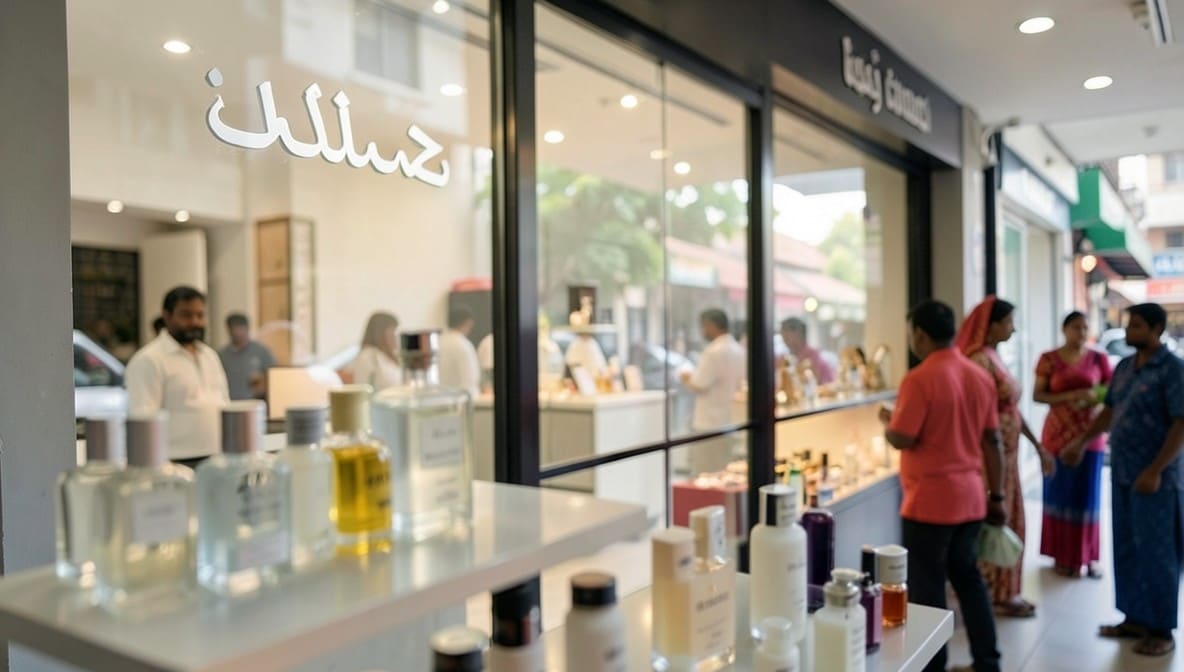
The Bombay High Court has clarified that mere accessibility of a foreign brand’s website in India or sales to Indian customers abroad does not establish the transborder reputation necessary to sustain a passing off claim. While denying interim relief on trademark grounds, the Court granted an injunction against copyright infringement, emphasizing the distinct thresholds for each cause of action.
Background & Facts
The Dispute
The Plaintiffs, Ahmed Perfumes LLC and M/s. Ahmed Al Maghribi Perfumes Trading LLC, both UAE-based entities, allege that the Defendants - individuals and entities operating in Mumbai - have adopted identical or deceptively similar marks, logos, and corporate names, including "Ahmed Al Maghribi", "Al Ahmed", "Bin Shaikh", "Oud & Roses", and "Kaaf and Marj", to pass off their perfumes as those of the Plaintiffs. The Plaintiffs claim prior global use since 2000 and seek an interim injunction to restrain infringement and passing off.
Key Facts
- The Plaintiffs adopted the mark "Ahmed Al Maghribi" in 2000 and registered it in the UAE.
- The Plaintiffs registered the domain name "ahmedalmaghribi.com" on 6th February 2009.
- In 2015, the Plaintiffs created a distinctive Arabic calligraphic logo (" ") for which they claim copyright.
- In October 2020, the Plaintiffs adopted the mark "Ahmed Perfumes" and obtained a commercial license from the UAE government.
- On 13th November 2021, Plaintiff No. 1 filed a trademark application in the UAE for "Ahmed Perfumes".
- On 14th September 2022, Defendant No. 1 filed a trademark application in India for "Ahmed Al Maghribi" and related marks.
- Defendant No. 3, Ahmed Al Maghribi LLP, was incorporated on 10th July 2023.
- Defendant No. 2, Al Ahmed India, operates a retail shop in Mumbai under the name "Al Ahmed Perfumes".
- The Defendants registered the domain name "www.ahmedindia.com" on 26th August 2022.
- The Plaintiffs claim sales to Indian customers via invoices dated from November 2021 onwards, but these invoices were issued from UAE and addressed to customers who purchased goods abroad.
- The Plaintiffs’ social media handles (Facebook, Instagram, Twitter) were created between 2013 and 2016, but no evidence shows Indian followers or targeted advertising.
- The Plaintiffs’ advertising costs for India via Meta and Google in 2023 totaled less than 1.5 AED per month.
- The Plaintiffs’ Chartered Accountant’s certificate showed total sales in India of approximately Rs. 5.5 lakh in 2021 and Rs. 1.3 lakh in 2022.
- The Plaintiffs entered into a distributorship agreement with an Indian entity in July 2024, but no agreement or invoices were produced.
Procedural History
- 14th September 2022: Defendant No. 1 files trademark application in India for "Ahmed Al Maghribi" and related marks.
- 28th February 2023: Plaintiffs contact Defendant No. 1 via email and WhatsApp, requesting withdrawal of trademark application.
- June 2023: Plaintiffs file trademark application in India for "Ahmed Perfumes" and oppose Defendant’s application.
- 10th July 2023: Defendant No. 3, Ahmed Al Maghribi LLP, incorporated.
- November 2024: Plaintiffs register domain "ahmedalmaghribi.co.in".
- 2025: Defendants file income tax returns under "Al Ahmed India" showing minimal turnover (Rs. 66,860 for FY 2023-24).
- 2026: Plaintiffs file Commercial IP Suit No. 711 of 2025 in Bombay High Court.
- 6th April 2026: Interim Application No. 1405 of 2026 argued before the Court.
- 7th May 2026: Judgment reserved and pronounced.
The Parties' Positions
Plaintiffs’ Position:
- Claim prior global use and reputation since 2000.
- Assert transborder reputation in India through website access, social media, and sales to Indian customers abroad.
- Argue that the Defendants’ marks are identical or deceptively similar.
- Claim copyright in the Arabic logo and allege its unauthorized reproduction.
- Seek injunction against use of marks, domain, and corporate name.
Defendants’ Position:
- Claim prior use of "Al Ahmed" since 2017 and "Al Ahmed India" since 2020.
- State "Ahmed" is a common Arabic name, referring to the name of the founder’s son and grandfather.
- Argue that "Oud & Roses", "Kaaf and Marj" are generic perfume ingredients.
- Contend that Plaintiffs had no physical presence, sales, or advertising in India before 2024.
- Challenge authenticity of Plaintiffs’ invoices and Chartered Accountant’s certificate.
- Assert independent creation of logo and trademark.
Relief Sought
The Plaintiffs sought:
- An interim injunction restraining the Defendants from using the marks "Ahmed Al Maghribi", "Al Ahmed", "Bin Shaikh", "Oud & Roses", "Kaaf and Marj", "MARJ", and the corporate name "Ahmed Al Maghribi LLP".
- An interim injunction restraining use of the domain "www.ahmedindia.com".
- An interim injunction restraining reproduction of the Plaintiffs’ copyrighted logo (" ").
The Legal Issue
The central question was whether a foreign plaintiff can establish transborder reputation in India sufficient to sustain a passing off claim based solely on website accessibility, social media presence, and sales to Indian customers abroad - without evidence of customers within India or targeted advertising in the Indian market.
Arguments Presented
For the Appellant/Petitioner
The Plaintiffs relied on N.R. Dongre v. Whirlpool Corporation, Milmet Oftho Industries v. Allergan Inc., and Toyota Jidosha Kabushiki Kaisha v. Prius Auto Industries Ltd. to argue that transborder reputation is established through:
- Global advertising accessible in India.
- Social media profiles with Indian followers.
- Sales invoices to Indian customers purchasing goods abroad.
- The International Copyright Order, 1999, granting reciprocal copyright protection for artistic works from WTO member countries. They submitted that the Defendants’ use of identical logos and marks constituted both passing off and copyright infringement.
For the Respondent/State
The Defendants countered that:
- No sales occurred within India before July 2024.
- The invoices produced were from UAE and lacked delivery challans, customs receipts, or Indian addresses.
- Social media advertising costs for India were negligible (less than 1.5 AED/month).
- The name "Ahmed" is generic and commonly used in Arabic culture.
- The Defendants had been using "Al Ahmed" since 2017 and registered their marks independently.
- The Plaintiffs’ copyright claim was invalid as the logo was not registered in India and no evidence showed prior use in India.
The Court's Analysis
The Court undertook a rigorous analysis of the legal framework governing transborder reputation and passing off, drawing extensively from Toyota Jidosha Kabushiki Kaisha v. Prius Auto Industries Ltd. and Starbucks (HK) Ltd. v. British Sky Broadcasting Group. It emphasized that goodwill must be rooted in actual customers within the jurisdiction, not merely in people who happen to be customers abroad.
"The claimant must show that it has customers within the jurisdiction of this Court as opposed to persons in this jurisdiction who are customers elsewhere."
The Court found that the Plaintiffs’ invoices, while showing sales to individuals with Indian names, were issued from the UAE and did not establish that the Plaintiffs had any commercial relationship with customers located in India. The mere fact that an Indian citizen purchased goods in Dubai and brought them to India did not create goodwill in India.
The Court further rejected the argument that website accessibility or social media presence alone could establish transborder reputation. Citing Sumit Vijay v. Major League Baseball Properties Inc., it held:
"The availability of a mark on websites can again be no indicator of trans-border goodwill or reputation percolating into a particular country such as India."
The advertising expenditure in India was found to be de minimis - less than 1.5 AED per month on Meta and Google - rendering any claim of widespread publicity implausible. The Chartered Accountant’s certificate, which showed sales of less than Rs. 6 lakh over two years, was deemed insignificant compared to the Plaintiffs’ global turnover of over 34 crore AED.
The Court also noted the absence of any distributorship agreement, local advertising, or print media presence in India. The Plaintiffs’ claim of reputation through "spillover" was therefore not substantiated.
However, the Court found a different outcome on the copyright claim. The Plaintiffs had created the Arabic calligraphic logo in 2015 and registered it in the UAE. The Defendants’ logo was found to be a slavish reproduction. The Court held that under the International Copyright Order, 1999, India grants reciprocal protection to artistic works from WTO member states. The Defendants failed to rebut the Plaintiffs’ claim of original creation or provide any evidence of independent design.
"The Defendants’ reply is bereft of any pleading or material to demonstrate the Defendant’s ownership in the artistic work."
Thus, while the passing off claim failed on lack of transborder reputation, the copyright infringement claim met the threshold for interim relief.
The Verdict
The Plaintiffs succeeded on the copyright claim but failed on the passing off claim. The Court granted an interim injunction restraining the Defendants from reproducing, printing, publishing, or communicating the Plaintiffs’ copyrighted logo (" ") in any form, including as part of the marks " ", " ", and " ". The injunction applied to all Defendants, their agents, distributors, and persons acting under them. The Court dismissed the interim application for injunction against use of the trademarks "Ahmed Al Maghribi", "Al Ahmed", and corporate name "Ahmed Al Maghribi LLP", holding that the Plaintiffs had not established transborder reputation in India.
What This Means For Similar Cases
Transborder Reputation Requires Actual Customers in India
- Practitioners must now demonstrate that customers within India have engaged in commercial transactions with the foreign brand - not merely that Indian nationals purchased goods abroad.
- Mere website access, social media followers, or export invoices to Indian nationals are insufficient.
- Evidence must show that the brand’s goodwill is recognized and relied upon by consumers within India.
Advertising Costs Must Be Substantial and Targeted
- Nominal advertising spend (e.g., less than Rs. 500/month) will not satisfy the threshold for transborder reputation.
- Plaintiffs must produce detailed, verifiable data on targeted advertising campaigns in India, including impressions, clicks, and geographic targeting.
- General global promotional expenses will not suffice.
Copyright Protection Is More Accessible for Foreign Rights Holders
- Foreign entities can enforce copyright in India under the International Copyright Order, 1999, even without local registration.
- Copying of distinctive logos, labels, or packaging may attract immediate interim relief if originality and prior use are established.
- Defendants must provide independent design evidence; silence or generic claims will not defeat copyright claims.
Prior Use Claims Must Be Documented
- Defendants claiming prior use must produce verifiable records - invoices, advertisements, tax returns, or business licenses - from before the plaintiff’s entry.
- Oral testimony or vague assertions of "family name" use are insufficient without corroborating documentation.
Domain Names and Corporate Names Are Not Automatically Protected
- Registration of a domain name or company name does not confer rights if the underlying mark lacks reputation.
- Courts will look beyond formalities to assess actual market presence and consumer recognition.