The Customs, Excise & Service Tax Appellate Tribunal, Kolkata Regional Bench, has delivered a definitive ruling clarifying that incentives and discounts received by automobile dealers from manufacturers are not taxable under Service Tax as Business Auxiliary Services. The judgment also reinforces the principle that extended limitation periods cannot be invoked absent clear evidence of suppression by the assessee. This decision provides critical relief to automotive dealers across India and sets a binding precedent on the characterization of dealer compensation.
Background & Facts
The Dispute
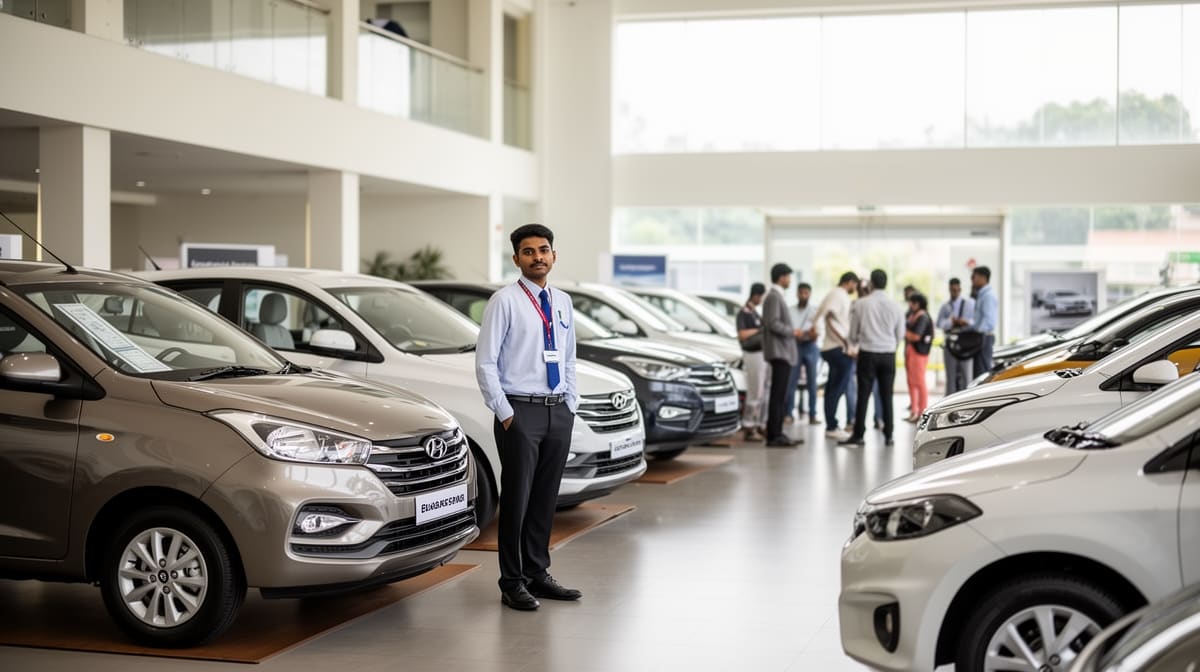
M/s S.M. Autokraft Pvt. Ltd., an authorized dealer of Volkswagen vehicles in Guwahati, Assam, was assessed for Service Tax on amounts received from Volkswagen as incentives and discounts. The Revenue contended that these amounts constituted "commission" and were taxable under the category of "Business Auxiliary Services" under the Finance Act, 1994. The appellant, however, maintained that it operated on a principal-to-principal basis, purchasing vehicles from Volkswagen and selling them to end customers, with the difference between purchase and sale price constituting profit, not commission.
Key Facts
- The appellant entered into a dealership agreement with Volkswagen Group Sales India Pvt. Ltd. on 03.12.2010, explicitly stating the relationship was "principal to principal" and not as an agent.
- The appellant purchased vehicles from Volkswagen, paid CST/VAT on procurement, and sold them to customers, charging State VAT on sales.
- The profit margin was the difference between the purchase price and sale price of each vehicle.
- Volkswagen provided additional financial incentives based on annual sales turnover and reimbursed discounts offered to customers.
- The appellant paid Service Tax on repairs and maintenance services rendered and filed ST-3 returns accordingly.
- The appellant filed Income Tax Returns showing full turnover in Profit & Loss Accounts and Balance Sheets.
- The Revenue relied on these IT Returns to infer that the profit margin represented "commission" receivable.
Procedural History
- 08.07.2014: Audit conducted by Commissionerate HQ for the period February 2012 to March 2014.
- 24.02.2017: Show Cause Notice (SCN) No. V(15)01/SCN/ST/SM Autokraft/GHY/2017/950 issued, demanding Rs. 16,16,905 as Service Tax for the period February 2012 to March 2014, invoking extended period under Section 73(1) of the Finance Act, 1994.
- 09.02.2018: Commissioner (Appeals) confirmed the demand with interest and penalty.
- 10.11.2016: Revenue sought documents (invoices, ST-3 returns, IT returns) for FY 2014-15 to 2015-16.
- 22.10.2019: Second SCN No. V(15)474/GHY/DIV-II/HQAE-II/SM/SCN/2019-20/3755 issued, demanding Rs. 17,90,886 for FY 2014-15 to 2015-16, again invoking extended period.
- 06.02.2025: Commissioner (Appeals) confirmed the second demand.
- 07.04.2026: Hearing before CESTAT Kolkata.
- 23.04.2026: Final Order pronounced.
Relief Sought
The appellant sought: (1) quashing of both impugned orders dated 09.02.2018 and 06.02.2025; (2) setting aside of Service Tax demands of Rs. 16,16,905 and Rs. 17,90,886; (3) cancellation of interest and penalty; and (4) declaration that incentives and discounts received are not taxable under Service Tax.
The Legal Issue
The central question was whether incentives and discounts received by an automobile dealer from a manufacturer, under a principal-to-principal agreement, constitute consideration for a taxable service under the category of "Business Auxiliary Service," or whether they form part of the profit from trading goods, which is exempt under the Negative List regime.
Arguments Presented
For the Appellant
The appellant argued that the dealership agreement clearly established a principal-to-principal relationship, not an agency arrangement. The profit margin between purchase and sale price was trading income, not commission. The incentives and reimbursements from Volkswagen were either trade discounts linked to volume sales or compensations for price reductions, all of which formed part of the sale transaction and not a separate service. The appellant relied on multiple precedents including Prem Motors Pvt Ltd v. CCE - Jaipur, Bimal Auto Agency v. CCGST Dibrugarh, and BM Autolink v. CCE - Kutch, all holding that such amounts are not taxable under Service Tax. The appellant further contended that the extended period of limitation could not be invoked as there was no suppression of facts; the Revenue had access to all documents through audits and returns, and the delay in issuing SCNs was attributable to its own inaction.
For the Respondent
The Revenue argued that the amounts received were "commission" for sales promotion activities and thus fell under Business Auxiliary Services. It relied on the higher turnover declared in Income Tax Returns as evidence that the appellant had concealed the true nature of receipts. The Revenue claimed that the delay in issuing SCNs was due to the appellant’s failure to submit certain documents, including surrender of ST-2 and updated ST-3 returns, thereby justifying invocation of the extended period under Section 73(1).
The Court's Analysis
The Tribunal meticulously examined the dealership agreement and found that it explicitly excluded any agency relationship. The appellant was not acting as an agent of Volkswagen but as an independent trader purchasing and selling vehicles. The Tribunal emphasized that the profit margin was not commission but the natural outcome of a trading activity.
"The vehicle manufacturer M/s Maruti Suzuki India Ltd. on the basis of yearly performance of sale grants the discount to the dealer, this discount is nothing but a discount in the sale value of the vehicle sold throughout the year therefore these sales discount in the course of transaction of sale and purchase of the vehicles hence, the same cannot be considered as service for levy of service tax."
The Tribunal relied on the consistent jurisprudence of various benches of the Tribunal, including Prem Motors, Bimal Auto Agency, and BM Autolink, which held that incentives tied to sales volume are trade discounts and form part of the sale price, not consideration for a service.
The Tribunal further held that the Revenue’s reliance on Income Tax Returns to infer taxable commission was legally unsustainable. Service Tax and Income Tax are governed by separate statutes, and profit shown in P&L accounts cannot be recharacterized as commission without evidence of a service being rendered. The Tribunal noted that the appellant had consistently filed ST-3 returns and paid Service Tax on actual taxable services (repairs and maintenance), demonstrating transparency.
On the issue of extended limitation, the Tribunal found no suppression. The first audit was conducted in July 2014, yet the SCN was issued only in February 2017, with no explanation for the delay. The second SCN, issued in October 2019, followed a three-year gap after documents were submitted in 2016. The Tribunal cited Nizam Sugar Factory v. Collector of Central Excise, holding that once facts are known to the department through audit or returns, subsequent SCNs on the same facts cannot rely on suppression.
"When the first SCN was issued all the relevant facts were in the knowledge of the authorities. Later on, while issuing the second and third show cause notices the same/similar facts could not be taken as suppression of facts on the part of the assessee as these facts were already in the knowledge of the authorities."
The Verdict
The appeals were allowed. The Tribunal set aside both impugned orders dated 09.02.2018 and 06.02.2025. The Service Tax demands of Rs. 16,16,905 and Rs. 17,90,886 were cancelled. All interest and penalties imposed were also set aside. The Tribunal held that incentives and discounts received by the appellant from Volkswagen are not taxable under Service Tax as they constitute trading income, not consideration for a service. The extended period of limitation was held inapplicable due to absence of suppression.
What This Means For Similar Cases
Incentives Are Trading Income, Not Services
- Practitioners representing automobile dealers must argue that any incentive, rebate, or reimbursement tied to sales volume is part of the sale transaction and not a separate service.
- The burden now lies on the Revenue to prove the existence of a service element, not on the dealer to prove its absence.
- Dealers should maintain clear documentation of dealership agreements and ensure they explicitly state principal-to-principal status.
Extended Limitation Requires Actual Suppression
- Revenue cannot invoke extended limitation merely due to delay in issuing SCNs if the facts were already known through audits or returns.
- A single audit or review of returns constitutes sufficient knowledge; subsequent notices on the same basis are barred.
- Practitioners should challenge any SCN issued more than 18 months after audit completion unless the Revenue can prove deliberate concealment.
IT Returns Cannot Substitute Taxable Event Analysis
- Income Tax Returns showing profit cannot be used to infer Service Tax liability.
- The nature of receipt must be determined under the Finance Act, 1994, not the Income Tax Act, 1961.
- Courts and tribunals will disregard Revenue’s attempts to use IT returns as a proxy for Service Tax assessment.