The Customs Excise and Service Tax Appellate Tribunal (CESTAT) has clarified that a trade discount extended to a bulk buyer cannot be treated as "additional consideration" under Rule 6 of the Central Excise Valuation Rules unless there is clear evidence of a direct or indirect flow of benefit from the buyer to the assessee. This ruling reinforces the principle that commercial pricing decisions, even when involving infrastructure arrangements, do not automatically trigger valuation adjustments under excise law.
Background & Facts
The Dispute
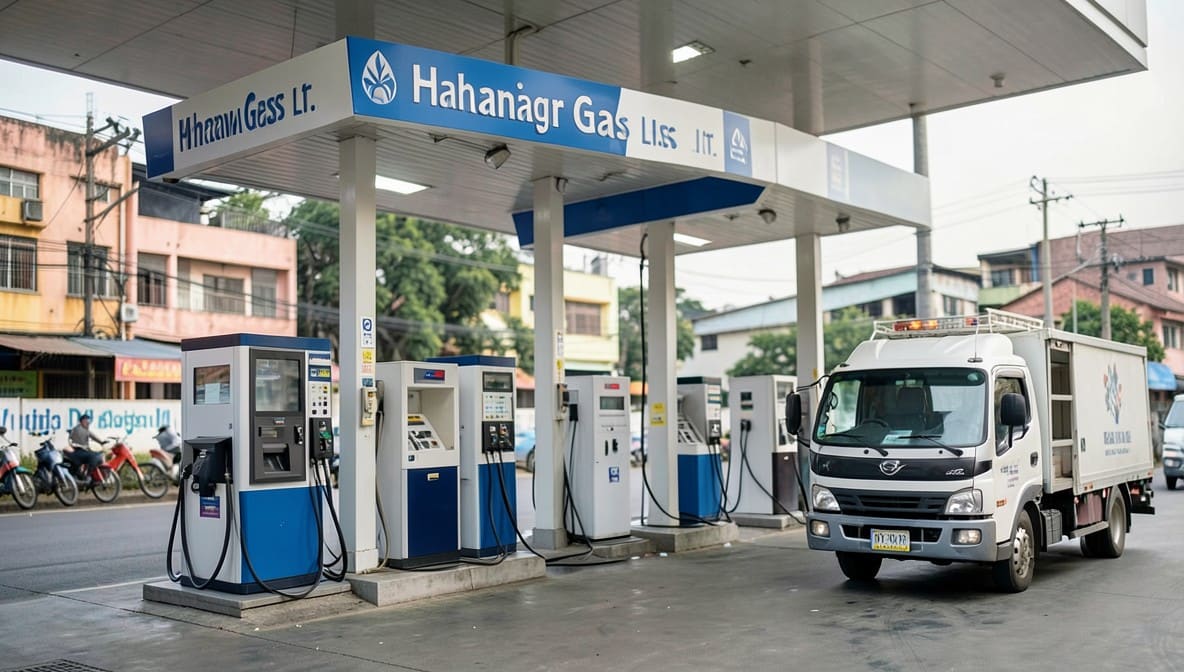
The appellant, Mahanagar Gas Ltd. (MGL), is engaged in the manufacture and supply of Compressed Natural Gas (CNG). It entered into an agreement with Navi Mumbai Municipal Transport (NMMT) for the supply of CNG through dispensing units installed at NMMT’s depot premises. Under this arrangement, MGL extended a trade discount of Rs. 0.17 per kg to NMMT, resulting in a lower sale price compared to other customers. The department contended that this discount was not genuine but constituted "additional consideration" because NMMT had provided land and infrastructure free of cost for setting up the CNG dispensing units.
Key Facts
- MGL and NMMT entered into a sub-lease agreement dated 11.03.2009 for the use of land at NMMT’s depot
- Clause 2.1 of the sub-lease agreement mandated MGL to pay monthly lease rent of Rs. 59,584/-
- MGL bore the entire cost of installation of plant, machinery, and CNG dispensing infrastructure
- The trade discount of Rs. 0.17 per kg was extended exclusively to NMMT as a bulk buyer
- Similar discounts were also extended to other bulk consumers including BEST and TMT
- No evidence was produced by the department to show that NMMT provided land or infrastructure free of cost
Procedural History
- 20.04.2015: Show cause notice issued proposing recovery of differential duty of Rs. 75,959/- for April 2014 to January 2015, along with interest and penalty
- 08.07.2016: Adjudicating authority confirmed duty demand, interest, and penalty
- 11.07.2016: Commissioner (Appeals) set aside penalty but upheld duty demand and interest
- 01.04.2026: Hearing before CESTAT, Mumbai West Zonal Bench
- 30.04.2026: Final order passed by CESTAT
Relief Sought
The appellant sought setting aside of the duty demand and interest, arguing that the trade discount was a legitimate commercial practice and that no additional consideration flowed from NMMT. It also sought reliance on the Tribunal’s earlier decision in its own case (Final Order No. 86221-86222/2024) and the Supreme Court’s ruling in Commissioner v. Mahanagar Gas Ltd. (2017).
The Legal Issue
The central question was whether a trade discount extended to a bulk buyer, in the context of a lease arrangement for land use, constitutes "additional consideration" under Rule 6 of the Central Excise Valuation (Determination of Price of Excisable Goods) Rules, 2000, thereby requiring inclusion in the assessable value.
Arguments Presented
For the Appellant
The appellant argued that the discount was a genuine commercial practice, common in the industry, and not linked to any indirect benefit from NMMT. It produced the sub-lease agreement dated 11.03.2009 proving that it paid monthly rent for the land. It relied on the Tribunal’s own prior decision in Mahanagar Gas Ltd. v. CCE, Mumbai-II (Final Order No. 86221-86222/2024) and the Supreme Court’s judgment in Commissioner v. Mahanagar Gas Ltd. (2017), both of which held that where lease rent is paid separately and no additional benefit flows from the buyer, the discount cannot be treated as additional consideration. It emphasized that Section 4(1)(a) of the Central Excise Act, 1944 permits transaction-based valuation based on commercial considerations, provided there is no mutuality of interest.
For the Respondent
The department contended that NMMT’s provision of land, water, and civil infrastructure constituted an indirect benefit to MGL, which effectively reduced its operational costs. It argued that this benefit should be quantified and added to the sale price as "additional consideration" under Rule 6. However, it failed to produce any documentary evidence to substantiate that the land or infrastructure was provided free of cost or that the discount was linked to such provision.
The Court's Analysis
The Tribunal conducted a meticulous review of the factual record and found that the department’s entire case rested on a flawed assumption - that NMMT provided land and infrastructure free of cost. The appellant produced the sub-lease agreement dated 11.03.2009, which clearly established that MGL paid Rs. 59,584 per month as lease rent. The department did not rebut this with any counter-evidence.
"The assumption carried by the department becomes more clear from the finding recorded by the learned Commissioner... NMMT is incurring all this expenditure in connection with buying CNG from MGL. The cost of these facilities is nothing but additional consideration to MGL in the guise of facilities."
The Tribunal rejected this reasoning, noting that the department had not established any nexus between the discount and the alleged provision of facilities. It emphasized that Rule 6 requires a demonstrable flow of consideration from the buyer to the seller, which must have a direct or indirect nexus with the price of the excisable goods. In the absence of such a flow, the discount remains a legitimate commercial pricing decision.
The Tribunal further relied on its own binding precedent in Mahanagar Gas Ltd. v. CCE, Mumbai-II (2024), which had examined identical facts and held that payment of lease rent negates any claim of additional consideration. It also cited the Supreme Court’s dismissal of the department’s appeal in Commissioner v. Mahanagar Gas Ltd. (2017), which affirmed that trade discounts to bulk buyers cannot be added to assessable value in the absence of evidence of additional consideration.
The Court concluded that the department’s invocation of Rule 6 was factually and legally unsustainable. The discount was not a disguised form of consideration but a standard commercial practice for bulk purchasers.
The Verdict
The appeal was allowed. The Tribunal set aside the Order-in-Appeal dated 08.07.2016, which had upheld the duty demand of Rs. 75,959/- and associated interest. The demand for duty and interest is hereby cancelled. The appellant is entitled to consequential relief, including refund of any amount already paid, with interest as prescribed under law. No penalty was imposed, consistent with the Commissioner (Appeals)’s earlier order.
What This Means For Similar Cases
Trade Discounts Are Presumed Legitimate Unless Proven Otherwise
- Practitioners must challenge departmental attempts to reclassify trade discounts as "additional consideration" unless the department produces concrete evidence of a flow of benefit
- The burden of proof lies squarely on the department to establish nexus between the discount and indirect consideration
- Merely showing that a buyer provides infrastructure is insufficient - proof of free provision is mandatory
Lease Payments Neutralize Claims of Indirect Benefit
- Where the assessee pays rent for land or facilities used for business operations, such payments break the chain of "additional consideration"
- This principle applies across industries - not just CNG supply - wherever infrastructure is leased rather than provided gratis
- Tax advisors should ensure clients maintain clear documentation of lease agreements and payment receipts
Precedent Binding Even Across Different Assessment Periods
- A prior Tribunal decision on identical facts is binding on subsequent cases, even if the assessment periods differ
- The Supreme Court’s dismissal of a similar appeal constitutes a de facto affirmation of the Tribunal’s legal reasoning
- Practitioners should cite such precedents early in proceedings to avoid protracted litigation