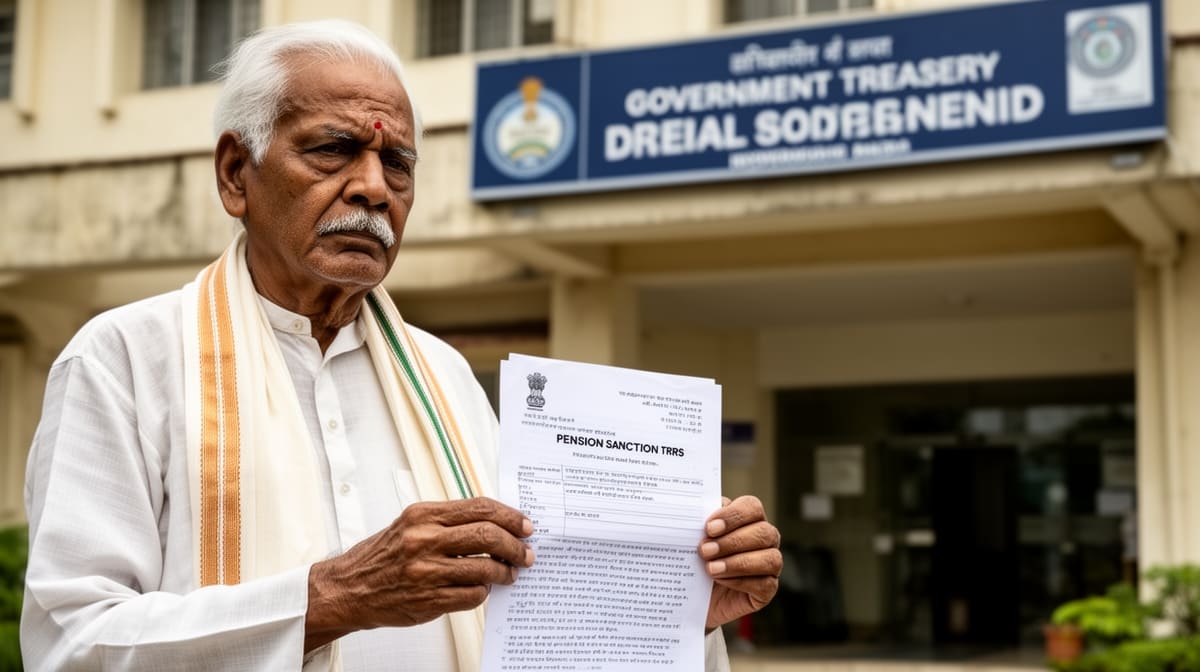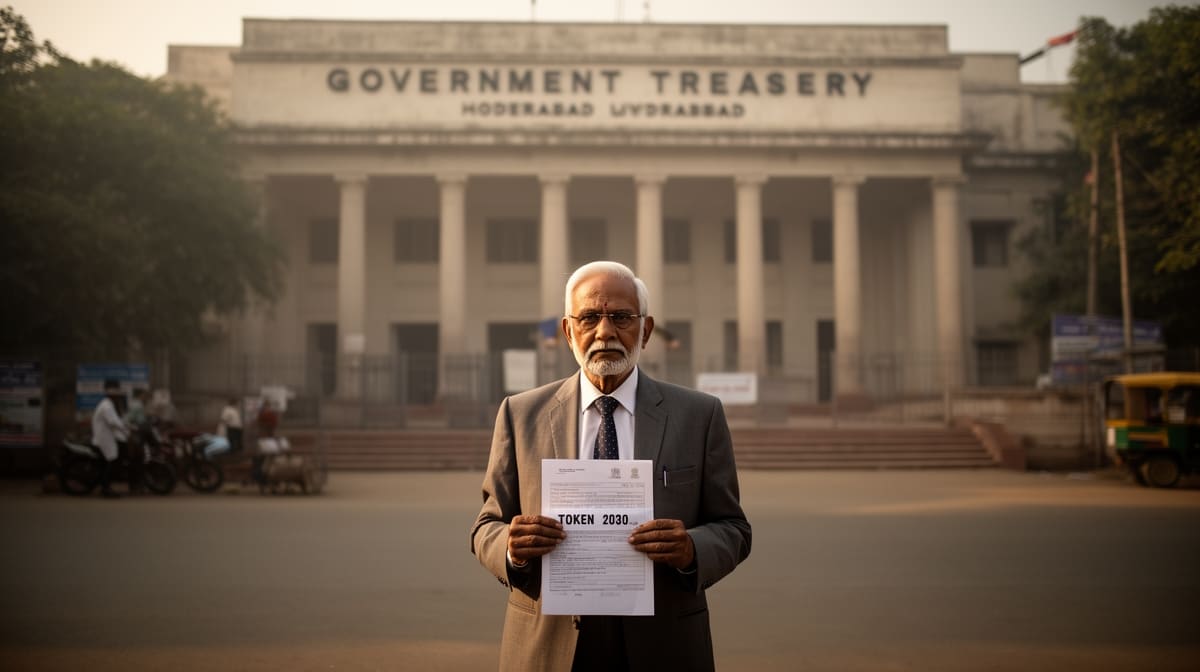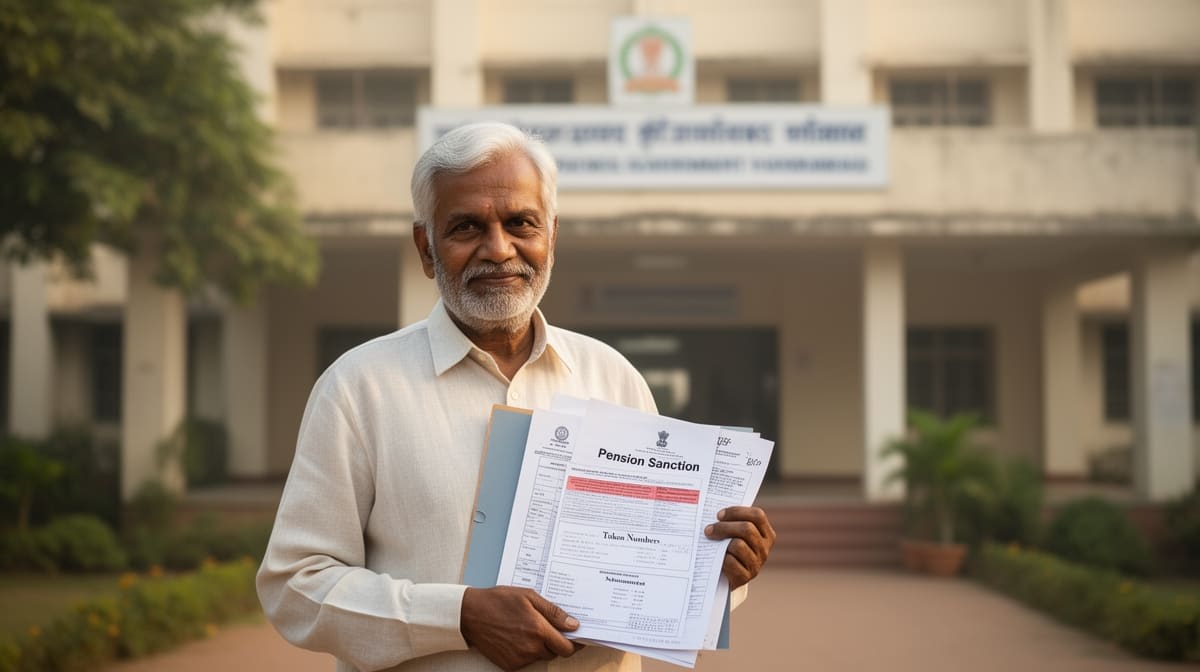
The High Court of Telangana has reaffirmed that the state cannot withhold retirement benefits once they have been formally sanctioned by competent authorities. This judgment reinforces the constitutional right to property under Article 300-A and the principle of non-arbitrariness under Article 14, offering critical clarity for public servants and their legal representatives.
Background & Facts
The Dispute
The petitioner, a retired Senior Lecturer in English, retired on 31 October 2025 after a long tenure in government service. Despite the issuance of multiple official token numbers by the Principal Accountant General (A&E) authorizing payment of all terminal benefits - including retirement gratuity, commutation of pension, General Provident Fund (G.P.F.) balance, earned leave encashment, and life insurance proceeds - the respondents failed to release the funds.
Procedural History
- October 2025: Petitioner retired after 35 years of service.
- October - November 2025: Token numbers were issued by the Principal Accountant General (A&E) for all terminal benefits, totaling over Rs. 1.5 crore.
- December 2025: Petitioner filed Writ Petition No. 2477 of 2026 under Article 226, challenging the non-payment as arbitrary and violative of constitutional rights.
- January 2026: The matter was heard on admission, with both parties consenting to final disposal.
Relief Sought
The petitioner sought a writ of mandamus directing the respondents to immediately release all sanctioned terminal benefits, including:
- Retirement gratuity: Rs. 11,27,421 and Rs. 4,72,579
- Commutation value of pension: Rs. 29,71,301 and Rs. 12,45,476
- Service pension: Rs. 1,08,550/month
- G.P.F. amount: Rs. 67,22,028
- Earned leave encashment: Rs. 37,78,840
- TG Life Insurance: Rs. 1,03,759
The Legal Issue
The central question was whether the state can lawfully withhold terminal benefits after they have been formally sanctioned through official token numbers, and whether such withholding violates Article 14, Article 16, and Article 300-A of the Constitution.
Arguments Presented
For the Petitioner
Counsel for the petitioner relied on State of U.P. v. Raj Narain and K. S. Puttaswamy v. Union of India to argue that once benefits are sanctioned by competent authorities, they become vested rights. He emphasized that the issuance of token numbers constitutes a final administrative decision, and withholding payment amounts to arbitrary deprivation of property under Article 300-A. He further cited W.P. No. 23138 of 2025, decided by the Division Bench of this Court on 03.09.2025, which had laid down identical principles.
For the Respondent
The Assistant Government Pleader did not dispute the factual position that token numbers had been raised. He conceded that the petitioner’s entitlements were duly sanctioned and acknowledged the binding precedent set in W.P. No. 23138 of 2025. He submitted that the delay was administrative and not intentional, and requested the Court to direct prompt payment without imposing penalties.
The Court's Analysis
The Court examined the nature of terminal benefits under the Telangana State Pension Rules and the constitutional framework governing public employment. It held that retirement benefits are not mere gratuities but vested rights arising from statutory and service rules. The issuance of token numbers by the Principal Accountant General (A&E) is not a preliminary step but a conclusive administrative act that creates a legal obligation.
"The state cannot hold back funds already sanctioned through official token numbers, especially when the entitlements are computed and approved by the finance authorities. To do so is to treat a constitutional right as a discretionary privilege."
The Court distinguished this case from those involving pending disciplinary proceedings or disputed claims, noting that no such challenge existed here. The respondents had not raised any legal or factual objection to the quantum or validity of the sanctioned amounts. The Court further held that delay in payment, even if administrative, amounts to a violation of Article 300-A, which protects the right to property against arbitrary state action.
The Court also relied on its own precedent in W.P. No. 23138 of 2025, emphasizing the need for consistency in judicial pronouncements concerning public servants’ rights. It rejected the notion that bureaucratic inertia could override constitutional guarantees.
The Verdict
The petitioner succeeded. The Court held that terminal benefits once sanctioned via official token numbers cannot be withheld and directed the respondents to release all amounts within six weeks. Failure to do so will attract interest at 10% per annum from the date the benefits became due.
What This Means For Similar Cases
Sanctioned Benefits Are Vested Rights
- Practitioners must argue that token numbers issued by finance authorities constitute final administrative orders under service rules.
- Any delay beyond the stipulated period must be challenged as a violation of Article 300-A, not merely as administrative lapse.
- No further clearance or approval is required after token issuance unless explicitly mandated by statute.
Precedent Binding Across Similar Claims
- This judgment reinforces that identical claims by similarly situated public servants must be treated uniformly.
- Writ petitions filed after a binding Division Bench order on the same issue may be disposed of summarily on admission, saving litigation time and cost.
- Counsel should cite W.P. No. 23138 of 2025 as binding precedent in all pending cases involving delayed pension or gratuity payments.
Interest as a Remedy for Delay
- The Court’s imposition of 10% per annum interest sets a new benchmark for compensating delayed public dues.
- This creates a strong deterrent against bureaucratic delays in payment of retirement benefits.
- Practitioners should now routinely pray for interest in writ petitions involving delayed gratuity, G.P.F., or leave encashment.