The High Court of Telangana has reaffirmed that the state cannot withhold authorized retirement benefits without reasonable cause, emphasizing that such delay violates the fundamental right to life and dignity under Article 21. This judgment reinforces the state’s obligation to act with promptness and fairness in discharging its contractual and constitutional duties toward retired public servants.
Background & Facts
The Dispute
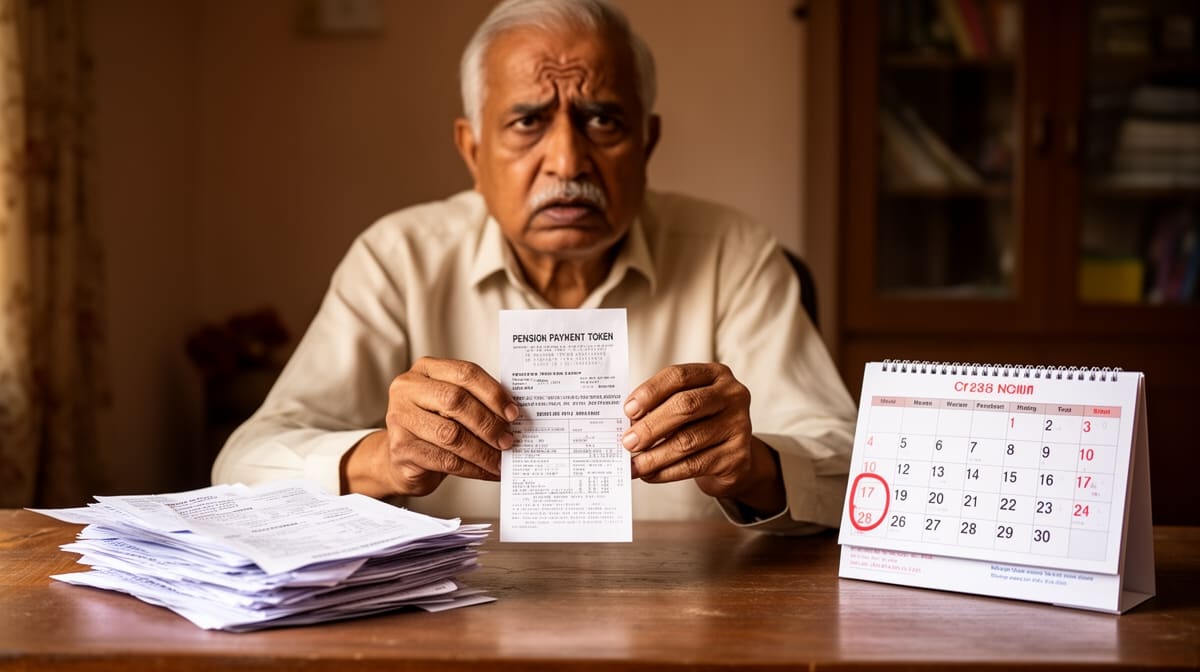
Dr. M. Papaiah, a retired lecturer in Psychology, sought the release of multiple retirement benefits including Gratuity (Central and State), Commutation amounts, Encashment of Earned Leaves, GPF, GIS, and PRC Arrears. All amounts were duly calculated and authorized by the Accountant General, Telangana, with unique token numbers assigned for payment. Despite this, the respondents - state departments responsible for disbursement - failed to release the funds for over a year after retirement.
Procedural History
- The petitioner filed Writ Petition No. 4128 of 2026 under Article 226 of the Constitution, challenging the inaction as arbitrary and violative of Articles 14, 16, 21, and 300A.
- A parallel petition, W.P. No. 23138 of 2025, had been decided by the Division Bench of the same Court on 03.09.2025, directing prompt payment in identical circumstances.
- The petitioner relied on the precedent set in that case to seek similar relief.
- The respondents did not contest the factual matrix or the applicability of the earlier judgment.
Relief Sought
The petitioner sought immediate release of all retirement benefits with interest at 24% per annum from the date of retirement until actual payment, and declared the delay illegal and unconstitutional.
The Legal Issue
The central question was whether the state’s failure to release retirement benefits, after formal authorization by the Accountant General, constitutes a violation of Article 21 and whether the Court can mandate payment with interest for such unreasonable delay.
Arguments Presented
For the Petitioner
Counsel relied on State of Punjab v. Baldev Singh and K.S. Puttaswamy v. Union of India to argue that delayed payment of earned entitlements amounts to deprivation of property without due process, violating Article 300A and Article 21. He emphasized that token numbers, once issued, create a vested right and administrative inaction amounts to arbitrariness under Article 14. The earlier judgment in W.P. No. 23138 of 2025 was cited as binding precedent.
For the Respondent
The Assistant Government Pleader for Services-III did not dispute the petitioner’s factual assertions or the applicability of the prior judgment. He conceded that the amounts were duly authorized and undertook to release them on priority, requesting the Court to pass an order consistent with the earlier decision.
The Court's Analysis
The Court examined the nature of retirement benefits under the Central Civil Services (Pension) Rules and Telangana State Rules, noting that once the Accountant General authorizes payment and issues token numbers, the entitlement becomes a vested right. The Court held that administrative delay in releasing such funds, despite clear authorization, is not merely procedural negligence but a substantive breach of constitutional obligations.
"The state, as a model employer, cannot afford to treat the earned entitlements of its retired employees as a matter of administrative convenience. Delay in payment, especially after formal authorization, strikes at the dignity and economic security of the individual, which are core components of Article 21."
The Court distinguished this from cases involving disputed claims or incomplete documentation, noting that here, all procedural and substantive requirements had been fulfilled. The earlier judgment in W.P. No. 23138 of 2025 was applied directly, as the facts were indistinguishable. The Court further held that interest must be awarded not as compensation but as a deterrent against systemic delay, setting the rate at 10% per annum from the date the amount fell due.
The Verdict
The petitioner succeeded. The Court held that delay in releasing authorized retirement benefits violates Article 21 and directed the respondents to pay all amounts within six weeks. Failure to comply will attract interest at 10% per annum from the date of retirement until actual payment.
What This Means For Similar Cases
Payment Upon Authorization Is Non-Discretionary
- Practitioners representing retired government employees must now argue that token number issuance = vested right, and any delay thereafter is actionable under Article 21.
- Administrative departments cannot invoke internal clearance delays as justification for non-payment.
Interest as a Deterrent, Not Compensation
- Courts will now routinely impose interest at 10% per annum for unreasonable delays in releasing authorized benefits, even absent a specific statutory provision.
- The rate is not tied to contractual terms but to the constitutional imperative of timely justice.
Precedent Binding in Identical Fact Patterns
- Writ petitions with identical factual matrices (authorized benefits, delayed payment) may be disposed of summarily by citing prior judgments under Order XVII Rule 1 CPC and Article 141.
- Advocates should file certified copies of relevant prior orders as annexures to secure swift disposal.