The Bombay High Court has affirmed that the right to education for a juvenile accused of serious offences cannot be sacrificed to pre-trial detention, even when the charges involve life imprisonment. In a rare but principled order, the Court granted temporary bail to enable the accused to appear for his Class 12 board examinations, prioritizing long-term societal interest over immediate punitive posture.
Background & Facts
The Dispute
The applicant, Parth @ Gattu, is a juvenile accused in Crime No. 878 of 2025 registered at Avdhutwadi Police Station, Yavatmal, under Sections 109, 103(1), 351(2), 352, 296 and 3(5) of the Bharatiya Nyaya Sanhita, 2023. The allegations involve participation in a murder committed alongside co-accused persons. The case is at an early stage, with no trial having commenced.
Procedural History
- The applicant was arrested and remanded to judicial custody following the registration of the FIR.
- A regular bail application was denied by the trial court on grounds of gravity of offence and risk of tampering.
- The applicant approached the Bombay High Court seeking only temporary relief to appear for his Class 12 board examinations.
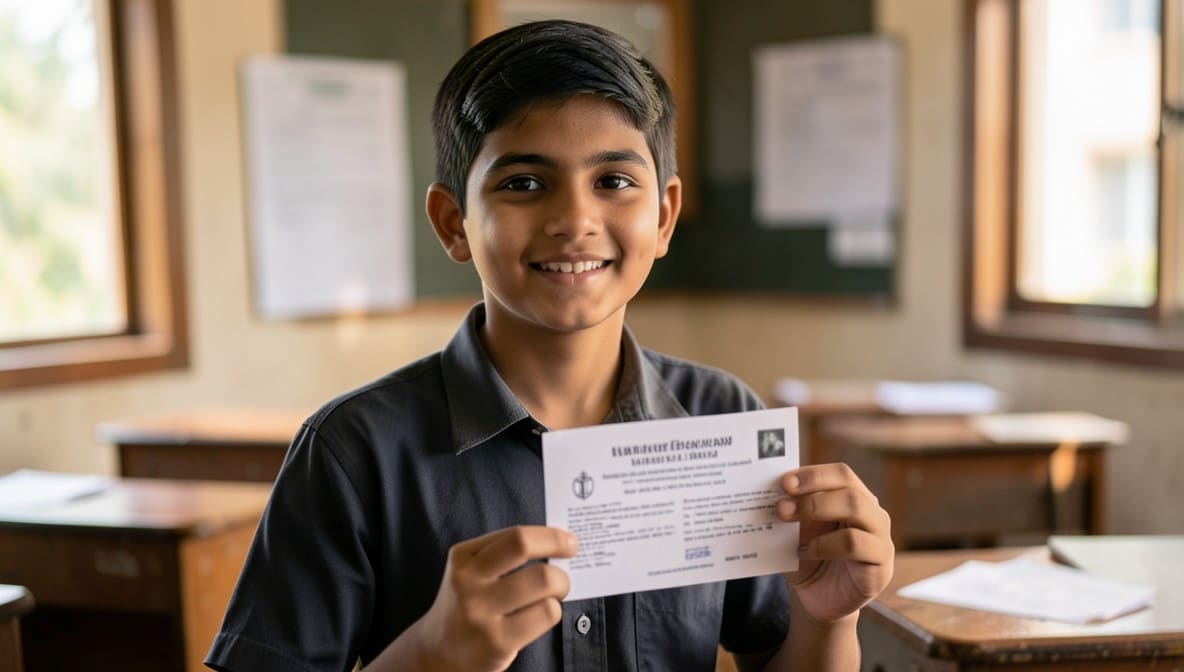
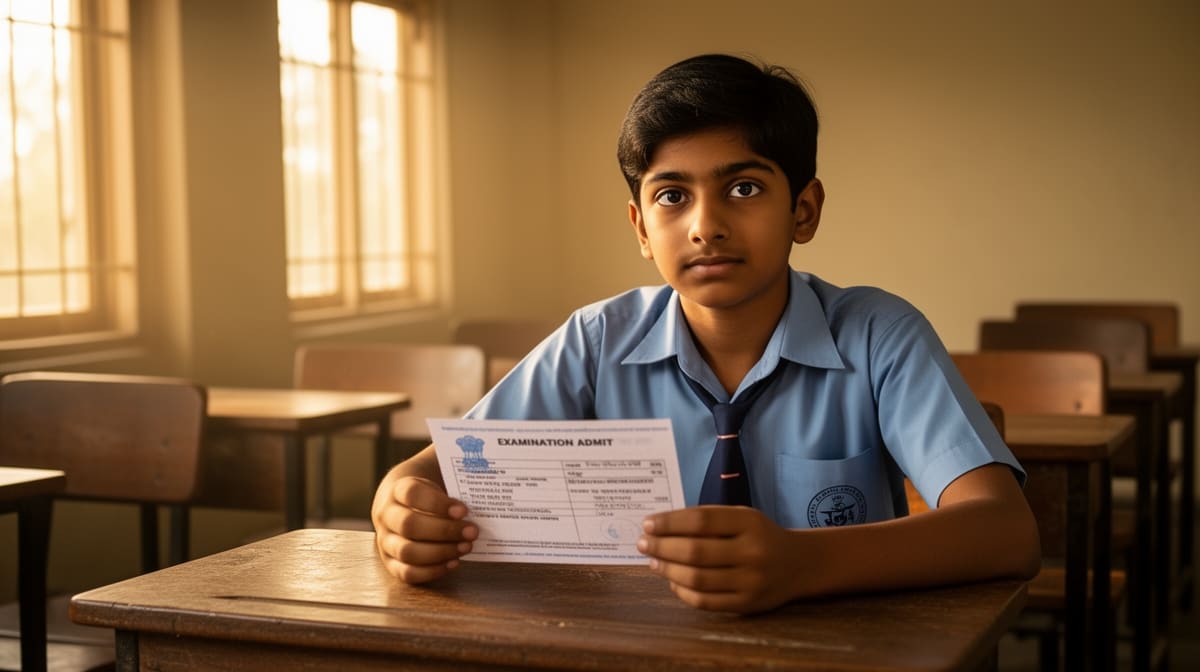
- The admission card for the examination was filed as Annexure-18, confirming the exam schedule from 10.02.2026 to 11.03.2026.
Relief Sought
The applicant sought no general bail but only temporary release for the duration of the examination period, with strict conditions to ensure compliance with the investigation and public order.
The Legal Issue
The central question was whether Article 21 of the Constitution, which guarantees the right to life and personal liberty, includes the right of a juvenile accused to pursue education during pre-trial detention, and whether temporary bail can be granted for this purpose even in cases involving serious offences.
Arguments Presented
For the Petitioner
The learned counsel argued that the applicant, being a minor, is entitled to the protections under the Juvenile Justice (Care and Protection of Children) Act, 2015, which emphasizes rehabilitation and education. He relied on State of Maharashtra v. Rajesh and Kishan Singh v. State of Rajasthan, where courts permitted temporary bail for medical treatment and family emergencies. He emphasized that denying the examination would irreparably harm the applicant’s future, violating his right to education under Article 21A and the Right to Education Act, 2009.
For the Respondent
The State contended that the gravity of the offence - murder under Section 103(1) BNS - warrants strict detention. It argued that granting any form of liberty, even temporary, could lead to witness intimidation or evidence tampering. The State cited Arnesh Kumar v. State of Bihar to assert that bail should not be granted lightly in heinous crimes, and that the applicant’s age does not negate the seriousness of the allegations.
The Court's Analysis
The Court acknowledged the seriousness of the allegations but distinguished between the nature of the offence and the nature of the relief sought. It held that temporary bail for educational purposes is not an acquittal or a relaxation of custody but a limited, time-bound exception grounded in constitutional obligation.
"The right to education is not a privilege but a fundamental entitlement, especially for a child in conflict with law. Depriving him of this opportunity does not serve the ends of justice; it defeats the very purpose of a rehabilitative juvenile justice system."
The Court emphasized that the applicant was not seeking unconditional liberty but a structured, monitored release. The proposed conditions - daily reporting, surrender before the exam concludes, and prohibition on contact with witnesses - were deemed sufficient to mitigate risks. The Court further noted that the Bharatiya Nyaya Sanhita, 2023, while replacing the IPC, retains the principle that juveniles are to be treated with special care under Section 3(5), which mandates a child-friendly approach.
The Court also referenced Kartar Singh v. State of Punjab, where the Supreme Court held that fundamental rights cannot be suspended merely because a person is accused of a serious crime. The balance, it concluded, must tilt toward preserving the child’s future unless there is a clear, imminent threat.
The Verdict
The applicant won. The Court held that the right to education of a juvenile accused cannot be denied on account of the gravity of the alleged offence, and granted temporary bail from 09.02.2026 to 11.03.2026, subject to strict reporting conditions and a personal bond of Rs. 25,000 with one surety.
What This Means For Similar Cases
Educational Rights Are Non-Negotiable for Juveniles
- Practitioners must now raise Article 21A and Section 3(5) BNS as primary grounds for temporary bail in juvenile cases involving board exams, competitive entrance tests, or medical emergencies.
- Courts are expected to treat educational disruption as a form of irreparable harm under Article 21, independent of the offence’s severity.
Temporary Bail Is Not a Precedent for General Bail
- This order does not dilute the standard for regular bail in heinous crimes.
- The conditions imposed - daily reporting, surrender dates, no contact with witnesses - are mandatory templates for future applications.
- Any request for temporary bail must be supported by official documentation (exam admit cards, medical certificates) and must specify exact dates and duration.
Procedural Compliance Is Key
- Applications must be filed well in advance of the event (here, filed 5 days before exams).
- Failure to comply with reporting conditions will result in immediate revocation and forfeiture of bond.
- Advocates should draft proposed conditions in the application itself to demonstrate judicial cooperation and reduce resistance from the prosecution.