The Madras High Court has clarified that under the Tamil Nadu Regulation of Rights and Responsibilities of Landlords and Tenants Act, 2017, a landlord’s intention to reconstruct premises renders the age or physical condition of the property legally irrelevant. This ruling resolves a recurring procedural dispute over the necessity of evidentiary appointments in eviction proceedings.
Background & Facts
The Dispute
The dispute arose from a petition for eviction filed by Somaraj Dheekshidar and Sarasa, the landlords, against Anbalagan, the tenant, for non-payment of rent and intent to demolish and reconstruct the rented property. The property consists of two shops, Door Nos. 3A and 3B, located in Chidambaram Town. The original owner, Sowdaranayagi, died on 18.06.2013, and her daughter Sarasa became the legal heir. Anbalagan, son of the original tenant Rajamanickam, inherited tenancy rights after his father’s demise.
Key Facts
- The original tenancy began nearly 40 years ago under Rajamanickam, with initial rent of Rs.100/month for Shop 3A and Rs.75/month for Shop 3B.
- Rent was periodically revised; at the time of litigation, rent was Rs.750/month for Shop 3A and Rs.500/month for Shop 3B.
- Advance deposit increased from Rs.7,000 to Rs.15,000.
- The landlords alleged default in rent payment from March 2019 to September 2019, claiming arrears of Rs.29,400.
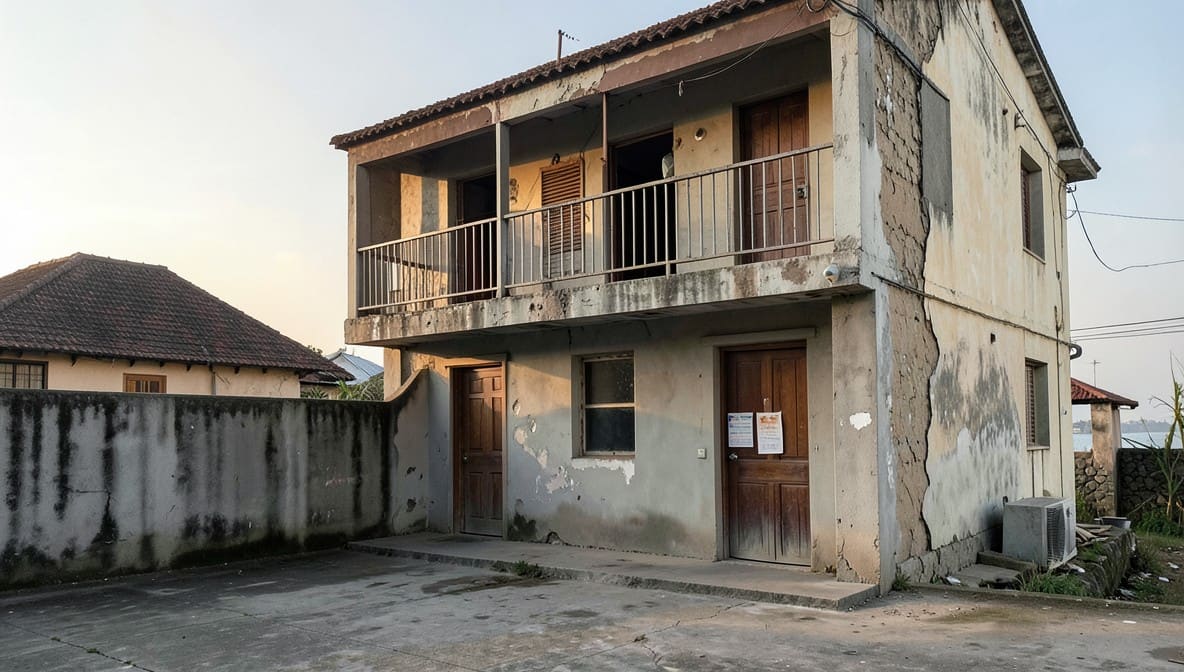
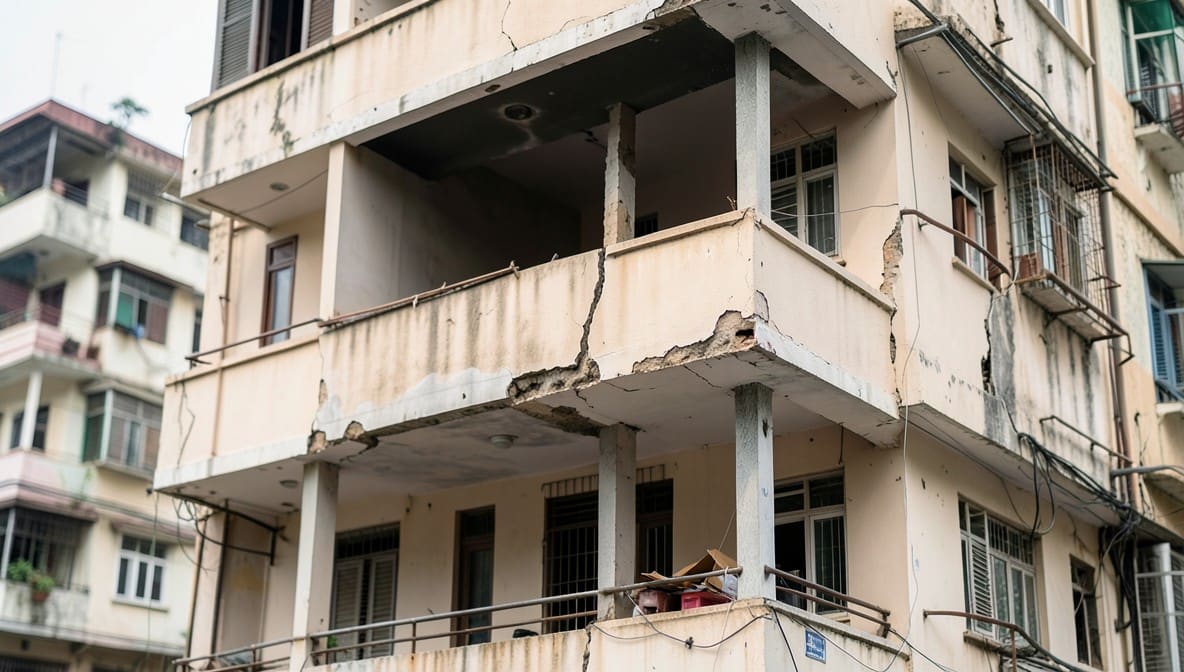
- The landlords claimed the building was old and dilapidated and intended to demolish and reconstruct the front portion.
- The tenant denied default, disputed the rent and advance figures, and contested the condition of the building, asserting it was not dilapidated.
- The tenant filed I.A. No.17 of 2022 seeking appointment of an Advocate-Commissioner to inspect and report on the age and condition of the premises.
- The Principal District Munsif Court dismissed the application on 01.02.2023, holding that only a qualified engineer could assess the building’s age.
- Anbalagan died on 15.01.2024 during pendency of proceedings.
- His legal representatives - his wife A. Jayamalathi and minor daughter A. Anushiya - continued the petition.
Procedural History
- 18.06.2013: Original landlord Sowdaranayagi died; Sarasa became legal heir.
- March 2019 to September 2019: Alleged rent default by tenant.
- 2021: Landlords filed R.L.T.O.P. No.1 of 2021 seeking eviction.
- 2022: Tenant filed I.A. No.17 of 2022 seeking Advocate-Commissioner appointment.
- 01.02.2023: Rent Court dismissed I.A. No.17 of 2022.
- 15.01.2024: Tenant Anbalagan passed away.
- 18.04.2023: Court allowed substitution of legal representatives via C.M.P. No.8691 of 2023.
- 27.03.2026: Madras High Court delivered judgment on C.R.P. No.1507 of 2023.
The Parties' Positions
Petitioners (Legal Representatives of Tenant): Argued that the building’s condition was central to the landlord’s claim of reconstruction. Contended that an Advocate-Commissioner’s inspection was necessary to verify whether the structure was truly dilapidated, and that the court could have appointed both an Advocate-Commissioner and a qualified engineer if needed.
Respondents (Landlords): Maintained that the petition was grounded on non-payment of rent and statutory right to reconstruct. Argued that the tenant’s application was a dilatory tactic to delay eviction, and that the condition of the building was irrelevant under the 2017 Act.
Relief Sought
The petitioners sought: (1) setting aside the Rent Court’s order dated 01.02.2023 dismissing I.A. No.17 of 2022; (2) allowing the application for appointment of an Advocate-Commissioner to inspect the premises; and (3) costs.
The Legal Issue
Whether the age and physical condition of rented premises are relevant under the Tamil Nadu Regulation of Rights and Responsibilities of Landlords and Tenants Act, 2017, when the landlord seeks eviction on the ground of reconstruction.
Arguments Presented
For the Petitioner
The petitioner’s counsel argued that the landlord’s claim of dilapidation was a pretext for eviction, and that the tenant had a right to challenge the veracity of this claim. He contended that the appointment of an Advocate-Commissioner was a legitimate procedural step to gather evidence on the building’s condition, and that the Rent Court’s refusal was arbitrary. He cited general principles of natural justice and the right to present evidence.
For the Respondent
The respondent’s counsel argued that the 2017 Act explicitly permits eviction for reconstruction irrespective of the building’s condition. He emphasized that the statutory provision does not require proof of dilapidation, and that the tenant’s application was a stalling tactic. He further noted that the tenant had not paid rent for seven months, and that the reconstruction ground was independently valid.
The Court's Analysis
The Court examined Section 21(2)(e) and Section 26 of the Tamil Nadu Regulation of Rights and Responsibilities of Landlords and Tenants Act, 2017. These provisions permit a landlord to seek eviction if they require the premises for reconstruction, renovation, or improvement, provided they are ready and willing to commence such work.
"The age and condition of the rented/demised property are irrelevant under Section 21(2)(e) read with Section 26 of the Act. If the landlord desires to reconstruct and is ready and willing to commence the work, the Rent Court may order eviction without any inquiry into the physical state of the building."
The Court held that the statutory framework intentionally decouples the reconstruction ground from evidentiary requirements regarding the building’s age or structural condition. The legislature’s intent, as reflected in the Act, is to empower landlords to improve their property without being subjected to protracted evidentiary battles over subjective assessments of dilapidation.
The Court acknowledged that the Rent Court’s reasoning - that only a qualified engineer could assess the building’s age - was legally flawed. However, it emphasized that the conclusion was correct: since the condition of the property is not a statutory requirement for eviction under this ground, appointing any expert, whether an Advocate-Commissioner or engineer, is unnecessary.
The Court further noted that the tenant’s failure to pay rent from March to September 2019 independently justified the eviction petition. The reconstruction ground, even if contested, was sufficient on its own.
The Verdict
The Civil Revision Petition was dismissed. The Madras High Court upheld the Rent Court’s order dated 01.02.2023 dismissing I.A. No.17 of 2022. The Court held that appointment of an Advocate-Commissioner or any expert to assess the building’s age or condition is not required under the Tamil Nadu Rent Act, 2017, when eviction is sought on the ground of reconstruction. There shall be no order as to costs.
What This Means For Similar Cases
Reconstruction Ground Is Self-Sufficient
- Practitioners must now treat the landlord’s declaration of intent to reconstruct as prima facie sufficient under Section 21(2)(e) of the Tamil Nadu Rent Act, 2017.
- Tenant defenses based on the building’s structural condition or age are legally irrelevant and should not be pursued as substantive grounds.
- Applications for expert inspection in such cases are now procedurally futile and may be viewed as dilatory.
Procedural Efficiency Over Evidentiary Overreach
- Courts are directed to avoid unnecessary evidentiary hearings when the statutory ground is clear.
- Tenants seeking to delay eviction must rely on other statutory defenses - such as non-compliance with notice requirements or lack of readiness to reconstruct - not on disputing the building’s condition.
- Landlords need only demonstrate willingness and ability to commence reconstruction; no proof of structural decay is required.
Strategic Implications for Drafting Eviction Petitions
- Eviction petitions should clearly state the intent to reconstruct and include a sworn undertaking of readiness to commence work.
- Avoid over-reliance on allegations of dilapidation; focus on statutory compliance under Section 26.
- Opposing counsel should not waste time filing applications for Advocate-Commissioners in reconstruction cases unless other grounds (e.g., non-payment) are also contested.