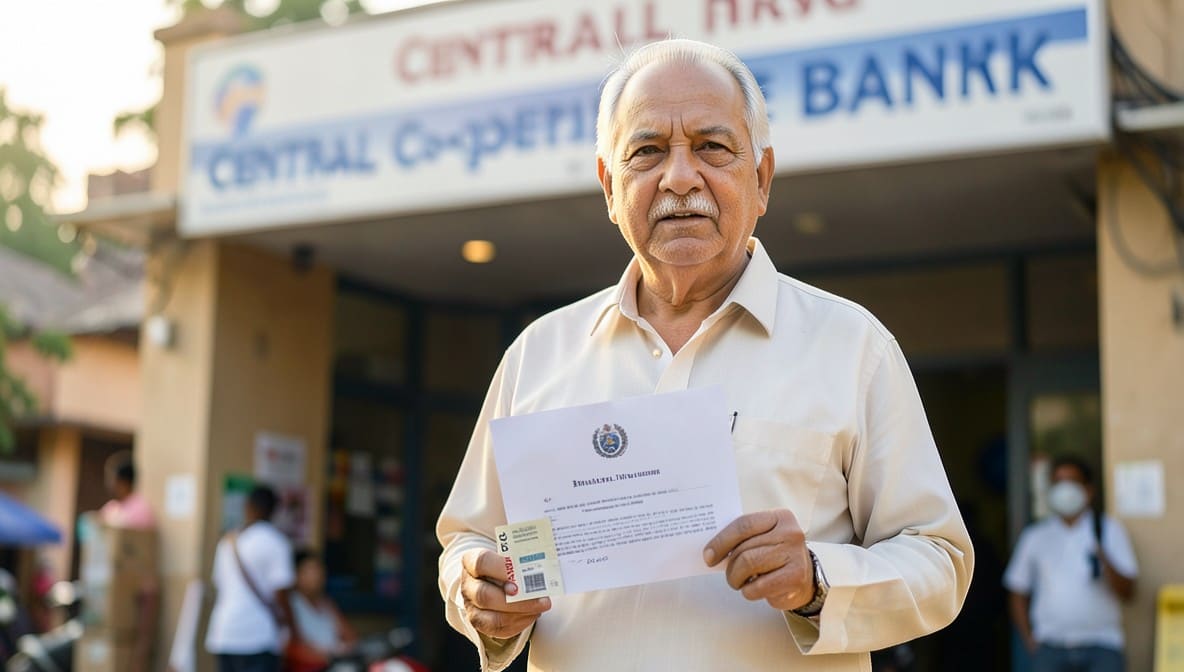
The Rajasthan High Court has clarified that an employer cannot evade statutory obligations toward retiral benefits by shifting liability to a third party through internal administrative arrangements. In two consolidated writ petitions, the Court held that the Central Co-Operative Bank, as the formal employer at the time of retirement, bears the primary duty to pay gratuity and privilege leave encashment, irrespective of contractual or regulatory allocations between itself and the cooperative society.
Background & Facts
The Dispute
The petitioners, retired Vyavasthapaks (administrative officers) of Gram Seva Sahkari Samitis, were employed under the administrative control of the Central Co-Operative Bank Ltd., Tonk, while their formal service records were maintained by the respective cooperative societies. Upon retirement, both petitioners were denied gratuity and encashment of accumulated privilege leave by the Bank, which claimed they were employees of the cooperative societies (Respondent No. 4) and not of the Bank itself.
Key Facts
- Petitioner 1: Ramjas Gurjar, retired on 30.07.2020 from the role of Vyavasthapak, Roopwas Gram Seva Sahkari Samiti Ltd.
- Petitioner 2: Chhitar Lal Verma, retired on 30.06.2020 from the role of Vyavasthapak, Gothda Gram Seva Sahkari Samiti Ltd.
- Both were appointed and posted by the Central Co-Operative Bank Ltd., Tonk, under its administrative supervision
- Retirement orders were issued by the Bank (Annexures 14 and 16)
- The Bank refused to pay gratuity and leave encashment, citing Rule 17 of the Rajasthan Co-operative Societies Rules, which allegedly makes the Gram Seva Sahkari Samiti liable
- Both petitioners had served continuously under the Bank’s direction for over 15 years
- No dispute existed regarding their employment status or length of service
- The Bank acknowledged receipt of service records but denied payment on grounds of alleged contractual liability
Procedural History
- 2020: Both petitioners retired and submitted claims for gratuity and leave encashment
- 2020 - 2021: Claims rejected by the Bank without written orders or reasons
- 2021: Writ Petitions filed before the Rajasthan High Court - WP(C) No. 10282/2021 and WP(C) No. 10009/2021
- 08.04.2026: Heard together and disposed of by the Division Bench
The Parties' Positions
Petitioners: Argued that they were de facto employees of the Central Co-Operative Bank, which issued retirement orders, controlled their duties, and disbursed salaries. The denial of benefits violated Article 14 and Article 21 of the Constitution, and the principle of natural justice.
Respondent No. 3 (Bank): Contended that under the Rajasthan Co-operative Societies Rules, the Gram Seva Sahkari Samiti (Respondent No. 4) was the statutory employer and therefore solely liable for retiral benefits. The Bank claimed it was merely an administrative arm and had no financial obligation.
Relief Sought
The petitioners sought:
- Payment of gratuity amount as per the Payment of Gratuity Act, 1972
- Encashment of accumulated privilege leave as per service rules
- Interest on delayed payments
- A direction to the Bank to settle the dues immediately
The Legal Issue
The central question was whether the Central Co-Operative Bank, as the entity issuing retirement orders and exercising day-to-day control, can deny retiral benefits on the ground that another entity (the cooperative society) is statutorily liable under internal rules.
Arguments Presented
For the Petitioner
Learned counsel for the petitioners relied on the doctrine of employer-employee relationship as determined by functional control, salary disbursement, and authority to terminate. They cited State of Punjab v. Davinder Singh to argue that the entity issuing the retirement order is the employer for all purposes, including retiral benefits. They emphasized that the petitioners had no direct contractual relationship with the cooperative society and were never paid by it. The denial of benefits, they argued, was arbitrary and violated the principle of audi alteram partem.
For the Respondent
The State and the Bank contended that Rule 17 of the Rajasthan Co-operative Societies Rules explicitly places the liability for gratuity and leave encashment on the Gram Seva Sahkari Samiti. They argued that the Bank was only a supervisory body and that recognizing the Bank as liable would disrupt the cooperative structure. They cited Cooperative Societies Act, 1912 and internal circulars to support their position.
The Court's Analysis
The Court rejected the Bank’s argument as a legal evasion. It held that the employer-employee relationship is determined by substance, not form. The Bank issued the retirement orders, controlled the petitioners’ duties, and paid their salaries. These factors conclusively established the Bank as the employer under the law.
"When it is the employer, it is under obligation to pay retiral benefits to the petitioners."
The Court further observed that any statutory liability imposed on the cooperative society under Rule 17 is an internal arrangement between the Bank and the society. Such internal allocations cannot override the constitutional and statutory rights of employees. The Court emphasized that employees are not bound by inter-institutional agreements and cannot be made to suffer due to administrative ambiguities.
The Court also noted that the Payment of Gratuity Act, 1972, applies to establishments employing ten or more persons, and the Bank, as the controlling authority, clearly fell within its ambit. The denial of benefits on technical grounds was held to be violative of Article 14 and Article 21.
The Verdict
The writ petitions were allowed. The Central Co-Operative Bank Ltd. is directed to settle the claim of gratuity amount and encashment of privilege leave within one month from the date of receipt of a copy of this order. The amount due, as determined by the Bank, shall be paid with interest at the rate of 6% per annum from the date it became due until the date of payment. The Bank is granted liberty to seek reimbursement from Respondent No. 4, subject to the liability under the Rules. All pending applications stand disposed of.
What This Means For Similar Cases
Employer Liability Is Determined by Control, Not Paperwork
- Practitioners must now argue that the entity issuing retirement orders, paying salaries, and exercising daily supervision is the legal employer - regardless of registration or internal rules
- Cooperative societies cannot be used as shields to avoid statutory obligations
- Employees in similar setups (e.g., cooperative banks, agricultural societies, public-private hybrids) can now claim benefits directly from the controlling authority
Internal Rules Cannot Override Constitutional Rights
- Statutory provisions allocating liability among entities do not bind employees who are not parties to those rules
- Denial of benefits on grounds of "internal arrangement" is arbitrary and violates Article 14
- Courts will look at the functional reality of employment, not administrative labels
Procedural Clarity Required for Retiral Claims
- Employers must issue written orders on retiral benefit claims within a reasonable time
- Silence or delay in payment, even if based on internal disputes, constitutes violation of service rights
- Interest at 6% per annum is now a standard remedy for delayed retiral dues in service matters