Topic

Leave Encashment

Leave encashment in Indian law refers to the statutory right of government and public sector employees to receive monetary compensation for unutilized earned leave upon retirement or termination.

21 articlesLatest September 2026
Section 10(10AA) | Enhanced ₹25 Lakh Leave Encashment Exemption Applies Retrospectively to Pre-Notification Retirees : ITAT Jaipur

Section 10(10AA) | Enhanced ₹25 Lakh Leave Encashment Exemption Applies Retrospectively to Pre-Notification Retirees : ITAT Jaipur

ITAT Jaipur ruled the 2023 notification raising the Section 10(10AA) leave encashment limit to ₹25 lakh applies retrospectively to non-government employees retiring before its issuance, treating it as a remedial statutory discharge. The assessee retiring in AY 2020-21 secured full exemption on ₹13.81 lakh encashment. The decision benefits retirees whose payouts exceeded the old ₹3 lakh cap but fall within the revised limit.

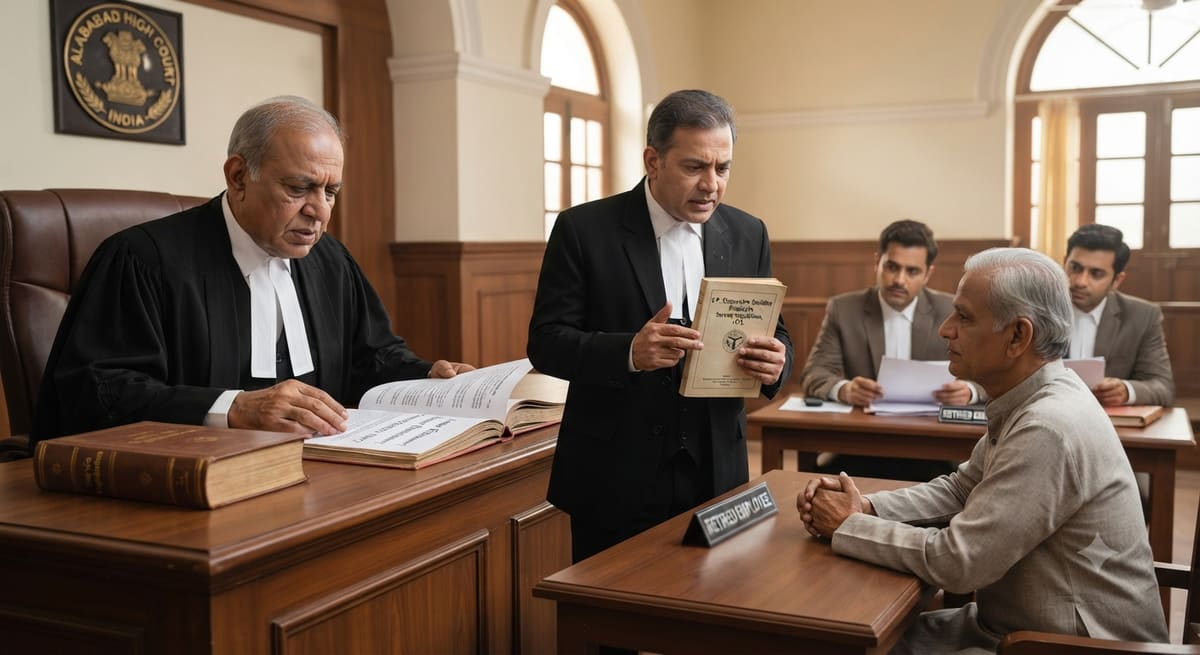
Leave Encashment Cannot Be Withheld Pending Disciplinary Inquiry | U.P. Cooperative Societies Employees Service Regulations, 1975 : Allahabad HC
Case Law Analysis
|Allahabad High Court

Leave Encashment Cannot Be Withheld Pending Disciplinary Inquiry | U.P. Cooperative Societies Employees Service Regulations, 1975 : Allahabad HC

The Allahabad High Court has ruled that cooperative employees are entitled to full leave encashment upon superannuation, regardless of pending disciplinary proceedings, as no provision under the 1975 Regulations permits such withholding. This reinforces earned benefits as non-negotiable rights, protecting thousands of cooperative sector workers from arbitrary financial delays by employers.

Non-Statutory Leave Encashment Dues Attract 7% Interest as Natural Accrual | Allahabad HC Affirms Nand Lal Doctrine : Allahabad HC
Case Law Analysis
|Allahabad High Court

Non-Statutory Leave Encashment Dues Attract 7% Interest as Natural Accrual | Allahabad HC Affirms Nand Lal Doctrine : Allahabad HC

The Allahabad High Court has ruled that delayed payment of leave encashment - even when not mandated by statute - attracts 7% interest as a natural consequence of delayed capital, reinforcing the principle that administrative delays cannot deprive employees of fair compensation. This sets a critical precedent for all government and public sector employees awaiting delayed service benefits, aligning them with the equity-based logic of natural justice.

Section 10(10AA) Income Tax Act | IIT Employees Governed by Central Service Rules Entitled to Leave Encashment Exemption : ITAT Delhi
Case Law Analysis
|Income Tax Appellate Tribunal

Section 10(10AA) Income Tax Act | IIT Employees Governed by Central Service Rules Entitled to Leave Encashment Exemption : ITAT Delhi

The ITAT Delhi has ruled that employees of Indian Institutes of Technology, even as autonomous bodies, qualify for tax-free leave encashment under Section 10(10AA) if governed by Central Government service rules. This clarifies that employer status alone cannot override statutory eligibility when service conditions align with central rules, impacting thousands of academic and technical staff across IITs and similar institutions.

Article 300-A | Withholding Leave Encashment Without Statutory Authority Violates Right to Property: CAT Directs Payment with GPF Interest
Case Law Analysis
|Central Administrative Tribunal

Article 300-A | Withholding Leave Encashment Without Statutory Authority Violates Right to Property: CAT Directs Payment with GPF Interest

CAT Principal Bench ruled that arbitrary withholding of retiral dues, including leave encashment, without statutory backing constitutes a violation of Article 300-A. The Tribunal directed the respondent corporation to release the withheld amount along with GPF interest, reinforcing constitutional protections for retired employees' property rights.

Retiral Dues Cannot Be Withheld for Financial Crunch | Gratuity & Leave Encashment Must Be Paid Within 3 Months with Interest : Allahabad HC
Case Law Analysis
|Allahabad High Court

Retiral Dues Cannot Be Withheld for Financial Crunch | Gratuity & Leave Encashment Must Be Paid Within 3 Months with Interest : Allahabad HC

The Allahabad High Court has ruled that public employers cannot delay payment of gratuity, leave encashment, or pending salary to retired employees due to financial constraints. The order mandates full payment within three months, with interest at bank rate if no specific provision exists, reinforcing that statutory benefits are non-negotiable rights, not discretionary payouts.

Rafiq Masih Doctrine | HP HC Bars Recovery of Excess Payments from Class-IV Retirees Under Service Law : HP HC
Case Law Analysis
|Himachal Pradesh High Court

Rafiq Masih Doctrine | HP HC Bars Recovery of Excess Payments from Class-IV Retirees Under Service Law : HP HC

The Himachal Pradesh High Court applied the Supreme Court's Rafiq Masih ruling to shield a retired Class-IV employee from recovery of Rs. 1,00,528, reinforcing that low-grade public servants and retirees cannot be subjected to retrospective financial clawbacks. The judgment underscores equity in administrative law, protecting vulnerable employees from undue hardship.

Conviction Under PC Act Does Not Automatically Forfeit Gratuity & Leave Encashment | MP HC Mandates Timely Decision with 6% Interest
Case Law Analysis
|Madhya Pradesh High Court

Conviction Under PC Act Does Not Automatically Forfeit Gratuity & Leave Encashment | MP HC Mandates Timely Decision with 6% Interest

Madhya Pradesh High Court rules that conviction under the Prevention of Corruption Act does not automatically forfeit gratuity, leave encashment, or insurance dues. Authorities must decide on forfeiture within 45 days, failing which the amounts must be released with 6% interest, ensuring procedural fairness in service law.

Judicial Precedent Mandates | HRTC Must Pay Gratuity, Leave Encashment & 9% Interest from Retirement Date : Himachal Pradesh HC
|Himachal Pradesh High Court

Judicial Precedent Mandates | HRTC Must Pay Gratuity, Leave Encashment & 9% Interest from Retirement Date : Himachal Pradesh HC

Himachal Pradesh High Court reinforces binding precedent, directing HRTC to pay full retiral benefits with 9% interest from the date of retirement. The ruling underscores that denial of statutory dues violates service law principles, setting a clear mandate for public sector employers to comply with judicial directions in similar cases.

Article 14, 19, 21 | 6% Interest on Delayed Leave Encashment Mandated Even Without Statutory Provision : MP HC Gwalior
Case Law Analysis
|Madhya Pradesh High Court

Article 14, 19, 21 | 6% Interest on Delayed Leave Encashment Mandated Even Without Statutory Provision : MP HC Gwalior

The Madhya Pradesh High Court has ruled that public employees are entitled to 6% interest on delayed retiral dues, including leave encashment, purely as a constitutional remedy under Articles 14, 19, and 21 - irrespective of whether any rule or policy mandates it. This sets a precedent for all state and municipal employees facing unjustified delays in final settlements, reinforcing that delay itself violates the right to fair treatment and livelihood.

J&K CSR Mandates Reimbursement Between Parent & Borrowing Organizations for Gratuity & Leave Encashment : J&K and Ladakh HC
Case Law Analysis
|Jammu & Kashmir and Ladakh High Court

J&K CSR Mandates Reimbursement Between Parent & Borrowing Organizations for Gratuity & Leave Encashment : J&K and Ladakh HC

J&K and Ladakh High Court reinforces that parent organizations must pay gratuity while borrowing organizations are liable for leave encashment for deputed government servants. Reimbursement under J&K Civil Service Regulations is mandatory, with 10% interest on delayed gratuity and 6% on leave salary from petition filing. The ruling impacts financial liability distribution in deputation cases across public employment.

Employer Liability for Gratuity & Leave Encashment | Central Co-Operative Bank Cannot Shift Burden to Cooperative Societies: Rajasthan HC
Case Law Analysis
|Rajasthan High Court

Employer Liability for Gratuity & Leave Encashment | Central Co-Operative Bank Cannot Shift Burden to Cooperative Societies: Rajasthan HC

Rajasthan High Court rules that the Central Co-Operative Bank, as the entity issuing retirement orders and maintaining service records, remains statutorily liable for gratuity and leave encashment payments-irrespective of internal arrangements assigning liability to cooperative societies. The judgment reinforces that employer obligations under service law cannot be contractually delegated to avoid statutory benefits.

Employer Liability for Gratuity & Leave Encashment Irreversible Despite Internal Shifts: Rajasthan HC
Case Law Analysis
|Rajasthan High Court

Employer Liability for Gratuity & Leave Encashment Irreversible Despite Internal Shifts: Rajasthan HC

Rajasthan High Court rules that the Central Co-Operative Bank remains statutorily liable for gratuity and leave encashment payments to retired employees, even if internal arrangements shift liability to affiliated cooperatives. The judgment reinforces that retiral benefits cannot be evaded through administrative reallocations, directly impacting employer obligations under service law.