The Patna High Court clarified the evidentiary threshold for convictions based on a solitary eyewitness and reiterated that a conviction under the Scheduled Castes and Scheduled Tribes (Prevention of Atrocities) Act requires proof of a caste-based motive, thereby reshaping prosecutorial strategy in violent crimes involving land disputes.
Background & Facts
The Dispute
The appellants - Birendra Yadav, Kamlesh Yadav and Bablu Yadav - were accused of murdering Mahanand Ram, a resident of Village-Pothia, Araria district, over a long-standing dispute concerning approximately 82 decimals of agricultural land allotted to the deceased’s family under a government scheme. The dispute had generated prior criminal litigations and enmity between the parties.
Key Facts
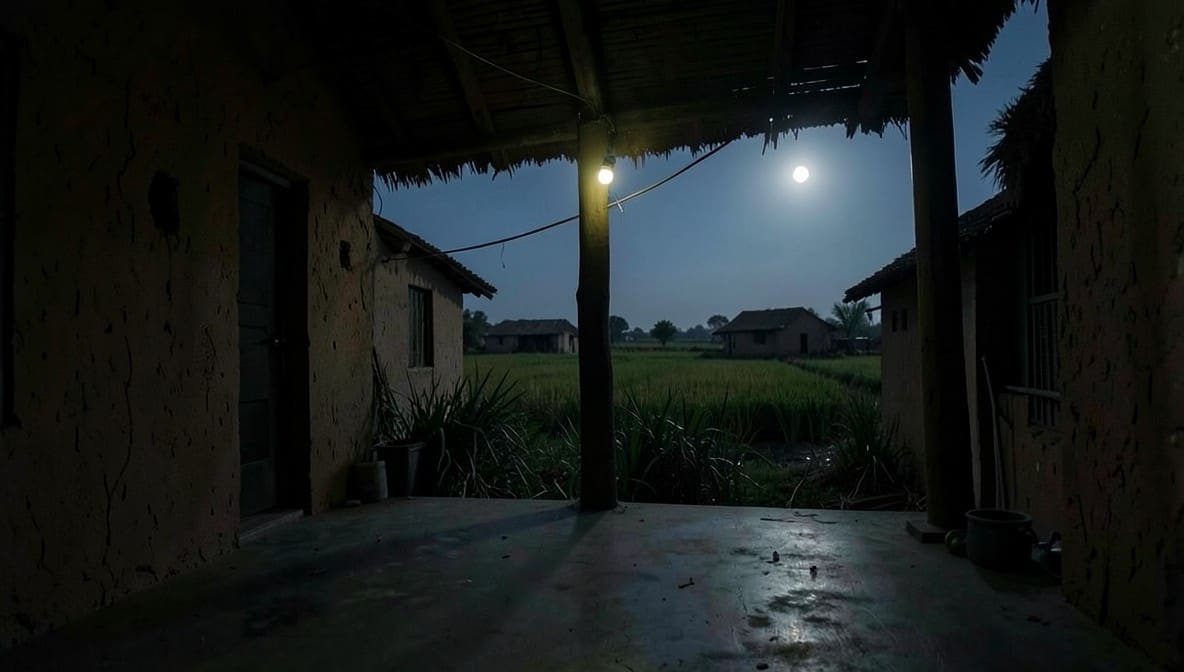
- 07/08 November 2015: On the night of 07/08 November 2015, the deceased and his wife Anuradha Devi were sleeping on the verandah of their house.
- 01:00 A.M.: Anuradha Devi heard gunshots, awoke, and alleged that Birendra Yadav caught hold of her husband while Bablu Yadav fired at his head; Kamlesh Yadav allegedly fired subsequently.
- 08.11.2015, 07:00 A.M.: The informant (Anuradha Devi) recorded a fardbeyan (PW-10) and the First Information Report (FIR) was lodged.
- 08.11.2015, 12:30 P.M.: Post-mortem examination by Dr. Rohit Kumar Jha (PW-6) revealed two firearm injuries - one circular wound on the left scalp and one lacerated wound on the right side of the face - deemed ante-mortem and sufficient to cause death.
- No bullet, cartridge, blood-stained clothing or sketch map of the scene was recovered; the investigating officer (PW-12) admitted these omissions.
- Twelve prosecution witnesses were examined, but only PW-10 (the widow) claimed to have witnessed the actual shooting. All other witnesses arrived after the incident and merely corroborated the fact of homicidal death.
Procedural History
- 13 July 2018: Trial Court convicted the appellants under Sections 302/34 IPC, Section 27 Arms Act and Section 3(2)(v) SC/ST Act; sentenced to rigorous imprisonment for life (IPC) and fine, three years (Arms Act) and concurrent sentences.
- 19 July 2018: Sentence order pronounced.
- 2018: Two criminal appeals filed - Criminal Appeal (DB) No. 948 of 2018 (by Birendra Yadav) and Criminal Appeal (DB) No. 982 of 2018 (by Kamlesh and Bablu Yadav).
- 5 August 2026: Patna High Court delivered the judgment under the coram of Hon’ble Mr. Justice Bibek Chaudhuri and Hon’ble Mr. Justice Rana Vikram Singh.
Relief Sought
The appellants contended that the conviction was unsustainable on factual and legal grounds, arguing that:
- PW-10 was the sole eyewitness and her testimony was unreliable due to relationship and prior enmity.
- Inconsistencies existed between PW-10’s account and medical evidence (three shots claimed vs. two injuries recorded).
- The investigation was defective, with crucial evidence not seized.
- No caste-based motive was established, rendering the SC/ST Act conviction untenable.
The Legal Issue
The central questions were: (i) Whether the prosecution proved beyond reasonable doubt that the homicide was committed by the three appellants, relying principally on the testimony of a solitary eyewitness; and (ii) Whether the conviction under Section 3(2)(v) of the Scheduled Castes and Scheduled Tribes (Prevention of Atrocities) Act could be sustained in the absence of proof that the offence was motivated by the victim’s caste.
Arguments Presented
For the Appellants
The defence argued that PW-10’s testimony was unreliable because she was an interested witness, that prior land-related enmity suggested a motive to falsely implicate the appellants, and that the discrepancy between the number of shots alleged and the two injuries recorded created a material contradiction. They highlighted investigative lapses - no bullet or cartridge recovered, no sketch map, and failure to record a statement of a key witness - to cast doubt on the prosecution’s case. Regarding the SC/ST Act, they contended that the prosecution had not shown any caste-based motive, only a land dispute.
For the Respondent (State)
The State maintained that PW-10’s presence at the scene was natural, her ocular account was consistent and corroborated by the prompt FIR, medical findings, and the post-mortem report. The other witnesses, though not eyewitnesses, reinforced the fact of homicidal death. The State argued that minor inconsistencies do not defeat the prosecution when the core testimony is trustworthy. On the SC/ST charge, the State asserted that the victim’s Scheduled Caste status alone sufficed for conviction.
The Court's Analysis
The Court began by reaffirming the principle that conviction may rest on a solitary eyewitness if the testimony is found wholly reliable and inspires confidence. It noted that the relationship of the witness to the deceased is not a fatal flaw; rather, the court must assess the naturalness of the presence, consistency of the account, and corroboration from surrounding circumstances.
"We are, therefore, of the considered opinion that the prosecution has succeeded in proving beyond reasonable doubt that Mahanand Ram met a homicidal death on the intervening night of 07/08.11.2015 and that the appellants were responsible for causing his death."
The Court observed that PW-10’s description of the verandah, the electric bulb, and the identities of the accused matched the factual matrix and was supported by the prompt FIR. Minor discrepancies - such as the claim of three shots versus two injuries - were deemed normal errors of observation in traumatic situations and did not undermine the core allegation that the accused fired at the victim.
Regarding the other prosecution witnesses, the Court held that while they were not eyewitnesses, their testimonies established the fact of homicidal death and the post-mortem findings corroborated the injuries, thereby strengthening the overall evidential picture.
On the issue of investigative deficiencies, the Court accepted that lapses (non-recovery of bullets, absence of a sketch map) do not, per se, invalidate a conviction when substantive evidence is otherwise reliable. It cited precedents that defective investigation cannot be a ground for acquittal unless it destroys the foundation of the prosecution case.
Turning to the SC/ST Act conviction, the Court applied the Supreme Court’s pronouncements in Dinesh alias Buddha v. State of Rajasthan and Ashrafi v. State of Uttar Pradesh, emphasizing that proof of the victim’s caste is insufficient; a nexus between the offence and the caste motive must be established. The evidence showed that the motive was a land dispute, not caste animus. Consequently, the conviction under Section 3(2)(v) was unsustainable.
Finally, the Court examined the conviction under Section 27 of the Arms Act. It noted that the allegation of Birendra Yadav firing a weapon emerged only in the later, improved version of PW-10’s testimony and was not part of the original fardbeyan. Lacking independent corroboration, the conviction of Birendra Yadav under the Arms Act was set aside, while the convictions of Bablu and Kamlesh Yadav under the same provision were upheld.
The Verdict
The Court affirmed the convictions and life sentences of all three appellants under Section 302 read with Section 34 of the IPC. It upheld the three-year rigorous imprisonment of Bablu Yadav and Kamlesh Yadav under Section 27 of the Arms Act, but set aside the conviction of Birendra Yadav under that provision. All convictions under Section 3(2)(v) of the Scheduled Castes and Scheduled Tribes (Prevention of Atrocities) Act were set aside. The sentences were directed to run concurrently.
What This Means For Similar Cases
Solitary Eyewitness Can Sustain Conviction
- A lone eyewitness, even if a relative of the deceased, may form the cornerstone of a conviction if the testimony is natural, consistent, and corroborated by forensic and circumstantial evidence.
- Courts will weigh the overall reliability rather than the number of witnesses.
Minor Inconsistencies Do Not Defeat Prosecution
- Discrepancies in the number of shots fired or the recovery of a bullet are treated as normal observational errors unless they strike at the core of the prosecution’s case.
- Medical evidence that confirms the nature of injuries can offset such inconsistencies.
Caste Motive Must Be Explicitly Proven for SC/ST Convictions
- Under Section 3(2)(v) of the SC/ST Act, the prosecution must establish a direct link between the offence and the victim’s caste.
- A mere allegation of land-related dispute is insufficient; the motive must be caste-based.
- Practitioners should ensure that charge-sheets specifically allege the caste motive and produce evidence thereof.