Topic

excise duty demand

6 articlesLatest July 2026
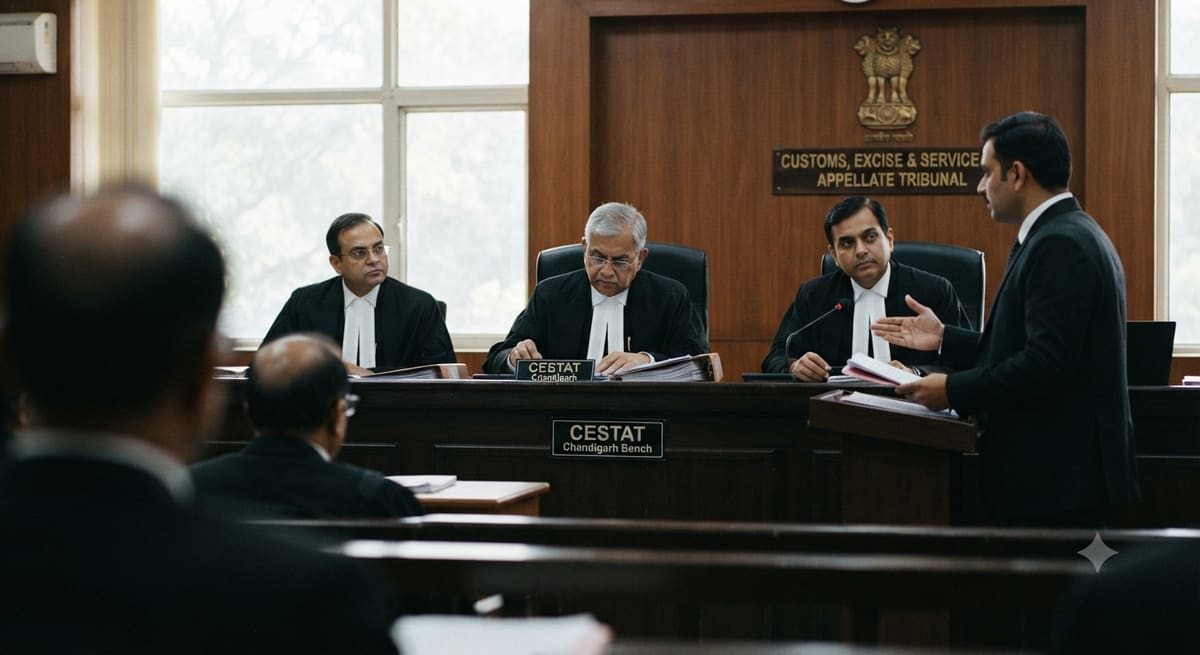
Section 11D Central Excise Act | Retrospective Application Barred; CESTAT Chandigarh Quashes Rs. 55 Lakh Demand for Pre-1991 Period : CESTAT
Case Law Analysis
|Custom, Excise & Service Tax Tribunal

Section 11D Central Excise Act | Retrospective Application Barred; CESTAT Chandigarh Quashes Rs. 55 Lakh Demand for Pre-1991 Period : CESTAT

CESTAT Chandigarh rules that Section 11D of the Central Excise Act, 1944 cannot be applied retrospectively, setting aside a Rs. 55,01,282 demand for the period prior to September 20, 1991. The ruling reinforces that excise duty demands under Section 11D are prospective only, impacting businesses facing retrospective tax claims.

Central Excise Act Section 11A | Burden of Proof for Clandestine Removal Requires Tangible Evidence, Not Presumptions or Private Records: CESTAT Ahmedabad
Case Law Analysis
|Custom, Excise & Service Tax Tribunal

Central Excise Act Section 11A | Burden of Proof for Clandestine Removal Requires Tangible Evidence, Not Presumptions or Private Records: CESTAT Ahmedabad

CESTAT Ahmedabad has ruled that revenue authorities cannot sustain excise duty demands based solely on handwritten notes or unverified challans. The burden lies squarely on the department to produce concrete, corroborated evidence of clandestine removal-rejecting speculative inferences from incomplete records. This sets a vital precedent for manufacturers facing arbitrary tax assessments under the Central Excise Act.

Section 3A Central Excise Act | Actual Production Records Prevail Over Delayed Statutory Documents: CESTAT Kolkata Quashes 18-Year-Old Demand
Case Law Analysis
|Custom, Excise & Service Tax Tribunal

Section 3A Central Excise Act | Actual Production Records Prevail Over Delayed Statutory Documents: CESTAT Kolkata Quashes 18-Year-Old Demand

CESTAT Kolkata ruled that when statutory documents are unavailable due to passage of time, actual production records submitted by the assessee hold legal precedence. The Tribunal set aside an excise duty demand of ₹73.1 lakh, reinforcing that tax authorities cannot rely on procedural lapses caused by delay to deny consequential relief to manufacturers.

Rule 7 Central Excise Valuation Rules | Transaction Value Must Reflect Actual Sale Price, Not Arbitrary 'Greatest Aggregate Value' : CESTAT Hyderabad
Case Law Analysis
|Custom, Excise & Service Tax Tribunal

Rule 7 Central Excise Valuation Rules | Transaction Value Must Reflect Actual Sale Price, Not Arbitrary 'Greatest Aggregate Value' : CESTAT Hyderabad

CESTAT Hyderabad ruled that excise duty valuation under Rule 7 must be based on the actual transaction value, rejecting the Department's demand predicated on the highest price of the week. The Tribunal emphasized the one-to-one correlation between factory clearance and depot sales, invalidating arbitrary valuation methods that disregard contractual agreements.

Rule 9 Central Excise Valuation | Transaction Value Cannot Be Rejected Solely Due to Related Party Status; Burden of Proof Lies with Revenue : CESTAT Chennai
Case Law Analysis
|Custom, Excise & Service Tax Tribunal

Rule 9 Central Excise Valuation | Transaction Value Cannot Be Rejected Solely Due to Related Party Status; Burden of Proof Lies with Revenue : CESTAT Chennai

CESTAT Chennai clarifies that mere related-party status does not invalidate transaction value under Rule 9; the revenue must prove actual influence on price through concrete evidence. This ruling empowers manufacturers dealing with group companies to rely on arm’s-length pricing unless proven otherwise, reducing arbitrary reassessments in excise audits.