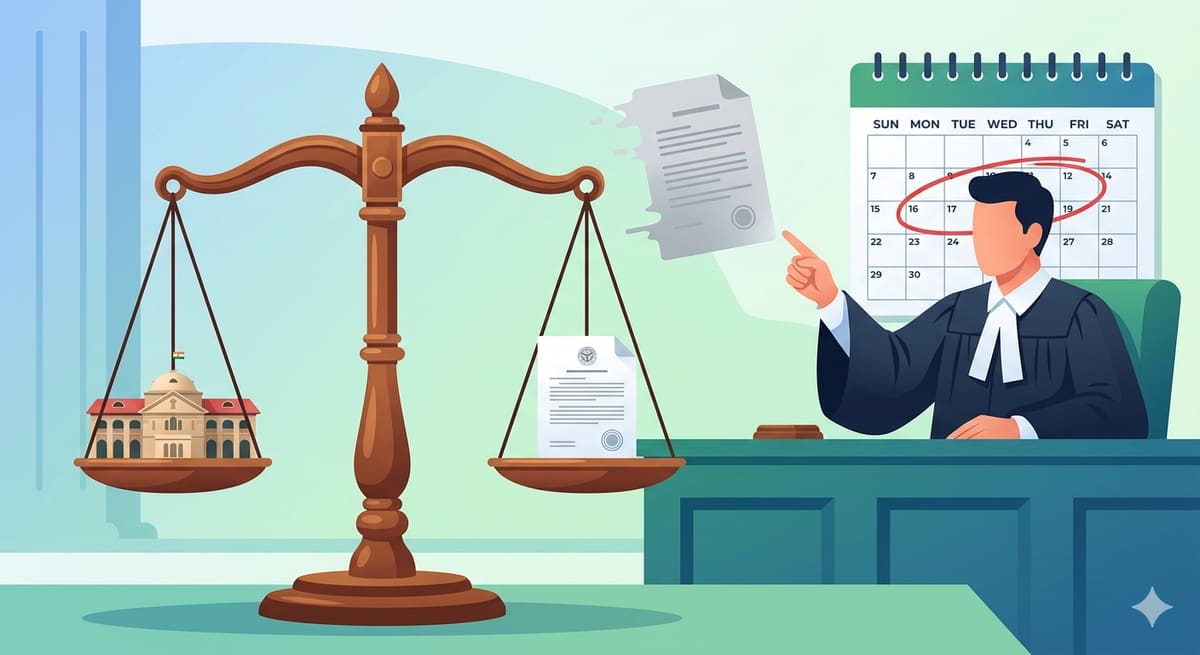
The Allahabad High Court has reinforced the principle that prolonged suspension without a formal charge sheet violates procedural fairness, particularly when allegations remain speculative and unproven after years. In a significant ruling, the Court mandated a strict timeline for concluding disciplinary proceedings against a suspended government servant, balancing the seriousness of allegations with the rights of the accused.
Background & Facts
The Dispute
The petitioner, Sandeep Singh, was appointed to a government post following his successful performance in the entrance examination held in 2019. In February 2026, he was placed under suspension by an order dated 21.02.2026, based on allegations of impersonation and use of unfair means during the 2019 entrance examination. The allegations were not raised at the time of selection, during verification, or at any point during the seven years between the examination and the suspension order.
Key Facts
The petitioner appeared for and cleared the entrance examination in 2019
He was appointed to the post following successful verification and joining formalities
No allegations of impersonation or misconduct were raised during selection, probation, or service until February 2026
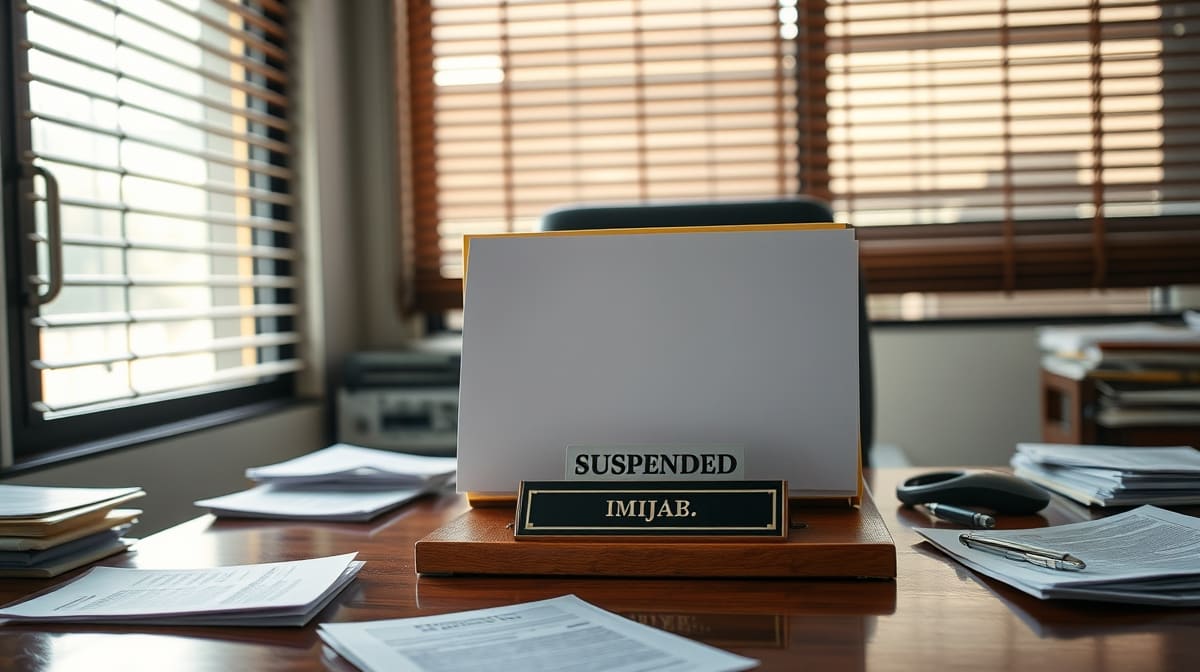
The suspension order dated 21.02.2026 was issued without any prior notice, inquiry, or charge sheet
As of the date of hearing, over two months had passed since suspension with no charge sheet issued
The petitioner has remained under suspension without any formal charges being framed
Procedural History
2019: Petitioner cleared entrance examination and was appointed to government service
21.02.2026: Suspension order issued without prior inquiry or charge sheet
22.03.2026: Writ Petition (Writ-A No. 6377 of 2026) filed before the Allahabad High Court
30.04.2026: Hearing conducted before Hon’ble Justice Saurabh Shyam Shamshery
The Parties' Positions
Petitioner’s Position: The allegations are stale, speculative, and raised after an unexplained delay of seven years. No material evidence has been produced to substantiate the claim of impersonation. The suspension order is arbitrary, violates principles of natural justice, and causes irreparable harm to the petitioner’s career and reputation.
Respondents’ Position: The allegations are serious and relate to the validity of the petitioner’s appointment. The department is in the process of gathering evidence and will issue a charge sheet as soon as possible. The suspension is a precautionary measure pending inquiry.
Relief Sought
The petitioner sought quashing of the suspension order dated 21.02.2026, reinstatement with full back wages, and a direction to conclude the inquiry within a reasonable time.
The Legal Issue
The central question was whether prolonged suspension without a charge sheet, after a seven-year delay in raising allegations, violates the principles of natural justice and reasonable opportunity under Article 14 and Article 21 of the Constitution.
Arguments Presented
For the Petitioner
The petitioner’s counsel, Sri Ashok Khare, Senior Advocate, argued that the delay of seven years in raising allegations renders them legally unsustainable. The suspension order lacks any prima facie material to justify such a drastic step. Reliance was placed on State of U.P. v. Mohd. Noor and K. Sankaran v. State of Kerala, which hold that suspension must be based on concrete grounds and cannot be used as a tool for indefinite detention without charge. The absence of a charge sheet for over two months after suspension further undermines its legality.
For the Respondent
The respondents’ counsel conceded that no charge sheet had been issued and acknowledged that the department was still in the process of collecting evidence. They submitted that the allegations, if proven, could lead to declaration of appointment void ab initio, and therefore, suspension was a necessary precaution. However, they offered no documentary or testimonial evidence to substantiate the claim of impersonation.
The Court's Analysis
The Court observed that while allegations of impersonation in a government recruitment process are grave and may warrant serious consequences, including voiding of appointment, they cannot be sustained on speculation or after an inordinate delay. The suspension order, dated 21.02.2026, contained no specific allegations, no evidence, and no reference to any inquiry or investigation conducted prior to suspension.
"The Court finds that though allegations are very serious but it requires a substantive material to prove, which does not appear to be made out in suspension order."
The Court emphasized that suspension is not a punishment but a precautionary measure, and its continued operation without a charge sheet for over two months transforms it into a de facto penalty without due process. The Court noted that the petitioner had served without incident for seven years, and the sudden invocation of allegations after such a long gap raises serious questions of fairness.
The Court further held that the respondents’ assertion that a charge sheet would be issued "as early as possible" was insufficient. In service jurisprudence, timelines are not discretionary; they are mandatory to prevent abuse of power. The Court therefore imposed a binding deadline to ensure procedural compliance.
The Verdict
The writ petition was disposed of with directions. The Court ordered that the disciplinary inquiry be concluded within three weeks from 30.04.2026, with full cooperation from the petitioner. In the event the inquiry is not concluded within this period, the impugned suspension order dated 21.02.2026 shall stand kept in abeyance, subject to the outcome of the inquiry. The petitioner shall remain suspended only until the conclusion of the inquiry or until the expiry of the three-week period, whichever is earlier.
What This Means For Similar Cases
Suspension Cannot Be Indefinite Without Charge Sheet
Practitioners must challenge suspensions exceeding six weeks without a charge sheet as violative of natural justice
The burden shifts to the department to demonstrate both the urgency and the evidentiary basis for continued suspension
Delay of more than one year in raising allegations must be explained with compelling justification
Procedural Compliance Is Non-Negotiable
Suspension orders must contain specific allegations, reference to relevant rules, and a basis for the decision
Oral submissions by counsel that a charge sheet will be issued "soon" are legally inadequate
Courts will impose strict timelines where procedural delays risk prejudicing the employee’s rights
Appointment Validity Requires Timely Scrutiny
Allegations affecting the validity of appointment must be investigated at the time of selection or during probation
Post-service allegations after years of unblemished service require extraordinary justification
Departments must maintain robust verification protocols to avoid reliance on belated, unsubstantiated claims