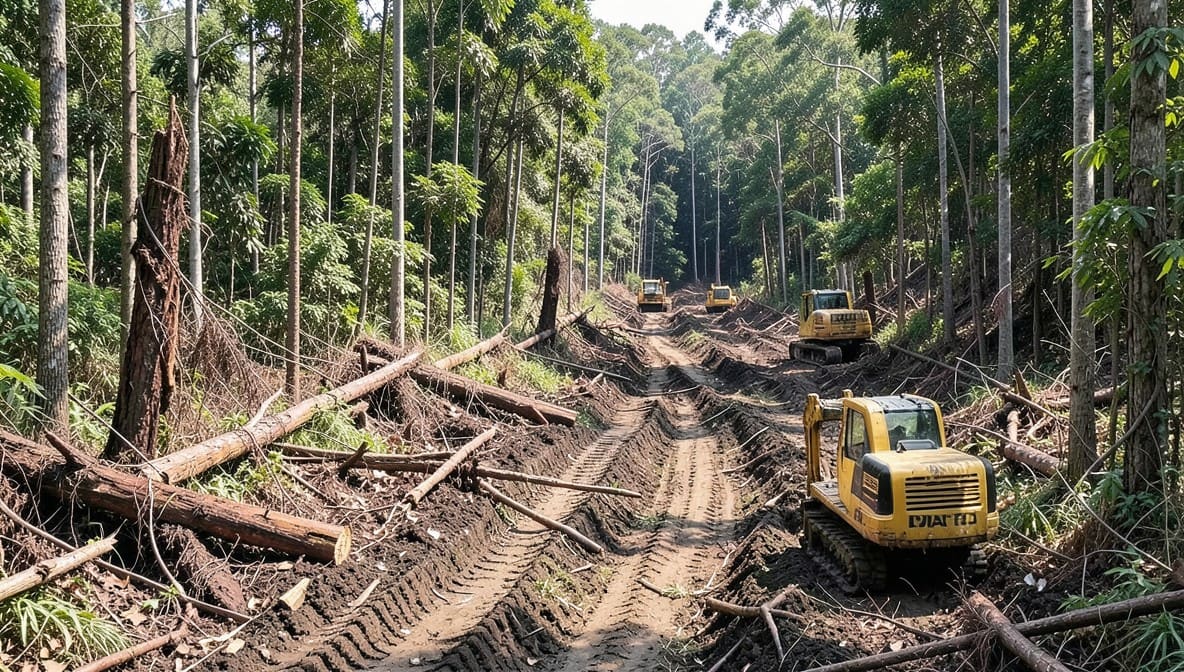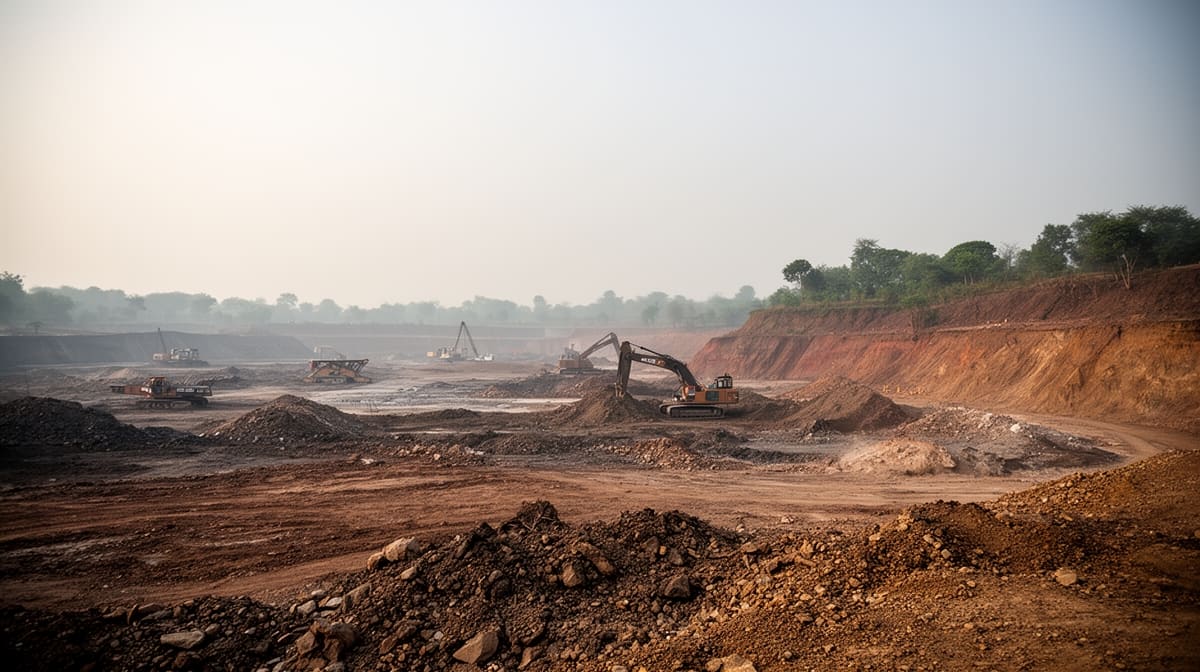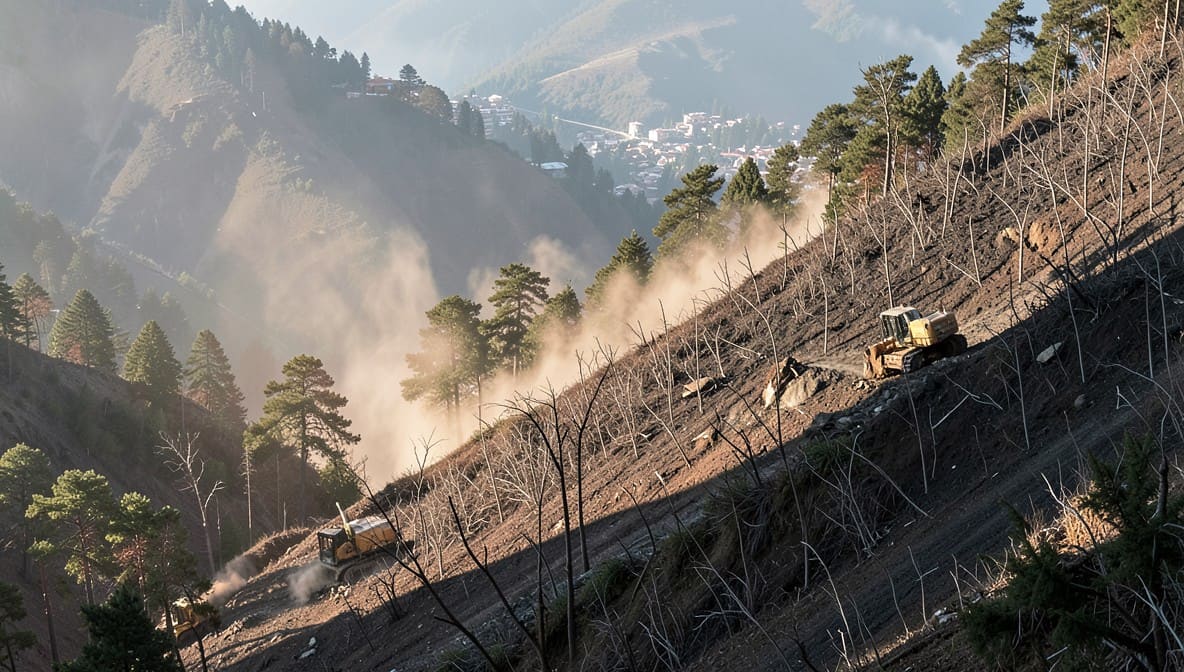
The National Green Tribunal has invoked its suo motu jurisdiction to address grave environmental concerns arising from large-scale illegal hill-cutting in Una District, Himachal Pradesh. This action underscores the Tribunal’s proactive role in enforcing environmental safeguards under the National Green Tribunal Act, 2010, even in the absence of formal representation by the complainant.
Background & Facts
The Dispute
The applicant, Gaurav Kumar, a resident of Bhatoli village, Pin code 144224, near Mandwara village in Daulatpur Chowk area, Una District, Himachal Pradesh, filed a public grievance on the National Green Tribunal’s online portal on 14.09.2025. The grievance detailed extensive, unregulated hill-cutting activities occurring just 100 meters from his residence. The applicant alleged that the operations, involving heavy machinery such as excavators and dumpers, are systematic and intended to continue for approximately 20 years. He warned that these activities mirror the destructive practices that exacerbated the 2023 landslides and floods in Shimla, Solan, and Mandi, and pose an imminent threat to life, water sources, agriculture, and biodiversity in Una.
Key Facts
- The hill-cutting activity is located within 100 meters of the applicant’s residence in Daulatpur Chowk, Una District
- The operations involve heavy earth-moving machinery operating without visible regulatory oversight
- The applicant claims the activity has been ongoing for months and is planned for a duration of ~20 years
- The environmental impacts cited include: continuous dust and noise pollution, ground vibrations, destabilization of slopes, contamination of water sources, degradation of agricultural land, and loss of forest cover and local biodiversity
- The applicant attached photographic evidence and Google Maps references to substantiate his claims
- He drew a direct comparison to the 2023 Himachal Pradesh disaster events, where unregulated hill-cutting was identified as a contributing factor
- The applicant explicitly requested: (1) immediate joint inspection by Forest Department, District Collector Una, HPPCB, and Mining Department; (2) production of all clearances and permits; (3) issuance of a stop-work order; (4) environmental monitoring of air, water, and soil; and (5) action against violators and site restoration
Procedural History
- 14.09.2025: Public grievance submitted by Gaurav Kumar via NGT’s online portal
- 17.03.2026: Application treated as Original Application No. 134/2026 and taken up for hearing under suo motu jurisdiction
- 17.03.2026: No advocate appeared for the applicant; Tribunal chose not to dismiss in default
- 17.03.2026: Tribunal directed issuance of notices to respondents
- 18.05.2026: Next date of hearing fixed
The Parties' Positions
The applicant, though unrepresented, presented a detailed, emotionally resonant plea grounded in environmental harm and public interest. He emphasized that his concern is not anti-development but pro-sustainability, invoking the moral duty of authorities to protect natural resources.
The respondents - State of Himachal Pradesh (through Secretary, Environment, Forest and Climate Change), District Magistrate, Una, and Himachal Pradesh State Pollution Control Board (through Member Secretary) - have not yet filed any response.
Relief Sought
The applicant sought:
- Immediate joint inspection by relevant departments
- Production of all Forest Clearance (under Forest (Conservation) Act, 1980), Environmental Clearance, and Mining Permits
- Issuance of a stop-work order until legality is verified
- Environmental monitoring of PM2.5, PM10, water quality, and soil contamination by HPPCB
- Action against violators and restoration of the damaged site
The Legal Issue
The central question is whether the National Green Tribunal may invoke suo motu jurisdiction under the National Green Tribunal Act, 2010 to initiate proceedings based on a public grievance alleging substantial environmental harm from unregulated hill-cutting, even in the absence of formal representation or a formal petition.
Arguments Presented
For the Applicant
The applicant, though unrepresented, invoked the precedent set in Municipal Corporation of Greater Mumbai v. Ankita Sinha (2022) 13 SCC 401, which affirmed the power of tribunals to act on public grievances under their inherent jurisdiction to protect environmental rights. He argued that the scale and nature of the hill-cutting, coupled with its proximity to habitation and documented ecological risks, constitute a prima facie violation of the Environment (Protection) Act, 1986 and the Forest (Conservation) Act, 1980, both listed in Schedule I of the NGT Act.
For the Respondent
No arguments were presented by the respondents as no appearance was made on the date of hearing. The Tribunal proceeded on the basis of the applicant’s submissions and attached evidence.
The Court's Analysis
The Tribunal examined the nature of the grievance and the materials submitted. It noted that the applicant’s allegations, if substantiated, implicate violations of multiple environmental statutes under the Tribunal’s exclusive jurisdiction. The Tribunal emphasized that the prima facie nature of the grievance - particularly the scale of excavation, the risk of slope failure, and the linkage to recent regional disasters - warrants immediate procedural intervention.
"Prima facie the averments made in the application raise substantial questions relating to environment arising out of the implementation of the 2 enactments specified in Schedule-I to the National Green Tribunal Act, 2010."
The Court reaffirmed its authority under Municipal Corporation of Greater Mumbai v. Ankita Sinha to treat public grievances as triggers for suo motu action, especially where environmental degradation threatens public health and ecological stability. The Tribunal held that the absence of legal representation does not negate the seriousness of the complaint, particularly when it is supported by visual evidence and aligns with known patterns of environmental harm.
The Tribunal further observed that the respondents, as statutory authorities responsible for environmental regulation, are under a legal duty to ensure compliance with environmental clearances and to prevent unauthorized hill-cutting. The failure to monitor or regulate such activity, if proven, would constitute a breach of their statutory obligations.
The Verdict
The National Green Tribunal directed the respondents - State of Himachal Pradesh, District Magistrate, Una, and Himachal Pradesh State Pollution Control Board - to file their replies within two months from the date of the order. The Registry was directed to issue notices along with copies of the application and attached documents. The matter was listed for further hearing on 18.05.2026. The applicant was directed to join the proceedings physically or via video conference and to submit all supporting material by that date.
What This Means For Similar Cases
Public Grievances Can Trigger NGT’s Sua Sponte Action
- Practitioners may now file environmental complaints via NGT’s online portal even without legal representation
- Tribunals are empowered to treat such grievances as suo motu applications if they prima facie raise substantial environmental issues
- This lowers the procedural barrier for citizens to initiate environmental litigation
Environmental Clearances Are Non-Negotiable in Hill Areas
- Any hill-cutting activity in ecologically sensitive zones requires prior clearance under the Forest (Conservation) Act, 1980 and Environment (Protection) Act, 1986
- Absence of such clearances, even if claimed to be "small-scale," is now a red flag for NGT intervention
- Authorities must proactively monitor and verify permits, especially in landslide-prone regions like Una
Monitoring Must Be Proactive, Not Reactive
- NGT expects environmental agencies to conduct real-time monitoring of air, water, and soil quality in areas of active excavation
- Failure to monitor or report violations may lead to contempt proceedings or judicial censure
- Evidence collection (photographs, satellite imagery, drone footage) is now a critical component of successful environmental complaints