The High Court of Telangana has reaffirmed that administrative authorities cannot invoke suo moto revision powers after an unexplained two-decade delay without violating principles of natural justice and legitimate expectation. This ruling provides critical clarity on the limits of revisory jurisdiction in land tenure matters under the Telangana Assigned Lands (Prohibition of Transfers) Act, 1977.
Background & Facts
The Dispute
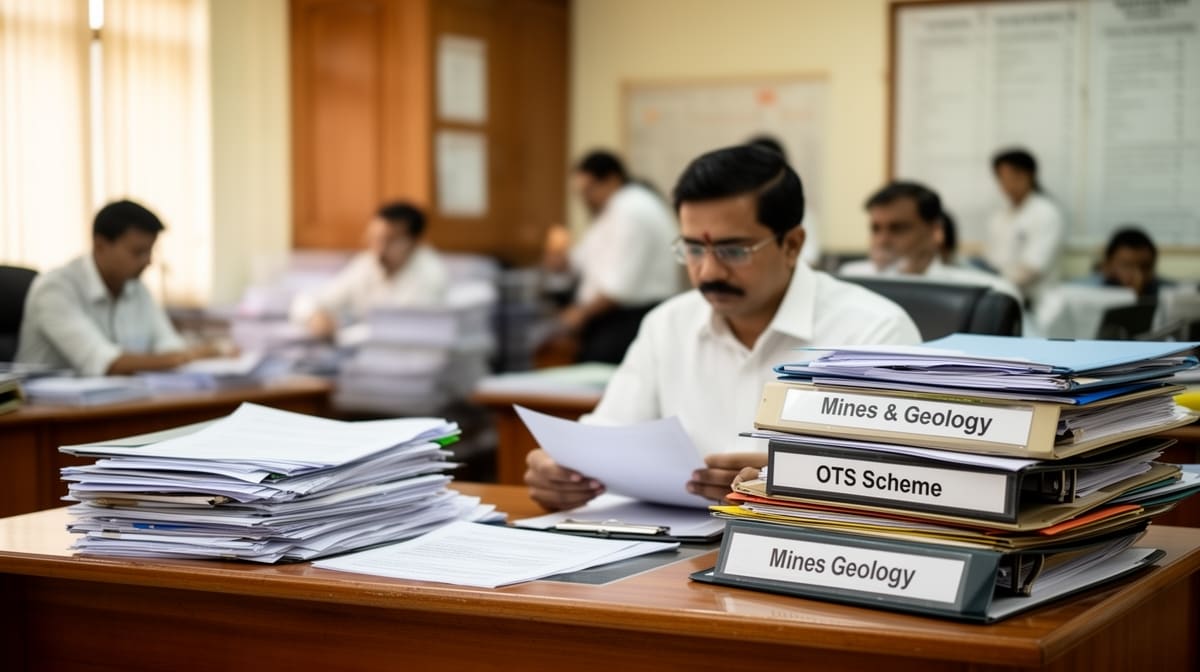
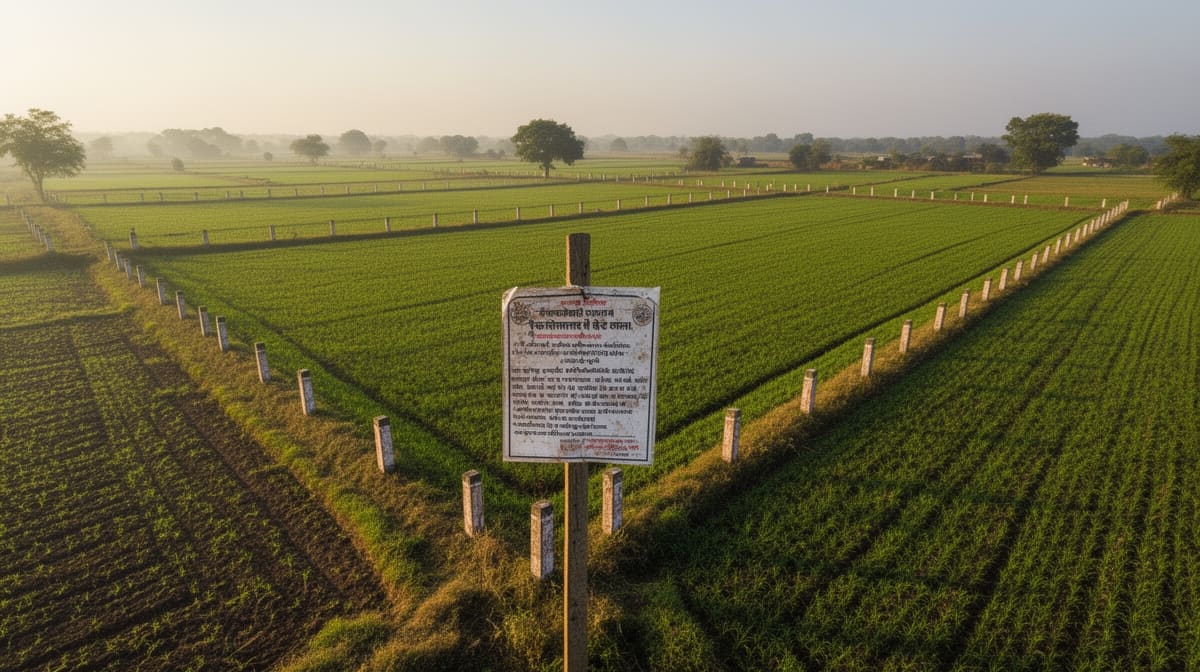
The petitioner, K.S. Murthy, holds land in Sy. Nos. 753, 867, 870, 877, 872, 873, 875, and 853 in Korremula Village, Ghatkesar Mandal, which was originally allotted under the Telangana Assigned Lands (Prohibition of Transfers) Act, 1977. In 2006, the Revenue Divisional Officer issued an order confirming the petitioner’s lawful possession and rejecting a prior challenge to his title. For the next twenty years, no action was taken by any revenue authority to question this order.
Procedural History
- 10 March 2006: Revenue Divisional Officer issued Order No. B/205L/2004 confirming petitioner’s lawful possession.
- 20 January 2026: District Collector initiated suo moto revision proceedings under Section 48 of the Act, challenging the 2006 order.
- 27 February 2026: Petitioner filed Writ Petition No. 4927 of 2026 before the High Court, seeking to quash the revision notice.
- 17 February 2026: High Court heard arguments and issued interim order.
Relief Sought
The petitioner sought a writ of mandamus declaring the revision proceedings illegal, arbitrary, and violative of natural justice. He also sought an interim stay on all coercive action pending final disposal of the writ petition.
The Legal Issue
The central question was whether Section 48 of the Telangana Assigned Lands (Prohibition of Transfers) Act, 1977 permits a revenue authority to initiate suo moto revision proceedings after an unexplained delay of twenty years, and whether such delay violates the principles of natural justice and legitimate expectation.
Arguments Presented
For the Petitioner
Learned counsel argued that the 20-year delay in initiating revision proceedings was inordinate, unexplained, and prejudicial. Reliance was placed on State of U.P. v. Mohd. Naseem and Lalita Kumari v. Govt. of U.P. to contend that long delay, especially in matters affecting property rights, raises a presumption of acquiescence and estops the state from reviving stale claims. The petitioner emphasized that he had invested in the land, constructed structures, and relied on the 2006 order for over two decades.
For the Respondent
The State contended that Section 48 grants unlimited power to revise any order deemed erroneous, regardless of time. It argued that the Act is a protective statute meant to prevent unauthorized transfers of assigned lands, and that the state’s duty to correct illegal transfers cannot be time-barred. No specific reason for the delay was offered.
The Court's Analysis
The Court examined the nature of suo moto revision under Section 48, noting that while the provision does not prescribe a time limit, it is not an unfettered power. The Court held that the exercise of such power must be guided by principles of equity, fairness, and reasonableness.
"The State cannot remain silent for two decades, allow a person to settle and invest in land, and then resurrect a revision proceeding without any explanation for the delay. Such conduct is not only arbitrary but also violative of the doctrine of legitimate expectation."
The Court distinguished State of Andhra Pradesh v. K. Srinivasulu where revision was allowed after 12 years because the state had actively pursued the matter. Here, there was total inaction. The Court further held that natural justice demands that no one should be prejudiced by the state’s own laches. The petitioner’s rights had crystallized over time, and reopening the matter after 20 years would cause irreparable harm.
The Court also noted that the absence of any justification for the delay undermined the credibility of the revision. The state’s duty to protect assigned lands does not override the fundamental right to property and the right to be free from arbitrary state action under Article 14 and Article 21 of the Constitution.
The Verdict
The petitioner succeeded. The Court held that suo moto revision initiated after an unexplained delay of twenty years is arbitrary and violative of natural justice. It suspended the revision proceedings and all coercive action pending final disposal of the writ petition.
What This Means For Similar Cases
Delay Vitiates Revisionary Power
- Practitioners must now argue that any revision under Section 48 after 10+ years without justification is prima facie invalid.
- The burden shifts to the state to explain the delay; silence or generic assertions of public interest are insufficient.
- Courts will apply the doctrine of legitimate expectation to protect long-standing possession.
Property Rights Trump Administrative Convenience
- Landholders who have held assigned land for over a decade with state acquiescence can invoke this judgment to resist belated revision.
- Revenue authorities must document and act on suspected violations promptly; inaction cannot be weaponized later.
- Applications for interim stay under Section 151 CPC in such cases are now strongly supported by precedent.
Judicial Scrutiny of Sua Sponte Actions
- Courts will not tolerate administrative overreach disguised as corrective action.
- This judgment reinforces that procedural fairness is non-negotiable, even in welfare statutes.
- Future petitions challenging delayed revision notices should cite this order as binding authority in Telangana and persuasive in other states with similar laws.