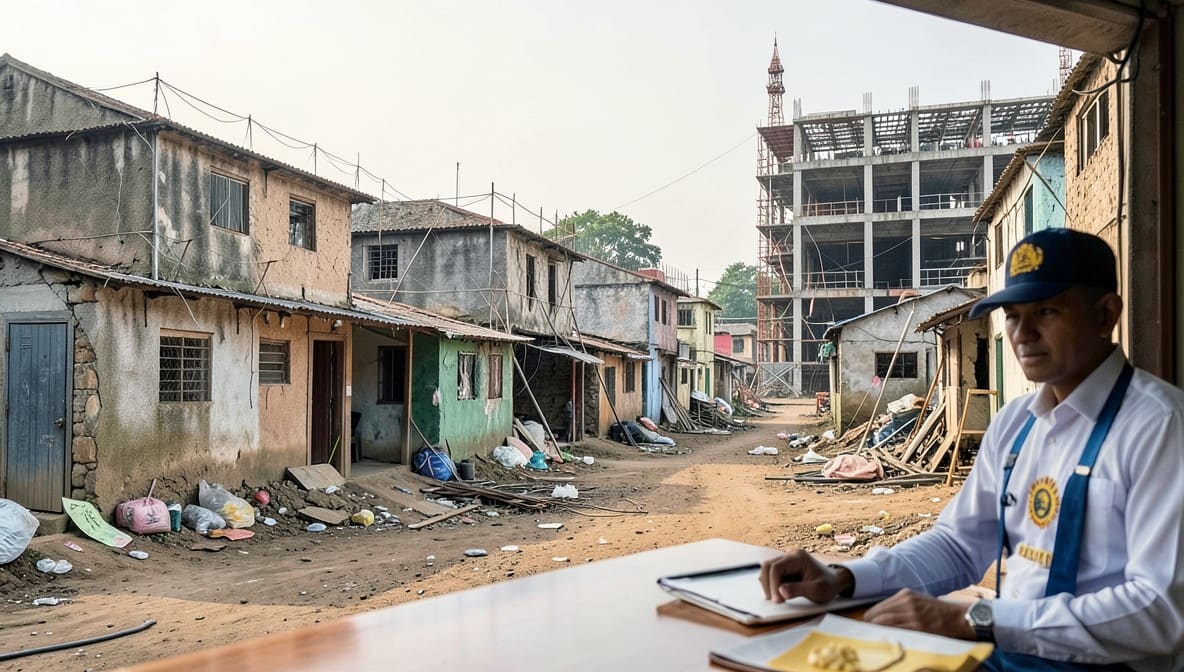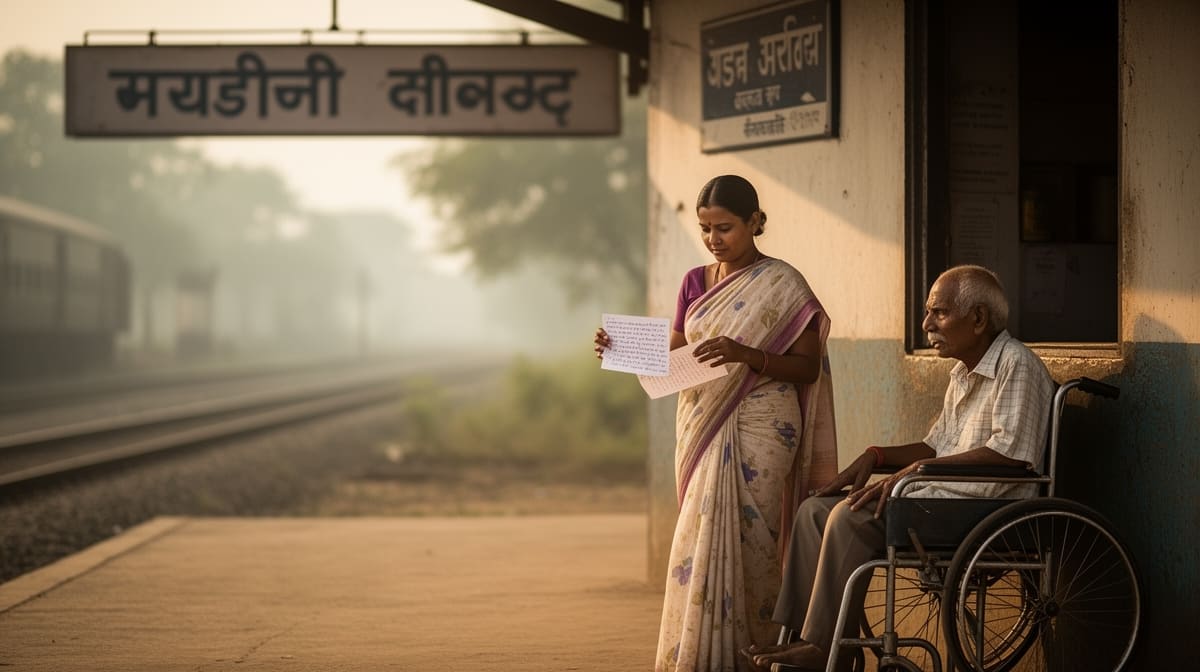
The Bombay High Court has clarified that illiteracy and lack of legal awareness constitute a valid ground for condoning delay in substituting legal representatives before the Railway Claims Tribunal, reinforcing the principle that procedural rigidity must yield to substantive justice under social welfare statutes.
Background & Facts
The Dispute
The appellants, the daughter-in-law and grandson of a deceased railway employee, sought to substitute themselves as legal representatives in a claim filed by the deceased’s wife for compensation under the Railway Claims Tribunal framework. The original claimant, the wife, died during pendency, followed by the son, leaving only the daughter-in-law and grandson as surviving family members. They applied for substitution under Rule 26 of the Railway Claims Tribunal (Procedure) Rules, 1989, citing illiteracy and lack of knowledge about legal procedures as reasons for the delay.
Procedural History
- 2012: Original claim filed by the deceased’s wife for compensation due to death in service.
- 2014: Wife and son both passed away during pendency of the claim.
- 2015: Daughter-in-law and grandson filed application for substitution under Rule 26.
- 19 March 2015: Railway Claims Tribunal dismissed the application solely on grounds of delay and alleged ineligibility, without examining the cause of delay.
- 2016: First Appeal filed before the Bombay High Court.
Relief Sought
The appellants sought condonation of delay and permission to continue the claim as legal representatives of the deceased, arguing that they were the only surviving dependents entitled to pursue the compensation.
The Legal Issue
The central question was whether illiteracy and lack of legal knowledge constitute a good and sufficient reason under Rule 26 of the Railway Claims Tribunal (Procedure) Rules, 1989 to condone delay in applying for substitution of legal representatives.
Arguments Presented
For the Appellants
Counsel for the appellants relied on the humanitarian purpose of the Railway Claims Tribunal regime, which is designed to provide swift redress to dependents of deceased railway employees. They emphasized that the appellants were rural, uneducated, and unaware of procedural timelines. They cited State of U.P. v. M.K. Singh to argue that procedural technicalities must not defeat substantive rights under social welfare legislation. The delay, they contended, was not mala fide but stemmed from ignorance and vulnerability.
For the Respondent
The respondent, Union of India, argued that Rule 26 requires strict compliance with timelines and that mere illiteracy cannot override statutory deadlines. They relied on Rajendra Kumar v. Union of India to assert that substitution is a privilege, not a right, and that the Tribunal was justified in rejecting the application due to the lapse of over two years. They further questioned the legal standing of a daughter-in-law and grandson as successors under the Rules.
The Court's Analysis
The Court rejected the Tribunal’s mechanical approach, holding that the failure to examine the cause of delay rendered the order legally unsustainable. Justice Jitendra Jain emphasized that Rule 26 is not a technical barrier but a mechanism to ensure continuity of claims for vulnerable claimants. The Court noted that the Tribunal did not record any findings on whether the stated reasons - illiteracy and lack of knowledge - were credible or sufficient.
"The Tribunal could not have rejected the application without giving its findings on whether the cause shown was a good and sufficient reason."
The Court observed that the appellants belonged to a socio-economically disadvantaged group, and the Railway Claims Tribunal, as a statutory body created for social justice, must adopt a liberal interpretation of procedural rules. The Court distinguished the case from commercial disputes where delay may reflect negligence, noting that here, the delay arose from systemic disadvantage, not indifference.
The Court further held that while the eligibility of the daughter-in-law and grandson to continue the claim remained an open question, the issue of condonation could not be decoupled from the merits. Given the age of the case and the humanitarian context, remanding would cause further injustice.
The Verdict
The appellants succeeded. The Court held that illiteracy and lack of legal knowledge constitute a good and sufficient reason under Rule 26 to condone delay, and allowed substitution. The question of eligibility to pursue the claim was left open for fresh adjudication.
What This Means For Similar Cases
Condonation of Delay Must Be Substantively Assessed
- Practitioners must now argue that socio-economic vulnerability and lack of legal awareness are valid grounds for condonation under social welfare tribunals.
- Tribunals cannot dismiss applications on delay alone; they must record specific findings on the adequacy of the cause shown.
- Failure to do so renders the order liable to be set aside on appeal.
Social Welfare Statutes Demand Liberal Interpretation
- Rule 26 is not a procedural hurdle but a protective mechanism for dependents.
- Courts must interpret such rules in light of the humanitarian intent behind statutes like the Railway Claims Tribunal Act.
- Where claimants are illiterate, elderly, or marginalized, procedural strictness must yield to substantive justice.
Eligibility of Non-Traditional Heirs Remains Open
- While substitution is now permitted, the Court did not decide whether a daughter-in-law or grandson qualifies as a legal representative under the Rules.
- Practitioners should prepare arguments based on Section 11 of the Indian Succession Act and Rule 26’s inclusive language to establish standing for extended family members in similar cases.