The High Court of Kerala has reaffirmed that an employee suspended from service remains entitled to subsistence allowance under statutory provisions, regardless of allegations of misconduct or subsequent income from other sources. This judgment clarifies the non-negotiable nature of subsistence payments during suspension and sets a critical precedent for public and cooperative sector employers.
Background & Facts
The Dispute
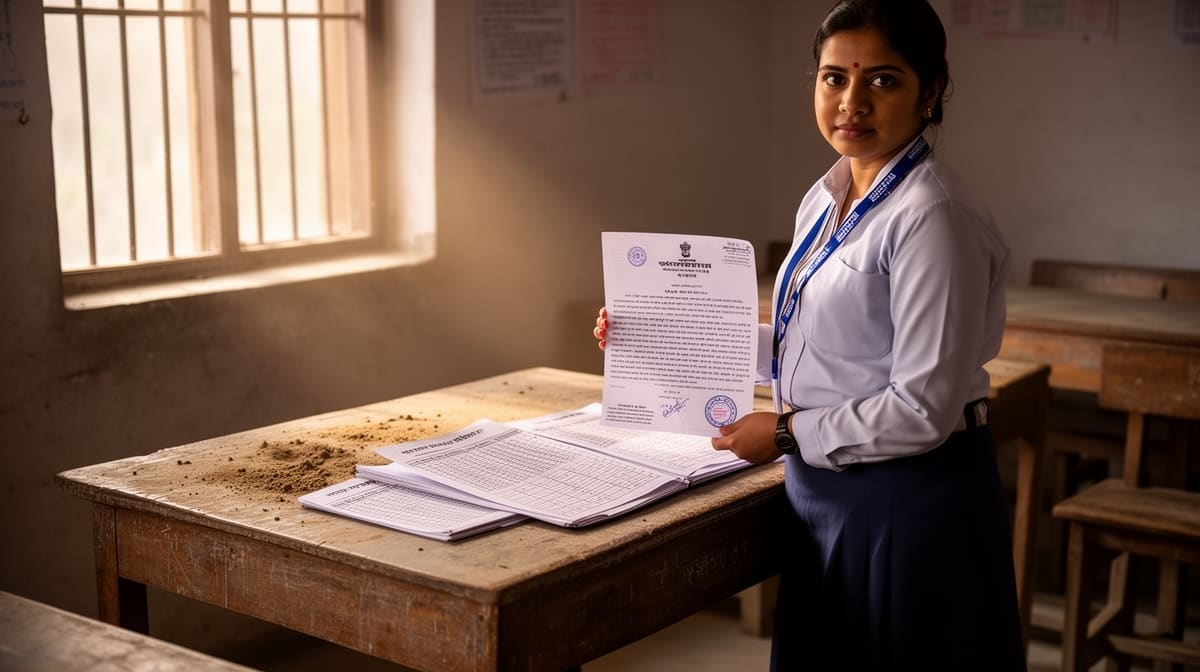
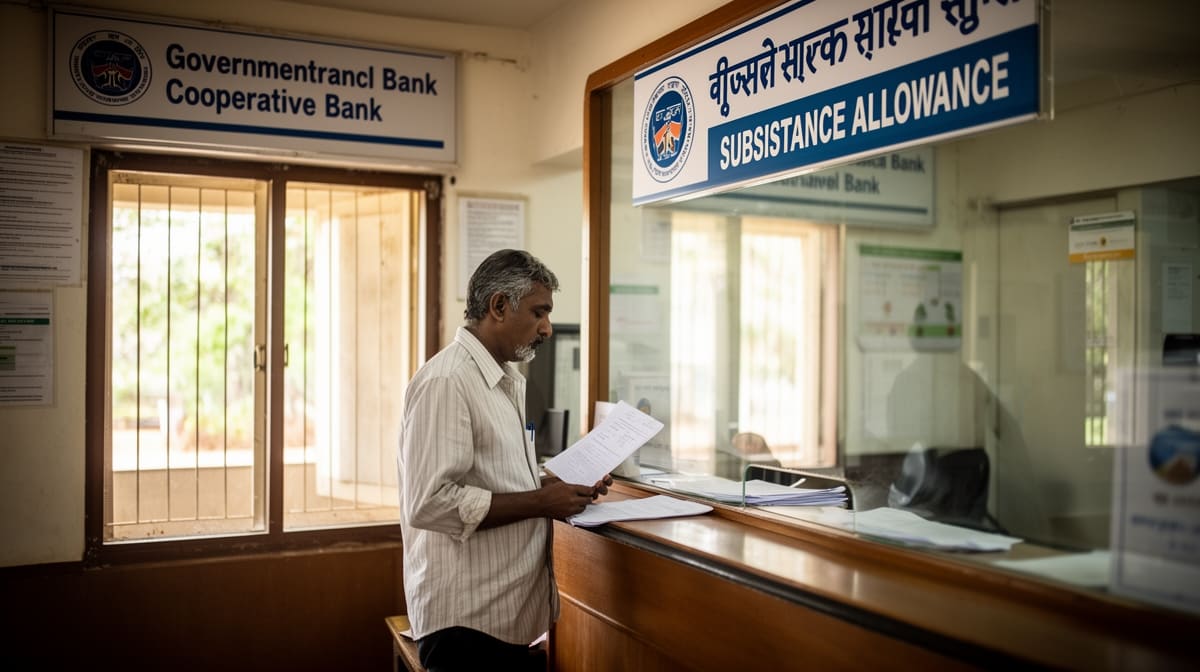
The 1st respondent, Ashok Kumar K, was employed as a Senior Clerk at Neduvathoor Service Co-operative Bank Ltd. He was suspended on 2 September 2023 under Ext.P1 order, which explicitly acknowledged his entitlement to subsistence allowance during suspension. Despite this admission, the bank refused to disburse the allowance, citing procedural non-compliance and allegations of financial misconduct.
Procedural History
- 2 September 2023: Suspension order issued (Ext.P1) with express recognition of entitlement to subsistence allowance
- 2023 - 2025: Respondent repeatedly requested payment; bank refused citing absence of non-employment certificate
- 2025: Writ petition filed under Article 226 seeking payment of arrears and continuation of allowance
- 22 January 2026: Single Judge allowed the writ petition, directing payment of arrears and ongoing allowance
- 27 February 2026: Bank filed this writ appeal challenging the Single Judge’s order
Relief Sought
The respondent sought a direction to the bank to pay subsistence allowance from the date of suspension (2 September 2023) until the suspension was revoked, and to continue payment thereafter. He also sought a declaration that his entitlement was statutory and not contingent on speculative allegations.
The Legal Issue
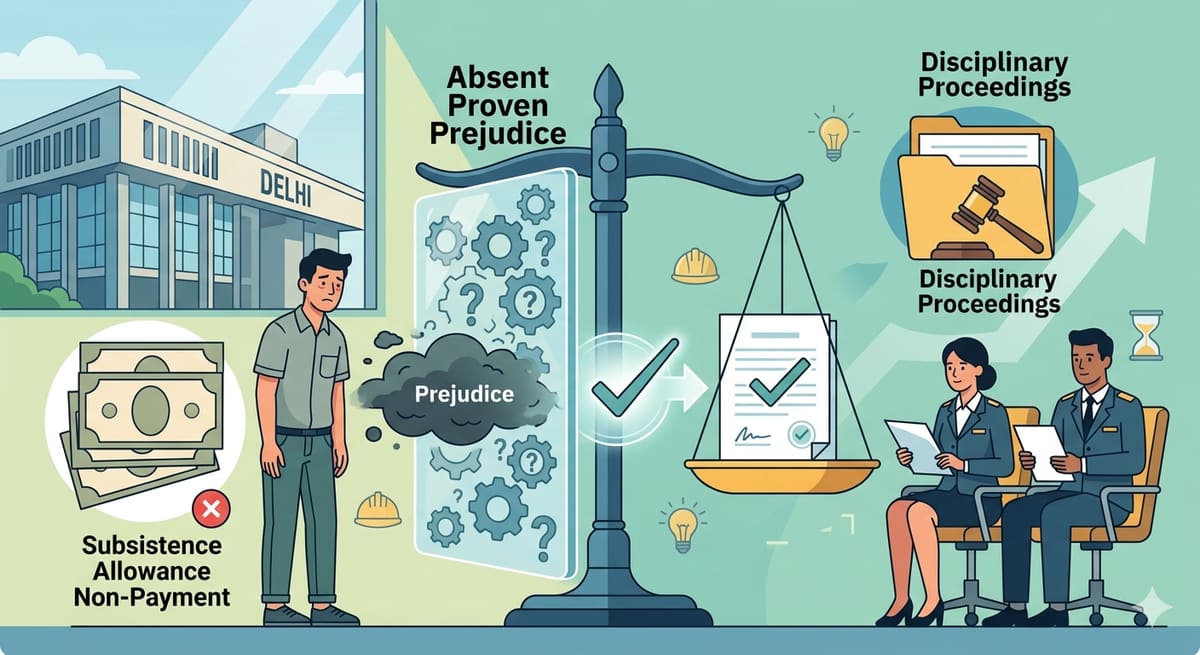
The central question was whether an employee suspended under a formal order that acknowledges entitlement to subsistence allowance can be denied payment on grounds of non-submission of a non-employment certificate or evidence of alternative income, when the statutory framework does not condition payment on such factors.
Arguments Presented
For the Appellant
The bank contended that payment of subsistence allowance was conditional upon submission of a non-employment certificate, which the respondent allegedly failed to provide until after filing the writ petition. It further argued that the respondent was engaged in profitable farming activities, as evidenced by Ext.R2(a), and therefore did not qualify as someone in need of subsistence support. The bank also invoked the seriousness of the alleged misappropriation of Rs.20 lakhs as justification for withholding payment.
For the Respondent
The respondent argued that Ext.P1, the suspension order, was an unequivocal admission of statutory entitlement. He produced Ext.P2, the non-employment certificate, during the pendency of the writ petition, thereby curing any procedural lapse. He further contended that agricultural income does not constitute employment under the proviso to Section 3 of the Kerala Payment of Subsistence Allowance Act, 1972, and that allegations of misconduct cannot override statutory rights pending final adjudication.
The Court's Analysis
The Court examined the statutory framework under the Kerala Payment of Subsistence Allowance Act, 1972, and the terms of Ext.P1. It emphasized that the suspension order itself constituted an admission of liability under the Act. The Court held that the requirement of a non-employment certificate, while procedural, could not be used to defeat a substantive statutory right, especially when the document was submitted during litigation.
"The materials on record, especially Ext.P1, would go to show that the appellants are not disputing the entitlement of the 1st respondent for subsistence allowance."
Regarding Ext.R2(a), the Court distinguished between agricultural activity and employment in an establishment. It noted that the proviso to Section 3 of the Act excludes only those engaged in formal employment, not self-employment in farming. The Court further observed that allegations of misappropriation, however serious, do not extinguish statutory rights pending disciplinary or criminal proceedings.
The Court also reaffirmed the limited scope of intra-court appellate jurisdiction, citing Bihar Industrial Area Development Authority v. M/s Scope Sales Private Ltd. to stress that appellate courts must not substitute their view for a plausible and reasonable one adopted by the Single Judge.
The Verdict
The writ appeal was dismissed. The Court upheld the Single Judge’s order, holding that the respondent was entitled to subsistence allowance from the date of suspension, and that the bank’s refusal was unlawful. The Court directed continued payment until suspension was revoked.
What This Means For Similar Cases
Subsistence Allowance Is a Statutory Right, Not a Discretionary Benefit
- Employers cannot withhold subsistence allowance on speculative grounds such as pending allegations of misconduct
- Suspension orders that acknowledge entitlement create an immediate statutory obligation
- Procedural lapses, such as delayed submission of documents, must be cured, not used to deny rights
Agricultural Income Does Not Disqualify Entitlement
- Income from farming or self-employment is not equivalent to formal employment under Section 3 of the Act
- Practitioners must challenge claims that equate agricultural activity with employment to deny subsistence allowance
- This distinction is critical in rural and semi-urban employment contexts where farming is a common supplementary activity
Intra-Court Appeals Are Not a Second Chance to Re-Appreciate Evidence
- Appellate courts must not interfere unless the lower court’s order is perverse or demonstrably erroneous
- A plausible and reasonable view by the Single Judge is sufficient to uphold the order
- This reinforces judicial restraint in service law matters and protects employees from procedural harassment