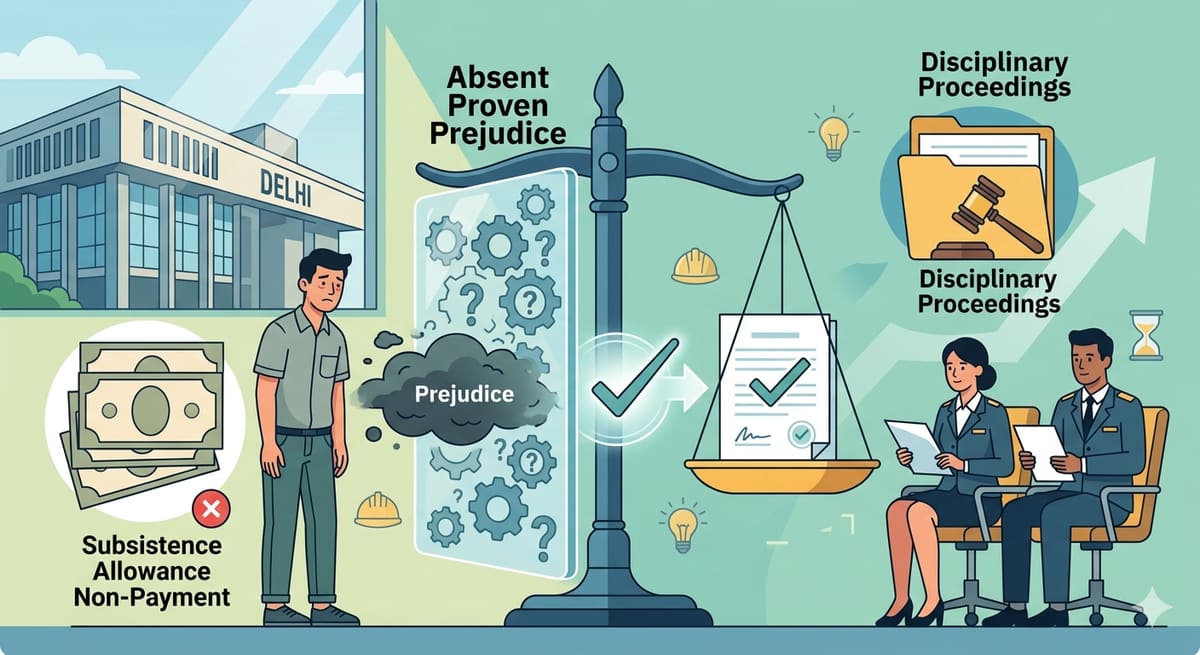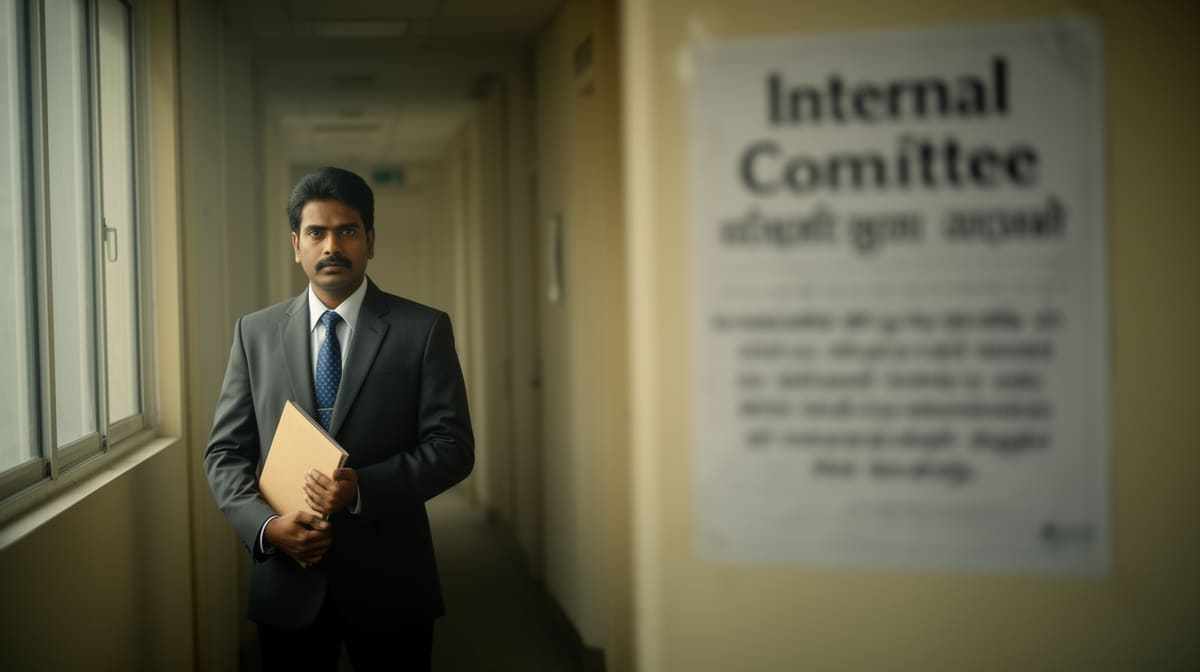
The Madras High Court has affirmed a fundamental principle of service law: suspension from duty does not extinguish an employee’s right to subsistence allowance. This judgment reinforces that procedural fairness and financial security must coexist even during pending disciplinary proceedings, particularly in sensitive cases involving allegations of sexual harassment.
Background & Facts
The Dispute
The appellant, D. Sathishkumar, was suspended on 05.04.2025 by the Board of Trustees of the Arulmigu Arunachaleswarar Thirukoil following an allegation of sexual harassment by a female employee. Despite the suspension, no subsistence allowance was paid to him. The respondents assured the Writ Court that a committee would be constituted under the Vishaka guidelines to conduct an inquiry, and the writ petition was dismissed on that assurance.
Procedural History
- 05.04.2025: Appellant suspended without payment of subsistence allowance
- 06.03.2026: Internal Committee constituted under Vishaka guidelines to investigate allegations
- 16.02.2026: Writ Petition dismissed by Single Judge on assurance that inquiry would conclude within four weeks
- 09.03.2026: Writ Appeal heard by Division Bench of Madras High Court
Relief Sought
The appellant sought payment of subsistence allowance from the date of suspension, with arrears, until the conclusion of the inquiry or revocation of suspension.
The Legal Issue
The central question was whether an employee suspended pending a sexual harassment inquiry is entitled to subsistence allowance under service law, even if the allegations are serious and an inquiry is underway.
Arguments Presented
For the Appellant
Learned counsel argued that suspension is a temporary measure, not a punishment, and that withholding subsistence allowance violates the principles of natural justice and Article 14 of the Constitution. He cited State of Punjab v. Baldev Singh to assert that financial hardship imposed during suspension undermines the presumption of innocence and amounts to punitive action without trial.
For the Respondent
The Additional Government Pleader contended that since the allegations involved sexual harassment - a grave misconduct under Vishaka - the payment of subsistence allowance could be withheld pending inquiry. He argued that the institution, being a religious trust, had discretionary powers and that the inquiry was imminent.
The Court's Analysis
The Court rejected the notion that the gravity of allegations justifies denial of subsistence allowance. It emphasized that suspension is an administrative tool to ensure impartial inquiry, not a pre-judgment of guilt. The Court observed that the right to subsistence allowance is not contingent on the nature of allegations but on the fact of suspension itself.
"The suspension of an employee does not ipso facto deprive him of the right to subsistence allowance. To withhold it is to impose a penalty without due process, which is contrary to the principles of natural justice and the doctrine of proportionality."
The Court further noted that the respondents had already constituted an Internal Committee under the POSH Act, 2013, which underscores the procedural framework already in place. The delay in payment, extending over eleven months, was deemed unreasonable and unjustified. The Court held that the appellant’s livelihood rights cannot be sacrificed pending administrative action.
The Verdict
The appellant succeeded. The Madras High Court held that subsistence allowance must be paid from the date of suspension, with arrears, and continued until the inquiry concludes or the suspension is revoked. The Court directed immediate computation and payment of the allowance.
What This Means For Similar Cases
Subsistence Allowance Is a Right, Not a Concession
- Practitioners must now assert subsistence allowance as a non-negotiable entitlement during suspension, regardless of the nature of allegations
- Employers, including religious trusts and public institutions, cannot invoke discretion to withhold it
- Failure to pay may attract contempt proceedings or claims for damages under Article 21
Allegations Do Not Override Procedural Fairness
- Even in cases involving sexual harassment, natural justice requires financial support during suspension
- The POSH Act’s procedural safeguards do not justify economic punishment prior to findings
- This judgment aligns with Vishaka and Bharat Forge Ltd. v. Uttam Manohar Nakade by reinforcing that due process includes economic security
Institutional Accountability Extends to Financial Obligations
- Religious and charitable institutions are not exempt from service law obligations
- Suspension orders must be accompanied by clear directives on subsistence allowance
- Employers must maintain records of allowance calculations and payment timelines to avoid litigation