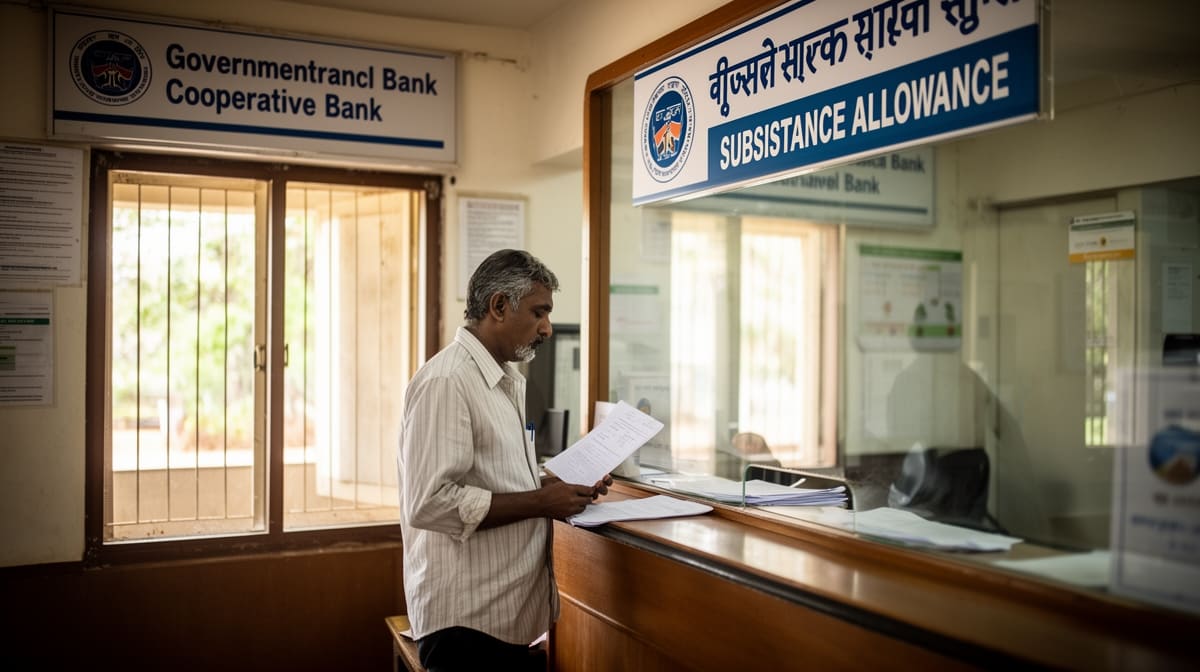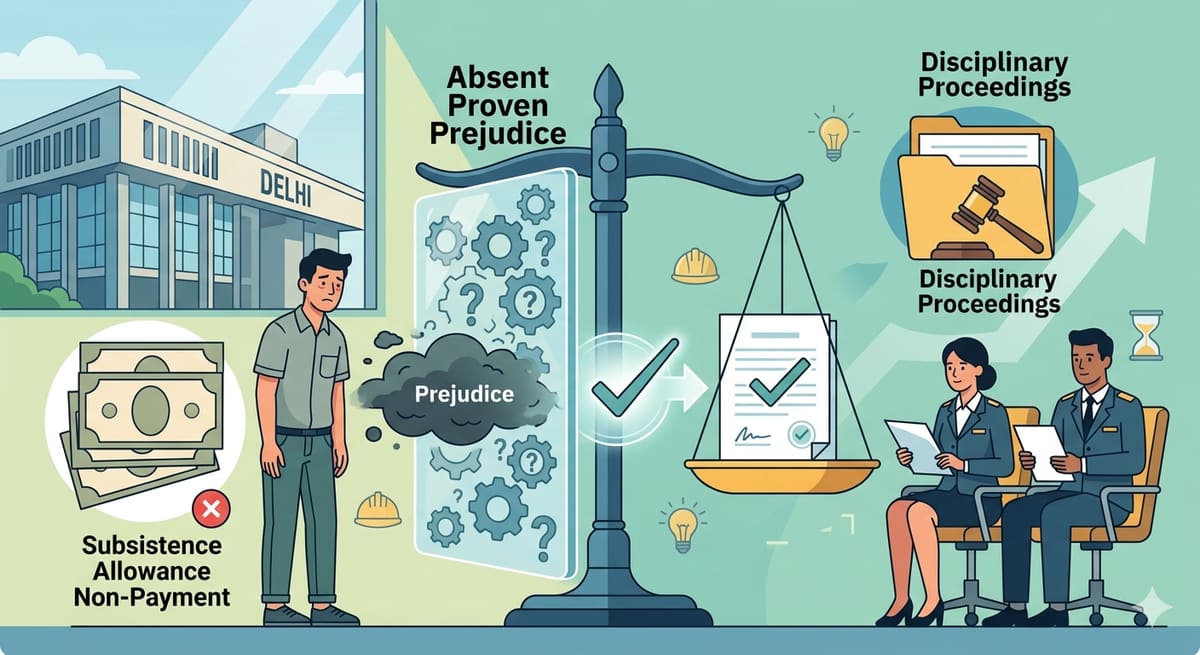
The Kerala High Court has clarified that co-operative societies cannot unilaterally deduct amounts from subsistence allowance payable to suspended employees, even if the employee owes money to the society. The judgment reinforces that subsistence allowance is meant for the sustenance of the employee's family and can only be reduced through statutorily permitted deductions, not arbitrary decisions by the employer.
Background & Facts
The Dispute
The petitioner, The Perumbalam Service Co-operative Bank Ltd, suspended its Secretary, the first respondent, on 25 November 2017 for alleged misappropriation of funds. Following an internal inquiry, the first respondent was dismissed from service on 17 August 2018. The first respondent challenged his dismissal before the Co-operative Arbitration Court in ARC No.14/2019, seeking reinstatement and payment of subsistence allowance during the suspension period.
Procedural History
The case progressed through multiple forums:
- 2019: First respondent filed ARC No.14/2019 before the Co-operative Arbitration Court, seeking reinstatement and subsistence allowance.
- 2019: First respondent filed IA No.57/2019 claiming ₹4,16,606 as arrears of subsistence allowance.
- 2022: Co-operative Arbitration Court passed Ext.P6 order, directing the petitioner to pay ₹4,87,272 as balance subsistence allowance with 7% interest.
- 2023: Kerala Co-operative Tribunal dismissed the petitioner’s revision petition (Ext.P11), upholding the Arbitration Court’s order.
Relief Sought
The petitioner sought to quash Ext.P6 and Ext.P11, contending that:
- The first respondent was not a "worker" under the Kerala Payment of Subsistence Allowance Act, making Rule 198(6) of the Kerala Co-operative Societies Rules, 1969 applicable.
- The petitioner was entitled to deduct amounts owed by the first respondent from the subsistence allowance.
- The first respondent failed to produce a non-employment certificate, disqualifying him from claiming subsistence allowance.
The Legal Issue
The central question was whether a co-operative society could deduct amounts owed by an employee from subsistence allowance without statutory authority, and whether the Kerala Service Rules or Rule 198(6) governed the payment of subsistence allowance to employees of co-operative societies.
Arguments Presented
For the Petitioner
The petitioner argued that:
- The first respondent was not a "worker" under the Kerala Payment of Subsistence Allowance Act, and thus Rule 198(6) applied, limiting subsistence allowance to half the basic pay.
- The petitioner was entitled to deduct amounts owed by the first respondent, as permitted under Kudayam S. Co-operative Bank Limited v. Radhakrishnan Nair [1993 (3) KLT 76].
- The first respondent failed to produce a non-employment certificate, rendering his claim for subsistence allowance invalid.
For the Respondents
The respondents contended that:
- The Kerala Service Rules governed subsistence allowance for employees of co-operative societies, as held in W.A. No.2450/2008.
- Subsistence allowance was intended for the sustenance of the employee’s family, and arbitrary deductions were impermissible without statutory authority.
- The first respondent had produced a non-employment certificate (Ext.P9), fulfilling the procedural requirement.
The Court's Analysis
The Court examined the applicability of Rule 198(6) and the Kerala Service Rules to employees of co-operative societies. It noted that the Co-operative Arbitration Court had correctly applied the Kerala Service Rules, as the first respondent was not a "worker" under the Kerala Payment of Subsistence Allowance Act. The Court observed:
"The provision for payment of subsistence allowance is made in order to sustain the family of a workman/employee. What is contemplated by law is payment for mere subsistence of the family. Without there being any enabling provision, an employer cannot deduct any amount from the subsistence allowance payable to an employee."
The Court rejected the petitioner’s argument that deductions could be made for amounts owed by the employee, holding that such deductions required statutory authority. It distinguished the precedent cited by the petitioner, Kudayam S. Co-operative Bank Limited v. Radhakrishnan Nair, noting that the case did not authorize arbitrary deductions.
The Court also dismissed the petitioner’s contention regarding the non-employment certificate, noting that the first respondent had produced Ext.P9, a valid certificate issued for the purpose of claiming subsistence allowance.
The Verdict
The writ petition was dismissed. The Court upheld the orders of the Co-operative Arbitration Court and the Kerala Co-operative Tribunal, affirming that:
- The first respondent was entitled to subsistence allowance under the Kerala Service Rules.
- The petitioner could not deduct amounts owed by the first respondent without statutory authority.
What This Means For Similar Cases
Subsistence Allowance Is Protected From Arbitrary Deductions
Co-operative societies and employers must ensure that deductions from subsistence allowance are statutorily permitted. The judgment clarifies that:
- Subsistence allowance is intended for the sustenance of the employee’s family and cannot be reduced arbitrarily.
- Deductions require explicit statutory authority, and employers cannot unilaterally withhold amounts owed by the employee.
Kerala Service Rules Govern Subsistence Allowance For Co-operative Employees
Practitioners should note that:
- Employees of co-operative societies who are not "workers" under the Kerala Payment of Subsistence Allowance Act are entitled to subsistence allowance under the Kerala Service Rules.
- The Kerala Service Rules do not automatically apply mutatis mutandis to co-operative employees, but their principles govern subsistence allowance calculations.
Non-Employment Certificates Must Be Properly Verified
Employers must:
- Verify the authenticity of non-employment certificates submitted by employees.
- Avoid rejecting claims for subsistence allowance on technical grounds unless the certificate is demonstrably invalid or fraudulent.