The Madras High Court has clarified that tax authorities cannot impose demands or penalties when statutory notice procedures are not followed, even where the assessee has closed business operations. The judgment underscores the mandatory nature of procedural compliance under the Tamil Nadu Value Added Tax Act and reinforces the principle that substantive rights cannot be adjudicated without due process.
Background & Facts
The Dispute
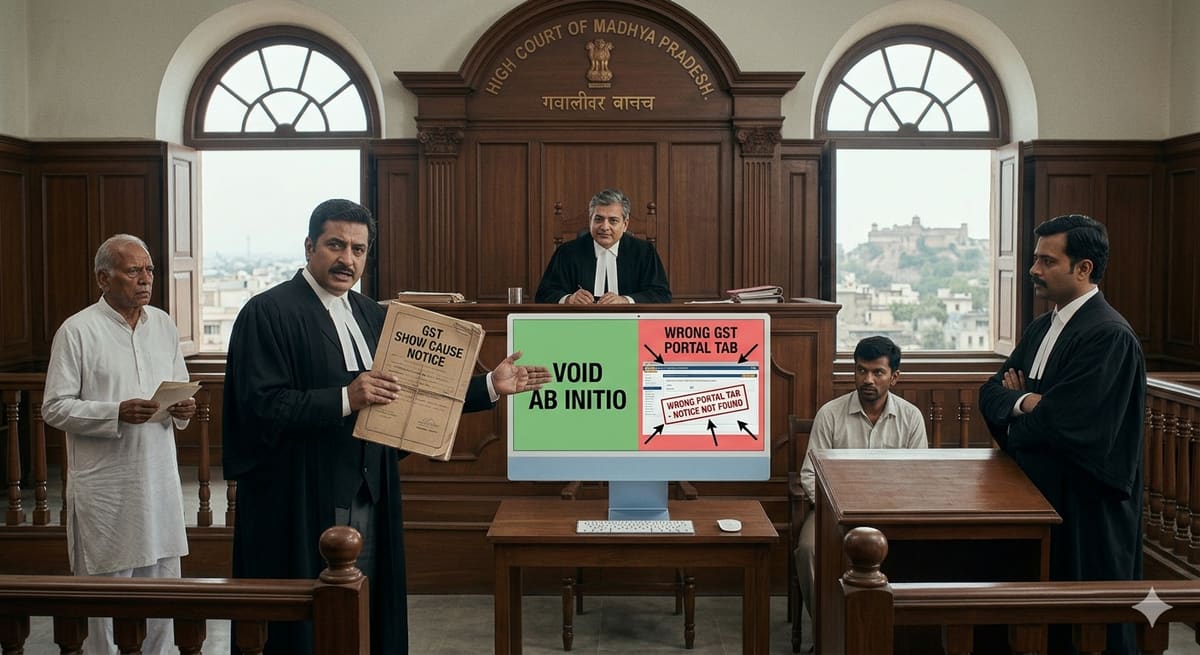
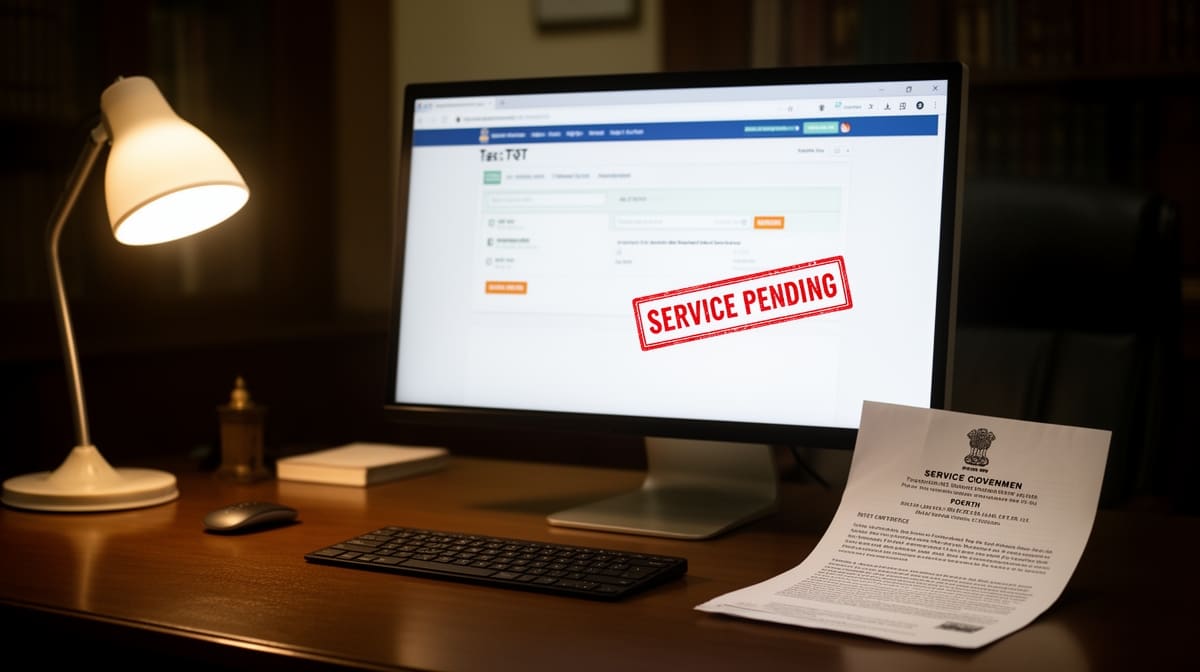
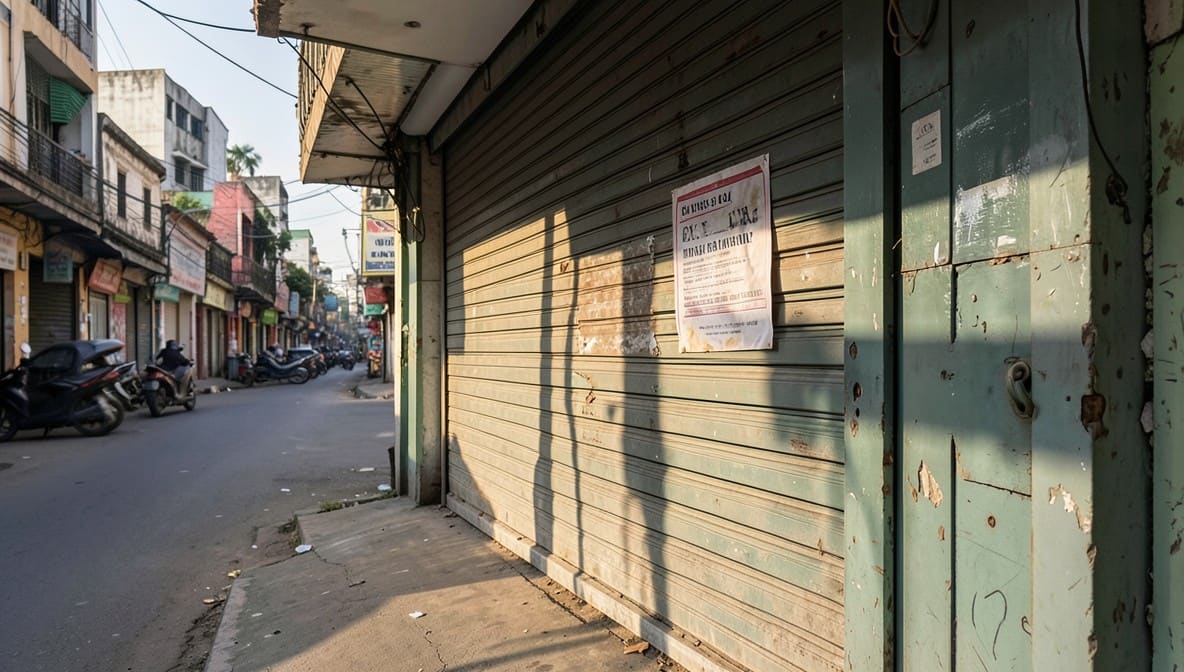
The appellant, M/s Singam Worldwide, a partnership firm engaged in commercial activities, closed its business operations in September 2023. Subsequently, on 28.09.2023, the Assistant Commissioner of Commercial Taxes issued a show-cause notice and, on 29.12.2023, passed a tax demand and penalty order through the online portal. The appellant was not served with the notice via registered post or any physical mode. The appellant challenged the order before the Single Judge of the Madras High Court, contending that the notice was not properly served and that the closure of business rendered the demand invalid.
Key Facts
- The appellant ceased business operations in September 2023
- Show-cause notice dated 28.09.2023 was issued exclusively through the online portal
- No physical service by registered post or personal delivery was attempted
- The tax demand of Rs. 31,98,742/- was raised, with a penalty of Rs. 15,99,371/-
- The appellant had not filed any return for the relevant period
- The appellant had not formally intimated the tax department of business closure within the 90-day statutory period under Section 45 of the Tamil Nadu Value Added Tax Act
- The appellant filed W.P. No. 46118 of 2025 on 15.11.2025 challenging the order
Procedural History
- 28.09.2023: Show-cause notice issued via online portal only
- 29.12.2023: Final assessment and penalty order passed
- 15.11.2025: Writ Petition (W.P. No. 46118 of 2025) filed before Single Judge, Madras High Court
- 03.12.2025: Single Judge quashed the assessment order, held service defective, and remanded the matter for fresh consideration
- 03.12.2025: Single Judge imposed condition: deposit 50% of disputed tax (Rs. 15,99,371/-) within 60 days
- 07.01.2026: Writ Appeal No. 819 of 2026 filed challenging the condition
- 07.04.2026: Judgment delivered by Division Bench
The Parties' Positions
Appellant: Argued that the show-cause notice was invalid due to non-compliance with statutory service requirements under the Act and Rules. Relied on State of Tamil Nadu v. M/s. Sree Rama Enterprises (2021) and the Single Judge’s own order in W.P. No. 4122 of 2022, where no condition was imposed despite similar facts. Contended that the closure of business was a legitimate reason for non-response.
Respondents: Maintained that the online portal was a valid mode of service under the amended provisions of the Act. Argued that the appellant had failed to comply with Section 45 by not intimating closure of business within 90 days, thereby rendering the notice valid. Asserted that the condition was necessary to prevent abuse of process.
Relief Sought
The appellant sought: (1) setting aside of the Single Judge’s order dated 03.12.2025; (2) deletion of the deposit condition; (3) direction to the Assessing Authority to decide the matter on merits without any pre-condition.
The Legal Issue
Whether the failure to serve a statutory show-cause notice under the Tamil Nadu Value Added Tax Act by registered post or physical means renders the subsequent tax demand void, and whether a court may impose a deposit condition as a precondition for remand when procedural irregularities are established.
Arguments Presented
For the Appellant
The appellant’s counsel, Dr. Manimaran, relied on the principle that statutory notices must be served in strict compliance with the law. He cited State of Tamil Nadu v. M/s. Sree Rama Enterprises to argue that online-only service without confirmation of receipt is insufficient. He also highlighted the Single Judge’s own precedent in W.P. No. 4122 of 2022, where a similar case was remanded without any deposit condition, making the imposition of a condition arbitrary and discriminatory.
For the Respondent
Mr. T.N.C. Kaushik, Additional Government Pleader, contended that the online portal was an authorized mode of service under Rule 12(2) of the TNVAT Rules, 2007. He argued that the appellant’s failure to intimate closure under Section 45 of the Act amounted to negligence, and that the deposit condition was a reasonable safeguard against frivolous litigation. He distinguished the 2022 case on grounds of factual differences.
The Court's Analysis
The Division Bench, comprising Dr. Justice G. Jayachandran and Justice Shamim Ahmed, examined the statutory framework under the Tamil Nadu Value Added Tax Act and the Rules. The Court noted that while electronic service is permitted, it must be accompanied by a reasonable assurance of receipt. The show-cause notice was issued solely through the portal without any confirmation of access, login, or acknowledgment by the appellant.
"The statutory obligation to serve notice is not a mere formality; it is a substantive safeguard to ensure fair hearing. Where the notice is not received, the right to be heard is extinguished ab initio."
The Court acknowledged the appellant’s failure to intimate closure under Section 45, but held that this procedural lapse could not validate an invalid notice. The Court further observed that the Single Judge had correctly identified the defect in service and rightly remanded the matter. However, the imposition of a 50% deposit condition was disproportionate.
The Court distinguished the 2022 precedent not on facts but on the principle of consistency in judicial reasoning. It held that where a procedural defect is established, the remedy is remand for fresh adjudication, not financial coercion. The Court emphasized that conditions should be imposed only when there is a clear risk of asset dissipation or abuse of process - neither of which was established here.
The Verdict
The writ appeal was allowed in part. The condition to deposit 50% of the disputed tax (Rs. 15,99,371/-) was reduced to 25% of the tax demand, i.e., Rs. 7,99,685/-. The appellant was directed to deposit this amount within 30 days of the judgment. The Assessing Authority was directed to reconsider the matter on merits and pass a fresh order within two months. No costs were awarded.
What This Means For Similar Cases
Statutory Notice Must Be Effectively Received
- Practitioners must challenge tax demands where notices are issued only via portals without proof of receipt
- Online service alone, without confirmation of access or acknowledgment, is insufficient under the TNVAT Act
- Failure to comply with Section 45 does not cure a defective notice under Section 44
Deposit Conditions Are Discretionary, Not Automatic
- Courts cannot impose deposit conditions as a routine measure in tax writ petitions
- Conditions must be justified by evidence of risk of asset dissipation or mala fide litigation
- The burden lies on the revenue to demonstrate why a condition is necessary
Consistency in Judicial Precedent Is Binding
- A court’s own prior order on identical facts creates a strong presumption of equal treatment
- Arbitrary deviation from precedent without reasoned distinction invites appellate interference
- Practitioners should cite prior bench decisions to challenge inconsistent judicial conditions