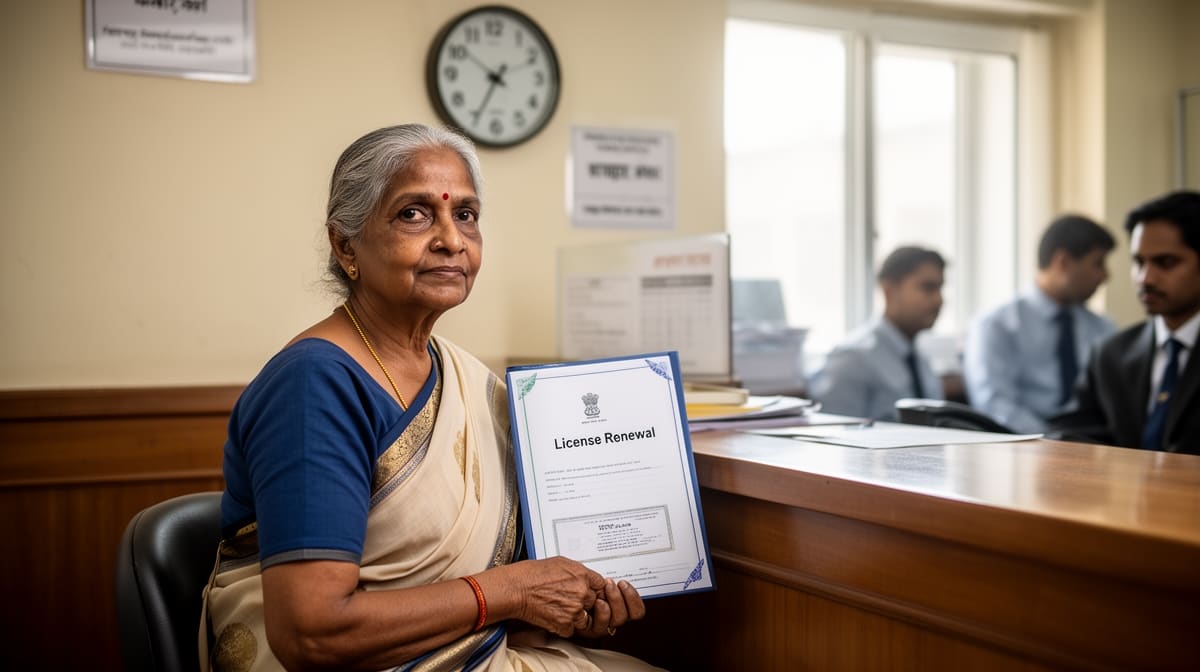
The Bombay High Court has underscored the principle that statutory remedies must remain effective and not be rendered infructuous by administrative delay. In a case involving the suspension of a performance licence under the Bombay Police Act, 1951, the Court directed the appellate authority to hear the appeal within four weeks, while granting interim relief to prevent irreparable harm during the short suspension period.
Background & Facts
The Dispute
The petitioner, Hotel Jyoti Palace Restaurant and Bar, held a performance licence under the Bombay Police Act, 1951 and the Rules for Licensing and Controlling Places of Public Amusement (other than Cinemas) and Performances, 1999 (the Public Amusement Rules, 1999). On 1 July 2026, the Respondent No. 3 (the Competent Authority) suspended the petitioner’s licence for a period of three months under Rules 218 and 219 of the Public Amusement Rules, 1999.
Procedural History
- 1 July 2026: Competent Authority suspends the petitioner’s licence for three months
- Post-1 July 2026: Petitioner files a statutory appeal against the suspension order along with an application for stay before Respondent No. 2 (the Appellate Authority)
- 13 July 2026: Petitioner approaches the Bombay High Court via Writ Petition No. 8552 of 2026, contending that the appeal before the Appellate Authority had not been taken up for hearing
- 13 July 2026: High Court disposes of the writ petition with directions for expeditious hearing
Relief Sought
The petitioner sought:
- Interim relief to stay the execution of the suspension order pending the appeal
- Expeditious hearing of the appeal to prevent the statutory remedy from becoming infructuous due to the short suspension period
The Legal Issue
The central question was whether a statutory appeal against a short-term licence suspension could be rendered infructuous by administrative delay, thereby depriving the petitioner of an effective remedy under the law.
Arguments Presented
For the Petitioner
- The petitioner’s licence suspension for three months would expire before the appeal could be heard, rendering the statutory remedy meaningless
- The Appellate Authority’s delay in hearing the appeal violated the principle of effective remedy
- The petitioner relied on the doctrine of exhaustion of remedies, arguing that the appellate process must be expeditious to prevent irreparable harm
For the Respondent
- The Respondent No. 2 (Appellate Authority) would decide the appeal expeditiously, and thus, the High Court should not entertain the writ petition at this stage
- The statutory remedy of appeal was already invoked, and the petitioner should await its outcome
The Court's Analysis
The Court observed that the suspension period of three months was relatively short, and if the appeal was not heard expeditiously, the statutory remedy would be rendered nugatory. The Court emphasized that statutory remedies must remain effective and not be defeated by procedural delays. It relied on the principle that administrative authorities must ensure timely adjudication to prevent injustice.
"In a case of the present nature, when the statute provides for an appellate remedy and the period of suspension is short one, there is a clear and present risk of the appellate remedy being rendered infructous by the sheer passage of time if the appeal is not expeditiously heard."
The Court further noted that the Appellate Authority’s failure to act promptly could lead to irreparable harm, as the petitioner’s licence would remain suspended for the entire duration, defeating the purpose of the appeal.
The Verdict
The Bombay High Court disposed of the writ petition with the following directions:
- Respondent No. 2 (the Appellate Authority) was directed to hear and decide the appeal as expeditiously as possible
- If the appeal could not be heard finally, the application for stay was to be decided within four weeks from 20 July 2026
- The petitioner was directed to appear before the Appellate Authority on 20 July 2026
- Interim relief was granted, staying the execution and operation of the impugned order for a period of six weeks
What This Means For Similar Cases
Statutory Remedies Must Remain Effective
- Administrative authorities must ensure that appeals against short-term suspensions or penalties are heard expeditiously to prevent the remedy from becoming infructuous
- Courts may intervene where delays in appellate processes risk defeating the purpose of the remedy, particularly in cases involving time-sensitive penalties
Interim Relief as a Safeguard
- Interim relief can be granted to preserve the status quo while an appeal is pending, especially where the penalty period is short and the appeal process is delayed
- Practitioners should highlight the risk of irreparable harm due to administrative delays when seeking interim relief in writ petitions
The Role of Appellate Authorities
- Appellate authorities must prioritize hearings in cases where the impugned order has a limited duration, to ensure that the statutory remedy remains meaningful
- Failure to act promptly may invite judicial intervention, as seen in this case, where the High Court directed timely adjudication