The Delhi High Court clarified that an arbitration agreement need not be signed where the parties’ conduct evidences acceptance, thereby upholding a Section 8 referral despite unsigned arbitration clauses in invoices. The decision refines the test for validity of arbitration clauses and guides practitioners on evidentiary requirements for compelling arbitration.
Background & Facts
The Dispute
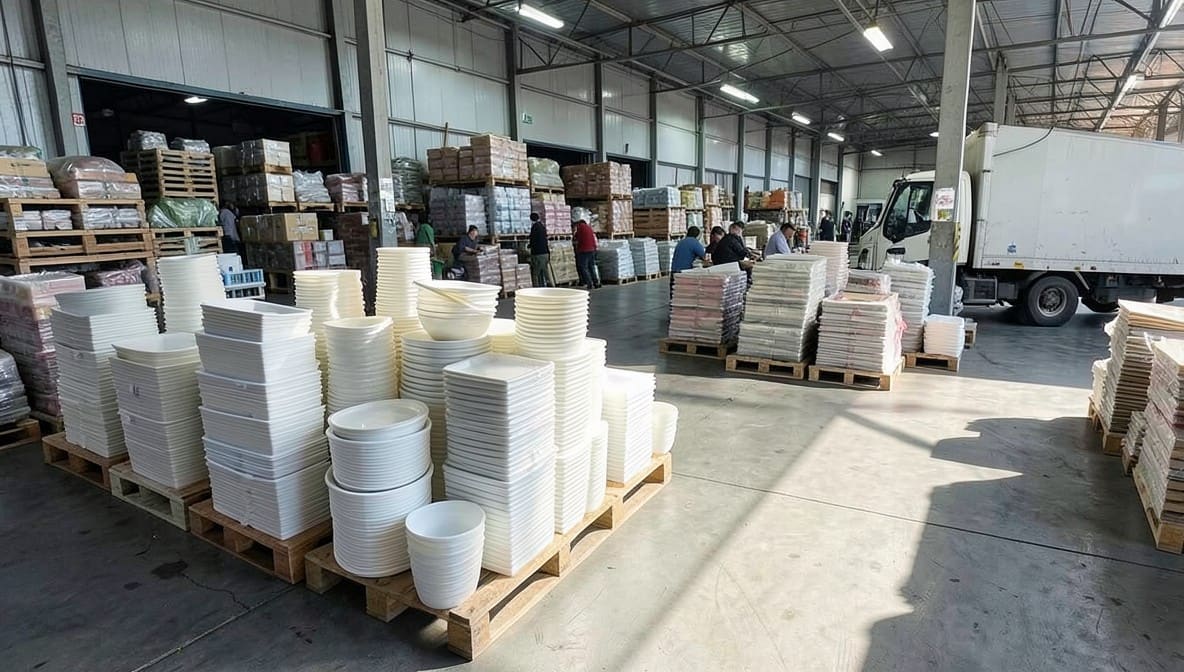
The petitioner, M/s Ambica Enterprises, a registered partnership firm engaged in trading disposable products, entered into a commercial relationship with the respondent, Alok Gupta, proprietor of M/s Tirupati Balaji Overseas & Anr., a manufacturer of disposable products. In April 2024 the petitioner placed an order for disposable bowls and trays worth approximately Rs. 2 crore and made two advances: Rs. 15 lakh on 30.04.2024 and Rs. 16 lakh on 22.05.2024.
Key Facts
- The parties maintained an open, running account for multiple transactions.
- As of 15.06.2024, the petitioner’s books showed an outstanding amount of Rs. 21,18,680 payable by the respondent.
- The petitioner filed a commercial suit seeking recovery of Rs. 23,09,361 with interest at 12% per annum.
- The respondent filed a written statement and an application under Section 8 of the Arbitration Act, seeking reference of the dispute to arbitration based on arbitration clauses contained in invoices dated 09.04.2024, 10.04.2024, 24.05.2024, 13.06.2024 and 15.06.2024.
- The respondent argued that the petitioner had accepted the invoices and therefore consented to the arbitration clause.
- The petitioner contended that the invoices were not signed by it, violating Section 7(3) and Section 7(4)(a) of the Arbitration Act, and that no explicit or tacit consent existed.
Procedural History
- April 2024: Purchase order placed and advance payments made.
- 15.06.2024: Outstanding amount recorded in petitioner’s books.
- Date not specified: Underlying commercial suit filed for recovery of Rs. 23,09,361.
- Date not specified: Respondent filed application under Section 8 of the Arbitration Act.
- 10.07.2026: Commercial Court (South East, Saket Court Complex) allowed the Section 8 application and directed parties to seek remedies under the Arbitration Act.
- 24.08.2026: Delhi High Court delivered the judgment dismissing the petition and upholding the order dated 10.07.2026.
Parties' Positions
- Petitioner: Argued that the arbitration clause in the invoices was invalid because the invoices were unsigned and there was no explicit or implied consent; relied on M/s Taipak Limited & Ors v. Ram Kishore Nagar and Mohammad Eshrar Ahmed v. M/s Tyshaz Buildmart India Pvt. Ltd. among others.
- Respondent: Asserted that arbitration clauses in invoices constitute valid arbitration agreements; relied on Supreme Court precedents such as Concrete Additives and Chemicals Pvt. Ltd. v. SN Engineering Services Pvt. Ltd., Caravel Shipping Services Private Ltd. v. Premier Sea Foods Exim Pvt. Ltd., and Radico Khaitan Ltd. v. Harish Choudhary.
Relief Sought
The petitioner sought a writ of certiorari to set aside the order dated 10.07.2026 and to prevent the matter from being referred to arbitration.
The Legal Issue
Whether an arbitration clause embedded in an invoice, which is unsigned by one party, can be treated as a valid arbitration agreement under Section 7(3) and Section 7(4)(a) of the Arbitration and Conciliation Act, 1996, thereby permitting a referral to arbitration under Section 8.
Arguments Presented
For the Petitioner
The petitioner contended that the Arbitration Act requires a written agreement that must be signed by the parties as mandated by Section 7(3) and Section 7(4)(a). It relied on decisions such as M/s Taipak Limited & Ors v. Ram Kishore Nagar and Mohammad Eshrar Ahmed v. M/s Tyshaz Buildmart India Pvt. Ltd. to argue that the absence of a signature renders the arbitration clause ineffective. The petitioner also emphasized the principle that arbitration is a party-centric mechanism and that no party can be compelled to arbitrate without clear consent.
For the Respondent
The respondent argued that arbitration clauses in commercial invoices are enforceable agreements, even if unsigned, provided the parties’ conduct demonstrates acceptance. It cited Supreme Court rulings in Concrete Additives and Chemicals Pvt. Ltd. v. SN Engineering Services Pvt. Ltd., Caravel Shipping Services Private Ltd. v. Premier Sea Foods Exim Pvt. Ltd., and Glencore International AG v. Shree Ganesh Metals & Anr. to show that the requirement of a signature is not absolute and that conduct, payment, and continued business dealings can satisfy the writing requirement of Section 7(3).
The Court's Analysis
The Court began by noting that the core question was the applicability of Section 7(3) and Section 7(4)(a) to unsigned invoices. It observed that the Supreme Court in Caravel Shipping Services Private Ltd. had held that an arbitration clause in an unsigned bill of lading could still bind a party when the party relied on that document in the underlying suit. The Court reiterated that the statutory requirement is that the agreement be in writing; a signature is not mandatory where the parties’ conduct evidences assent.
"Thus, it becomes relevant to consider whether the conduct of the parties showed an acceptance of the arbitration agreement and an intent to be governed by the Arbitration Act."
The Court further examined the precedent in Glencore International AG which emphasized that non-signing does not preclude arbitration where the parties’ conduct points to acceptance. It distinguished the petitioner’s reliance on M/s Taipak and Mohammad Eshrar on the ground that those cases involved different factual matrices, notably the absence of any express stipulation granting jurisdiction to Delhi courts.
The Court also addressed the scope of the referral court under Section 8, citing Vidya Drolia & Ors. v. Durga Trading Corp. and SBI General Insurance Co. Ltd. v. Krish Spinning that the referral court’s role is limited to a prima facie examination of the existence and validity of the arbitration agreement. It held that once the existence of an arbitration clause is established on a prima facie basis, the referral court need not delve into the deeper question of consent.
Applying these principles, the Court found that the invoices were part of a continuous commercial relationship, that the petitioner had made advance payments against the very invoices containing the arbitration clause, and that no objection to the clause was raised until the filing of the reply to the Section 8 application. Consequently, the Court concluded that the petitioner’s conduct amounted to acceptance of the arbitration agreement, satisfying the requirements of Section 7(3).
In light of the Supreme Court’s pronouncements and the factual matrix, the Court held that the order dated 10.07.2026 allowing reference to arbitration under Section 8 was not infirm. The petition was dismissed, and the matter was left to be resolved in the arbitral forum.
The Verdict
The petition was dismissed. The Delhi High Court upheld the order dated 10.07.2026 that referred the dispute to arbitration under Section 8 of the Arbitration and Conciliation Act, 1996. No monetary award or costs were granted. The Court clarified that an arbitration agreement need not be signed if the parties’ conduct demonstrates acceptance, and it refrained from expressing any view on the merits of the underlying commercial dispute.
What This Means For Similar Cases
Signature Not Mandatory for Arbitration Agreements
- Parties can be bound by arbitration clauses embedded in invoices, purchase orders, or other commercial documents even if unsigned, provided their conduct (payments, continued dealings) shows assent.
- Practitioners should gather evidence of acceptance such as payment receipts, correspondence, and consistent performance to establish a valid arbitration agreement.
Scope of Section 8 Referral Courts
- Referral courts conduct only a prima facie assessment of the existence of an arbitration agreement; they need not adjudicate the deeper issue of consent.
- Once a prima facie case is made, the matter proceeds to arbitration, and the court will not revisit the consent issue unless a clear defect is shown.
Drafting Implications
- Include explicit arbitration clauses in contracts and ensure they are highlighted to avoid disputes over consent.
- Even where signatures are omitted, maintain a clear paper trail of acceptance to safeguard enforceability.
- Counsel should advise clients that reliance on unsigned clauses is viable, but the burden of proof shifts to the party asserting the existence of the agreement.