Topic

Procedural Lapse

Procedural lapse in Indian law refers to technical or administrative failures in following legal procedures, without necessarily undermining substantive rights or public interest.

6 articlesLatest July 2026
Article 226 Powers | High Court Can Retrospectively Shift Section 4 Notification Date to Prevent Injustice in Land Acquisition: Bombay HC
Case Law Analysis
|Bombay High Court

Article 226 Powers | High Court Can Retrospectively Shift Section 4 Notification Date to Prevent Injustice in Land Acquisition: Bombay HC

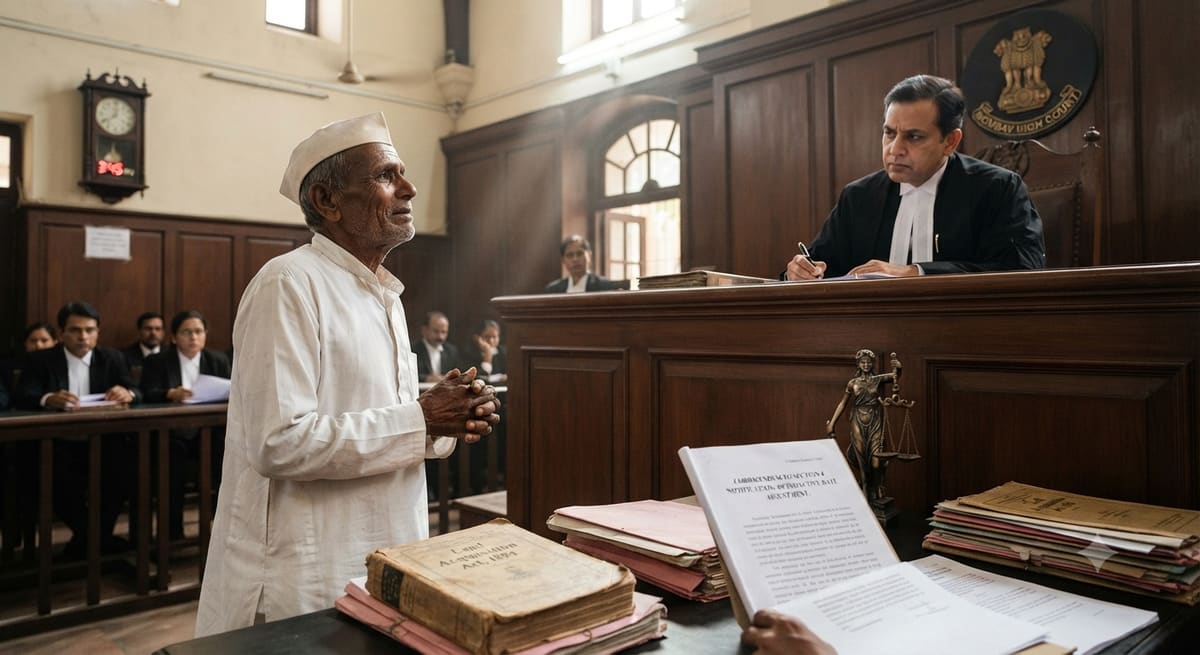
Bombay High Court rules that while State Land Acquisition Officers lack authority to alter Section 4 notification dates under the Land Acquisition Act, 1894, High Courts can exercise Article 226 powers to retrospectively adjust dates to prevent injustice. The Court shifted the notification date to the writ petition filing date, ensuring fair compensation calculation for affected landowners.


Section 439 CrPC | Indefinite Judicial Custody for Non-Appearance Before Trial Court Violates Proportionality : Karnataka HC
Case Law Analysis
|Karnataka High Court

Section 439 CrPC | Indefinite Judicial Custody for Non-Appearance Before Trial Court Violates Proportionality : Karnataka HC

Karnataka High Court rules that prolonged detention for mere procedural non-compliance-such as failure to appear before the trial court-amounts to disproportionate punishment, violating bail jurisprudence under Section 439 CrPC. The judgment underscores that coercive measures must align with the gravity of the lapse, not the underlying offence.

Customs Brokers Licensing Regulations, 2013 | Procedural Lapse Without Fraud or Revenue Loss Cannot Justify License Revocation: CESTAT Chennai
Case Law Analysis
|Custom, Excise & Service Tax Tribunal

Customs Brokers Licensing Regulations, 2013 | Procedural Lapse Without Fraud or Revenue Loss Cannot Justify License Revocation: CESTAT Chennai

CESTAT Chennai has ruled that revoking a customs broker’s license for mere procedural non-compliance-without evidence of fraud, intent, or revenue loss-is disproportionate and violates principles of natural justice. The decision restores the license and security deposit, setting a critical precedent for regulatory fairness in trade compliance and protecting small brokers from punitive overreach.

Service Tax Abatement Under Notification No. 1/2006-ST | Procedural Lapses Cannot Deny Substantive Benefit : CESTAT Kolkata
Case Law Analysis
|Custom, Excise & Service Tax Tribunal

Service Tax Abatement Under Notification No. 1/2006-ST | Procedural Lapses Cannot Deny Substantive Benefit : CESTAT Kolkata

CESTAT Kolkata holds that 67% service tax abatement under Notification No. 1/2006-ST cannot be denied merely due to procedural lapses like non-claim in ST-3 returns. The ruling reinforces that substantive benefits under tax laws prevail over technical non-compliance, impacting construction and works contract service providers.

Section 80IAC IT Act | Belated Form 10CCB Filing Condonable Before Assessment Completion : ITAT Delhi Upholds Substantial Compliance
Case Law Analysis
|Income Tax Appellate Tribunal

Section 80IAC IT Act | Belated Form 10CCB Filing Condonable Before Assessment Completion : ITAT Delhi Upholds Substantial Compliance

ITAT Delhi rules that delayed filing of Form 10CCB under Section 80IAC does not invalidate tax deductions if submitted before assessment finalisation, reinforcing the principle of substantial compliance over procedural technicalities. This precedent protects startups and eligible businesses from losing tax benefits due to minor filing delays.