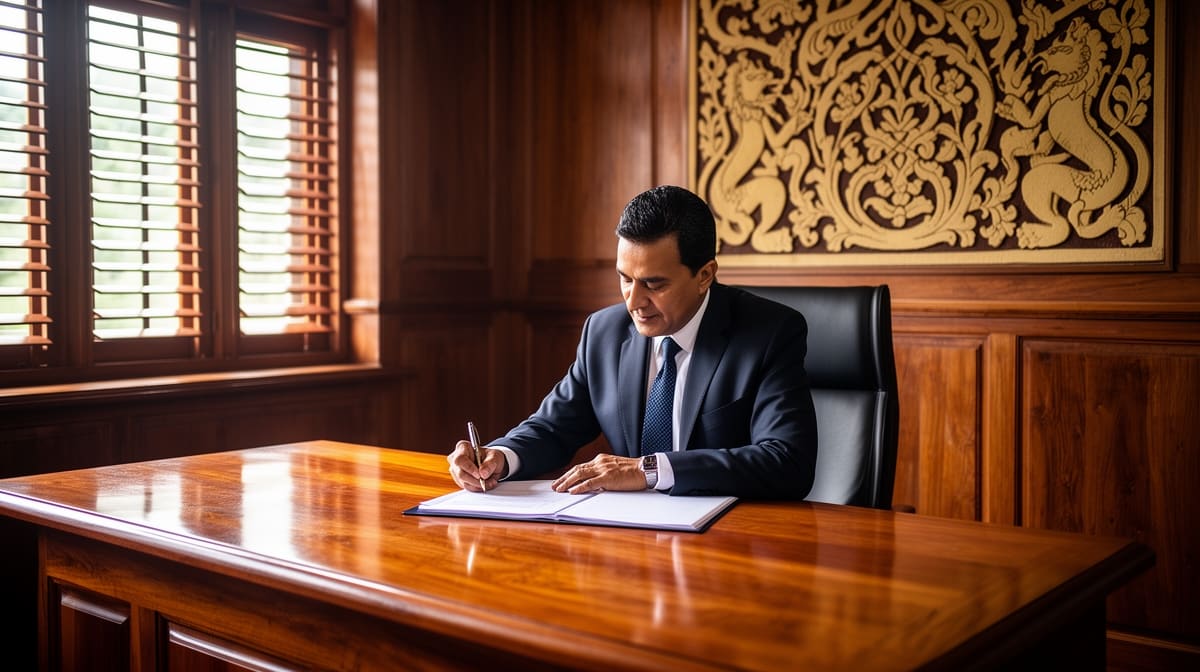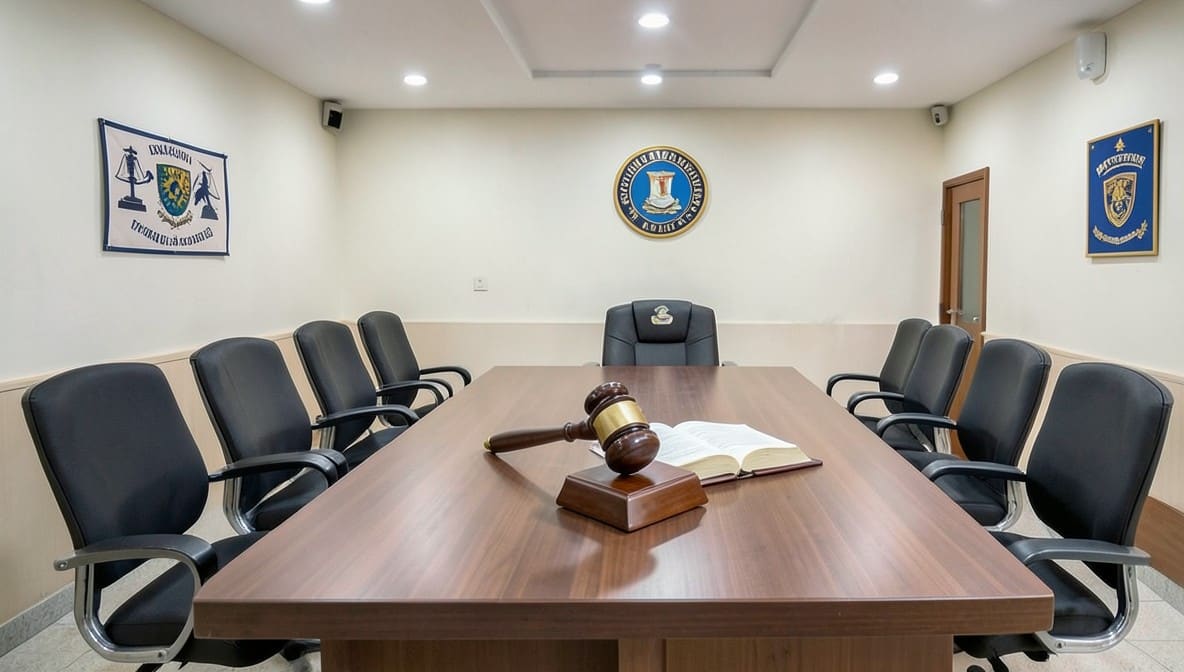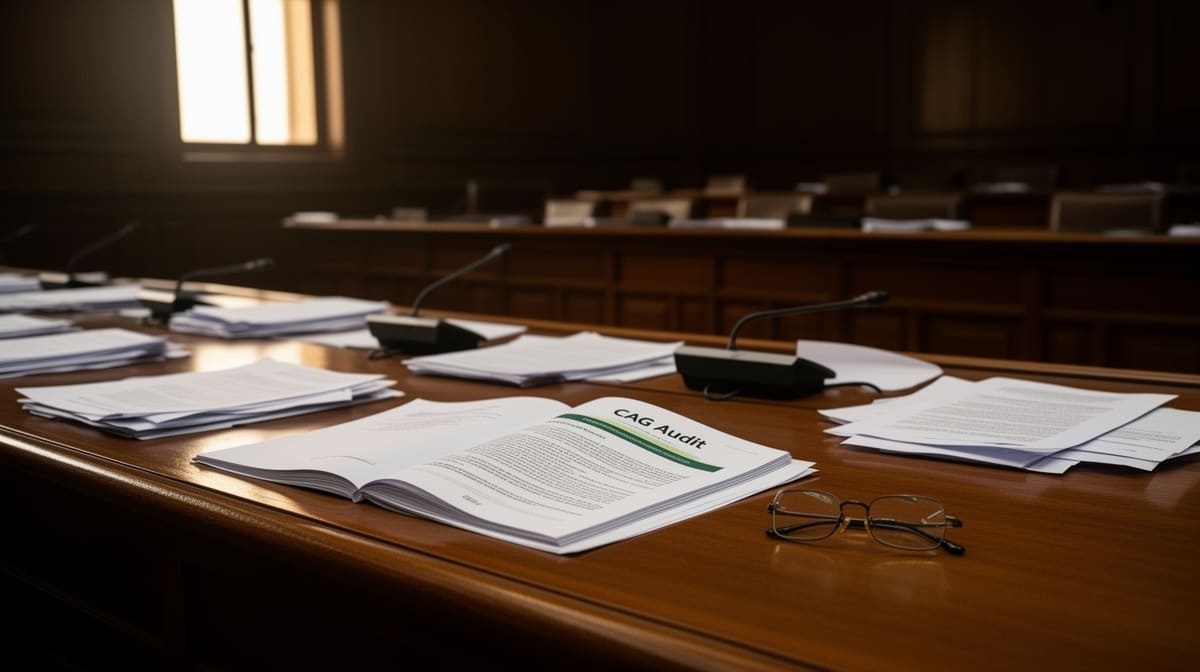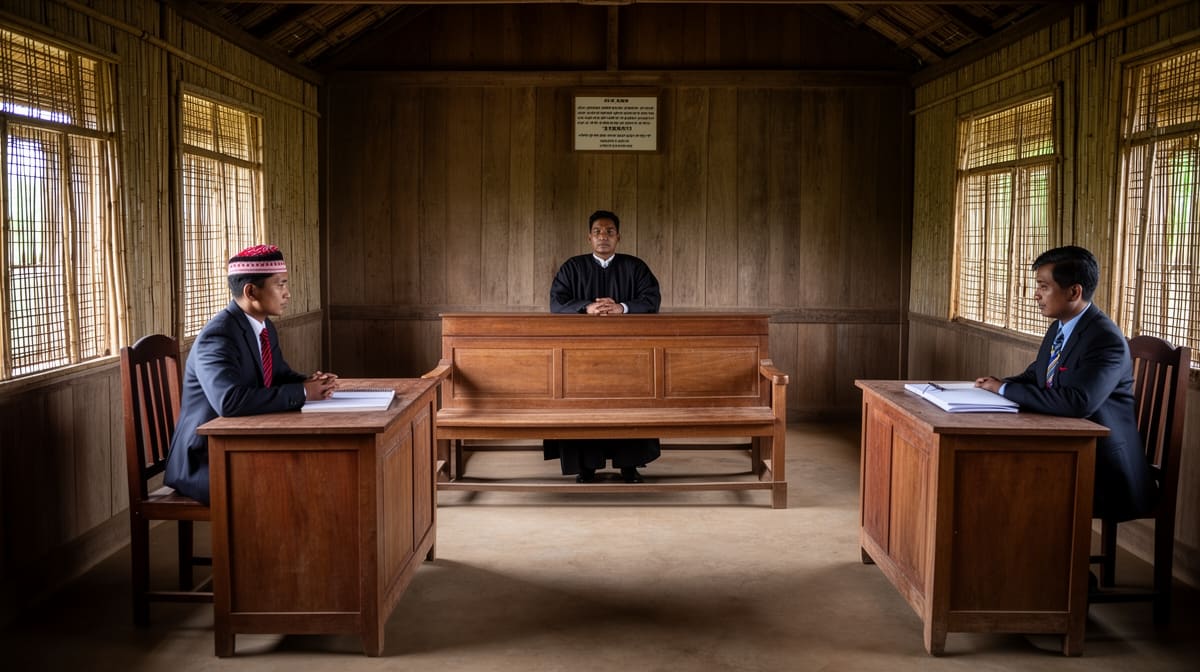
The High Court of Meghalaya has delivered a decisive affirmation of the constitutional principle of separation of powers within autonomous district councils under the Sixth Schedule. By directing the immediate cessation of dual roles held by judicial officers in executive positions, the Court has reinforced the foundational requirement of an independent judiciary even in tribal self-governance frameworks.
Background & Facts
The Dispute
The petitioner challenged the structural fusion of judicial and executive functions within the Garo Hills Autonomous District Council (GHADC). The Secretary to the Executive Committee of GHADC, an administrative officer, was simultaneously serving as the Additional Judge of the District Council Court. This arrangement, though longstanding, violated the explicit mandate of Rules 10 and 11 of the Garo Hills Autonomous District (Administration of Justice) Rules, 1953, which require distinct appointments for judicial and administrative roles.
Procedural History
- December 10, 2025: The Court observed the violation and directed that S.R.R. Marak cease functioning as Secretary to the Executive Committee.
- January 20, 2026: The Advocate General filed an affidavit disclosing that Peter R. Marak had been appointed as In-Charge Secretary, replacing S.R.R. Marak.
- February 10, 2026: An affidavit from P.R. Marak confirmed that S.R.R. Marak continues solely as Additional Judge, and that a full-time judge will be appointed in compliance with law.
Relief Sought
The petitioner sought a writ directing the respondents to strictly enforce the separation of judicial and executive functions in GHADC, and to appoint judicial officers strictly in accordance with the 1953 Rules and the Sixth Schedule to the Constitution.
The Legal Issue
The central question was whether the concurrent holding of judicial and executive offices by a single individual in an Autonomous District Council under the Sixth Schedule violates the constitutional mandate of separation of powers and the specific provisions of the Garo Hills Autonomous District (Administration of Justice) Rules, 1953.
Arguments Presented
For the Petitioner
The petitioner relied on the express language of Rules 10 and 11 of the 1953 Rules, which require separate appointments for judicial officers and administrative secretaries. He cited State of Rajasthan v. Union of India to emphasize that the Sixth Schedule is not a license to dilute constitutional principles, but a mechanism to preserve autonomy within the framework of democratic governance. He argued that dual roles compromise impartiality, invite conflict of interest, and erode public confidence in the judiciary.
For the Respondent
The State contended that the appointment of P.R. Marak as In-Charge Secretary was made under Rule 19(2) of the Assam and Meghalaya (Constitution of District Councils) Rules, 1951, and that the arrangement was temporary pending full-time appointment. They argued that the functional separation had been achieved with S.R.R. Marak no longer holding the secretarial post, and that the interim arrangement did not violate the spirit of the law.
The Court's Analysis
The Court examined the constitutional architecture of the Sixth Schedule, which grants autonomy to tribal areas while embedding them within the broader constitutional order. It held that autonomy does not equate to exemption from core constitutional values, particularly the separation of powers. The Court emphasized that the 1953 Rules were not advisory but mandatory, and their violation undermined the legitimacy of judicial proceedings.
"The judiciary cannot function as an appendage of the executive, even within autonomous councils. The very purpose of establishing District Council Courts is to ensure justice administered independently, not as an extension of administrative control."
The Court noted that while the State had taken corrective steps by removing S.R.R. Marak from the secretarial role, the appointment of another executive officer to the same post did not resolve the underlying structural flaw. The Court accepted the undertaking that a full-time judge would be appointed in accordance with law, and found that the petition had been rendered infructuous by this compliance.
The Verdict
The petition was disposed of as fulfilled. The Court held that the judiciary must be functionally and formally separated from the executive in Autonomous District Councils, and that any officer holding judicial office must not concurrently discharge executive functions. The appointment of a full-time judge must proceed without delay and in strict compliance with the 1953 Rules.
What This Means For Similar Cases
Judicial Independence Is Non-Negotiable Under the Sixth Schedule
- Practitioners must challenge any dual-role appointments in District Council Courts, even if justified as "interim."
- The Sixth Schedule does not permit deviation from constitutional norms of judicial independence.
- Any appointment of a judicial officer must be made through a transparent, merit-based process distinct from administrative postings.
Procedural Compliance Is Mandatory, Not Discretionary
- Rule 10 and Rule 11 of the 1953 Rules are not directory but mandatory.
- Courts will not accept assurances of future compliance as substitute for immediate adherence.
- Petitioners may seek contempt proceedings if timelines for full-time appointments are unreasonably delayed.
Administrative Appointments Cannot Override Judicial Statutes
- Rule 19(2) of the 1951 Rules cannot override the specific judicial appointment framework in the 1953 Rules.
- Where two rules conflict, the more specific provision governing judicial administration prevails.
- Legal officers must verify the hierarchy of applicable rules before advising on appointments.