The Madhya Pradesh High Court has clarified that an internal college inquiry report conducted under the POSH Act is not irrelevant merely because it is non-judicial. In a sexual assault case, such a report may be summoned under Section 94 of the Bharatiya Nagarik Suraksha Sanhita to test the credibility of the prosecutrix during prosecution evidence, reinforcing the principle that all material bearing on the truth of allegations must be considered.
Background & Facts
The Dispute
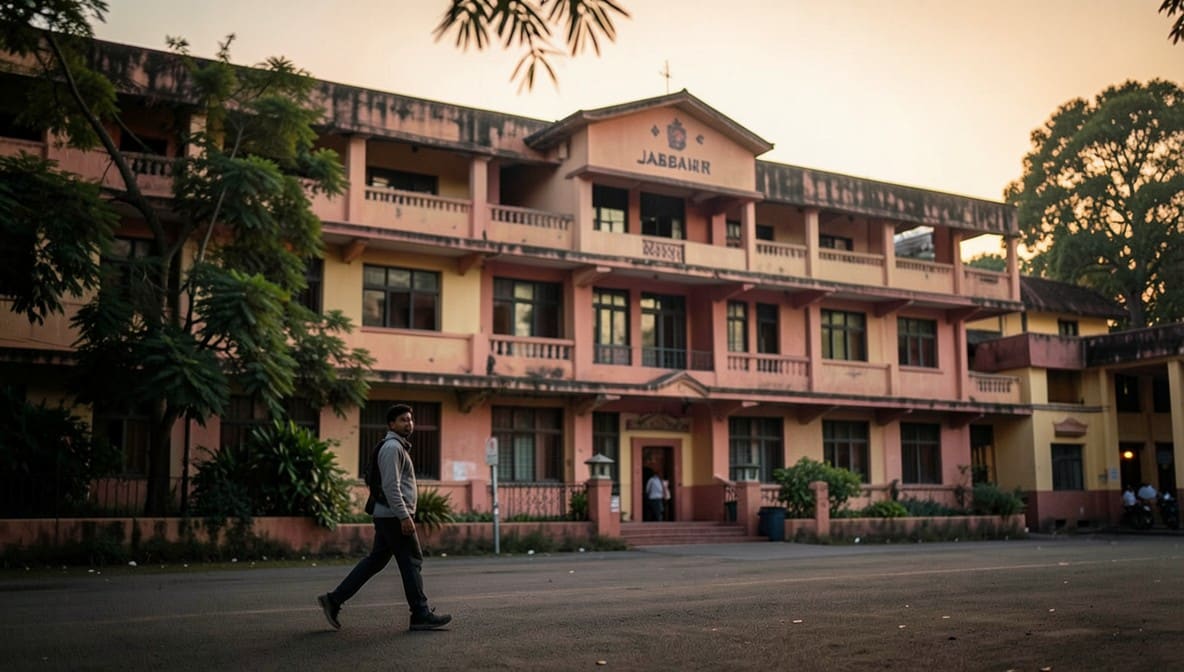
The petitioner, Mohammad Noor Islam Qadri Ansari, is accused of sexually exploiting the prosecutrix, a fellow student at Shri Ram Institute of Science and Technology, Jabalpur. The allegations arose from two incidents: one on 13.04.2024 within the college premises, and another on 14.04.2024, the location of which is unspecified in the FIR. An FIR was registered on 25.10.2024 under relevant provisions of the Indian Penal Code and the Protection of Children from Sexual Offences Act.
Key Facts
- The prosecutrix and the petitioner were both students at Shri Ram Institute of Science and Technology, Jabalpur
- On 13.04.2024, the alleged incident occurred inside the college building
- On 14.04.2024, a second alleged incident occurred, with no specified location in the FIR
- The prosecutrix filed a formal complaint with the college’s Vishakha Committee/Complaints Committee under the Sexual Harassment of Women at Workplace (Prevention, Prohibition and Redressal) Act, 2013 (POSH Act)
- The college committee conducted an inquiry, recorded statements of the prosecutrix and her parents, and issued a final report
- The petitioner sought production of this report under Section 94 BNSS to confront the prosecutrix during prosecution evidence
- The trial court rejected the application, holding that the report was not relevant for the criminal trial
Procedural History
- 13.04.2024: Alleged incident of sexual exploitation within college premises
- 14.04.2024: Alleged second incident (location unspecified)
- 25.10.2024: FIR registered against the petitioner
- Between 25.10.2024 and 16.03.2026: College Vishakha Committee conducted inquiry and submitted its report
- 16.03.2026: Trial Court rejected petitioner’s application under Section 94 BNSS to summon the college inquiry report
- 05.05.2026: Petitioner filed Misc. Petition No. 2555 of 2026 before the Madhya Pradesh High Court
The Parties' Positions
For the Petitioner
The petitioner argued that the college inquiry report contained statements made by the prosecutrix and her parents under oath before an internal committee. These statements may contradict her testimony in court and are therefore essential to test her credibility during prosecution evidence. He emphasized that Section 94 BNSS permits summoning any document necessary or desirable for the trial, and that the report is directly related to the same incident.
For the Respondent/State
The State contended that the college inquiry was a quasi-administrative proceeding under the POSH Act and not a judicial inquiry. It argued that the report was inadmissible in a criminal trial and that the petitioner could seek the material at the stage of defense evidence, if needed.
Relief Sought
The petitioner sought quashing of the trial court’s order dated 16.03.2026 and a direction to summon the college inquiry report under Section 94 BNSS for use during prosecution evidence.
The Legal Issue
Can a college inquiry report prepared under the POSH Act, relating to the same incident as a criminal complaint, be summoned by the trial court under Section 94 BNSS to enable the accused to confront the prosecutrix during prosecution evidence?
Arguments Presented
For the Petitioner
The petitioner relied on the broad language of Section 94 BNSS, which permits the court to summon any document deemed necessary or desirable for the trial. He argued that the college report contained prior statements by the prosecutrix, which could be used to impeach her credibility under Section 145 of the Indian Evidence Act. He cited State of U.P. v. Krishna and Rajesh v. State of Haryana to emphasize that the right to cross-examine includes access to prior inconsistent statements, regardless of the forum in which they were made. He further contended that delaying access to the report until the defense stage would violate the principle of fair trial, as confrontation must occur during prosecution evidence to effectively challenge the witness’s testimony.
For the Respondent/State
The State argued that the POSH Act inquiry was a civil, administrative process and its findings were not admissible in criminal proceedings. It contended that the report lacked the safeguards of a judicial proceeding and that its admission could prejudice the trial. The State also relied on the trial court’s observation that the petitioner could seek the report during defense evidence, asserting that this provided sufficient opportunity for the accused.
The Court's Analysis
The Court examined the scope of Section 94 BNSS, which replaces Section 91 CrPC and empowers courts to summon any document or thing deemed necessary or desirable for the purposes of investigation, inquiry, or trial. The Court rejected the State’s narrow interpretation that only judicial or formal evidence qualifies.
"If relating to same incident, the College where whole or part of the incident has taken place has also conducted some enquiry and taken statements of the prosecutrix, then the said material cannot be said to be totally irrelevant for the purpose of trial."
The Court emphasized that relevance under Section 94 BNSS is not contingent on the nature of the forum but on the material’s potential to assist in testing the truthfulness of evidence. The college committee’s report contained sworn statements made by the prosecutrix shortly after the alleged incidents, which may contain inconsistencies with her trial testimony. The Court held that the right to confront a witness during prosecution evidence is a fundamental aspect of fair trial under Article 21 of the Constitution, and this right cannot be deferred to the defense stage.
The Court distinguished between admissibility of the report as substantive evidence and its use for impeachment. It clarified that summoning the report under Section 94 BNSS does not mean it will be admitted as proof of facts, but only to enable cross-examination. The Court further noted that the POSH Act mandates confidentiality and procedural fairness, and its findings, while not conclusive, are not irrelevant merely because they are non-judicial.
The Verdict
The petition was allowed. The High Court set aside the trial court’s order dated 16.03.2026 and directed the trial court to summon the inquiry report of the Vishakha Committee of Shri Ram Institute of Science and Technology, Jabalpur, relating to the incident dated 13.04.2024. The report shall be produced for the purpose of enabling the petitioner to confront the prosecutrix during her examination-in-chief in the trial. The trial court shall proceed with the trial in accordance with this direction.
What This Means For Similar Cases
Prior Statements in Administrative Inquiries Are Not Irrelevant
- Practitioners may now invoke Section 94 BNSS to summon reports from internal committees (e.g., POSH, university disciplinary, workplace inquiries) when they contain prior statements by prosecution witnesses
- The relevance of such documents is determined by their potential to impeach credibility, not by the forum in which they were created
- This applies equally to reports from educational institutions, corporate internal committees, or government grievance redressal bodies
Confrontation Must Occur During Prosecution Evidence
- The right to cross-examine a witness using prior inconsistent statements must be exercised during the prosecution’s case, not deferred to the defense stage
- Delaying access to such material undermines the accused’s right to a fair trial under Article 21
- Courts must not treat this as a procedural technicality; failure to permit confrontation at the correct stage may vitiate the trial
POSH Act Reports Are Not Inadmissible Per Se
- Reports under the POSH Act are not automatically excluded from criminal proceedings
- Their evidentiary value lies in their use for impeachment, not as substantive proof
- Defense counsel should routinely request such reports in cases involving institutional complaints, especially where the complainant is a student or employee