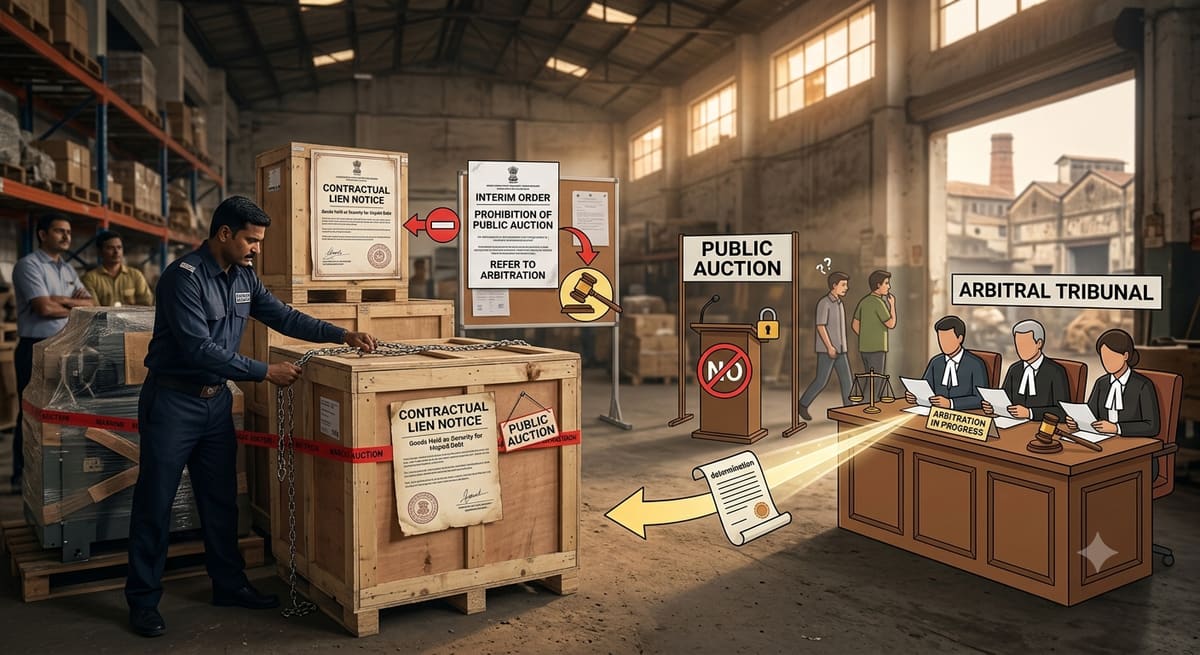
The Bombay High Court has delivered a significant ruling on the scope of interim protection under Section 9 of the Arbitration and Conciliation Act, 1996, in a dispute involving a rent discounting facility secured by mortgage. The Court directed the deposit of lease rentals into a no-lien account and appointed a symbolic Court Receiver to preserve the mortgaged property pending arbitration, while rejecting objections based on maintainability and membership disputes under the Multi State Co-operative Societies Act, 2002.
Background & Facts
The Dispute
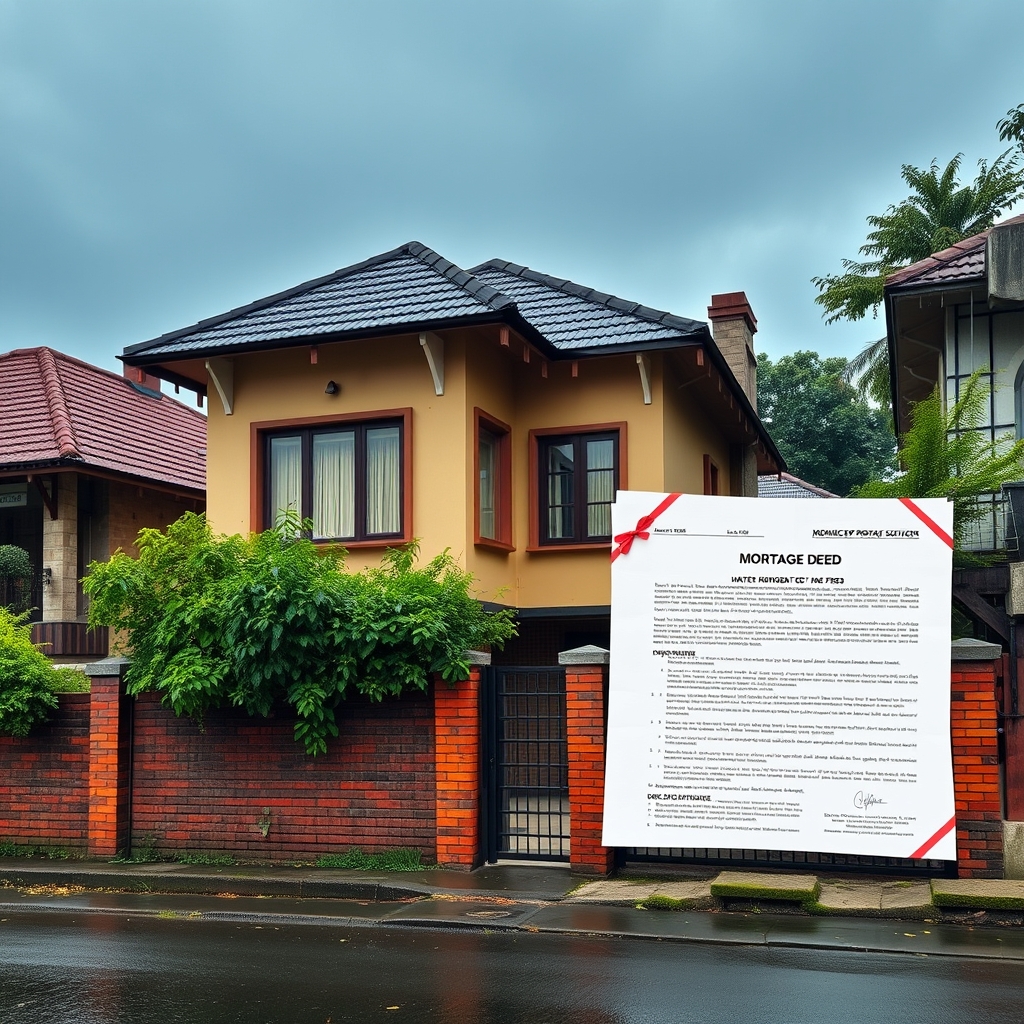
The petitioner, NKGSB Co-Operative Bank Limited, extended a Rent Discounting Facility to respondent no. 1, M/s. Universal Textile Waterproof Co. (India), on 06th November 2012. The facility was secured by a registered Mortgage Deed executed on 08th November 2012 over the mortgaged premises. The terms of the facility required respondent no. 1 to deposit all rent and lease receivables from the mortgaged property into a designated bank account maintained with the petitioner.
Key Facts
- 06.11.2012: Respondent no. 1 approached the petitioner for financial assistance
- 08.11.2012: Facility Agreement and registered Mortgage Deed executed
- June 2019: Loan account of respondent no. 1 became irregular and was classified as a Non-Performing Asset (NPA)
- 27.06.2019: Respondent no. 1 executed a Lease Deed in favour of respondent no. 2, Apollo Tyres Limited, for the mortgaged premises
- 06.09.2019: Petitioner issued notice under Section 13(2) of the SARFAESI Act
- 11.11.2019: Respondent no. 1 replied, expressing willingness to resolve disputes through arbitration
- 17.12.2019: Petitioner issued notice under Section 13(4) of the SARFAESI Act
- 24.12.2019: Respondent no. 1 asserted that the mortgaged property was encumbered by tenancy
- 27.10.2023: Chief Metropolitan Magistrate passed order under Section 14 of the SARFAESI Act
- 22.02.2024: Respondent no. 1 filed application under Section 17 of the SARFAESI Act before the Debts Recovery Tribunal
- 01.03.2024: Debts Recovery Tribunal granted interim protection, restraining further action under the SARFAESI Act
- 09.05.2024: Petitioner addressed letter to respondent no. 2, demanding deposit of lease rentals
- 01.07.2024: Present arbitration petition filed under Section 9 of the Arbitration and Conciliation Act
Procedural History
- 01.07.2024: Arbitration Petition (Comm Arbitration Petition No. 66 of 2025) filed before Bombay High Court
- 18.06.2026: Judgment reserved
- 24.06.2026: Judgment pronounced
The Parties' Positions
For the Petitioner:
- Contended that respondent no. 1 failed to deposit lease rentals from the mortgaged property into the designated account, violating the terms of the Sanction Letter and Mortgage Deed
- Argued that the petitioner is entitled to enforce its rights under the Mortgage Deed and recover rent directly from respondent no. 2
- Relied on the reply dated 11.11.2019, wherein respondent no. 1 expressed willingness to resolve disputes through arbitration
- Submitted that the petitioner had taken steps for appointment of an Arbitrator by addressing a letter to the Central Registrar, Co-operative Societies on 20.01.2025
For the Respondents:
- Raised preliminary objection regarding maintainability, arguing that the petitioner failed to take effective steps for appointment of an Arbitrator
- Contended that respondent no. 1 is not a member of the petitioner bank, and thus the arbitration mechanism under Section 84 of the Multi State Co-operative Societies Act, 2002 is unavailable
- Relied on Goldstar Metal Solutions Pvt. Ltd. v. Dattaram Gajanan Kavtankar and Others (2013 SCC OnLine Bom 448) to argue against interim relief
- Pointed out that respondent no. 1 had already instituted a civil suit against the petitioner concerning the same transaction
Relief Sought
The petitioner sought:
- Direction to respondent no. 2 to deposit lease and licence fees received from the mortgaged property into a designated account
- Appointment of a Court Receiver to protect the secured assets during pendency of arbitration
- Interim protection under Section 9 of the Arbitration and Conciliation Act to preserve the subject matter of the dispute
The Legal Issue
The central questions before the Court were:
- Whether the petitioner had established a prima facie case for interim protection under Section 9 of the Arbitration and Conciliation Act pending constitution of the Arbitral Tribunal;
- Whether the objections raised by the respondents regarding maintainability and membership under the Multi State Co-operative Societies Act defeated the claim for interim relief; and
- Whether the balance of convenience favoured preservation of rental receivables and the mortgaged asset pending arbitration.
Arguments Presented
For the Petitioner
- Relied on Clause 4 of the Specific Conditions in the Sanction Letter, which required respondent no. 1 to deposit all rent and lease receivables from the mortgaged property into a designated account
- Contended that respondent no. 2 failed to comply with the demand made by the petitioner to deposit lease rentals, thereby prejudicing the petitioner’s security interest
- Argued that the Mortgage Deed entitled the petitioner to receive rent generated from the mortgaged property in the event of default
- Submitted that the petitioner had taken steps for appointment of an Arbitrator, as evidenced by the letter dated 20.01.2025 to the Central Registrar
- Pointed out that respondent no. 1, in its reply dated 11.11.2019, had expressed willingness to resolve disputes through arbitration
For the Respondents
- Argued that the petitioner failed to take effective steps for constitution of the Arbitral Tribunal, demonstrating absence of intention to pursue arbitration
- Contended that respondent no. 1 is not a member of the petitioner bank, and thus Section 84 of the Multi State Co-operative Societies Act is inapplicable
- Relied on Goldstar Metal Solutions Pvt. Ltd. v. Dattaram Gajanan Kavtankar and Others to argue that interim relief should not be granted in the absence of a valid arbitration agreement
- Submitted that the pendency of proceedings before the Debts Recovery Tribunal and actions under the SARFAESI Act barred separate interim protection
The Court's Analysis
The Court conducted a detailed analysis of the principles governing interim measures under Section 9 of the Arbitration and Conciliation Act, emphasizing that such relief is intended to preserve the subject matter of the dispute pending final adjudication by the Arbitral Tribunal.
"The scope of consideration at present is limited. The Court is required to see whether the material available discloses a need for interim protection so that the subject matter of the dispute remains available till constitution of the Arbitral Tribunal and determination of rights. While exercising jurisdiction of this nature, the Court cannot proceed because a claim is asserted. It is required to consider whether a prima facie case exists, whether balance of convenience lies in favour of protection and whether refusal of relief may result in prejudice which may not be easily repaired later."
The Court rejected the respondents’ objection regarding absence of intention to arbitrate, noting that:
- Respondent no. 1, in its reply dated 11.11.2019, had expressed willingness to resolve disputes through arbitration
- The petitioner had taken steps for appointment of an Arbitrator by addressing a letter to the Central Registrar on 20.01.2025
- The material on record did not justify a conclusion that arbitration was never intended
Regarding the membership dispute, the Court held that:
- The controversy required deeper examination, including scrutiny of records maintained by the petitioner and statutory requirements for admission of members
- Such an exercise was not appropriate while considering interim measures
- The question before the Court was whether the property and monetary benefits forming the subject matter of the dispute required preservation pending final adjudication
The Court placed significant emphasis on disclosure of rental receivables