The Bombay High Court has affirmed the availability of interim relief under Section 9 of the Arbitration and Conciliation Act, 1996 to prevent asset dissipation by a respondent facing financial distress and ongoing criminal investigation. The order provides critical guidance on the scope of judicial intervention before the constitution of an arbitral tribunal, reinforcing the principle that courts may act to preserve the subject matter of dispute even when arbitration is pending.
Background & Facts
The Dispute
The petitioner, Chandrasekar Ramiah, entered into a series of financial arrangements with Moneyedge Capital Services, represented by its Director Rajeev Jadhav, beginning in August 2023. The petitioner was induced to invest approximately Rs. 1.40 Crores under representations of assured monthly returns. These investments were formalized through multiple written agreements. Payments were made regularly until June 2024, after which all disbursements ceased.
Key Facts
- The petitioner made investments between August 2023 and September 2024 under various agreements
- On 30 September 2024, the respondent executed a Loan Agreement-cum-Memorandum of Understanding (IMOU) acknowledging liability for the outstanding amount
- Clause 4 of the IMOU secured repayment with a parcel of land at Suhagad, Pali, Maharashtra, to be sold in case of default
- The respondent failed to repay the principal or initiate sale of the secured property despite repeated demands
- As of May 2025, the outstanding amount, inclusive of contractual and penal interest, stood at Rs. 1,64,12,100
- A legal notice dated 29 May 2025 was returned unserved with endorsement: "Addressee Left without instructions"
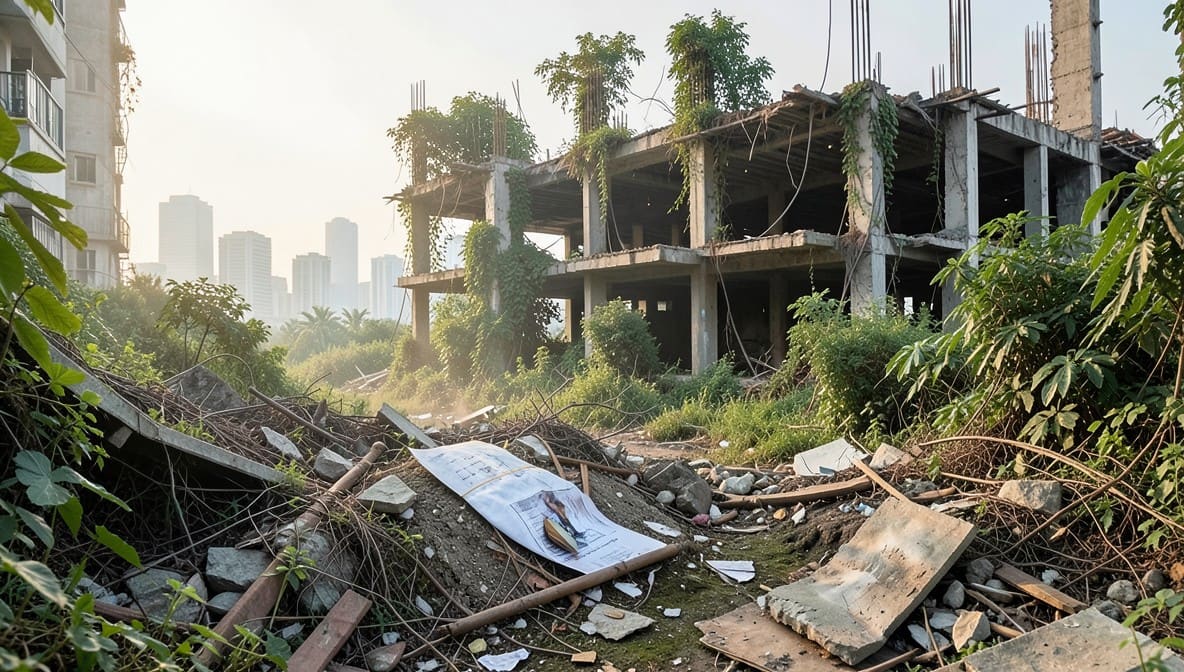
- The Economic Offences Wing (EOW) is investigating the Moneyedge Group for alleged cheating of investors, with properties including the Pali land already under attachment
- The petitioner invoked arbitration via notice dated 16 July 2025 and clarified the seat and venue as Mumbai via notice dated 21 August 2025
Procedural History
- 07 August 2023: First investment made by petitioner into Moneyedge financial scheme
- 30 September 2024: Execution of Loan Agreement-cum-MOU acknowledging debt of Rs. 1.40 Crores plus interest
- 31 December 2024: Deadline for repayment under IMOU expired without payment
- 29 May 2025: Legal notice sent to respondent; returned unserved
- 16 July 2025: Arbitration invoked by petitioner via formal notice
- 21 August 2025: Clarification notice designating Mumbai as seat and venue of arbitration
- 30 September 2025: Arbitration Petition No. 17 of 2026 filed under Section 9 of the Arbitration and Conciliation Act
- 18 June 2026: Judgment delivered by the Bombay High Court
The Parties' Positions
Petitioner: Argued that the respondent was actively dissipating assets, had abandoned its registered office, and was under EOW investigation. The petitioner sought urgent interim measures to preserve the subject matter of arbitration and prevent irreparable harm to its claim.
Respondent: Did not appear or file any written response. The court noted the absence of any opposition or counter-affidavit.
Relief Sought
The petitioner sought five reliefs under Section 9:
- Disclosure of all assets, bank accounts, demat accounts, receivables, and pending litigation
- Restraint on sale, transfer, or creation of third-party rights over non-attached assets
- Appointment of a Court Receiver with powers under Order XL Rule 1 CPC
- Deposit of Rs. 1,64,12,100 plus interest as security for the claim
- Ad interim relief on all the above
The Legal Issue
The central question was whether a court may grant interim relief under Section 9 of the Arbitration and Conciliation Act, 1996 to restrain disposal of assets and compel disclosure of financial information when arbitration is pending but the arbitral tribunal has not yet been constituted, and the respondent is under investigation for financial fraud.
Arguments Presented
For the Petitioner
The petitioner relied on the broad remedial purpose of Section 9, citing S.B.P. & Co. v. Patel Engineering and Rajeev Thakur v. Union of India, to argue that courts have wide discretion to preserve the subject matter of arbitration. It emphasized the respondent’s conduct - failure to repay, abandonment of office, unserved legal notice, and ongoing EOW investigation - as clear indicators of asset dissipation risk. The petitioner contended that disclosure and restraint are necessary to ensure any future arbitral award remains enforceable.
For the Respondent
No arguments were presented by the respondent. The court noted the absence of any opposition, which weighed in favor of granting the petitioner’s prayer.
The Court's Analysis
The Court examined the statutory framework under Section 9, noting that its purpose is to preserve the status quo pending arbitration. The court held that the petitioner had demonstrated a prima facie case with a serious dispute over a substantial sum, coupled with credible evidence of financial instability and criminal investigation against the respondent.
"The respondent has left its registered office, failed to respond to legal notice, and is under investigation by the EOW for alleged cheating of investors. The risk of asset dissipation is not speculative but evident."
The Court distinguished between the powers of the arbitral tribunal under Section 17 and those of the court under Section 9, affirming that interim relief under Section 9 is available even before the tribunal is constituted. The court further held that disclosure of assets and restraint on dealing with non-attached properties are proportionate and necessary measures to prevent frustration of the arbitration process.
The Court declined to appoint a receiver or direct deposit of funds, noting that such measures are more appropriately sought before the arbitral tribunal under Section 17. However, it found the first two prayers - disclosure and restraint - to be justified and within the court’s jurisdiction.
The Verdict
The petitioner succeeded on prayers (A) and (B). The Court directed the respondent to file an affidavit disclosing all movable and immovable properties, bank accounts, demat accounts, receivables, debts, and pending litigation within 14 days. The respondent, its directors, servants, and agents are restrained from selling, transferring, creating charges, or otherwise dealing with any assets not already under attachment by the EOW or any other authority. All other prayers were dismissed without prejudice to the petitioner’s right to seek further relief before the arbitral tribunal under Section 17. The arbitration petition stands disposed of.
What This Means For Similar Cases
Disclosure of Assets Is a Valid Section 9 Remedy
- Practitioners may now confidently seek full financial disclosure from respondents under Section 9 where there is credible risk of asset dissipation
- Courts will treat non-cooperation, abandonment of office, and pending criminal proceedings as strong indicators of risk
- Affidavits disclosing assets must be comprehensive and sworn under penalty of perjury
Restraint Orders Are Proportionate and Enforceable
- Courts will grant injunctions against disposal of non-attached assets even without proof of actual transfer
- The burden shifts to the respondent to demonstrate that restraint is unnecessary or disproportionate
- Such orders remain in force until the conclusion of arbitration unless modified by the arbitral tribunal
Section 9 Is Not a Substitute for Section 17
- Courts will not grant receivership or deposit orders under Section 9 unless exceptional circumstances exist
- Parties must reserve applications for possession, collection of income, or security deposits for the arbitral tribunal under Section 17
- Section 9 is a protective tool; Section 17 is an executive one