The Delhi High Court Division Bench has dismissed an appeal under Section 37 of the Arbitration and Conciliation Act, 1996, upholding a Single Judge's order granting interim protection under Section 9 to restrain the appellants from creating third-party rights in a commercial mall project. The Court affirmed that the respondent's claim, though entangled in complex ownership disputes and parallel proceedings, disclosed a prima facie case warranting preservation of the subject matter pending arbitral adjudication.
Background & Facts
The Dispute
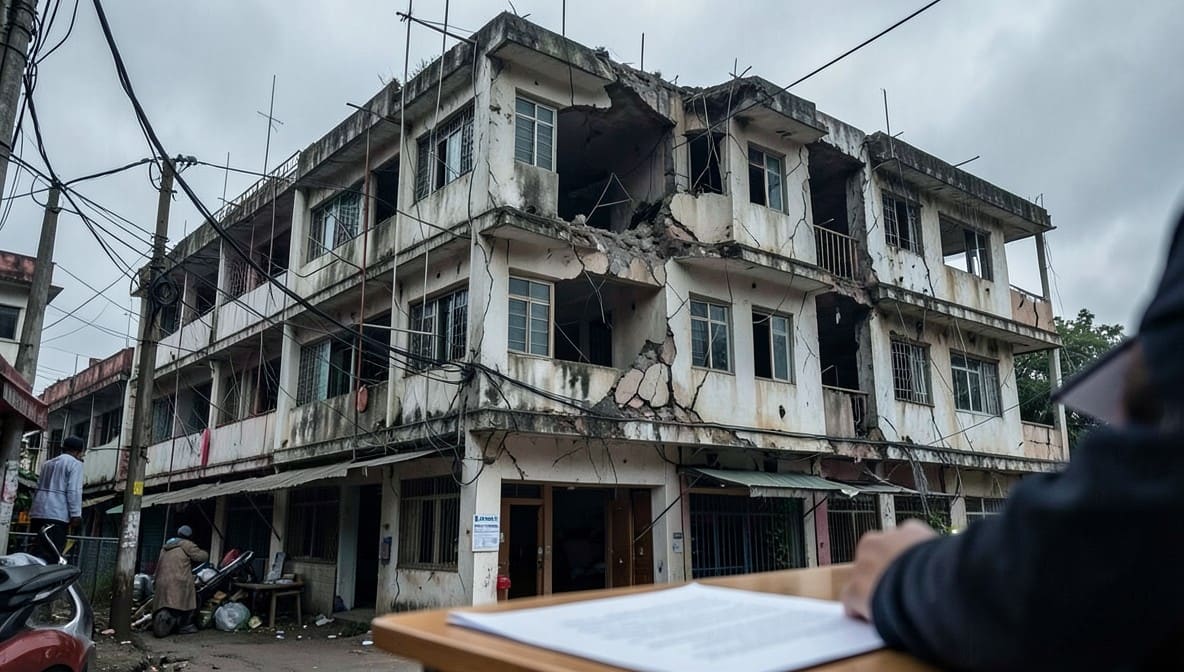
The appeal arises from a long-standing commercial dispute concerning the development of a commercial mall project ("Project") on a plot allotted by the Delhi Development Authority (DDA). The appellants - Mr. Bhupesh Kumar Dhingra (Appellant No. 1), M/S S.S. Con-Build Pvt. Ltd. (SSCBPL, Appellant No. 2), and M/S Suridhi Commercial Infra Pvt. Ltd. (Suridhi, Appellant No. 3) - challenged the order dated 03.07.2026 passed by the learned Single Judge in O.M.P.(I) (COMM.) 129/2026, which allowed a Section 9 application filed by Mr. Rajeev Behl (Respondent). The Respondent sought to restrain the appellants from creating third-party rights in, or otherwise dealing with, 50% of the saleable area of the Project.
Key Facts
- On 05.12.2006, three promoters - Mr. Rajeev Behl, Mr. Yogesh Gupta, and Mr. Pankaj Dayal - formed Realtech Infrastructure Limited (RIL) as equal shareholders.
- Appellant No. 2 (SSCBPL) was incorporated in 2006 as a Special Purpose Vehicle, jointly owned by the Dhingra Group and the Realtech Group (50% each), to develop the Project.
- A perpetual lease deed was executed by DDA in favour of SSCBPL on 10.05.2007 upon payment of approximately Rs. 100 crores.
- On 02.06.2011, the three promoters of RIL entered into a Memorandum of Understanding (MOU-I) to divide the Realtech Group businesses. The Project allegedly fell to the Respondent's share. The appellants were not signatories to MOU-I.
- On 20.09.2011, a second Memorandum of Understanding (MOU-II) was executed between the Respondent, Appellant No. 1, and Appellant No. 2, recognising the Respondent as the person entitled to represent RIL's interest in the Project. RIL was not a party to MOU-II.
- During the pendency of arbitration under MOU-I before Justice (Retd.) S.B. Sinha, a Settlement Agreement was executed between the Respondent and Mr. Pankaj Dayal on 16.12.2015.
- The MOU-I Arbitration Award dated 28.01.2018 declared MOU-I valid and binding, held that the rights of the Realtech Group in the Project stood vested with the Respondent, and incorporated the Settlement Agreement. However, the appellants contend the award did not declare the Respondent as successor-in-interest of RIL for shareholding and advances in SSCBPL.
- On 14.09.2015, SSCBPL leased approximately 33,000 sq. ft. in the Project to M/s Total Properties Maintenance LLP (owned by the Respondent's brother-in-law) at the Respondent's instance.
- On 07.10.2015, RIL objected to the Respondent's continuation on the board of SSCBPL; he was removed as director on 14.01.2016. The Respondent alleges the Extraordinary General Meetings of 14.12.2015 and 14.01.2016 were held without notice to him.
- The lease dated 14.09.2015 was cancelled unilaterally by SSCBPL vide letter dated 03.03.2016. The Respondent challenged this cancellation in arbitration before Justice (Retd.) P.K. Bahri, who upheld the lease's validity vide award dated 19.02.2018.
- A Divestment Agreement was executed on 18.01.2018, under which RIL allegedly divested its stake in SSCBPL to Appellant No. 3 (Suridhi). The Respondent claims he became aware of this only on 16.07.2019 and alleges it is a sham transaction - unstamped, unregistered, without board resolutions, and executed to defeat his rights. He further alleges Suridhi is owned and controlled by Appellant No. 1 and his family.
Procedural History
- 2016: Respondent filed proceedings before the Company Law Board (now NCLT). C.P. No. 13/2016 dismissed on 23.08.2024 (Respondent held not a shareholder in SSCBPL in personal capacity). Company Appeal (AT) No. 275/2024: NCLAT directed status quo on 29.08.2024.
- C.P. No. 55/2016 (rectification of SSCBPL register) stated to be pending.
- W.P.(C) 5217/2022 and W.P.(C) 3364/2023: SSCBPL challenged DDA's lease cancellation; possession protected by orders dated 31.03.2022 and 13.04.2022.
- W.P.(C) 6868/2023: Respondent restrained Sub-Registrar from registering further documents for the Project on 19.05.2023.
- 25.11.2024: DDA decision restored SSCBPL's lease; Conveyance Deed dated 20.12.2024 executed by DDA in favour of SSCBPL. Respondent challenged this in W.P.(C) 5470/2025 (came to know on 08.09.2025).
- W.P.(Crl.) 844/2025 and contempt petitions also pending.
- O.M.P.(ENF.)(COMM.) 140/2023: Enforcement petition for MOU-I Arbitration Award filed in 2023.
- O.M.P.(I)(COMM.) 259/2023: Section 9 petition against RIL and others; interim protection for City Emporium Mall, Chandigarh granted on 14.08.2023; disposed of as infructuous on 22.07.2025 with protection continued till enforcement petition disposal.
- 18.02.2026: Respondent invoked arbitration under Clause 9 of MOU-II via legal notice.
- O.M.P.(I)(COMM.) 129/2026: Section 9 application filed; Impugned Order dated 03.07.2026 allowed the application.
- 18.08.2026: Single Judge extended interim protection till adjudication of Section 17 application by Arbitral Tribunal (not challenged in this appeal).
- Present Appeal: FAO (OS) (COMM) 216/2026 filed against the Impugned Order.
Relief Sought
The appellants sought setting aside of the Impugned Order dated 03.07.2026, contending the Respondent had no locus standi, no prima facie case, the claim was barred by limitation, the cause of action lay only against RIL, and the injunction improperly affected third-party rights without impleading them.
The Legal Issue
The central questions were: (1) Whether the Respondent, not being a shareholder of SSCBPL in his personal capacity and not a signatory to MOU-I, had locus standi to invoke Section 9 of the Arbitration Act based on MOU-II; (2) Whether the Single Judge correctly found a prima facie case, balance of convenience, and irreparable injury despite complex ownership disputes, parallel proceedings, and the Divestment Agreement; (3) Whether the issue of limitation, involving disputed questions of fact and law, should be decided at the Section 9 stage or left to the Arbitral Tribunal; (4) Whether interim protection restraining creation of further third-party rights was justified when substantial inventory had already been sold.
Arguments Presented
For the Appellants
The appellants contended that the Respondent made no independent investment in SSCBPL - the investment was made by RIL - and his claim rests entirely on MOU-I, which the Arbitral Award did not declare him as successor-in-interest of RIL for shareholding and advances. They argued the Single Judge failed to properly consider the MOU-I Award's findings, the Respondent's subsequent conduct (not executing the Award for nearly five and a half years, not implementing MOU-II against SSCBPL), and that the cause of action, if any, lay against RIL, not the appellants. The Divestment Agreement of 18.01.2018 transferred the disputed rights to Suridhi, and the Respondent, aware since 16.07.2019, did not challenge RIL's action. They further submitted the claim was barred by limitation (cause of action arising on 03.03.2016 and 18.01.2018), the Single Judge wrongly placed the onus on them, the injunction covered areas already sold to third parties not impleaded, and the principles in Colgate Palmolive (India) Ltd. v. Hindustan Lever Ltd. and American Cyanamid Co. v. Ethicon Ltd. were not properly applied. They also relied on the earlier proceedings - O.M.P.(I)(COMM.) 259/2023 (no interim relief granted) and O.M.P.(ENF.)(COMM.) 140/2023 (notice not issued to RIL) - to argue against the present relief.
For the Respondent
The Respondent argued that MOU-II was executed between him and Appellant Nos. 1 and 2, creating an arbitration agreement directly binding them. He was inducted into SSCBPL as RIL's representative and units were leased at his instance, establishing his connection to the Project. The MOU-I Award vested Realtech Group's rights in him, and the Divestment Agreement was a sham transaction to defeat his rights. He invoked arbitration under Clause 9 of MOU-II via notice dated 18.02.2026 and sought Section 9 protection to preserve the subject matter. He contended the Single Judge correctly found a prima facie case, balance of convenience in his favour (given multiple pending proceedings and substantial inventory already sold), and irreparable injury if further third-party rights were created. The issue of limitation involved mixed questions of law and fact for the Arbitral Tribunal. The earlier proceedings did not prejudice the current application - interim protection was in fact granted in O.M.P.(I)(COMM.) 259/2023 and continued, and the enforcement petition order merely directed notice at the initial stage.
The Court's Analysis
The Division Bench, comprising Justice Anil Kshetarpal and Justice Bharat Parashar, began by reiterating the well-settled principle that an appellate court would not interfere with the exercise of discretion by the court of first instance merely because another view may be possible. Interference is warranted only where discretion has been exercised arbitrarily, capriciously, perversely, or contrary to settled principles governing interim relief, citing Wander Ltd. v. Antox India (P) Ltd.
The Court noted that the Single Judge had elaborately dealt with all three essential ingredients for interim relief: (i) existence of a prima facie case, (ii) balance of convenience, and (iii) irreparable injury. On the appellants' contention that the Respondent never acquired RIL's interest in SSCBPL, the Court observed that the Single Judge's prima facie view - that this raises a serious dispute for adjudication in the proposed arbitration - was correct. The existence of the arbitration agreement under MOU-II between the Respondent and Appellant Nos. 1 and 2 was not in dispute. Whether Appellant No. 3 is bound by the arbitration agreement was left open for the Arbitral Tribunal. The Court held that the Respondent's initial induction into SSCBPL as RIL's representative and the subsequent leasing of units at his instance raised serious disputes amenable to final adjudication. It could not be said at this stage that the Respondent had no locus standi to file a Section 9 petition.
On the contention that the cause of action lay only against RIL, the Court found MOU-II itself was executed between the Respondent and Appellant Nos. 1 and 2. The subsequent cancellation of the lease and the Divestment Agreement formed part of the disputes regarding the Project. Whether the Respondent ultimately succeeds is a matter for arbitral adjudication; at the Section 9 stage, his claim could not be held ex facie untenable.
Regarding limitation, the Court endorsed the Single Judge's reliance on ITW Signode India Ltd. v. Collector of Central Excise and Uttarakhand Purv Sainik Kalyan Nigam Ltd. v. Northern Coal Field Limited, holding that limitation involved disputed questions of law and fact to be determined by the Arbitral Tribunal after evidence.
On the duration of interim protection, the Court noted the Impugned Order granted relief till constitution of the Arbitral Tribunal, but the order dated 18.08.2026 extended it till adjudication of the Section 17 application. Since the latter order was not challenged, no interference was warranted.
As to third-party rights, the Court clarified that the interim protection operates against the appellants and persons claiming through them to restrain further creation of third-party rights. The Single Judge observed that given the nature and number of pending proceedings and substantial inventory already sold, further third-party rights would complicate enforcement of any eventual award. The Court found no infirmity in such preservation. Any existing transferee's independent rights, if prejudicially affected, remain open to assertion in accordance with law.
The Court also declined to examine the proposition that Section 9 jurisdiction is not confined to relief with no effect on non-signatories, as the restraint was directed against the appellants and persons claiming through them for preservation of the subject matter. The interpretation and effect of earlier arbitral awards were rightly left for the Arbitral Tribunal, as the rival contentions raised disputed questions not to be finally determined at the Section 9 stage. The reliance on O.M.P.(I)(COMM.) 259/2023 did not advance the appellants' case, as interim protection had been granted therein and continued. The order in O.M.P.(ENF.)(COMM.) 140/2023 merely directed notice at the initial stage and contained no adjudication on liability or entitlement.
The Verdict
The Division Bench dismissed the appeal, upholding the Impugned Order dated 03.07.2026. The Court held that the appellants failed to demonstrate any perversity, material error in appreciation of facts, or misapplication of settled principles governing interim relief. The interim protection restraining the appellants from creating further third-party rights in respect of the Project, pending consideration by the Arbitral Tribunal, was affirmed. The order dated 18.08.2026 extending protection till adjudication of the Section 17 application by the Arbitral Tribunal remains in force. No order as to costs was made.
What This Means For Similar Cases
Section 9 Relief Available Despite Complex Ownership Disputes
The judgment reinforces that a party to an arbitration agreement can obtain Section 9 interim protection even when the underlying ownership structure is complex and the claimant's title is disputed. The Court will not conduct a mini-trial on title at the Section 9 stage; a prima facie case based on the arbitration agreement and surrounding circumstances suffices. Practitioners should focus on establishing the existence of the arbitration agreement and a plausible claim connected to the subject matter, rather than attempting to conclusively prove ownership.
Limitation Questions Left to Arbitral Tribunal
Following ITW Signode and Uttarakhand Purv Sainik Kalyan Nigam, the Court reiterated that where limitation involves mixed questions of law and fact - such as when the cause of action accrued, whether the claimant had knowledge, or the effect of prior proceedings - the issue should be left to the Arbitral Tribunal. This prevents premature dismissal of Section 9 applications on limitation grounds and preserves the kompetenz-kompetenz principle. Counsel should argue for referral to the Tribunal whenever limitation depends on factual disputes.
Preservation of Subject Matter Trumps Third-Party Sales
The Court upheld an injunction against further creation of third-party rights even though substantial inventory had already been sold. The rationale: multiple pending proceedings and the risk of complicating enforcement of an eventual award justify preserving the remaining subject matter. Practitioners seeking Section 9 relief in real estate or project disputes should highlight the pendency of parallel proceedings and the risk of asset dissipation. However, the injunction does not adjudicate existing third-party rights - those parties can assert their rights independently.
Non-Challenged Extension Orders Bind Parties
The Court refused to interfere with the duration of interim protection because the extension order dated 18.08.2026 (till Section 17 adjudication) was not challenged. This underscores the importance of timely challenging all adverse interim orders, including clarification/modification orders. A party aggrieved by an extension of interim relief must file a separate appeal or challenge; failure to do so precludes raising the issue in an appeal against the original order.