The Bombay High Court has clarified that co-operative societies cannot unilaterally auction mortgaged goods without first initiating arbitration as mandated by statute. This ruling reinforces procedural fairness in debt recovery by co-operative institutions and sets a binding precedent for lenders relying on warehouse receipts as security.
Background & Facts
The Dispute
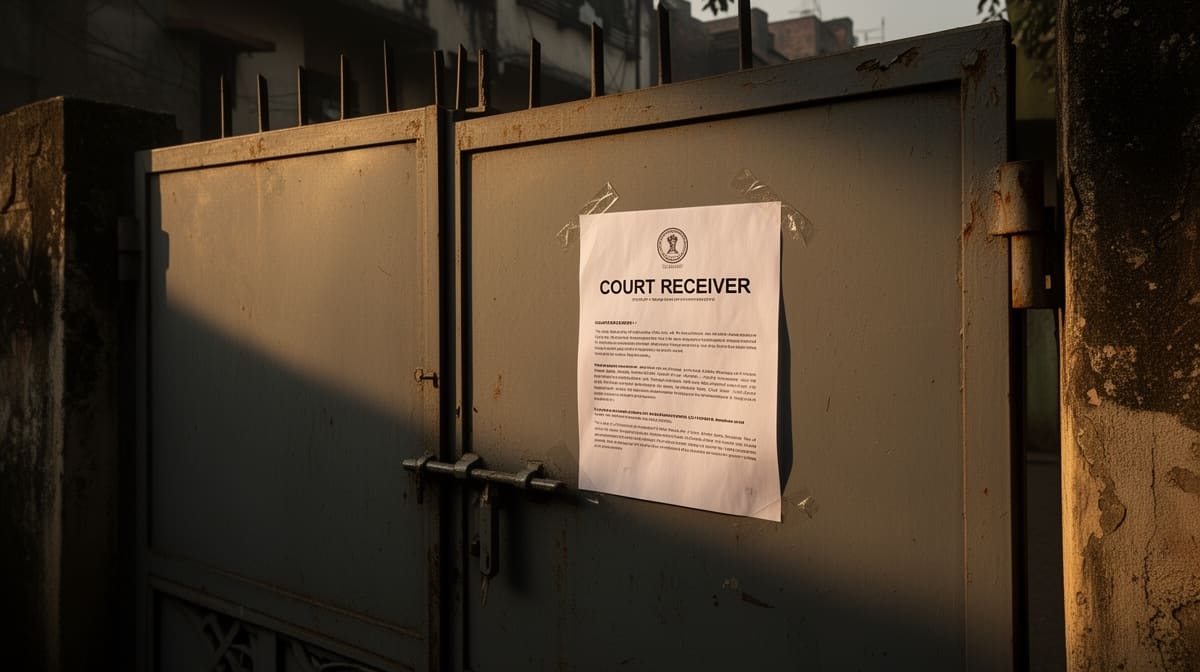
The petitioner, Shri Mahalaxmi Ginning Industries, obtained a loan from Respondent No.3, Buldhana Urban Co-operative Credit Society Limited, secured by warehouse receipts of cotton bales. Upon alleged default, the society issued an auction notice dated 24.02.2026, threatening to sell the pledged cotton on 06.03.2026 without any prior adjudication of the debt.
Procedural History
The petitioner had previously filed a civil suit challenging the auction notice. In response, the co-operative society invoked Order 7 Rule 11 of the Code of Civil Procedure, 1908, arguing that the suit was not maintainable because the dispute fell exclusively under Section 84 of the Multi-State Co-operative Societies Act, 2002, which mandates arbitration. The Trial Court accepted this argument and rejected the plaint on 21.02.2026. Within three days, the society issued the impugned auction notice.
Relief Sought
The petitioner sought an urgent stay on the auction, arguing that the society had bypassed the mandatory arbitration mechanism under Section 84 and violated principles of natural justice by proceeding directly to recovery without adjudication.
The Legal Issue
The central question was whether Section 84 of the Multi-State Co-operative Societies Act, 2002 requires a co-operative society to refer a loan recovery dispute to arbitration before initiating any coercive recovery action, including auction of pledged goods.
Arguments Presented
For the Petitioner
The petitioner’s counsel argued that Section 84 creates an exclusive forum for resolution of disputes between co-operative societies and their members, and that any attempt to bypass arbitration renders recovery proceedings void. Reliance was placed on the principle that statutory arbitration clauses oust the jurisdiction of civil courts unless the statutory mechanism is exhausted. The auction notice, issued immediately after the plaint was rejected, was characterized as an abuse of process.
For the Respondent
The Union of India, through its counsel, did not contest the applicability of Section 84 but argued that the society was merely exercising its contractual right to enforce security. No substantive counter-argument was advanced regarding the mandatory nature of arbitration under the Act.
The Court's Analysis
The Court examined the language and legislative intent behind Section 84, which provides that "any dispute" between a co-operative society and its member shall be referred to arbitration. The Court held that the term "any dispute" is broad and inclusive, covering not only questions of liability but also enforcement of security interests arising from default.
"The legislature intended to insulate co-operative societies from unregulated recovery practices by mandating a structured, adjudicatory mechanism before any coercive action. To permit auction without arbitration would render Section 84 otiose."
The Court noted that the society had not appointed an arbitrator, nor had it initiated any formal proceedings under the Act. The issuance of the auction notice immediately after the civil suit was rejected demonstrated a clear intent to circumvent the statutory framework. The Court emphasized that procedural compliance is non-negotiable in matters governed by special statutes.
The Verdict
The petitioner succeeded. The Court held that Section 84 of the Multi-State Co-operative Societies Act, 2002 mandates arbitration before any auction of pledged goods, and stayed the auction pending arbitration. The society was directed to initiate arbitration proceedings within 30 days.
What This Means For Similar Cases
Arbitration Is a Precondition to Recovery
- Practitioners must now verify whether a co-operative society has initiated arbitration before advising clients on challenges to auctions or seizures
- Any recovery action taken without arbitration is voidable and subject to immediate stay
- Civil suits challenging such actions are not barred merely because arbitration is pending
Warehouse Receipts Do Not Bypass Statutory Arbitration
- Even where security is in the form of warehouse receipts, the statutory arbitration clause under Section 84 applies
- Lenders cannot rely on contractual clauses to override mandatory statutory procedures
- The nature of the collateral (movable goods, agricultural produce) is irrelevant to the applicability of Section 84
Judicial Restraint Against Procedural Evasion
- Courts will intervene where parties attempt to exploit procedural gaps between civil and special law
- Issuing notices immediately after a civil suit is rejected will be viewed as mala fide
- Affidavits of compliance with arbitration provisions must be filed in any recovery-related litigation