The Madras High Court has decisively reaffirmed that registration authorities lack jurisdiction to cancel registered sale deeds, even where fraud is alleged. This ruling restores the primacy of civil courts in resolving title disputes and invalidates administrative actions taken under a provision long since struck down.
Background & Facts
The Dispute
The petitioner, a Resolution Professional appointed by the National Company Law Tribunal (NCLT) in the insolvency proceedings of Coastal Energen Pvt. Ltd., seeks to quash two orders issued by the District Registrar and Deputy Inspector General of Registration. These orders purported to cancel three registered sale deeds executed by the Corporate Debtor between 2007 and 2010, on grounds of alleged impersonation and fraud. The cancellation was sought by a third party, Madathi, who claimed to be the true owner of the land.
Key Facts
- The Corporate Debtor acquired 83 cents of dry land in Survey No. 34/1A and 1.40 acres in Survey No. 24/5 from Ulagammal and others via registered Sale Deed dated 19.06.2009 (Doc. No. 1876/2009)
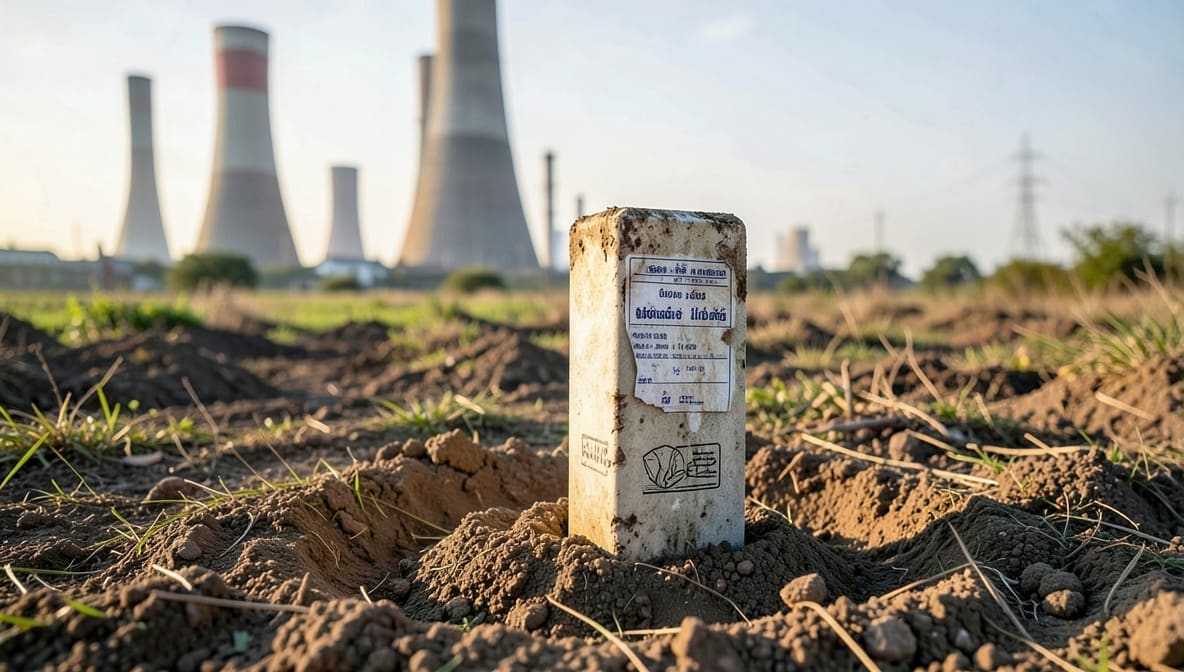
- The land in Survey No. 34/1A was essential for constructing a road for its 2 x 600 MW thermal power plant
- In 2010, the Corporate Debtor purchased an additional 62 cents in Survey No. 34/1A from Madasamy and Madathi via registered Sale Deed dated 27.01.2010 (Doc. No. 238/2010)
- The Corporate Debtor conducted due diligence, verified ownership, and transferred revenue records accordingly
- The Corporate Debtor paid property tax continuously from 2010 and constructed infrastructure on the land
- In 2021, Madathi filed a representation alleging that the sale deeds (Doc. Nos. 1348/2007, 1876/2009, and 238/2010) were executed through impersonation and that she never consented to them
- The District Registrar initiated an inquiry under Section 77 of the Registration Act and issued Order Mu.Mu.No. 7536/AA4/2021 dated 27.06.2022, directing cancellation of the deeds
- The Deputy Inspector General of Registration upheld this order via Order Na.Ka.No. 4957/Vu/2022 dated 29.04.2024
Procedural History
- 19.06.2009: Sale deed executed between Corporate Debtor and Ulagammal et al. (Doc. No. 1876/2009)
- 27.01.2010: Sale deed executed between Corporate Debtor and Madasamy & Madathi (Doc. No. 238/2010)
- 2010 onwards: Corporate Debtor pays property tax and maintains possession
- 2021: Madathi files representation with District Registrar alleging fraud
- 27.06.2022: District Registrar issues order cancelling sale deeds under Section 77
- 29.04.2024: Deputy Inspector General of Registration upholds cancellation order on appeal
- 06.11.2025: Writ Petition reserved for judgment
- 16.04.2026: Judgment pronounced by Madras High Court
Relief Sought
The petitioner sought quashing of the impugned orders dated 27.06.2022 and 29.04.2024, and a direction to relegate the parties to the competent Civil Court for adjudication of title disputes.
The Legal Issue
The central question was whether the District Registrar and Deputy Inspector General of Registration possess statutory jurisdiction under the Registration Act to cancel a registered sale deed on grounds of alleged fraud, particularly after Section 77A had been declared unconstitutional.
Arguments Presented
For the Petitioner
The petitioner’s counsel argued that Section 77A of the Registration Act, which empowered registration authorities to cancel deeds on grounds of fraud, had been struck down by a Division Bench of this Court. Consequently, no administrative authority could entertain complaints or conduct inquiries into the validity of registered documents. The remedy, he submitted, lies exclusively in a civil suit for declaration and cancellation under the Civil Procedure Code. The registration authorities’ orders were ultra vires and amounted to an abuse of power.
For the Respondent
The Government Advocate for the 1st and 2nd respondents contended that the Registrar retained inherent powers under Section 77 to investigate fraudulent registrations and protect public interest. The third party’s claim of impersonation, they argued, warranted administrative intervention to prevent perpetuation of fraudulent titles. The Deputy Inspector General’s appellate review was presented as a legitimate exercise of statutory oversight.
The Court's Analysis
The Court examined the constitutional validity of Section 77A of the Registration Act and noted that it had been declared void by a Division Bench of this Court in a prior judgment. The Court emphasized that once a statutory provision is struck down, it ceases to exist in law and cannot be invoked as a basis for any administrative action.
"Section 77A of the Registration Act was struck down by the Hon’ble Division Bench of this Court. Therefore, the official respondents cannot conduct any enquiry or entertain any appeal."
The Court further held that the power to adjudicate title disputes, including allegations of fraud, impersonation, or forgery in registered documents, is exclusively vested in civil courts. Registration authorities are administrative bodies tasked with recording transactions, not adjudicating rights. Their role is ministerial, not judicial.
The Court rejected the argument that Section 77 conferred substantive powers to cancel deeds, clarifying that Section 77 only permits correction of clerical or arithmetical errors, not cancellation of titles. The impugned orders, therefore, were not merely erroneous - they were legally non-existent.
The Court observed that the Corporate Debtor had been in continuous, open, and peaceful possession of the land for over twelve years, had paid taxes, and had invested in infrastructure. To allow administrative cancellation without judicial scrutiny would violate principles of natural justice and legitimate expectation.
The Verdict
The writ petition was allowed. The impugned orders dated 27.06.2022 and 29.04.2024 are quashed as nullities, being passed without jurisdiction. The parties are directed to approach the competent Civil Court for adjudication of title disputes. There shall be no order as to costs. The connected miscellaneous petition is closed.
What This Means For Similar Cases
Administrative Authorities Cannot Cancel Registered Documents
- Practitioners must immediately challenge any order by a Registrar or Inspector General seeking to cancel a registered sale deed, regardless of alleged fraud
- Such orders are void ab initio if passed after the striking down of Section 77A
- No administrative inquiry, even if labeled as "investigation," can substitute a civil suit
Civil Court Is the Sole Forum for Title Disputes
- Any claim involving ownership, fraud, forgery, or impersonation in registered documents must be filed as a civil suit under Order VII Rule 1 CPC
- Registration offices are not courts and lack the procedural safeguards required for adjudication
- Evidence such as witness testimony, handwriting analysis, and documentary corroboration must be tested under the Evidence Act in civil proceedings
Insolvency Resolution Professionals Must Protect Assets Vigilantly
- Resolution Professionals must document and preserve all title records of corporate assets
- If registration authorities attempt interference, immediate writ relief under Article 226 is available
- Continuous possession and tax payment over a decade constitute strong evidence of title, even without formal registration in all cases