An unregistered partnership firm may recover payment for goods supplied without a formal contract under Section 70 of the Indian Contract Act, 1872, even if it cannot enforce contractual rights under Section 69(2) of the Partnership Act. The Madras High Court has clarified that the absence of a contract does not preclude recovery where goods are delivered, accepted, and utilized, preventing unjust enrichment. This judgment provides critical doctrinal clarity for suppliers operating without formal agreements.
Background & Facts
The Dispute
The plaintiff, M/s Sri Vasan Minerals, an unregistered partnership firm, supplied recycled raw materials to the defendant, M/s Totale Global Pvt. Ltd., a manufacturer of refractory products, between 2017 and November 2023. The plaintiff claimed that payments for goods supplied were initially made within 30 days but later delayed to nearly 300 days. From financial year 2019-20 onwards, payments became increasingly irregular. By November 2023, 102 invoices remained unpaid, aggregating to Rs.2,55,63,034/-.
Key Facts
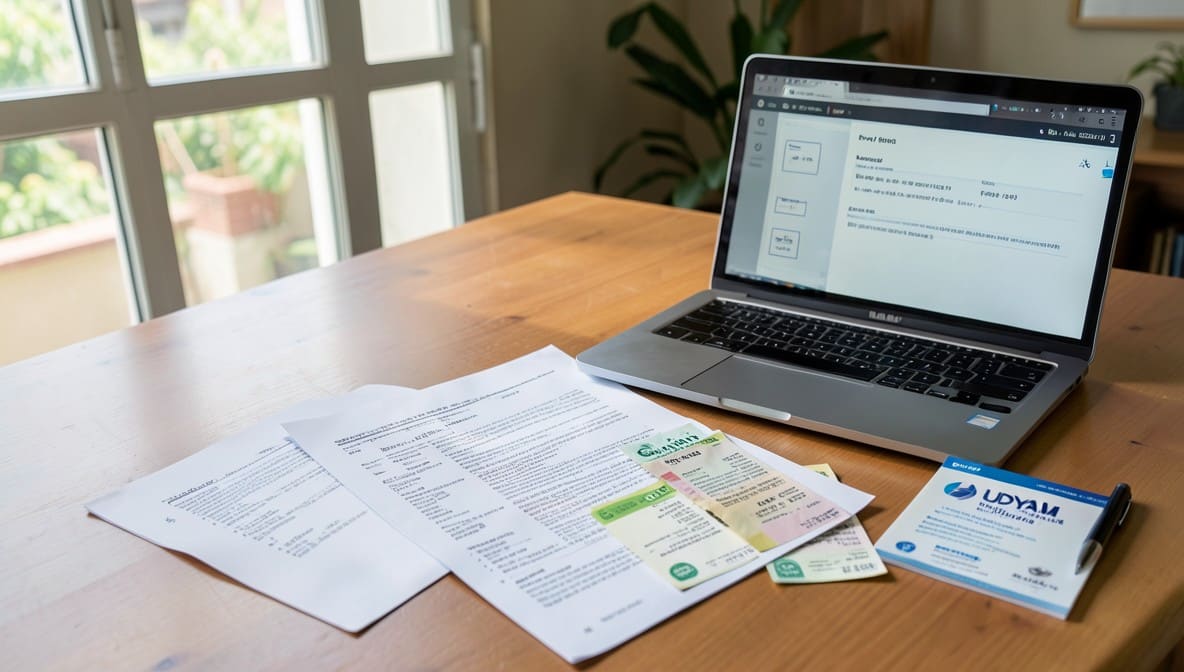
- The plaintiff was registered under the UDYAM portal on 16.02.2022 (Ex. P3)
- Supplies were made from February 2023 to November 2023 across four invoice series: Ex. P4 (37 invoices), Ex. P7 (44 invoices), Ex. P10 (19 invoices), and Ex. P13 (2 invoices)
- Each invoice was accompanied by an e-way bill, GST returns (GSTR-1, GSTR-3B, GSTR-9), and tax payment receipts (Ex. P5, P6, P8, P9, P11, P12, P15, P19, P37, P38)
- The defendant’s employee, Mr. Praveen, was the Chief Technology Officer and allegedly manipulated invoicing
- On 01.12.2023, the defendant sent an email (Ex. P14) alleging over-invoicing, dumping of materials, and collusion with Mr. Praveen
- The defendant’s reply to the legal notice dated 02.01.2024 (Ex. P17) claimed Rs.8,34,487.5 worth of goods were not received and Rs.2.72 crores were dumped, but provided no annexed particulars
- No written or oral contract was produced by either party
- The plaintiff’s Managing Partner, Mr. B. Keerthivasan, testified under cross-examination that no price, margin, or credit period was agreed upon
Procedural History
- 28.05.2024: Summons served on defendant
- 10.07.2024: Court directed plaintiff to file proof affidavit due to defendant’s failure to file written statement
- 29.07.2024: Evidence recording directed before Additional Master II
- 18.09.2024: Court directed Registry to verify if application for leave to defend was filed
- 30.09.2024: No application for leave to defend filed
- 18.10.2024: Court rejected adjournment request and directed evidence recording by 22.11.2024
- 03.12.2024: PW1 (Mr. B. Keerthivasan) examined; Exs. P1 to P38 marked
- 04.12.2024: Cross-examination of PW1 completed
- 01.04.2026: Judgment pronounced
The Parties' Positions
Plaintiff: Asserted that supplies were made without a formal contract; claim is based on quantum meruit under Section 70 of the Contract Act; UDYAM registration establishes MSME status; e-way bills and GST returns prove delivery and acceptance.
Defendant: Contended that the suit is barred under Section 69(2) of the Partnership Act; plaintiff failed to file memorandum under Section 8 of the MSMED Act; supplies were fraudulent, over-invoiced, and dumped; no valid contract exists; plaint lacked statement of truth.
Relief Sought
The plaintiff sought:
- Payment of Rs.2,55,63,034/- as principal amount
- Interest at 24% per annum compounded monthly under the MSMED Act
- Costs of the suit
The Legal Issue
Can an unregistered partnership firm recover payment for goods supplied without a contract under Section 70 of the Indian Contract Act, 1872, despite the bar under Section 69(2) of the Partnership Act, and is it entitled to interest under the MSMED Act?
Arguments Presented
For the Petitioner
The plaintiff relied on Shiv Developers v. Aksharay Developers and Raptakos Brett v. Ganesh Property to argue that Section 69(2) only bars suits enforcing contractual rights, not claims based on quasi-contractual obligations under Section 70. It cited Sita Ram Jaiswal, B.K. Mondal, and MTNL v. Tata Communications to establish that where goods are delivered and accepted without a contract, compensation is recoverable as quantum meruit. The plaintiff emphasized that e-way bills, GST returns, and delivery records proved lawful supply and defendant’s enrichment. It further argued that the statement of truth was filed on 14.05.2024, curing any procedural defect.
For the Respondent
The defendant contended that the suit was barred under Section 69(2) of the Partnership Act because the claim arose from a commercial relationship that was inherently contractual. It relied on Raptakos Brett, Jagdish Chandra Gupta, and M.Muthukumaraswami to argue that even indirect enforcement of contractual rights is barred. It challenged the plaintiff’s MSME status, asserting that no memorandum under Section 8 of the MSMED Act was filed, rendering interest claims invalid. It further alleged that the plaintiff engaged in over-invoicing and dumping, and that the plaint lacked a statement of truth, disqualifying it as a commercial suit.
The Court's Analysis
The Court undertook a rigorous analysis of whether the claim arose from a contract or from a non-gratuitous delivery of goods. It found that the plaint contained no assertion of a written or oral contract, and the plaintiff’s witness explicitly denied any agreement on price, margin, or credit period. The defendant’s own email (Ex. P14) and reply (Ex. P17) confirmed that the supplies were not made pursuant to any mutual understanding, but rather were allegedly dumped and over-invoiced by a third party.
"The materials on record reveal beyond doubt that the plaintiff did not intend to supply goods gratuitously. If it had been intended to deliver goods gratuitously, the plaintiff would not have made supplies under multiple sets of invoices making monetary claims in respect thereof."
The Court held that the three cumulative requirements of Section 70 were satisfied: (i) lawful delivery of goods by the plaintiff, (ii) non-gratuitous intent evidenced by invoicing and GST filings, and (iii) defendant’s enjoyment of the benefit through use in manufacturing, with no return or rejection of goods. The Court distinguished Raptakos Brett and Shiv Developers, affirming that Section 69(2) does not bar suits based on common law or quasi-contractual rights.
The Court further held that the MSMED Act’s interest provisions under Section 16 are inapplicable to claims under Section 70, as those provisions presuppose a contractual debt. Since no contract existed, the claim was one for reasonable compensation, not for recovery of a debt. The Court therefore rejected the claim for 24% compounded interest.
"An action for compensation under Section 70 of the Contract Act is maintained under the principle of quantum meruit where a supply is made without a contract, and, therefore, the terms of supply have not been agreed to by and between the parties. In those circumstances, the claim is not for a debt due but for reasonable compensation."
The Court concluded that interest at 9% per annum, as a reasonable commercial rate, was appropriate from the date of plaint until realization, to reflect the time value of money and prevent unjust enrichment.
The Verdict
The plaintiff succeeded on the principal claim. The Court decreed the suit by directing the defendant to pay Rs.2,55,63,034/- as compensation under Section 70 of the Indian Contract Act, 1872, with simple interest at 9% per annum from the date of plaint (28.05.2024) until realization. The defendant was also directed to pay Rs.6,00,000/- as costs towards court fees, lawyer’s fees, and other expenses. The claim for 24% compounded interest under the MSMED Act was dismissed.
What This Means For Similar Cases
Section 69(2) Does Not Bar Non-Contractual Claims
- Practitioners may now confidently argue that unregistered firms can recover payments for goods delivered without a contract under Section 70, even if the transaction is commercial
- The bar under Section 69(2) applies only to enforcement of contractual rights, not to claims based on unjust enrichment or quantum meruit
- Evidence of delivery (e-way bills, GST returns, acceptance records) is sufficient to sustain such claims
MSMED Act Interest Is Not Automatic
- Interest under the MSMED Act is only available in suits for recovery of a debt arising from a contractual obligation
- Where no contract exists, the claim is for compensation under Section 70, and interest must be determined on equitable grounds
- Practitioners must not automatically plead 24% compounded interest in cases involving unregistered firms without establishing a contractual basis
Documentary Evidence Trumps Oral Denials
-
The defendant’s allegations of over-invoicing and dumping were rejected due to lack of specific evidence
-
GST returns, e-way bills, and reconciliation statements created a strong evidentiary chain
-
Courts will not accept vague denials without supporting documentation or cross-examination
-
Always file GST returns and e-way bills as evidence in supply disputes
-
Avoid pleading MSMED Act interest unless a valid contract and Section 8 memorandum exist
-
Use Section 70 as a fallback claim in all cases where contractual terms are unproven