The Bombay High Court has delivered a significant ruling on the interpretation of Section 7 of the Maharashtra Ownership Flats (Regulation of the Promotion of Construction, Sale, Management and Transfer) Act, 1963 (MOFA), clarifying that promoters must obtain informed consent from flat purchasers before making structural alterations to a sanctioned plan. The judgment underscores the need to balance the promoter’s development rights with the statutory obligations owed to existing apartment owners, setting aside a blanket injunction that had stalled an entire project.
Background & Facts
The Dispute
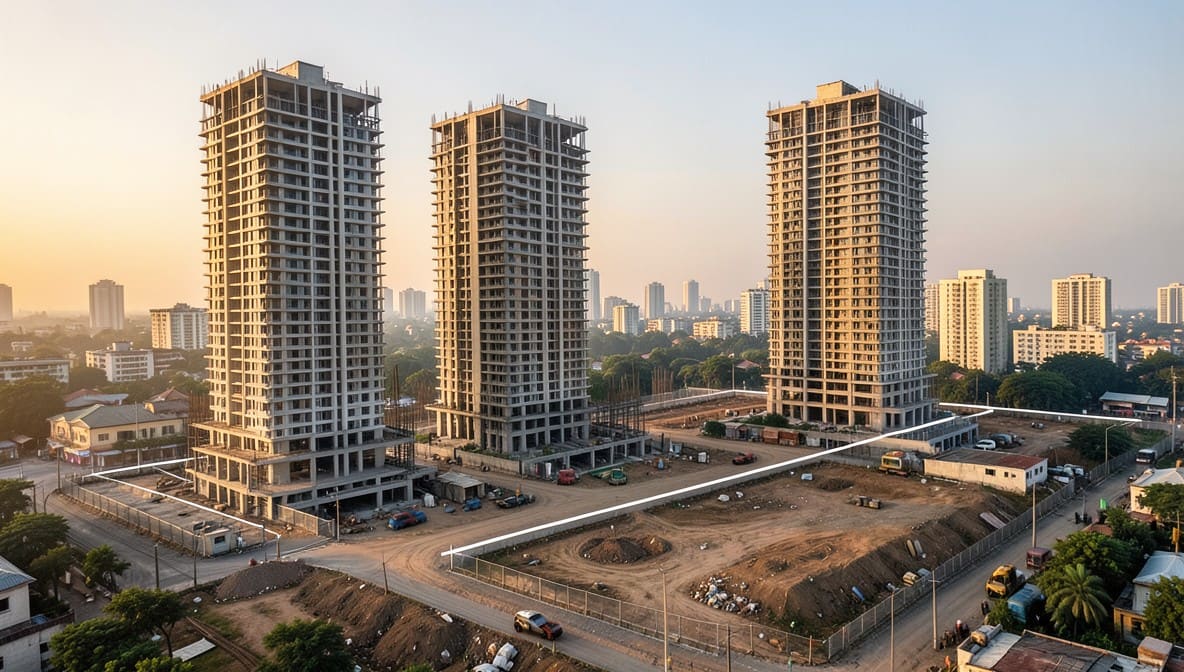
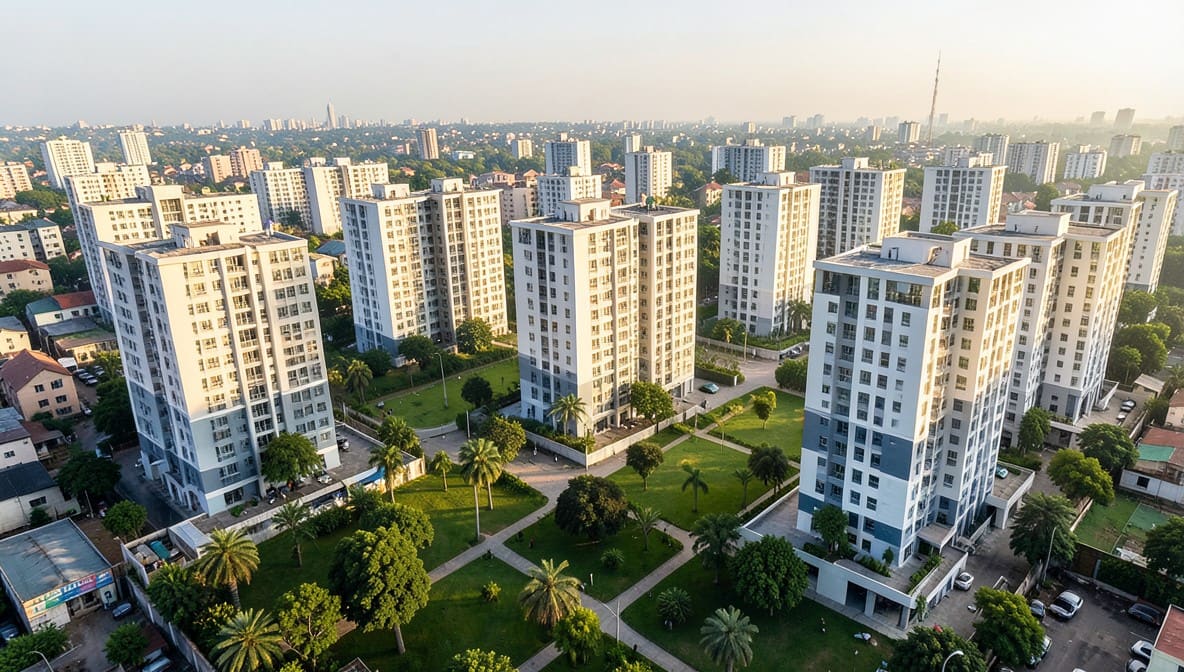
The petitioner, Kolte Patil Developers Limited, a public limited company engaged in real estate development, undertook the project “Aleria” at Kharadi, Pune, in two phases: Block ‘A’ (fully developed by 2011) and Block ‘B’ (proposed for development in 2021). Respondent Nos. 1 to 3 (Omprakash Jainarayan Sharma and others) and Respondent Nos. 4 to 8 (Kanifnath Paraji Changulpai and others) are apartment owners in Block ‘A’. The dispute arose when the petitioner obtained a revised sanctioned plan in 2023 for Block ‘B’, scaling down the floors from ground plus thirteen to ground plus nine, allegedly without obtaining the informed consent of the apartment owners in Block ‘A’, as required under Section 7 of MOFA, 1963.
Key Facts
- 04.09.2017: Original sanctioned plan for Block ‘A’ approved by Pune Municipal Corporation (PMC).
- 2011: Block ‘A’ fully developed; apartment owners put in possession.
- 2021: Petitioner obtained revised sanctioned plan for Block ‘B’ (ground plus thirteen floors).
- 07.08.2023: Petitioner obtained re-revised sanctioned plan for Block ‘B’ (ground plus nine floors) after objections from Block ‘A’ owners.
- 2025: Construction commenced under the re-revised plan, leading to disputes over alleged deviations affecting amenities and facilities for Block ‘A’ owners.
- SCS No. 1248 of 2025: Suit filed by Respondent Nos. 1 to 3 alleging violations of Section 7 of MOFA, 1963, including:
- Removal of children’s play area.
- Reduction of pathway width.
- Relocation of two-wheeler parking slots.
- Absence of space for generator and garbage pit in the revised plan.
- Changes in parking orientation (horizontal to vertical), reducing pathway size.
Procedural History
- 25.11.2025: Learned Civil Judge, Senior Division, Pune, granted temporary injunction (Exhibit “5”) in SCS No. 1248 of 2025, directing:
- PMC (Respondent Nos. 9 and 10) to issue a stop-work order.
- Restraint on PMC from issuing further approvals, NOCs, or certificates to the petitioner without consent of Block ‘A’ owners.
- Restraint on the petitioner from carrying out construction as per the revised sanctioned plan.
- 27.01.2026: District Judge, Pune, dismissed the petitioner’s appeal (MCA No. 374 of 2025), upholding the trial court’s order.
- 2026: Petitioner filed the present Writ Petition (WP No. 4250 of 2026) under Article 227 of the Constitution challenging the orders.
Relief Sought
The petitioner sought:
- Quashing of the orders dated 25.11.2025 and 27.01.2026.
- Permission to carry out construction in accordance with the sanctioned plan, subject to undertakings to maintain existing amenities.
- Relief from the blanket injunction, which allegedly caused irreparable loss to the petitioner and allottees of Block ‘B’.
The Legal Issue
The central question was whether the promoter’s re-revised sanctioned plan for Block ‘B’, which allegedly affected the amenities and facilities of Block ‘A’ owners, violated Section 7 of MOFA, 1963, requiring informed consent from all apartment owners before making structural alterations. Additionally, the Court had to determine whether the blanket injunction granted by the lower courts was justified, given the advanced stage of construction in Block ‘B’ and the equities involved.
Arguments Presented
For the Petitioner
- The lower courts erred in granting a blanket injunction without considering:
- The statutory powers of PMC to grant approvals, which cannot be restrained.
- The balance of convenience, particularly the prejudice to allottees of Block ‘B’, whose apartments were nearly complete.
- The undertakings offered by the petitioner to maintain existing amenities (e.g., driveway width, children’s play area, generator space, and parking).
- The re-revised plan complied with building rules and development control regulations, and the alleged deviations did not warrant a complete halt to construction.
- The consent requirement under Section 7 was misinterpreted; the promoter had disclosed the entire project layout in 2007, and no additional consent was needed for development within the sanctioned plan.
For the Respondents
- The promoter brazenly violated Section 7 of MOFA, 1963 by obtaining the revised plan without the informed consent of Block ‘A’ owners, depriving them of amenities.
- The blanket injunction was justified to prevent a fait accompli, as the promoter’s actions were in flagrant violation of statutory obligations.
- The undertakings offered by the petitioner were insufficient, as they did not fully restore the amenities as per the original sanctioned plan of 2007.
- The concurrent findings of the lower courts should not be interfered with under Article 227, as no perversity or jurisdictional error was demonstrated.
The Court's Analysis
The Court framed its analysis around three key legal principles:
1. Supervisory Jurisdiction Under Article 227
The Court reiterated the limited scope of Article 227, citing the Supreme Court’s judgment in Rajendra Diwan v. Pradeep Kumar Ranibala (2019 SCC Online SC 1586), which held:
“The power of superintendence under Article 227 is supervisory and not appellate. The High Court cannot re-assess or re-evaluate evidence but can intervene only if there is a patent error of law, perversity, arbitrariness, or disregard of settled principles.”
The Court found that the lower courts had not committed any jurisdictional error in holding that the promoter’s actions prima facie violated Section 7 of MOFA, 1963. However, the blanket nature of the injunction warranted interference under Article 227, as it failed to balance equities.
2. Interpretation of Section 7 of MOFA, 1963
The Court examined Section 7(1)(ii) of MOFA, 1963, which mandates that:
“After the plans and specifications of the building approved by the Planning Authority are disclosed or furnished to the persons who agreed to purchase the apartments, the promoter shall not make any alterations or additions in the structure of the building without the previous consent of all the persons who have agreed to take the flats in such building.”
The Court relied on the Supreme Court’s judgment in Jayantilal Investments v. Madhuvihar Coop. Housing Society ((2007) 9 SCC 220), which clarified:
- If the entire project (including future development) is disclosed to flat purchasers at the time of agreement, no additional consent is required for construction within the sanctioned plan.
- However, if the promoter seeks to make alterations or additions not part of the original plan, informed consent under Section 7 is mandatory.
- Informed consent requires full disclosure of the proposed changes; a blanket consent at the time of agreement is insufficient.
The Court held that the re-revised plan of 2023 introduced material alterations (e.g., removal of play area, changes in parking orientation) that affected the amenities of Block ‘A’ owners. Thus, the promoter’s failure to obtain informed consent prima facie violated Section 7.
3. Principles of Temporary Injunction
The Court emphasized that mere existence of a prima facie case is insufficient to grant an injunction. Citing Ramakant Ambalal Choksi v. Harish Ambalal Choksi (AIR 2024 SC (supp) 2379), the Court reiterated the triple test for granting injunction:
- Prima facie case: A substantial question requiring adjudication.
- Irreparable injury: Injury that cannot be adequately compensated by damages.
- Balance of convenience: Whether the injury to the plaintiff outweighs the prejudice to the defendant.
The Court found that the lower courts failed to apply the balance of convenience test:
- The blanket injunction stalled the entire project, causing irreparable loss to the petitioner and allottees of Block ‘B’, whose construction was nearly complete.
- The nature of deviations (e.g., changes in parking orientation, pathway width) did not warrant a complete halt to construction, especially when the petitioner offered undertakings to maintain existing amenities.
- The equities favored moulding the relief rather than imposing a blanket restraint.
Undertakings by the Petitioner
The Court noted the undertakings filed by the petitioner in two affidavits:
- Additional Affidavit (01.05.2026):
- Maintain driveway width (7.5 meters).
- Retain children’s play area.
- Preserve generator, garbage spaces, and garden.
- Not disturb bicycle parking.
- Increase underground water tank capacity to 84,500 liters (from 47,000 liters).
- Further Additional Affidavit (05.05.2026):
- Attempt to relocate the septic tank to provide parking spaces.
- Not provide fabricated bicycle stands pending suit disposal.
- No mechanized parking to be constructed.
The Court held that these undertakings substantially addressed the alleged violations, ensuring the continuance of amenities for Block ‘A’ owners. Thus, the blanket injunction was unwarranted and inequitable.
The Verdict
The Court allowed the writ petition and set aside the orders dated 25.11.2025 and 27.01.2026, with the following directions:
- Quashing of injunction orders: The blanket injunction restraining construction and directing PMC to issue a stop-work order was set aside.
- Acceptance of undertakings: The petitioner’s undertakings in the affidavits dated 01.05.2026 and 05.05.2026 were accepted as undertakings to the Court, to be scrupulously complied with.
- Permission to proceed with construction: The petitioner was permitted to carry out construction in accordance with the sanctioned plan, subject to compliance with the undertakings and building rules, by-laws, and development control regulations.
- Duration of undertakings: The undertakings would operate till the final disposal of the suit.
- No order as to costs.
What This Means For Similar Cases
Informed Consent Is Non-Negotiable Under Section 7
- Promoters cannot rely on blanket consents obtained at the time of agreement. Section 7 of MOFA, 1963 mandates informed consent for any structural alterations, requiring full disclosure of proposed changes.
- Practical takeaway: Promoters must:
- Document detailed discussions with apartment owners regarding proposed alterations.
- Obtain written consent specifying the exact nature of changes.
- Avoid unilateral revisions to sanctioned plans without prior approval.
Blanket Injunctions Must Be Avoided
- Courts must balance equities while granting injunctions. A blanket restraint on construction is disproportionate if the promoter offers undertakings to maintain amenities.
- Practical takeaway: Plaintiffs seeking injunctions should:
- Quantify the prejudice caused by deviations (e.g., specific amenities affected).
- Propose limited relief (e.g., restraint on specific alterations rather than entire project).
- Avoid overbroad orders that cause irreparable loss to third parties (e.g., allottees of Block ‘B’).
Undertakings Can Mitigate Violations
- Courts may accept undertakings to address statutory violations, provided they substantially restore the status quo.
- Practical takeaway: Promoters facing injunctions should:
- Proactively offer undertakings to maintain critical amenities.
- Ensure compliance with undertakings to avoid contempt proceedings.
- Avoid cosmetic compromises - undertakings must fully address the grievances of apartment owners.