The Bombay High Court has clarified that a landowner who grants limited development rights to an independent developer and expressly reserves all additional Floor Space Index and Transferable Development Rights to itself cannot be treated as a promoter under the Maharashtra Ownership Flats Act, 1963. This landmark ruling upholds contractual clarity and proprietary rights against expansive statutory interpretations that seek to impose promoter obligations on landowners with no active role in construction or sale.
Background & Facts
The Dispute
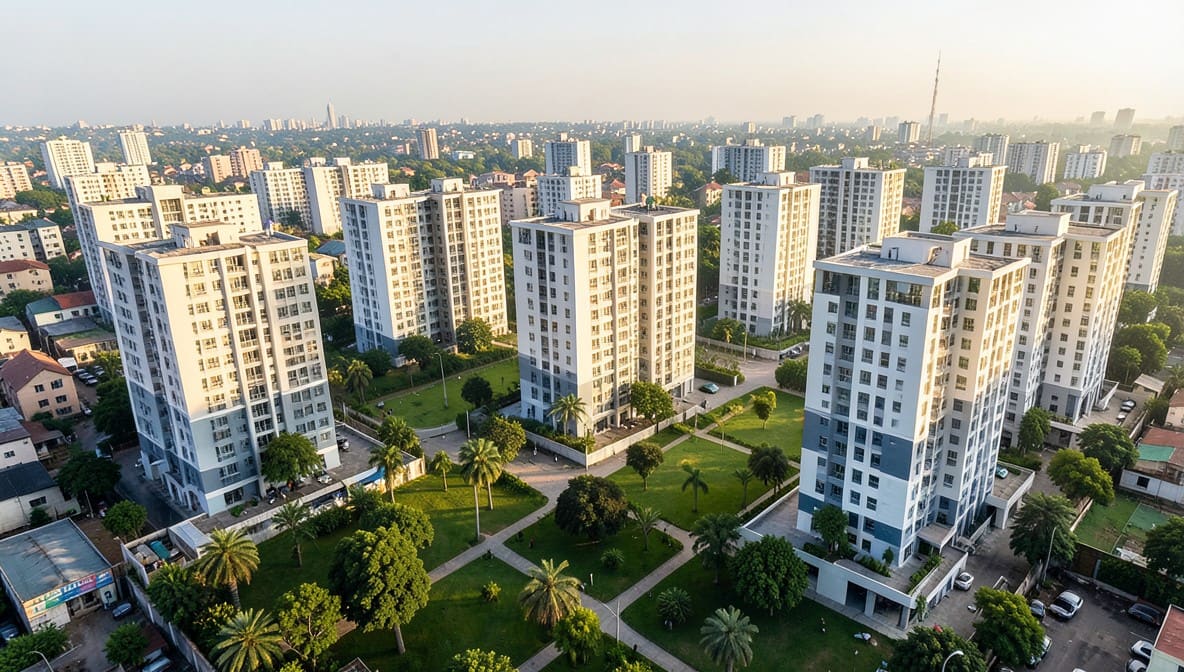
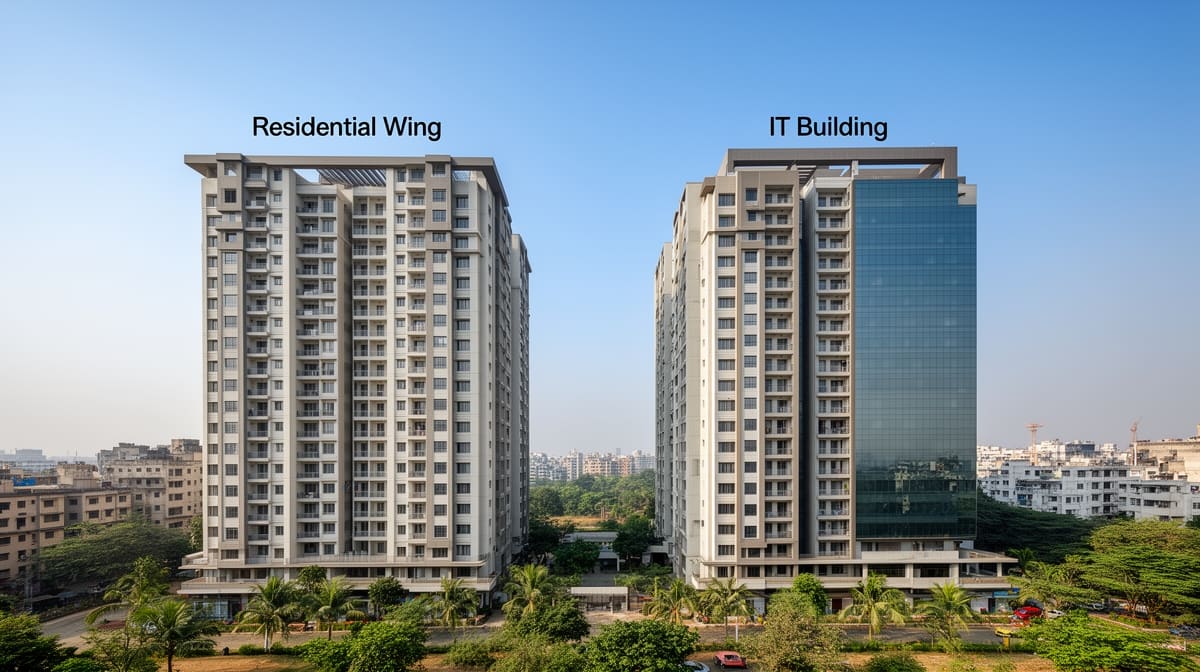
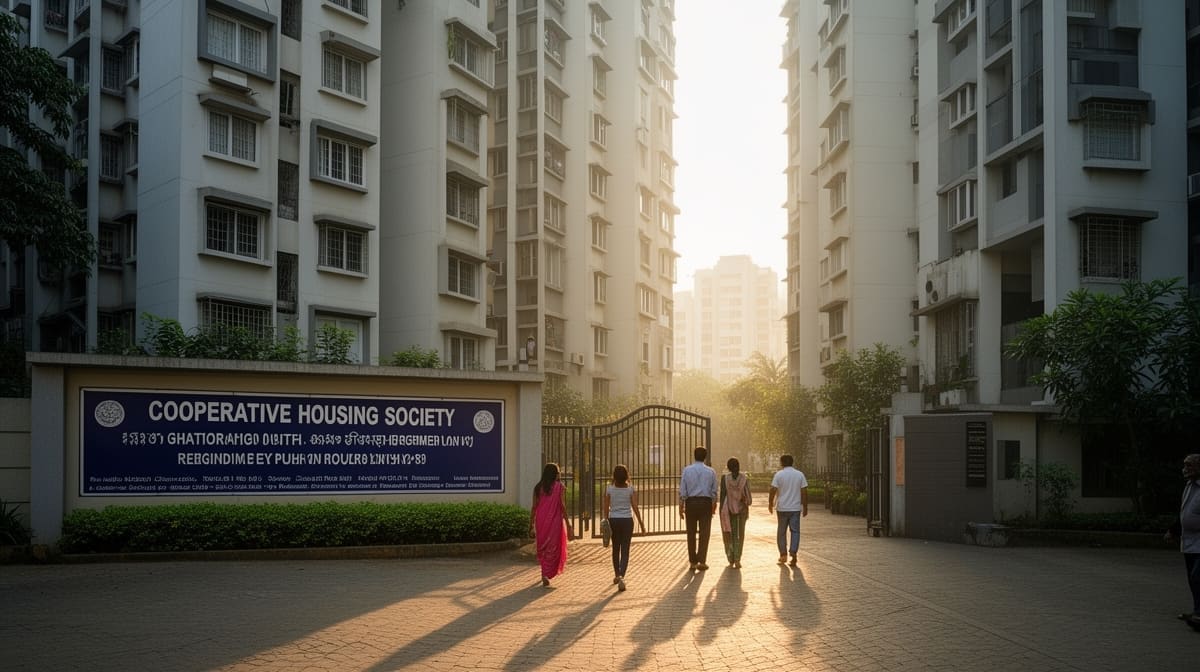
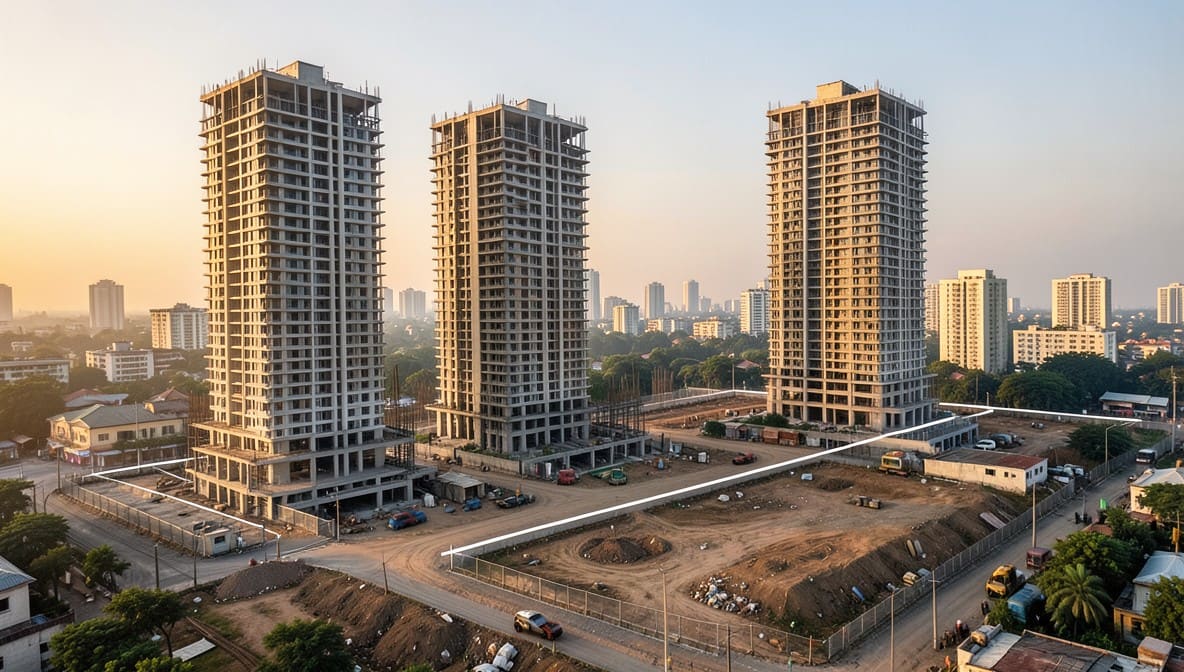
The dispute arises from a complex real estate development arrangement involving a large landholding of 151,328 sq. mtrs. at Village Magathane, Borivali, Mumbai, owned by the Appellant, Cable Corporation of India Limited (CCI). The Appellant granted development rights over a portion of this land - specifically 31,123 sq. mtrs. - to Respondent No. 2, Kanakia Spaces Realty Private Limited (the Developer), under a series of Development Agreements executed in 2005 and 2008. These agreements explicitly capped the Developer’s entitlement to 59,157 sq. mtrs. of FSI/TDR and reserved all additional FSI/TDR exclusively to the Appellant. The Developer constructed three residential buildings - Western Edge I, Western Edge II, and Samarpan Exotica - using only this allocated FSI/TDR. The flat purchasers, who became members of Respondent Nos. 1, 4, and 5 (co-operative societies), executed Agreements for Sale that expressly acknowledged these limitations.
Key Facts
- The Appellant owned a total land parcel of 151,328 sq. mtrs. (Larger Property)
- The Developer was granted rights over only 31,123 sq. mtrs. of the Larger Property (Suit Land)
- The Development Agreements (dated 10.02.2005, 08.05.2008, 19.04.2008, 30.04.2008) capped Developer’s FSI/TDR at 59,157 sq. mtrs.
- Clause 4(c) of the Development Agreement expressly stated: "All additional Floor Space or TDR... shall belong to and vest with the Owner... and shall not be used on the Property to be Developed"
- Agreements for Sale (executed between 2010 - 2012) incorporated these terms and recorded that purchasers had inspected the Development Agreements and accepted the reservation
- Occupation Certificates were issued for the three buildings between June 2010 and July 2012
- The Western Edge II Society (Respondent No. 1) was formed on 20.11.2014
- In 2019 - 2020, the Mumbai Municipal Corporation issued notices alleging 4,226 sq. mtrs. of unauthorised FSI usage in Western Edge II
- Negotiations between the Appellant, Developer, and Society to purchase additional FSI/TDR for regularisation failed
- On 22.03.2022, a Deemed Conveyance Order was passed in favour of the Society for 8,953.46 sq. mtrs., but was later rejected on 07.06.2022
- The Society filed S.C. Suit No. 2103 of 2022 and Notice of Motion No. 2989 of 2022 on 09.09.2022 seeking injunction against the Appellant’s use of reserved FSI/TDR
- On 31.03.2023, the Appellant obtained MMC permission to construct additional towers using the reserved FSI/TDR
- The Trial Court granted interim injunction on 30.10.2023, restraining the Appellant from utilising any FSI/TDR, creating third-party rights, or commencing construction
Procedural History
- 10.02.2005: Development Agreement executed between Appellant and Developer
- 08.05.2008: Supplemental Agreement executed
- 05.06.2008: Deed of Rectification executed
- 19.04.2008: Agreement between Appellant, EIPL, and Prithvi Consultancy executed
- 30.04.2008: Agreement between Developer and Prithvi Consultancy executed
- 22.06.2010: Occupation Certificate issued for Western Edge I and Samarpan Exotica
- 03.07.2012: Occupation Certificate issued for Western Edge II
- 20.11.2014: Western Edge II Premises Co-operative Society Limited formed
- 09.11.2020: Appellant alleged to have subdivided land in breach of Section 7 of MOFA
- 22.03.2022: Deemed Conveyance Order passed by Competent Authority
- 07.06.2022: Deemed Conveyance Application rejected by Competent Authority
- 09.09.2022: S.C. Suit No. 2103 of 2022 and Notice of Motion No. 2989 of 2022 filed by Society
- 30.10.2023: Trial Court granted interim injunction restraining Appellant
- 31.03.2023: Appellant obtained MMC permission for additional construction
- 14.11.2025: Bombay HC set aside rejection of Deemed Conveyance Application and remanded for fresh consideration
- 21.03.2025: Supreme Court directed status quo in SLPs filed by Society
- 07.05.2025: Supreme Court disposed of SLPs, observing that parties remain subject to Bombay HC’s orders
- 17.03.2026: Bombay HC delivered judgment in Appeal
The Parties' Positions
For the Appellant (Owner)
- Argued it is merely a landowner who granted limited development rights to an independent developer
- Emphasised that the Development Agreements and Agreements for Sale clearly reserved all additional FSI/TDR to the Owner
- Contended that the Developer alone acted as promoter under MOFA, bore all costs, risks, and received all sale proceeds
- Asserted that the Owner never marketed, sold, or controlled construction
- Relied on Vaidehi Akash Housing Pvt. Ltd. v. New D.N. Nagar Co-op. Housing Society and Deepak Prabhakar Thakoor v. MHADA to establish that landowners granting development rights are not promoters
- Argued that the Society’s claim to reserved FSI/TDR is contrary to express contractual terms and constitutes an abuse of process
For the Respondent (Society)
- Contended that the Owner is a promoter under Section 2(c) of MOFA because it "caused to be constructed" the buildings by granting development rights, executing Powers of Attorney, and receiving consideration
- Argued that the reservation of FSI/TDR is invalid under Section 7 and Section 16 of MOFA as it amounts to "blanket consent" without informed disclosure
- Relied on Ravindra Munteja, Dosti Corporation, and Sandeep Grover to assert that promoters cannot retain future FSI after project completion
- Claimed that the layout plan annexed to the Occupation Certificate did not disclose future towers, making any new construction a violation of Section 7
- Asserted that failure to execute conveyance within statutory period entitles the Society to the balance FSI/TDR
Relief Sought
The Society sought an interim injunction restraining the Appellant from:
- Utilising any FSI/TDR on the Suit Land
- Creating third-party rights over the land
- Commencing any construction on the Suit Land The Appellant sought setting aside of the interim injunction and dismissal of the suit as not maintainable.
The Legal Issue
The central question is whether a landowner who grants limited development rights to an independent developer, expressly reserves all additional FSI/TDR to itself, and has no involvement in construction or sale, can be treated as a "promoter" under Section 2(c) of the Maharashtra Ownership Flats Act, 1963, and thereby be restrained from exercising its reserved development rights through a suit for bare injunction.
Arguments Presented
For the Appellant
The Appellant, represented by Mr. Aspi Chinoy, Sr. Adv., argued that the term "promoter" under Section 2(c) of MOFA requires active participation in construction or sale. The Owner merely granted development rights, received a lump-sum consideration, and retained proprietary rights over the balance FSI/TDR. The Developer alone bore all costs, risks, and profits, executed Agreements for Sale, and was identified as the promoter in all statutory documents. The Owner’s execution of Powers of Attorney was a procedural necessity to obtain approvals before land subdivision and did not create an agency relationship. The Agreements for Sale explicitly disclosed the limitation on FSI/TDR and the reservation in favour of the Owner, which the purchasers accepted. The Society’s suit, seeking only injunction without any declaration, is not maintainable under T.V. Ramakrishna Reddy v. M. Mallappa and K.M. Krishna Reddy v. Vinod Reddy. The suit is an abuse of process, filed only after failed negotiations to compel the Owner to surrender its reserved rights for regularising the Society’s own unauthorised construction.
For the Respondent
The Society, represented by Mr. Mehul Shah, contended that the Owner "caused to be constructed" the buildings by granting development rights, obtaining approvals in its name, and receiving consideration. The Owner’s retention of economic interest in the balance FSI/TDR and execution of Powers of Attorney established it as a co-promoter under MOFA. The reservation of FSI/TDR in the Agreements for Sale constitutes "blanket consent" under Section 7 of MOFA, which is invalid as per Neena Sudarshan Wadia v. Venus Enterprises and Dosti Corporation v. Sea Flama CHS. Section 16 of MOFA overrides any contract contrary to its scheme. The Society’s claim to the balance FSI/TDR arises from the statutory obligation under Section 11 to convey all rights appurtenant to the project. The suit for injunction is maintainable as it seeks to enforce statutory rights.
The Court's Analysis
The Court undertook a rigorous analysis of the contractual framework, statutory definitions, and binding precedents. It held that the term "causes to be constructed" in Section 2(c) of MOFA cannot be interpreted to include every landowner who grants development rights. Such an interpretation would render the distinction between owner and promoter meaningless and impose promoter liabilities on financiers, landowners, and statutory authorities - leading to absurd consequences.
"The expression must therefore mean something more, namely, active participation, control, or entrepreneurial involvement in the construction activity."
The Court examined the substance of the arrangement, not its form. The Developer bore all construction costs, controlled marketing and sales, received all sale proceeds, and was the sole party named in Agreements for Sale. The Owner had no role in these activities. The Powers of Attorney were procedural tools to facilitate approvals before land subdivision and did not alter the substantive allocation of rights.
The Court distinguished Vaidehi Akash Housing Pvt. Ltd. and Deepak Prabhakar Thakoor, which held that landowners granting development rights are not promoters. The Society’s attempt to distinguish these cases on the ground that the Owner was a commercial entity was rejected: "Whether a person is a promoter under Section 2(c) depends on whether that person undertook or caused construction and sold flats, not on whether the person is a society or a commercial entity."
The Court also rejected the Society’s reliance on Sandeep Grover (NCDRC) and Goregaon Pearl CHS Ltd. (SC dismissal), noting that NCDRC decisions are not binding precedents and dismissal of SLPs does not attract the doctrine of merger under Kunhayammed v. State of Kerala.
Regarding Section 7 of MOFA, the Court held it applies only to alterations in the disclosed plan by the promoter. The Owner’s proposed development using reserved FSI/TDR was never part of the Developer’s project and was never disclosed in the layout plan. Section 7 cannot be stretched to bar independent development on land outside the promoter’s entitlement.
"The Act entitles [purchasers] to what they agreed to purchase, not to more."
The Court further held that the reservation of FSI/TDR was not a "blanket consent" but a specific, quantified, and disclosed term. The Agreements for Sale explicitly stated: "Kanakia shall not be entitled to develop... beyond 59,157 sq. meters... All Floor Space Index or TDR... shall belong to and vest with the Owner."
The Court also found that the suit for bare injunction was not maintainable. The Society’s claim to the balance FSI/TDR was directly contradicted by the contractual documents and the legal position established by binding precedents. Where the existence of a right is disputed, a declaration must be sought first, as held in T.V. Ramakrishna Reddy and K.M. Krishna Reddy. The Society’s deliberate omission of any declaratory prayer indicated an intent to avoid adjudication of the core issue.
The Court concluded that the suit was an abuse of process, filed only after the Society’s unauthorised construction was exposed and negotiations for additional FSI failed. MOFA was never intended to enable flat purchasers to appropriate a landowner’s reserved rights.
The Verdict
The Appeal was allowed. The impugned order dated 30.10.2023 granting interim injunction was set aside. The plaint in S.C. Suit No. 2103 of 2022 was rejected under Order VII Rule 11(d) CPC as not maintainable. The suit was dismissed. The Respondent No. 1 (Society) was directed to pay costs of ₹10,00,000 to the Appellant within four weeks from the date of the order.
What This Means For Similar Cases
Landowners Are Not Promoters by Default
- Practitioners must distinguish between landowners granting development rights and promoters undertaking construction and sale
- Mere execution of Powers of Attorney for procedural approvals does not convert a landowner into a promoter
- Development agreements must clearly define the scope of rights granted and reserved
FSI/TDR Reservations Are Enforceable
- Express reservation of future FSI/TDR in Development Agreements and Agreements for Sale is valid and binding
- Disclosure of such reservations to purchasers negates claims of "blanket consent" under Section 7 of MOFA
- Courts will uphold contractual clarity over expansive statutory interpretations
Bare Injunction Suits Are Not Maintainable
- A suit seeking only injunction without a declaration of entitlement is barred where title or right is disputed
- Plaintiffs must first seek declaratory relief to establish the existence and scope of their claimed rights
- Courts may reject plaints suo motu under Order VII Rule 11(d) CPC if the suit is manifestly meritless
Strategic Litigation Risks
- Filing suits as pressure tactics to extract additional FSI/TDR for regularisation of unauthorised construction may be deemed an abuse of process
- Courts will examine the timing and context of litigation to determine bona fides
- MOFA cannot be weaponised to appropriate proprietary rights of landowners