The Income Tax Appellate Tribunal’s ruling in this case reinforces a foundational principle in direct tax litigation: the Revenue cannot sustain additions based on unsubstantiated suspicion when the assessee has discharged its initial burden of proof. This judgment clarifies the procedural and evidentiary standards applicable to unexplained credit cases under Section 69A, offering critical guidance for practitioners handling assessment appeals.
Background & Facts
The Dispute
The assessee, Carrisa Investments Pvt. Ltd., was assessed for A.Y. 2014-15 after the Income Tax Department alleged receipt of Rs. 3.59 crore as unexplained credits from two entities - M/s Bansal Traders and M/s Vertex Dealcom Pvt. Ltd. The Department contended these entities were shell companies used for accommodation entries, and the transactions lacked genuineness. The Assessing Officer made an addition under Section 69A of the Income Tax Act, 1961, primarily due to the assessee’s failure to produce its DEMAT account statements during the assessment proceedings.
Procedural History
- 2014: Assessee filed return declaring a loss of Rs. 4.20 lakh.
- 2022: Notice under Section 148 issued after departmental investigation flagged suspicious transactions.
- 2023: Assessment completed under Section 69A, adding Rs. 3.59 crore on grounds of unexplained credits and non-production of DEMAT records.
- 2025: CIT(A) deleted the addition, permitting DEMAT statements as additional evidence under Rule 46A and finding the assessee had discharged its initial burden.
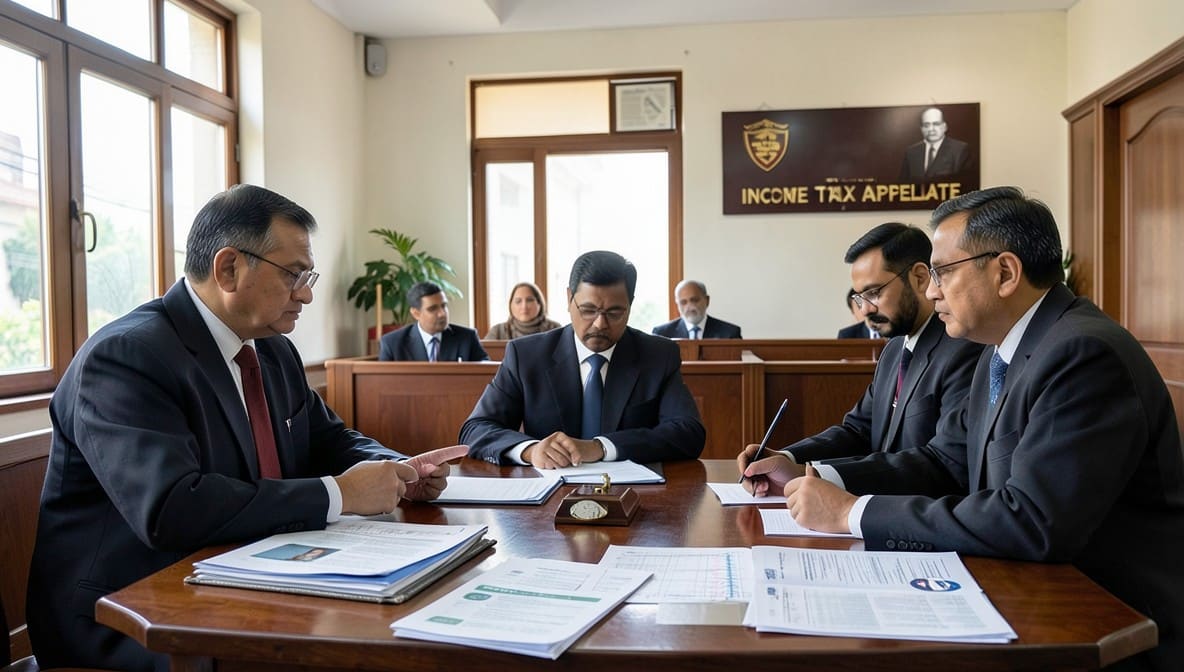
- 2026: Revenue appealed to ITAT Delhi.
Relief Sought
The Revenue sought confirmation of the addition under Section 69A, arguing that the CIT(A) erred in admitting additional evidence and ignoring departmental findings of shell entities. The assessee sought dismissal of the appeal, maintaining that the evidence submitted - including ledger entries, sale bills, bank statements, and DEMAT records - established the genuineness of the transactions.
The Legal Issue
The central question was whether Section 69A permits an addition solely on the basis of departmental suspicion regarding shell entities, when the assessee has produced credible documentary evidence establishing identity, creditworthiness, and genuineness of the transaction, and whether Rule 46A allows admission of additional evidence where sufficient cause is shown for non-production during assessment.
Arguments Presented
For the Appellant
The Revenue argued that the CIT(A) erred in admitting DEMAT statements under Rule 46A without sufficient cause, and that the assessee’s failure to produce these documents during assessment warranted an adverse inference. It relied on departmental investigation reports labeling the counterparties as shell entities and contended that the assessee had not rebutted these findings. The Revenue further argued that allowing additional evidence at appellate stage rewarded procedural non-compliance and prejudiced the department’s interests.
For the Respondent
The assessee contended that it had submitted comprehensive documentation - including ledger accounts, confirmation letters, sale bills, and bank statements - during assessment, and that the DEMAT statements were not available due to legitimate access constraints with its broker. It invoked Rule 46A(c), asserting that the delay was due to bonafide cause. It further argued that the Revenue had failed to produce any independent evidence to prove the transactions were bogus, and that suspicion alone cannot override documented proof.
The Court's Analysis
The Tribunal examined both procedural and substantive aspects of the case. On the admissibility of DEMAT statements under Rule 46A, it found that the assessee had demonstrated sufficient cause under clause (c) for non-production during assessment: the records were held by a third-party broker and could not be retrieved in time despite repeated requests. The CIT(A) had rightly permitted the evidence after obtaining the Assessing Officer’s remand report, which confirmed the DEMAT records matched the ledger and sale bills.
"The admission of additional evidence will cause no prejudice to the Department, the same shall only advance the cause of justice and fair play."
On the substantive issue under Section 69A, the Tribunal emphasized that once the assessee produces credible evidence - such as sale bills, ledger confirmations, and bank trails - the initial onus is discharged. The burden then shifts to the Revenue to disprove the genuineness of the transaction with independent, verifiable material. The Department had relied solely on third-party investigation reports, which were not shared with the assessee, nor were the persons involved subjected to cross-examination.
The Tribunal cited multiple precedents, including CIT v. Andaman Timbers Industries Ltd., PCIT v. Montage Enterprises, and Odeon Builders (P) Ltd., to affirm that suspicion cannot replace proof in quasi-judicial proceedings. It held that the Assessing Officer’s failure to conduct any independent inquiry or rebut the documents submitted by the assessee rendered the addition unsustainable.
The Tribunal also underscored the principle of natural justice: an assessee must be given an opportunity to cross-examine persons whose statements are relied upon by the department. Since no such opportunity was afforded, the department’s allegations remained untested and legally insufficient.
The Verdict
The assessee won. The Tribunal held that Section 69A cannot be invoked merely on suspicion of shell entities when the assessee has discharged its initial burden with credible documentary evidence. It further held that Rule 46A permits admission of additional evidence where sufficient cause is shown, and that the CIT(A) acted correctly in permitting the DEMAT statements. The appeal was dismissed.
What This Means For Similar Cases
Burden of Proof Shifts to Revenue After Initial Discharge
- Practitioners must ensure clients submit comprehensive documentation (ledger entries, sale bills, bank trails) during assessment to discharge initial onus under Section 69A.
- If Revenue relies on investigation reports, demand access to those documents and seek opportunity for cross-examination.
- Argue that unverified third-party information cannot sustain additions.
Rule 46A Is a Shield Against Procedural Harshness
- If documents are unavailable due to third-party delays (e.g., brokers, banks), document all requests and communications to establish bonafide cause.
- File applications under Rule 46A at appellate stage with affidavits explaining delay.
- Cite Odeon Builders and PCIT v. Hadoti Punj Vikas to reinforce that natural justice overrides technical non-compliance.
Suspicion Alone Is Not Evidence
- Challenge assessments based on "shell entity" allegations without independent verification.
- Highlight that the department’s duty is to investigate, not assume.
- Use CIT v. Anandlok to argue that adverse inferences cannot be drawn without affording cross-examination rights.