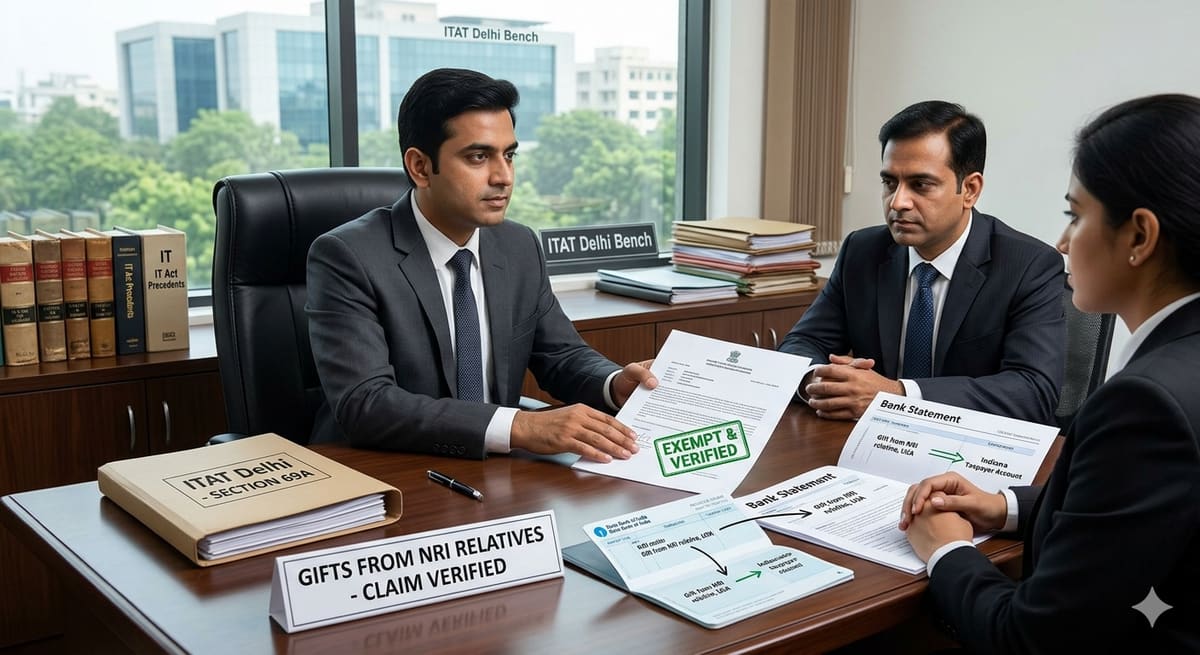
The Income Tax Appellate Tribunal, Delhi, has significantly clarified the application of Section 69 of the Income Tax Act in cases involving unexplained investments discovered during search operations. The order emphasizes that mere possession of valuable assets during a search does not automatically justify addition of income unless the assessee’s explanation, supported by documentary evidence and protected by CBDT guidelines, is properly evaluated. This ruling reinforces procedural fairness and doctrinal precision in assessing undisclosed income.
Background & Facts
The Dispute
Three assessees - Smt. Bimla Narang (legal representative of the deceased Shri Satpal Narang), Shri Rakesh Narang, and M/s Zevraat (a partnership firm) - filed appeals against orders passed by the Commissioner of Income Tax (Appeals)-3, Gurgaon, dated 11.11.2025. The assessments were framed under Section 143(3) read with Section 153B(1)(b) following a search operation conducted on 21.12.2016 at the business premises of M/s Zevraat and the residential premises of its partners.
M/s Zevraat, engaged in the sale and purchase of gold, silver, and utensils, had two partners: Shri Rakesh Narang and Shri Mukesh Narang, each holding a 50% share. Shri Satpal Narang, father of Rakesh and Mukesh, was also residing at the same premises. Upon his death, his legal representative, Smt. Bimla Narang, became the appellant in his stead.
Key Facts
- Search conducted on 21.12.2016 at business and residential premises
- Seized documents formed the basis for additions in all three cases
- M/s Zevraat declared total sales of Rs. 17,03,97,809/- in its books as of 08.11.2016
- Department claimed retrieved sales data amounted to Rs. 8,55,55,791/-, leading to an addition of Rs. 8,48,42,018/- as unaccounted sales
- Stock as per books: Rs. 11,61,25,237/-; verified stock: Rs. 4,65,10,719/-; differential: Rs. 6,96,14,518/-
- Unsecured loans of Rs. 57.50 lakhs from Shri Joginder Singh were added under Section 68
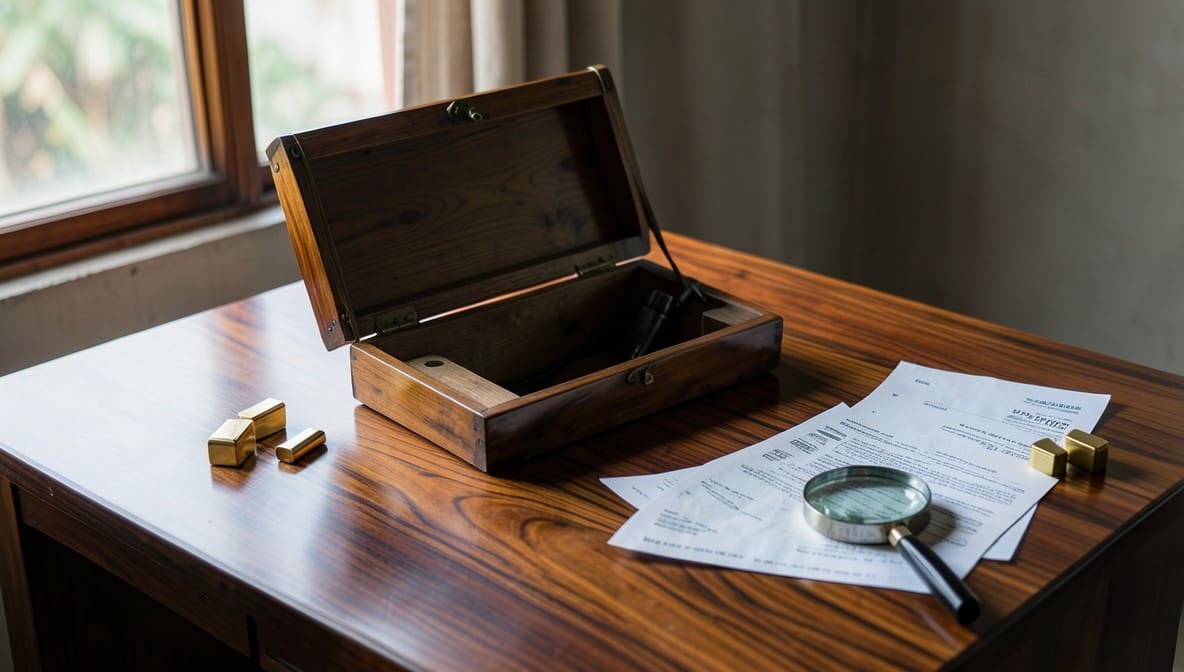
- In Shri Satpal Narang’s case: seven gold bars (1 kg each) seized; six released as firm’s stock; one retained for addition of Rs. 3,12,22,409/-
- In Shri Rakesh Narang’s case: jewellery worth Rs. 93.68 lakhs added under Section 69; Rs. 2,53,890/- cash seized
- M/s Zevraat claimed profit margin of 6.06% on stock shortage, which was undisputed by revenue
- CBDT Circular No. 1916 dated 11.05.1994 was invoked by assessees to claim benefit for family-held assets
Procedural History
- 21.12.2016: Search conducted under Section 132 at business and residential premises
- 13.12.2018: Assessing Officer passed final assessment orders adding unsecured loans, unexplained sales, stock shortage, and unexplained investments
- 11.11.2025: CIT(A) passed orders partially sustaining additions
- 20.04.2026: Hearing held before ITAT Delhi
- 13.05.2026: Judgment pronounced by ITAT Delhi
The Parties' Positions
For the Assessees
- Contended that unsecured loans were substantiated with bank statements, ledger entries, and confirmation letters
- Argued that sales discrepancy arose from department’s reliance on incomplete retrieved data, leading to double addition
- Stated that stock shortage should attract only profit element (6.06%) and not entire value of missing stock
- Invoked CBDT Circular No. 1916/1994 to claim that family members’ holdings should not be treated as unexplained investments if source is explained
- Submitted purchase invoices and proof of release of six gold bars as firm’s stock
- Provided family tree showing ten members, including wife and children, to justify jewellery holdings
For the Revenue
- Maintained that seized documents and recovered data formed prima facie evidence of undisclosed income
- Argued that failure to explain source of gold bars and jewellery warranted additions under Section 69
- Did not dispute the 6.06% profit margin but insisted on full stock value being added
- Did not address applicability of CBDT Circular in its submissions
Relief Sought
- Delete unsecured loan addition of Rs. 57.50 lakhs
- Delete unexplained sales addition of Rs. 8,48,42,018/-
- Reduce stock shortage addition from Rs. 6,96,14,518/- to profit element of Rs. 33,29,703/-
- Delete unexplained investment in gold and jewellery totaling Rs. 4,05,90,649/-
- Allow benefit of CBDT Circular No. 1916/1994
- Exclude application of Section 115BBE for transactions post 01.04.2017
The Legal Issue
The central question was whether Section 69 of the Income Tax Act permits addition of unexplained investments based solely on possession during a search, without considering the assessee’s explanation supported by documentary evidence and the protective guidelines under CBDT Circular No. 1916 dated 11.05.1994.
Arguments Presented
For the Appellant/Petitioner
The assessees relied on CBDT Circular No. 1916/1994, which mandates that assets found in the possession of family members during a search must be examined in light of their known sources of income and family holdings. They submitted purchase invoices for the gold and jewellery, proof of release of six gold bars as firm’s stock, and bank records for unsecured loans. They argued that the department’s failure to consider these documents violated natural justice and the settled principle that possession alone does not equate to unexplained income. They further contended that the sales discrepancy was a result of departmental error in relying on partial data, leading to double taxation.
For the Respondent/State
The Revenue did not contest the documentary evidence submitted by the assessees. It maintained that the seized assets were unexplained and that the burden of proof lay with the assessee. However, it failed to provide any rebuttal to the circular’s applicability or to the invoices and release records. The department’s arguments were largely mechanical, relying on the mere fact of seizure without engaging with the substantive explanations.
The Court's Analysis
The Tribunal undertook a meticulous review of the evidence and the legal framework governing unexplained investments. It emphasized that Section 69 is not a tool for automatic addition but requires a reasonable opportunity to explain the source of assets. The Court noted that the department had already accepted Rs. 8.55 crores in sales, yet still added Rs. 8.48 crores as unaccounted sales, creating a clear case of double taxation.
"The assessee’s declared sales of Rs. 17.03 crores far exceed the retrieved figure. To add the difference without accounting for the already accepted figure is to impose a double burden, which is legally impermissible."
Regarding the stock shortage, the Tribunal held that the entire value of the missing stock cannot be added unless the assessee has concealed sales. Where the profit margin is known and undisputed, only the profit element is taxable. The Tribunal accepted the assessee’s claim of 6.06% profit, reducing the addition from Rs. 6.96 crores to Rs. 33.30 lakhs.
On the issue of gold bars, the Tribunal observed that six bars were released by the department as firm’s stock, yet the entire value of seven bars was added against the deceased’s estate. The Court held this to be legally untenable. The circular mandates that family holdings must be considered, and the department’s failure to do so was a violation of settled law.
"The Revenue cannot ignore the CBDT Circular No. 1916/1994, which explicitly directs that assets found in the possession of family members must be examined in the context of their known sources and family wealth."
The Tribunal further clarified that Section 115BBE applies only to transactions occurring on or after 01.04.2017, as settled in S.M.I.L.E Microfinance Limited v. ACIT. Since the search occurred in December 2016, the higher rate under Section 115BBE was inapplicable.
The Verdict
The appeals were partly allowed. The Tribunal:
- Deleted the unsecured loan addition of Rs. 57.50 lakhs in full
- Deleted the unexplained sales addition of Rs. 8,48,42,018/-
- Reduced the stock shortage addition from Rs. 6,96,14,518/- to Rs. 33,29,703/- (6.06% profit)
- Deleted the unexplained investment in gold of Rs. 3,12,22,409/- pertaining to six gold bars; directed the Assessing Officer to reconsider the seventh bar in light of purchase invoices and CBDT Circular No. 1916/1994
- Directed the Assessing Officer to grant benefit of CBDT Circular No. 1916/1994 and purchase invoices for jewellery additions in Shri Rakesh Narang’s case
- Upheld the cash addition of Rs. 2,53,890/- as not contested
- Clarified that Section 115BBE is inapplicable to transactions prior to 01.04.2017
- Directed the Assessing Officer to compute consequential relief under normal provisions within 8 weeks
What This Means For Similar Cases
CBDT Circular 1916/1994 Is Binding in Search Cases
- Practitioners must invoke CBDT Circular No. 1916/1994 in all cases involving assets found in family members’ possession
- The circular mandates that the source of assets must be examined in context of family income history, not in isolation
- Failure by the department to apply the circular renders additions legally unsustainable
Stock Shortage Additions Must Reflect Profit, Not Value
- In businesses with known profit margins, only the profit element of unaccounted stock can be added under Section 69
- The entire value of missing stock cannot be treated as undisclosed income unless concealment of sales is proven
- Maintain and submit audited profit margin records to limit exposure
Double Addition Is Legally Invalid
- If the Assessing Officer accepts a portion of declared income, the balance cannot be added as unexplained income without accounting for the accepted figure
- This principle applies to sales, purchases, and stock valuations
- Always cross-check departmental data against declared books to identify double taxation