The Delhi State Consumer Disputes Redressal Commission has held that a flat buyer's complaint alleging deficiency in service and unfair trade practice against DLF Home Developers Limited is barred by limitation under Section 69 of the Consumer Protection Act, 2019. The Commission ruled that the two-year limitation period commences from the date of the offer of possession letter, not from the date of actual handover, and that the complainant's reliance on the Supreme Court's COVID-19 limitation extension order was misplaced as the limitation period had already expired before the pandemic.
Background & Facts
The Dispute
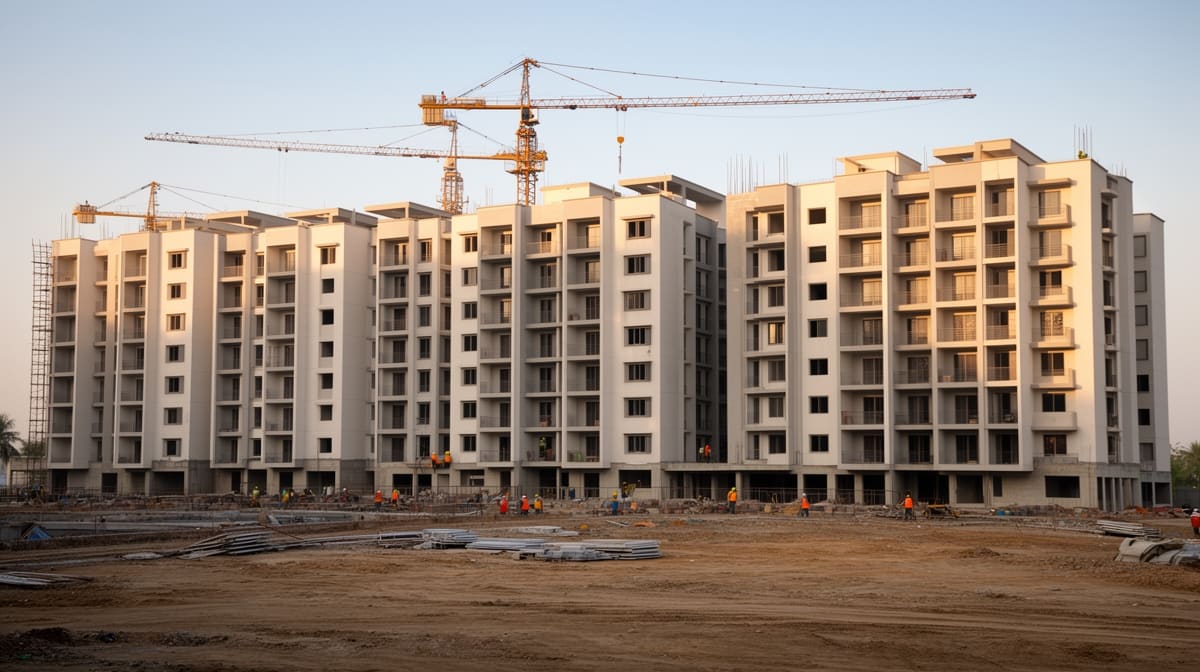
The complainant, Mr. Rohit Jain, booked a residential flat in the DLF Capital Greens project situated at 15, Shivaji Marg, New Delhi, developed by DLF Home Developers Limited (formerly DLF Universal Ltd. and prior thereto DLF Retail Developers Ltd.). The dispute centres on alleged inordinate delay in construction and handing over possession, arbitrary escalation of super area charges, denial of timely payment rebate and delay compensation, and the imposition of an indemnity-cum-undertaking as a pre-condition for possession.
Key Facts
- 29.09.2009: Opposite Party (OP) issued allotment letter for flat CGN-193 on 19th floor, Tower N with parking PN2050
- 09.10.2009: At complainant's request, OP changed allotment to flat CGM-141 with parking PM2013
- 30.03.2010: Apartment Buyer Agreement executed for total consideration of Rs. 1,19,27,000/-; Clause 11(a) stipulated possession within 36 months from date of booking
- March 2010: Additional parking space allotted; total parking cost Rs. 6,75,000/-
- Complainant opted for construction-linked payment plan and paid Rs. 1,25,48,772.61/-
- 19.07.2012: OP informed complainant of building plan approvals received on 20.10.2011 and revised possession period from 36 to 52 months citing force majeure
- 28.02.2013: OP demanded Rs. 6,57,473/- for increase in super area from 1,520 sq. ft. to 1,602.52 sq. ft. without prior intimation
- 27.06.2017: OP issued offer of possession letter with statement of account demanding Rs. 16,93,180.58/- by 27.03.2018 (with discount options for early payment on 11.08.2017 and 25.09.2017)
- OP required complainant to sign indemnity-cum-undertaking as pre-condition for possession
- July-August 2017: Complainant sent multiple emails (05.07, 07.07, 08.07, 13.07, 21.07, 27.07, 03.08, 10.08, 14.08) pointing out discrepancies in statement of account
- 19.08.2017: OP issued revised credit statement granting Rs. 13,01,796/- credit (Rs. 4,83,296/- delay compensation + Rs. 8,18,500/- timely payment rebate); outstanding reduced to Rs. 3,69,858.58/-
- Complainant paid the outstanding amount without objection
- 28.10.2017 (pre-dated 25.10.2017): OP issued possession letter calling for possession by 01.12.2017
- 25.11.2017 & 28.11.2017: Complainant visited site; found apartment incomplete; site in-charge confirmed not ready for handover
- 22.11.2017 & 29.11.2017: Complainant emailed OP regarding incomplete condition; no response
- 13.02.2018 & 11.04.2018: Further emails; OP confirmed possession on 14.04.2018
- 14.04.2018: Possession finally handed over - 67 months after the original 36-month contractual timeline
- 25.11.2020: Complaint filed before Delhi State Consumer Commission
Procedural History
- 25.11.2020: Complaint Case No. 273/2020 instituted before Delhi State Consumer Disputes Redressal Commission
- 08.07.2026: Date of hearing
- 07.09.2026: Date of decision - complaint dismissed
Relief Sought
The complainant prayed for: (a) interest @ 18% p.a. on Rs. 1,26,21,773/- from September 2012 to 14.04.2018 (Rs. 1,18,70,779/-); (b) refund of car parking and club charges with 18% interest; (c) Rs. 50 lakhs compensation for mental agony; (d) refund of Rs. 8,89,200/- claimed as super area escalation; (e) litigation costs.
The Parties' Positions
Complainant: Alleged deficiency in service and unfair trade practice; sought compensation for delay, refund of excess charges, and interest. Relied on DLF Home Developers Ltd. v. Capital Greens Flat Buyers Association (2021) 5 SCC 537, Experion Developers v. Himanshu Dewan 2023 SCC OnLine SC 1029, and the Supreme Court's suo motu order dated 23.03.2020 in WP(C) No. 3/2020 extending limitation due to COVID-19.
Opposite Party: Raised preliminary objections - (i) complainant not a consumer under CPA 2019 as possession taken without protest; (ii) complaint barred by limitation under Section 69 CPA 2019 as offer of possession dated 27.06.2017, taken on 14.04.2018 without protest; (iii) no deficiency as OP discharged duties per agreement; (iv) delay caused by competent authorities' approvals. Relied on NCDRC judgments in Avtar Singh Chauhan v. DLF Home Developers Ltd. (CC 789/2020, decided 02.03.2023) and several first appeals.
The Legal Issue
Whether the complaint filed on 25.11.2020 is barred by limitation under Section 69 of the Consumer Protection Act, 2019, which prescribes a two-year period from the date the cause of action arises, and specifically whether the cause of action for delay in possession arises on the date of offer of possession or the date of actual handover.
Arguments Presented
For the Complainant
Counsel argued that the cause of action arises on the date of actual handover of possession (14.04.2018), not the offer of possession letter. The complainant had continuously objected to deficiencies - incomplete construction, erroneous accounts, denial of rebates - and the revised statement of account dated 23.08.2017 itself acknowledged delay compensation. The Supreme Court's order dated 23.03.2020 in Suo Moto WP(C) No. 3/2020 extended the limitation period across all forums due to the pandemic, which should render the complaint timely.
For the Opposite Party
Counsel contended that under Section 69 CPA 2019, limitation runs from the date the cause of action arises, which in real estate cases is the date of offer of possession once possession has been delivered. Reliance was placed on the NCDRC's decision in Avtar Singh Chauhan v. DLF Home Developers Ltd. (CC 789/2020, decided 02.03.2023), where it was held that where possession has been handed over, limitation commences from the offer of possession date. The offer dated 27.06.2017 (and revised statement 23.08.2017) triggered the two-year period, which expired well before the complaint was filed. The COVID-19 extension order applied from 15.03.2020 onwards and could not revive an already time-barred claim.
The Court's Analysis
The Commission first framed the limitation issue as the threshold question. Referring to Section 69(1) of the Consumer Protection Act, 2019, it noted the statutory mandate that a complaint must be filed within two years from the date the cause of action arises, with a condonation provision under sub-section (2) requiring recorded reasons.
The Commission placed decisive reliance on the NCDRC judgment in Avtar Singh Chauhan v. DLF Home Developers Ltd. (CC No. 789/2020, decided 02.03.2023). In that case, the NCDRC held:
"It is undeniable that in the present case, the Occupancy Certificate was received by the OP on 21.2.2017, and only after that the offer of possession was made to the Complainants on 23.3.2017. Consequently, the period of limitation starting from the latter date would end on 23.3.2019. Any Complaint filed after that date would per se be beyond limitation."
The NCDRC further observed that where complainants raised no objection to the conditions in the offer of possession at the relevant time, they could not later resile from it to extend limitation.
Applying this precedent, the Commission found that the OP had sent an offer of possession dated 27.06.2017 along with a statement of account. A revised statement dated 23.08.2017 granted credits for delay compensation (Rs. 4,83,296/-) and timely payment rebate (Rs. 8,18,500/-), and the complainant paid the balance Rs. 3,69,858.58/- without objection. The Commission noted:
"The Complainant has also failed to place on record any evidence to show that he had made any objection towards the super area, car parking or any additional charges. Accordingly, we are of the view that the Complainant has failed to produce any evidence or document to show that he had raised any objection to any of the conditions/amount mentioned in the Offer of Possession dated 23.08.2017, which were allegedly not acceptable to him."
The Commission concluded that the limitation period expired on 23.08.2019 (two years from the revised statement/offer). The complaint filed on 25.11.2020 was thus over a year late. The Supreme Court's COVID-19 extension order dated 23.03.2020 (effective from 15.03.2020) could not resurrect a claim already barred, as the limitation period had "closed on 23.08.2019" - months before the pandemic.
The Verdict
The Commission dismissed the complaint as barred by limitation under Section 69 of the Consumer Protection Act, 2019. No orders as to costs. The two-year limitation period was held to commence from the offer of possession dated 27.06.2017 / revised statement of account dated 23.08.2017, not from the actual handover on 14.04.2018. The complainant's failure to object to the offer's terms at the time, and the payment of the revised outstanding amount without protest, cemented the offer date as the starting point. The Supreme Court's COVID-19 limitation extension (effective 15.03.2020) was inapplicable as limitation had already expired on 23.08.2019.
What This Means For Similar Cases
Offer of Possession Triggers Limitation, Not Actual Handover
- In real estate consumer disputes where possession has ultimately been delivered, the cause of action for delay crystallises on the date of the builder's offer of possession letter, not the date of physical handover.
- Practitioners must advise clients to file complaints within two years of the offer of possession letter, even if the flat is not yet ready or the buyer refuses to take possession due to defects.
- The Avtar Singh Chauhan precedent (NCDRC, CC 789/2020) is now binding authority on this point for State Commissions.
Silence on Offer Terms Amounts to Acceptance
- If a buyer pays the amount demanded in the offer of possession / revised statement of account without written objection to specific charges (super area escalation, parking, club, delay compensation quantum), the offer date becomes the fixed limitation trigger.
- Actionable takeaway: Clients must send a formal written objection (registered post/email with acknowledgment) to every demand letter, explicitly reserving rights on each disputed head - super area, delay compensation, rebates, parking, club - before making any payment.
COVID-19 Limitation Extension Does Not Revive Expired Claims
- The Supreme Court's suo motu extension order (23.03.2020, effective 15.03.2020) only pauses limitation during its operation; it does not restart or extend limitation for claims already time-barred before 15.03.2020.
- Practical check: Before relying on the COVID extension, calculate whether the two-year period from the offer of possession had already expired before 15.03.2020. If yes, the extension is irrelevant.
Documentary Evidence of Objection Is Non-Negotiable
- The Commission's emphasis on the complainant's failure to "place on record any evidence" of objection means oral protests or site visits are insufficient.
- Drafting protocol: Every communication to the builder after receiving an offer of possession must be in writing, dated, and preserved. A single comprehensive objection letter covering all disputed items, sent immediately upon receipt of the offer, creates the evidentiary foundation to argue that the cause of action remains live.
Condonation Under Section 69(2) Requires Positive Pleading
- The Commission did not even consider condonation because the complainant did not plead "sufficient cause" for delay with supporting facts.
- Practice tip: If filing beyond two years, the complaint must contain a dedicated section pleading specific sufficient cause (illness, legal notice correspondence, ongoing negotiations, builder's assurances) with annexed evidence, and the court must record reasons for condonation.