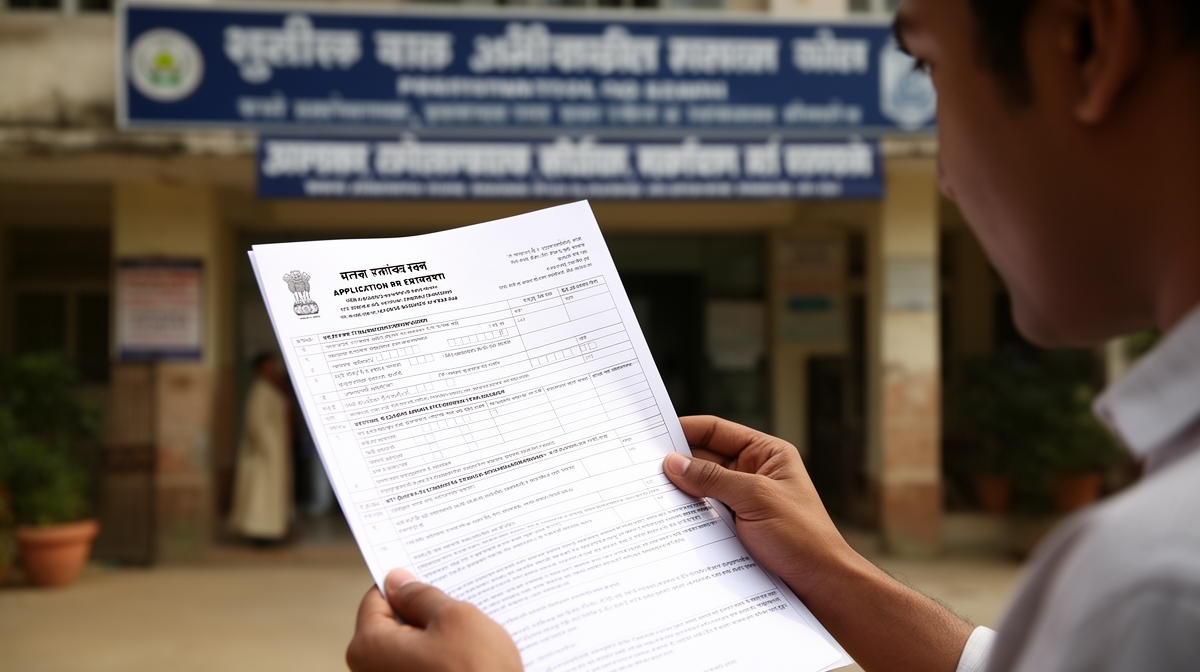

The Income Tax Appellate Tribunal, Ahmedabad, has delivered a significant clarification on the application of Section 68 of the Income Tax Act, 1961, in the context of demonetization-era cash deposits. The ruling underscores that statistical anomalies alone, without discrediting the taxpayer’s books or identifying specific irregularities, cannot sustain an addition of unexplained income. This decision provides critical guidance for taxpayers and tax practitioners navigating post-demonetization scrutiny.
Background & Facts
The Dispute
The appellant, Pankaj Jewellers Private Limited, is a closely held business engaged in bullion and jewellery trading. During the Assessment Year 2017-18, the Assessing Officer (AO) identified a sharp increase in cash deposits - Rs. 1.88 crore - compared to the previous year, with Rs. 1.35 crore deposited during the demonetization period (9 November to 31 December 2016). The AO treated Rs. 62.53 lakh of this amount as unexplained cash credit under Section 68, taxing it at 60% under Section 115BBE.
Procedural History
- 2017: Assessee filed return declaring income of Rs. 14.61 lakh.
- 2018: Case selected for scrutiny due to "abnormal cash deposits during demonetization."
- 2020: AO issued notices under Section 133(6) to six cash sale parties and two purchase parties; only one purchase party responded.
- 2025: AO made addition of Rs. 62.53 lakh under Section 68 and invoked Section 115BBE.
- 2025: Commissioner of Income Tax (Appeals) upheld the addition.
- 2026: Appeal filed before ITAT Ahmedabad.
Relief Sought
The assessee sought deletion of the addition under Section 68, arguing that the cash deposits were fully explained through documented cash sales, opening cash balance, and reconciliation supported by audited financials, bank statements, VAT returns, and stock records.
The Legal Issue
The central question was whether Section 68 permits an addition based solely on a comparative increase in the cash deposit-to-turnover ratio, when the taxpayer has provided complete documentation of cash inflows from verified sales and maintained unchallenged books of account.
Arguments Presented
For the Appellant
The assessee’s counsel argued that:
- The books of account were not rejected and were supported by audited financials, cash books, bank statements, and VAT returns.
- The opening cash balance as of 8 November 2016 was Rs. 1.35 crore, accumulated from prior cash sales.
- The demonetization policy compelled deposit of all Specified Bank Notes, explaining the spike in deposits.
- The ratio of cash sales to turnover had actually decreased from 6.2% to 5.87%, indicating no increase in cash-based transactions.
- The AO failed to identify any discrepancy in stock, purchases, or invoices.
- Reliance was placed on CIT v. M/s. S. S. Enterprises and CIT v. M/s. R. K. Jewellers, where courts held that mere suspicion cannot override documented evidence.
For the Respondent
The Revenue contended that:
- The disproportionate increase in cash deposits relative to turnover (from 4.5% to 6.7%) was suspicious.
- The assessee failed to provide conclusive proof linking each deposit to specific cash sales.
- The AO’s methodology of computing excess deposits by applying a 4.5% benchmark was reasonable.
- The burden under Section 68 shifts to the assessee to prove the source of large, unusual credits.
The Court's Analysis
The Tribunal rejected the Revenue’s reliance on mathematical ratios as the sole basis for addition. It emphasized that Section 68 requires the Assessing Officer to establish that the source of the credit is not satisfactory, not merely that it is unusual.
"The AO has made the addition merely because there was a variation of 2.28% in the ratio of cash deposits to turnover between two years."
The Tribunal noted that the assessee had provided a detailed reconciliation of cash flows, tracing the Rs. 1.35 crore deposited during demonetization to an opening balance of Rs. 1.35 crore, accumulated from prior cash sales. Crucially, the AO had not disputed the genuineness of sales, purchases, or stock, nor had he rejected the books of account.
The Tribunal held that once the trading results and stock are accepted, the cash realization from such transactions cannot be treated as undisclosed income. The increase in deposit-to-turnover ratio was a direct consequence of demonetization, not concealment. The AO’s failure to point to any specific infirmity in the documents rendered the addition unsustainable.
The Tribunal further observed that Section 68 is not a tool for speculative taxation. It requires a positive finding of unexplained origin, not a negative inference drawn from statistical deviation.
The Verdict
The assessee won. The ITAT held that Section 68 cannot be invoked merely on the basis of a comparative increase in cash deposit-to-turnover ratio when the taxpayer has provided complete, unchallenged documentation of cash inflows from verified business operations. The addition of Rs. 62.53 lakh was deleted.
What This Means For Similar Cases
Books of Account Must Be Rejected Before Section 68 Applies
- Practitioners must argue that Section 68 requires the AO to first establish that the books are unreliable or incomplete.
- If the books are maintained regularly and not rejected, the burden on the Revenue to prove unexplained origin becomes insurmountable.
- Merely pointing to a spike in deposits during demonetization is insufficient.
Demonetization-Related Deposits Require Contextual Analysis
- Taxpayers must document and retain:
- Opening cash balances as of 8 November 2016
- Month-wise cash sales and purchases
- Bank statements showing deposits of SBNs
- VAT returns correlating with sales
- Any increase in deposit ratios during demonetization must be explained as a policy-driven phenomenon, not concealment.
Statistical Benchmarks Are Not Legal Standards
- AO’s use of arbitrary benchmarks (e.g., 4.5% of turnover) to compute "excess" deposits is legally invalid.
- Courts and tribunals will not uphold additions based on mathematical formulas without substantive evidence of unexplained origin.
- Practitioners should challenge such methodologies as arbitrary and contrary to the spirit of Section 68.