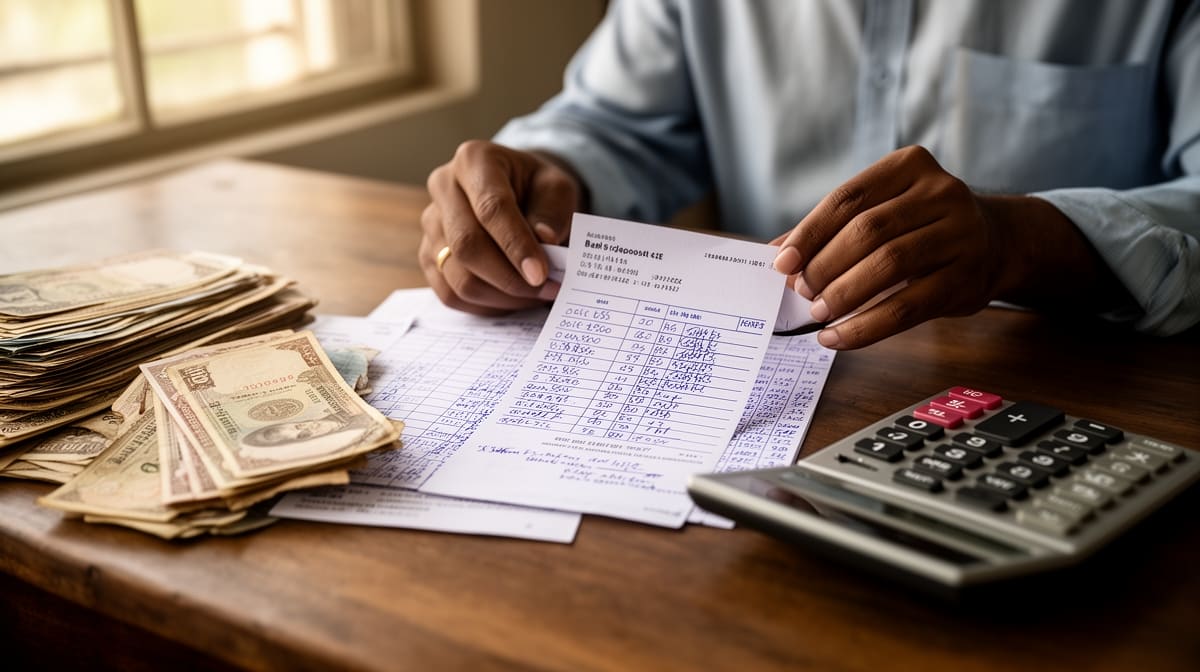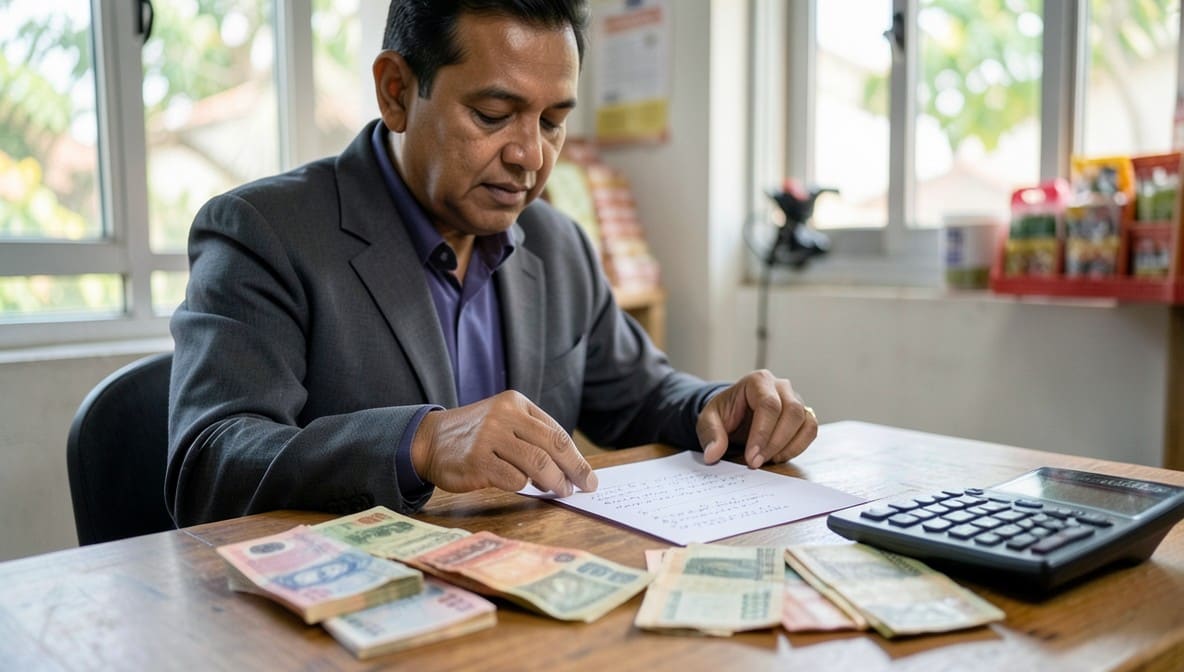
The Income Tax Appellate Tribunal, Bangalore, has clarified that cash deposits made during the demonetization period, when supported by audited books of account, VAT returns, and sales records, cannot be treated as unexplained income under Section 68 of the Income Tax Act merely because the currency notes tendered were Specified Bank Notes (SBNs). This ruling reinforces the principle that taxability hinges on the nature and source of income, not on compliance with non-tax regulatory norms.
Background & Facts
The Dispute
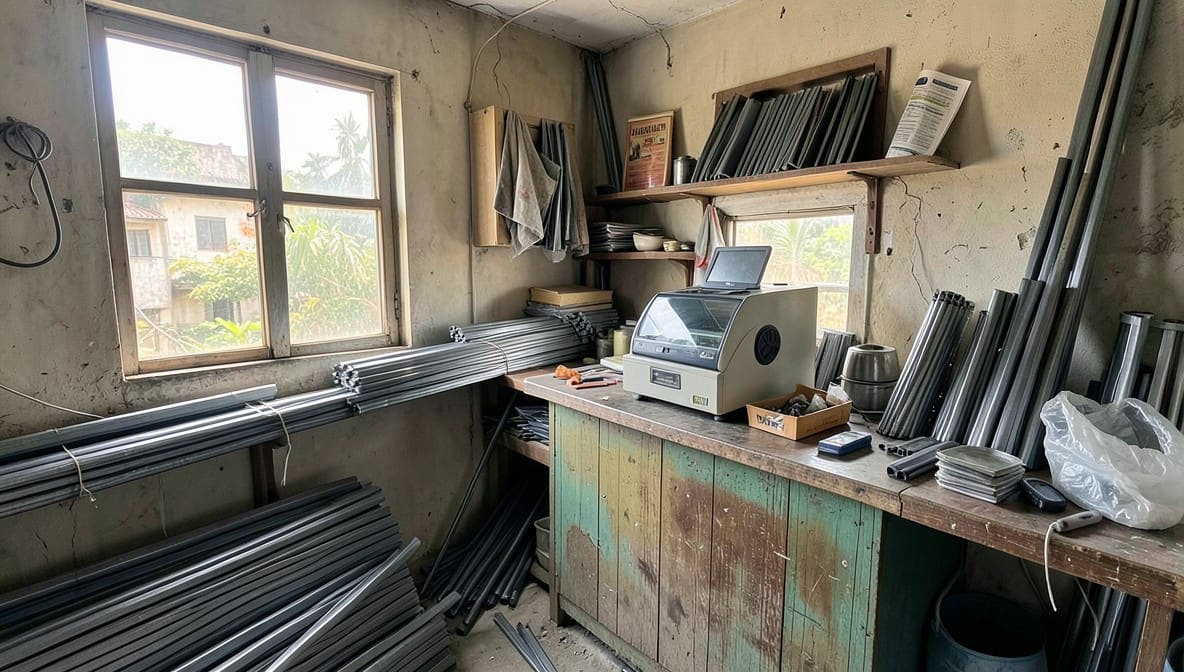
The appellant, Sri. Soger Malleshappa Manjunath, is the proprietor of M/s Kalleshwara Enterprises, engaged in the trading of borewell tubes, pipes, GI pipes, and agricultural equipment. During the assessment year 2017-18, the Assessing Officer (AO) added Rs. 29,27,000 as unexplained cash credit under Section 68 of the Income Tax Act, 1961, based on cash deposits made during the demonetization period (10.11.2016 to 17.12.2016). The AO’s rationale was that the appellant had accepted Specified Bank Notes (SBNs) after 08.11.2016, which violated Reserve Bank of India (RBI) guidelines, rendering the sales non-genuine for tax purposes.
Key Facts
- The assessee filed his return of income on 22.09.2017 declaring total income of Rs. 5,57,560.
- The case was selected for scrutiny under the Computer Assisted Selection System (CASS) on 15.10.2017.
- Notices under Section 143(2) and Section 142(1) were issued and complied with by the assessee.
- The assessee maintained daily books of account including cash book, ledger, stock register, sales bills, and VAT returns.
- The books were audited by a Chartered Accountant and were never rejected under Section 145(3).
- As of 08.11.2016, the cash balance in hand was Rs. 16,54,500.
- During the demonetization period (10.11.2016 to 17.12.2016), the assessee deposited Rs. 45,81,500 in two banks: Rs. 14,89,500 in Corporation Bank and Rs. 30,92,000 in Pragathi Grameena Bank.
- The AO calculated the excess deposit as Rs. 29,27,000 (Rs. 45,81,500 - Rs. 16,54,500) and treated it as unexplained cash credit.
- The assessee submitted VAT returns, bank deposit slips, stock registers, and audited financial statements to substantiate the source of deposits.
- The AO accepted the genuineness of the business and the recorded sales but rejected the cash deposits solely on the ground of SBN acceptance.
Procedural History
- 22.09.2017: Income tax return filed for AY 2017-18.
- 15.10.2017: Case selected for scrutiny under CASS.
- 17.12.2019: Assessment order passed under Section 143(3) adding Rs. 29,27,000 under Section 68.
- 17.09.2025: CIT(A)/NFAC dismissed the appeal, upholding the addition on grounds of violation of RBI guidelines.
- 12.05.2026: Appeal heard and decided by the Income Tax Appellate Tribunal, Bangalore.
Relief Sought
The appellant sought deletion of the addition of Rs. 29,27,000 under Section 68, reversal of interest levied under Sections 234A/B/C, and restoration of the return as filed.
The Legal Issue
The central question was whether Section 68 of the Income Tax Act, 1961 permits the addition of cash deposits as unexplained income solely on the ground that the currency notes tendered were Specified Bank Notes (SBNs) accepted in contravention of RBI guidelines, despite the assessee providing a complete and documented explanation of the source as cash sales.
Arguments Presented
For the Appellant
The learned Advocate for the assessee contended that:
- The cash deposits were fully supported by audited books of account, VAT returns, stock registers, sales bills, and bank deposit slips.
- The AO had accepted the business nature and recorded turnover; the only objection was the form of currency.
- Section 68 requires satisfaction regarding the nature and source of credit, not compliance with RBI norms.
- The banks had credited the SBNs, indicating their acceptance as valid tender at the time of deposit.
- The Specified Bank Notes (Cessation of Liabilities) Act, 2017, only declared SBNs invalid as legal tender from 31.12.2016, not retroactively.
- The addition amounted to double taxation, as the turnover had already been taxed under VAT and as business income.
- Binding precedents such as CIT v. M/s. Sree Krishna Enterprises and CIT v. M/s. Rameshwarlal & Co. held that cash sales supported by records cannot be treated as unexplained income.
For the Respondent
The Standing Counsel for Revenue relied on the CIT(A)’s order, arguing that:
- Acceptance of SBNs after 08.11.2016 was illegal under RBI guidelines.
- Transactions in contravention of law cannot be recognized for tax purposes.
- The source of the deposit was not satisfactorily explained because the mode of receipt was unlawful.
- The banks’ acceptance of SBNs did not validate the transaction under tax law.
The Court's Analysis
The Tribunal conducted a meticulous review of the statutory framework under Section 68 and the factual record. It emphasized that Section 68 is triggered only when the nature and source of a credit entry in the books of account are not explained to the satisfaction of the Assessing Officer. The Tribunal noted that the AO and CIT(A) had not disputed the genuineness of the business, the accuracy of the cash book, or the linkage between sales and deposits.
"The assessee had appropriately explained from where the SBN notes have come and such notes have also been deposited in the respective banks & therefore additions under section 68 of the Act is unwarranted."
The Tribunal held that the prohibition on accepting SBNs under RBI guidelines was a regulatory violation, not a tax law issue. The Income Tax Act does not empower the revenue to deny the legitimacy of income merely because the mode of receipt violated a non-tax regulation. The Tribunal further observed that the Specified Bank Notes (Cessation of Liabilities) Act, 2017, did not render SBNs valueless until 31.12.2016, and even then, the Act did not invalidate transactions occurring prior to that date.
The Tribunal distinguished between legality of transaction under commercial law and taxability under the Income Tax Act. It cited CIT v. M/s. Sree Krishna Enterprises to affirm that retail cash sales do not require identification of individual customers, and that cash deposits during demonetization, when supported by books, cannot be treated as unexplained income.
The Tribunal also rejected the argument of double taxation, noting that VAT and income tax are distinct heads of taxation, but emphasized that taxing the same receipt twice under different provisions without legal basis was unjustified.
The Verdict
The appeal was allowed. The Tribunal set aside the addition of Rs. 29,27,000 under Section 68 of the Income Tax Act, 1961, and directed the Assessing Officer to delete the same. The interest levied under Sections 234A, 234B, and 234C was also cancelled as consequential to the main addition. The Tribunal directed the AO to compute the tax liability afresh without the impugned addition and to complete the process within 8 weeks.
What This Means For Similar Cases
Source Over Form Prevails in Section 68 Cases
- Practitioners must argue that Section 68 is not a tool to enforce regulatory compliance but to identify unexplained income.
- If the source of cash deposits is documented through books, invoices, and tax returns, the form of currency (including SBNs) is irrelevant.
- Revenue authorities cannot substitute RBI guidelines for the statutory test under Section 68.
Demonetization-Era Deposits Require Contextual Analysis
- Cash deposits between 09.11.2016 and 31.12.2016 must be evaluated based on contemporaneous records, not post-facto regulatory changes.
- Bank acceptance of SBNs as valid deposits is strong corroborative evidence of legitimacy.
- VAT returns and stock registers remain critical evidence to establish nexus between sales and deposits.
Double Taxation Risk Must Be Argued
- Where turnover has been taxed under GST/VAT and as business income, invoking Section 68 on the same receipts invites double taxation.
- This argument must be raised explicitly and supported with computation showing prior taxation.
Judicial Precedents Are Binding
- Precedents such as CIT v. M/s. Sree Krishna Enterprises and CIT v. M/s. Rameshwarlal & Co. must be cited to reinforce that cash sales supported by records are not unexplained income.
- Tribunals are bound to follow these principles unless overruled by higher courts.