The Jammu & Kashmir and Ladakh High Court has clarified that in NDPS cases involving commercial quantities, bail cannot be denied solely on the basis of inadmissible confessional statements recorded under Section 67 of the NDPS Act, especially when no contraband is recovered from the accused’s possession and no corroborative evidence exists. This ruling reinforces the evidentiary limits imposed by the Supreme Court in Tofan Singh and provides critical guidance for bail applications in drug-related prosecutions.
Background & Facts
The Dispute
The petitioner, Salim Khan, aged 45, is accused of trafficking commercial quantities of controlled substances under the Narcotic Drugs and Psychotropic Substances Act, 1985. The prosecution alleges that he consigned four parcels containing Spasmo Proxyvon Plus capsules (containing Tramadol) and Codeine-based cough syrup from Delhi to Srinagar, disguised as electronic goods, to a co-accused, Asif Ishtiyaq. The contraband was intercepted during transit on 31.08.2024 at Lakhanpur, Kathua. Asif Ishtiyaq was apprehended upon collecting the parcels at Star Goods Carrier, Srinagar on 02.09.2024, and subsequently disclosed under Section 67 NDPS Act that he had ordered the contraband from Salim Khan and paid Rs. 65,000 via ATM card.
Key Facts
- On 31.08.2024, at approximately 1600 - 1800 hours, a truck bearing registration JK13E 9954 carrying four parcels was intercepted at State Tax Enforcement Physical Inspection Hall No. 2, Lakhanpur, Kathua.
- The parcels were booked under Builty No. 20512 with consigner as Verma Electricals and consignee as Farooq Ahmed Labroo.
- The contents of the parcels included: two Jhoomar lights, a green card box labeled "Battery cell", Sarvo cards, and in the fourth parcel - 40 boxes of Spasmo Proxyvon Plus capsules and 25 bottles of Codeine syrup.
- The truck driver, Nazir Ahmad, and conductor, Umar Gani Laway, were examined as independent witnesses.
- On 02.09.2024, Asif Ishtiyaq collected the parcels from Star Goods Carrier, Srinagar, and was immediately detained by NCB.
- On 03.09.2024, Asif Ishtiyaq recorded a statement under Section 67 NDPS Act, disclosing that he had ordered the contraband from Salim Khan and paid Rs. 65,000 via ATM.
- On 27.10.2024, Salim Khan was summoned and his statement was recorded under Section 67 NDPS Act, wherein he allegedly admitted to dispatching the parcels as electronic goods under the name "HA Electrics".
- Irshad Sadiq Runga of Star Goods Carrier was examined under Section 183 BNSS and allegedly confirmed that Salim Khan had booked the parcels and stated he would provide receiver documents at delivery.
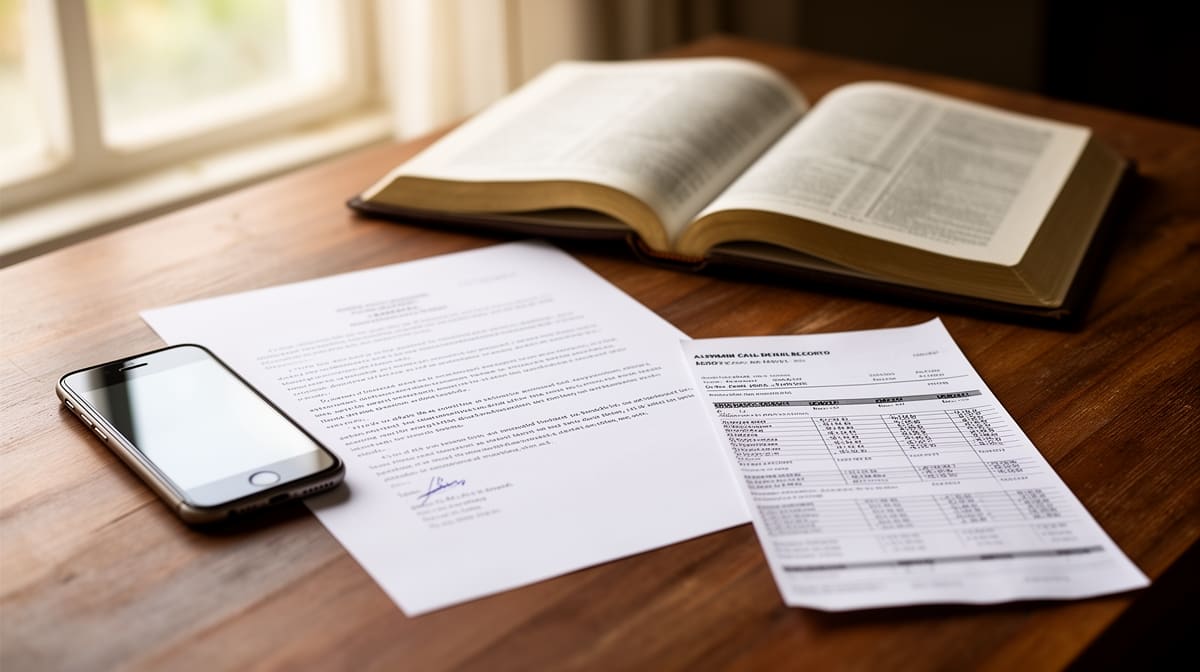
- Mobile phones of both Salim Khan and Asif Ishtiyaq were seized; CDRs and CAFs were obtained from service providers under Section 65B of the Indian Evidence Act.
- The contraband was never recovered from Salim Khan’s residence, vehicle, or person.
- Salim Khan is neither the consigner nor the consignee as per the builty.
Procedural History
- 31.08.2024: Contraband intercepted during transit.
- 02.09.2024: Asif Ishtiyaq arrested upon collecting parcels in Srinagar.
- 03.09.2024: Statement of Asif Ishtiyaq recorded under Section 67 NDPS Act.
- 27.10.2024: Statement of Salim Khan recorded under Section 67 NDPS Act.
- 02.11.2024: Charge sheet filed in trial court.
- 14.11.2025: Bail application rejected by Additional Sessions Judge, Kathua, citing gravity of offence and Section 37 NDPS Act.
- 29.04.2026: Bail application filed before J&K and Ladakh High Court.
The Parties' Positions
Petitioner (Salim Khan):
- Argues that no contraband was recovered from his possession.
- Contends that the sole basis of implicating him is the inadmissible Section 67 statement of co-accused Asif Ishtiyaq.
- Asserts that he is neither consigner nor consignee as per builty.
- Relies on Tofan Singh to argue that Section 67 statements are inadmissible for conviction or bail denial.
- Highlights absence of call transcripts, financial trail, or physical evidence linking him to the crime.
Respondent (NCB / Union of India):
- Opposes bail on grounds of commercial quantity recovered and seriousness of offence under Section 29 NDPS Act.
- Argues that Section 37 NDPS Act bars bail in such cases.
- Relies on the disclosure statement of Asif Ishtiyaq and CDRs as circumstantial evidence.
- Claims that the petitioner’s involvement is established through the chain of communication and payment.
Relief Sought
The petitioner seeks grant of regular bail, subject to standard conditions, arguing that the legal bar under Section 37 NDPS Act does not apply when the prosecution lacks admissible evidence to establish a prima facie case.
The Legal Issue
Can an accused in an NDPS case involving commercial quantity be denied bail under Section 37 solely on the basis of an inadmissible Section 67 statement of a co-accused, when no contraband is recovered from his possession and no corroborative evidence exists?
Arguments Presented
For the Petitioner
The petitioner’s counsel relied on the Supreme Court’s judgment in Tofan Singh v. State of Tamil Nadu (2021) 4 SCC 1, which held that officers under Section 53 NDPS Act are "police officers" within the meaning of Section 25 of the Evidence Act, rendering any statement recorded under Section 67 inadmissible as a confession. Further, the petitioner cited State by (NCB) Bengaluru v. Pallulabid Ahmad Arimutta (2022) 1 RCR (Criminal) 762, where the Supreme Court upheld bail despite CDRs and Section 67 statements, emphasizing that absence of possession and lack of corroborative material negated a prima facie case. The petitioner argued that CDRs without call transcripts cannot establish criminal intent, and that the builty clearly shows he was neither consigner nor consignee.
For the Respondent
The respondent, through DSGI, contended that the recovery of commercial quantity of contraband triggers the mandatory bar under Section 37 NDPS Act. It was argued that the disclosure by the co-accused, combined with CDRs and the timing of transactions, formed a prima facie case. The prosecution maintained that the petitioner’s role as the originator of the consignment, even if not the consigner on paper, was evident from the payment trail and the sequence of events.
The Court's Analysis
The Court undertook a rigorous analysis of the evidentiary foundation for the prosecution’s case. It emphasized that Section 37 NDPS Act, while imposing a stringent bar on bail, does not override the fundamental principle that bail cannot be denied in the absence of a prima facie case based on admissible evidence.
"That the officers who are invested with powers under Section 53 of the NDPS Act are ‘police officers’ within the meaning of Section 25 of the Evidence Act, as a result of which any confessional statement made to them would be barred under the provision of Section 25 of the Evidence Act, and cannot be taken into account in order to convict an accused under the NDPS Act."
The Court held that the statement of Asif Ishtiyaq, recorded under Section 67 while in custody, was inadmissible as a confession under Tofan Singh. The prosecution’s case, therefore, rested entirely on an inadmissible piece of evidence. The Court further examined the CDRs and CAFs obtained from service providers and concluded that, in the absence of transcripts of conversations, mere contact between the petitioner and the co-accused could not establish common criminal intent. The Court noted that call records may show communication, but not the content or purpose of that communication.
The Court also observed that the petitioner was neither the consigner nor the consignee as per the builty, and the contraband was never recovered from his person, residence, or vehicle. The prosecution failed to produce any financial records linking the Rs. 65,000 payment to the petitioner, nor any forensic or documentary evidence connecting him to the parcels. The Court concluded that the prosecution had not established a prima facie case against the petitioner under Section 29 NDPS Act.
The Court further distinguished the present case from those where bail was denied due to recovery of contraband from the accused’s possession or where independent corroborative evidence existed. Here, the entire chain of accusation collapsed without the Section 67 statement.
The Verdict
The petitioner succeeded. The High Court allowed the bail application and directed the petitioner’s release on bail upon furnishing a solvent surety bond of Rs. one lakh to the satisfaction of the trial court, and a personal bond to the satisfaction of the Superintendent of District Jail, Kathua. The petitioner is subject to four conditions: (i) not to tamper with evidence or abscond; (ii) not to leave the territorial jurisdiction of the trial court without permission; (iii) not to commit any similar offence; and (iv) not to influence witnesses. The Court explicitly clarified that nothing in the order constitutes an opinion on the merits of the case.
What This Means For Similar Cases
Section 67 Statements Cannot Form the Sole Basis for Bail Denial
- Practitioners must challenge bail rejections in NDPS cases where the prosecution relies exclusively on Section 67 statements.
- The Tofan Singh precedent is now binding: such statements are inadmissible confessions and cannot be used to establish a prima facie case.
- Courts must conduct an independent assessment of admissible evidence before invoking Section 37 NDPS Act.
Absence of Possession and Corroboration Entitles Accused to Bail
- If contraband is not recovered from the accused’s possession, and no independent evidence (e.g., financial trail, intercepted communication, eyewitness) links the accused to the crime, bail must be granted.
- CDRs and CAFs without call transcripts are insufficient to establish criminal intent.
- The burden remains on the prosecution to demonstrate a prima facie case using admissible evidence, not speculative inferences.
Prosecution Must Move Beyond Accused’s Disclosure
- NCB and investigating agencies must prioritize collection of physical, documentary, or forensic evidence over reliance on custodial disclosures.
- In future bail applications, defense counsel should systematically challenge the admissibility of Section 67 statements and demand disclosure of all corroborative material.
- Courts are now expected to scrutinize the evidentiary chain rigorously before applying Section 37’s mandatory bar.