The Himachal Pradesh High Court has reaffirmed that mere association with a co-accused and possession of contraband in a shared premises, without direct recovery from the accused, cannot justify denial of bail under the NDPS Act - especially when the sole incriminating evidence is an inadmissible confessional statement. This ruling reinforces the constitutional presumption of innocence and the strict limits on using statements recorded under Section 67 of the NDPS Act.
Background & Facts
The Dispute
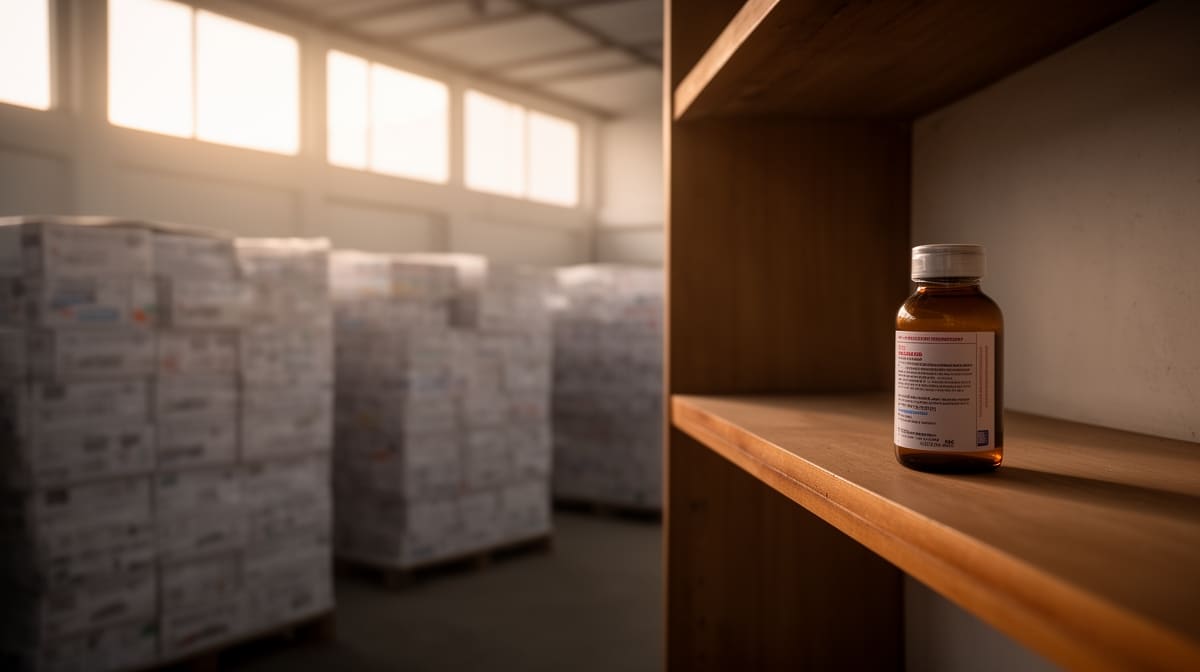
The petitioner, Pardeep Kumar, was arrested on 11.12.2025 in connection with FIR No.301 dated 05.12.2025, registered at Police Station Baddi, District Solan, under Sections 22 and 29 of the Narcotic Drugs and Psychotropic Substances (NDPS) Act, 1985. The case arose from the recovery of 360 bottles of syrup, Zing Cirex-T, containing Triprolidine Hydrochloride and Codeine Phosphate, from a rented room occupied by the petitioner and co-accused Prajwal Sharma.
Key Facts
- The 360 bottles were recovered on 05.12.2025 from a room leased in the name of CSD Life Sciences, where both the petitioner and Prajwal Sharma resided.
- Only 14 of the 360 bottles bore the label of CSD Life Sciences; the remaining 346 were unlabeled.
- The investigating agency confirmed that CSD Life Sciences’ official records showed no manufacture of these 360 bottles; all legally produced drugs were dispatched to Kanpur.
- The petitioner was not present at the time of recovery and no contraband was found in his personal possession.
- The prosecution’s case against the petitioner rested entirely on the statement of co-accused Prajwal Sharma, who alleged that the bottles were stored by the petitioner on the instructions of Vishal, a partner of CSD Life Sciences.
- The petitioner has been in custody since 11.12.2025.
- The owners of CSD Life Sciences - Vishal, Sachin, and Production Manager Alok Dhar Dwivedi - were granted anticipatory bail by this Court on 06.03.2026.
Procedural History
- 05.12.2025: FIR No.301 registered at PS Baddi after recovery of 360 bottles of syrup.
- 11.12.2025: Petitioner arrested based on statement of co-accused Prajwal Sharma.
- 27.02.2026: State filed status report before the Court.
- 06.03.2026: Court granted anticipatory bail to Vishal, Sachin, and Alok Dhar Dwivedi via Cr.MP(M) Nos.137, 182 and 222 of 2026.
- 16.03.2026: Petitioner’s bail application under Section 483 of BNSS, 2023, heard and decided.
Relief Sought
The petitioner sought regular bail, arguing that no contraband was recovered from his person or personal effects, and that the prosecution’s case was founded solely on an inadmissible statement under Section 67 of the NDPS Act.
The Legal Issue
Can an accused be denied bail under Section 37 of the NDPS Act when the contraband was not recovered from his conscious possession, and the only evidence linking him to the offence is a statement made by a co-accused under Section 67, which the Supreme Court has held to be inadmissible as a confession?
Arguments Presented
For the Petitioner
The petitioner’s counsel argued that the prosecution failed to establish any direct connection between the petitioner and the contraband. The recovery was from a shared room, not his personal custody. The sole incriminating material was the statement of Prajwal Sharma, recorded under Section 67 of the NDPS Act, which the Supreme Court in Tofan Singh v. State of Tamil Nadu has unequivocally held to be inadmissible as a confession. The petitioner, a low-level employee, had no control over production or inventory. His continued detention without prima facie evidence violated the presumption of innocence and the principle that bail is the norm, not the exception.
For the Respondent
The Additional Advocate General contended that the commercial quantity of contraband (360 bottles) triggered the rigours of Section 37 of the NDPS Act, making bail difficult. Although the petitioner was not found with the drugs, his presence as an occupant of the room and his employment with CSD Life Sciences made him liable under Section 29 for possession. The Investigating Officer asserted that the petitioner had not explained how the excess bottles came to be in the room, suggesting complicity. The State argued that the gravity of the offence and societal impact warranted denial of bail.
The Court's Analysis
The Court undertook a rigorous analysis of the evidentiary foundation of the prosecution’s case. It emphasized that the contraband was not recovered from the petitioner’s conscious possession, nor was there any independent corroboration of his involvement. The sole link was the statement of Prajwal Sharma, recorded under Section 67 of the NDPS Act.
"The officers who are invested with powers under section 53 of the NDPS Act are ‘police officers’ within the meaning of section 25 of the Evidence Act, as a result of which any confessional statement made to them would be barred under the provisions of section 25 of the Evidence Act, and cannot be taken into account in order to convict an accused under the NDPS Act."
The Court relied on Tofan Singh v. State of Tamil Nadu (2021) 4 SCC 1 and State by (NCB) Bengaluru v. Pallulabid Ahmad Arimutta (2022) to hold that statements under Section 67 are not confessions and cannot form the basis of prosecution. The Court further noted that even if the statement were admissible, it was a self-serving declaration by a co-accused, which under Section 30 of the Evidence Act, cannot be the sole ground for conviction.
The Court rejected the State’s argument that the commercial quantity of drugs automatically barred bail. It cited Dataram Singh v. State of Uttar Pradesh (2018) and Sanjay Chandra v. CBI (2012) to reaffirm that bail is not a punishment and that deprivation of liberty pending trial must be justified by necessity - not suspicion. The Court observed:
"Till the time guilt of accused is not proved, in accordance with law, he is deemed to be innocent."
It also noted that the owners of CSD Life Sciences had already been granted anticipatory bail, further undermining the claim of the petitioner’s unique culpability. The Court concluded that the prosecution had not established a prima facie case against the petitioner under Section 22 or 29 of the NDPS Act, and that his continued incarceration would amount to pre-trial punishment.
The Verdict
The petitioner succeeded. The Court granted him regular bail, subject to furnishing a personal bond of Rs.1,00,000 with two local sureties of the like amount, to be approved by the Chief Judicial Magistrate or trial court. The petitioner must: (a) appear before the trial court on all hearing dates; (b) not tamper with evidence or influence witnesses; (c) not leave India without permission; and (d) remain available for interrogation. The Court clarified that this order does not prejudge the merits of the case and that bail may be canceled if conditions are violated.
What This Means For Similar Cases
Confessional Statements Under Section 67 Cannot Sustain Arrest or Denial of Bail
- Practitioners must immediately challenge arrests or bail denials based solely on Section 67 statements.
- Any prosecution relying on such statements must now produce independent, corroborative evidence to establish prima facie involvement.
- Courts must reject arguments that ‘possession in shared premises’ alone justifies detention under Section 37.
Bail Is Not Denied Solely on Quantity of Contraband
- Section 37 of the NDPS Act permits bail even in commercial quantity cases if the accused is not in direct possession and there is no likelihood of reoffending.
- Courts must apply the Dataram Singh and Sanjay Chandra tests: Is detention necessary to ensure trial attendance? Is there a risk of evidence tampering?
- The burden shifts to the prosecution to show why the accused cannot be released on bail, not to the accused to prove innocence.
Occupation of Premises ≠ Constructive Possession
- Mere presence or residence in a premises where contraband is found does not equate to criminal possession under Section 22 or 29.
- Courts must distinguish between ownership, control, and access - especially in commercial settings with multiple employees.
- The absence of labels on 346 of 360 bottles in this case was critical; it undermined the prosecution’s claim of organized trafficking.