The Andhra Pradesh High Court has reaffirmed that mere association with a co-accused, without independent corroboration, cannot sustain detention under the NDPS Act when the contraband quantity is non-commercial. This ruling underscores the necessity of substantive evidence beyond confessional statements in bail applications.
Background & Facts
The Dispute
Criminal Case No. 28/2026 was registered at Airport Law and Order Police Station, Visakhapatnam District, against two accused persons for offences under Section 20(b)(ii)(B) read with Section 8(C) of the Narcotic Drugs and Psychotropic Substances Act, 1985. The petitioner, Chirumamilla Gopi, aged 27, is arrayed as Accused No. 2. He was arrested on 13.03.2026 and has been in judicial custody for 53 days as of the date of hearing.
Key Facts
- On 29.01.2026, the Sub-Inspector of Airport Law and Order Police Station received credible information regarding illicit drug activity near the Old Bus Stop, opposite NSTL, NAD, Visakhapatnam.
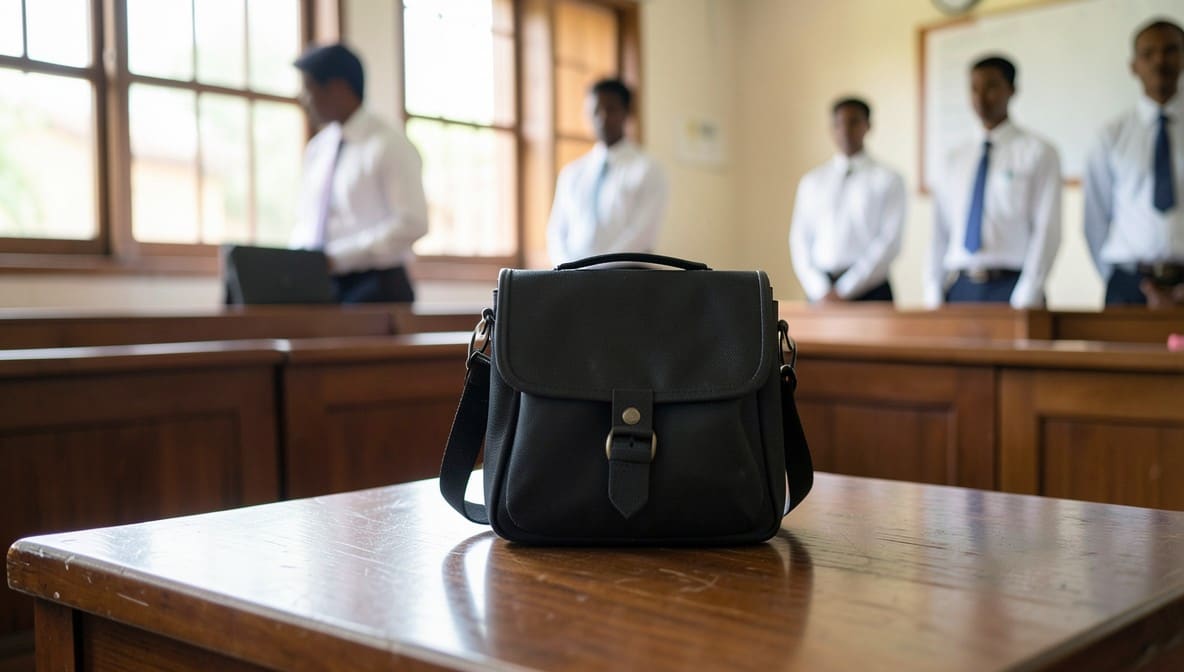
- Police rushed to the spot and observed a person carrying a black college bag who attempted to flee upon seeing police.
- Accused No. 1 was apprehended and 1.8 kg of ganja was seized from his possession.
- The petitioner, Accused No. 2, was named solely on the basis of a confession statement made by Accused No. 1.
- No contraband was recovered from the petitioner’s person, residence, or vehicle.
- No independent evidence - such as CCTV footage, mobile location data, witness testimony, or recovered items - links the petitioner to the offence.
- The quantity of ganja seized (1.8 kg) is classified as a non-commercial quantity under the NDPS Act.
Procedural History
- 29.01.2026: FIR registered at Airport Law and Order P.S., Visakhapatnam, for offences under NDPS Act.
- 13.03.2026: Petitioner arrested and remanded to judicial custody.
- 06.05.2026: Criminal Petition No. 4081/2026 filed under Sections 437, 438, 439, and 482 of CrPC and Section 528 of BNSS seeking regular bail.
- 06.05.2026: Hearing before the High Court.
The Parties' Positions
The petitioner contends that he has been falsely implicated without any direct or circumstantial evidence connecting him to the offence. His involvement is based exclusively on the uncorroborated confession of Accused No. 1, which is inadmissible as substantive evidence under Section 24 of the Indian Evidence Act and has been consistently held insufficient by higher courts.
The State acknowledges that the quantity of ganja is non-commercial and that no contraband was recovered from the petitioner. It does not oppose bail outright but leaves the decision to the Court’s discretion, noting that the investigation is still ongoing.
Relief Sought
The petitioner seeks regular bail pending trial, with conditions to ensure cooperation with investigation and non-interference with the judicial process.
The Legal Issue
Can an accused be denied bail under the NDPS Act solely on the basis of a co-accused’s confession, when no contraband is recovered from him and the quantity involved is non-commercial?
Arguments Presented
For the Petitioner
Learned counsel for the petitioner argued that the petitioner has no independent connection to the offence. The sole basis for his inclusion as Accused No. 2 is the uncorroborated confession of Accused No. 1, which is inherently unreliable and inadmissible as proof under Section 24 of the Indian Evidence Act. He cited State of Punjab v. Baldev Singh and K. Narayana Reddy v. State of Andhra Pradesh to emphasize that confessions of co-accused cannot form the sole basis for prosecution or denial of bail. He further submitted that 1.8 kg of ganja is a non-commercial quantity under the NDPS Act, and the petitioner has no prior criminal record. He undertook to comply with all bail conditions.
For the Respondent
The Assistant Public Prosecutor conceded that the quantity of ganja is non-commercial and that no incriminating material was recovered from the petitioner. She acknowledged the absence of independent evidence linking the petitioner to the crime but noted that the investigation was still in progress. She did not oppose bail but requested the Court to impose strict conditions to prevent tampering with evidence or witnesses.
The Court's Analysis
The Court examined the nature of the evidence against the petitioner and found that the prosecution’s case rests entirely on the uncorroborated confession of Accused No. 1. The Court observed that confessions of co-accused are not substantive evidence and cannot be the sole basis for either conviction or denial of bail, especially where no physical evidence connects the accused to the offence.
"The petitioner has been arrayed as Accused No.2 in this case, based solely on the confession statement of Accused No.1. No contraband was seized from the possession of the petitioner."
The Court further noted that the quantity of ganja (1.8 kg) falls within the non-commercial category as defined under the NDPS Act, and the Supreme Court in State of Punjab v. Baldev Singh and K. Narayana Reddy v. State of Andhra Pradesh has held that bail should not be denied merely on the ground of the nature of the offence when the quantity is small and the accused has no prior record.
The Court emphasized that while the NDPS Act is stringent, the principle of bail, not jail remains applicable, particularly where the evidence against the accused is weak and the detention period has already exceeded five weeks. The Court also considered the petitioner’s clean record and his willingness to comply with conditions.
The Verdict
The petitioner succeeded. The High Court granted regular bail to Accused No. 2, subject to the following conditions: (i) execution of a personal bond of Rs. 20,000 with two sureties of like amount; (ii) appearance before the Investigating Officer as required; (iii) no tampering with evidence or intimidation of witnesses; (iv) weekly reporting to the Station House Officer every Sunday between 10.00 a.m. and 5.00 p.m.; (v) no commission of any future offence; and (vi) surrender of passport or submission of an affidavit stating non-possession. The Court clarified that these observations are not indicative of any opinion on the merits of the case. The bail is subject to cancellation upon violation of any condition.
What This Means For Similar Cases
Confession Alone Is Insufficient for Bail Denial
- Practitioners must argue that confessions of co-accused, without corroboration, cannot justify continued detention under the NDPS Act.
- Courts must scrutinize whether the prosecution has independent evidence linking the accused to the offence.
- Where the quantity is non-commercial and no contraband is recovered from the accused, bail should be the norm, not the exception.
Non-Commercial Quantity Triggers Lenient Bail Jurisprudence
- The threshold for bail under the NDPS Act is not uniform - non-commercial quantities (e.g., under 2 kg ganja) warrant a more liberal approach.
- Courts must distinguish between traffickers and petty users or associates; detention should not be automatic.
- The State of Punjab v. Baldev Singh precedent must be invoked to counter prosecutorial overreach in low-quantity cases.
Procedural Safeguards Must Be Enforced
- Bail conditions must be specific, reasonable, and proportionate - weekly reporting and passport surrender are acceptable; blanket restrictions are not.
- Courts must explicitly state that bail orders are not indicative of merit to avoid prejudicing trial.
- Prosecutors must not rely on vague assertions of "ongoing investigation" to oppose bail without showing risk of evidence tampering or flight.