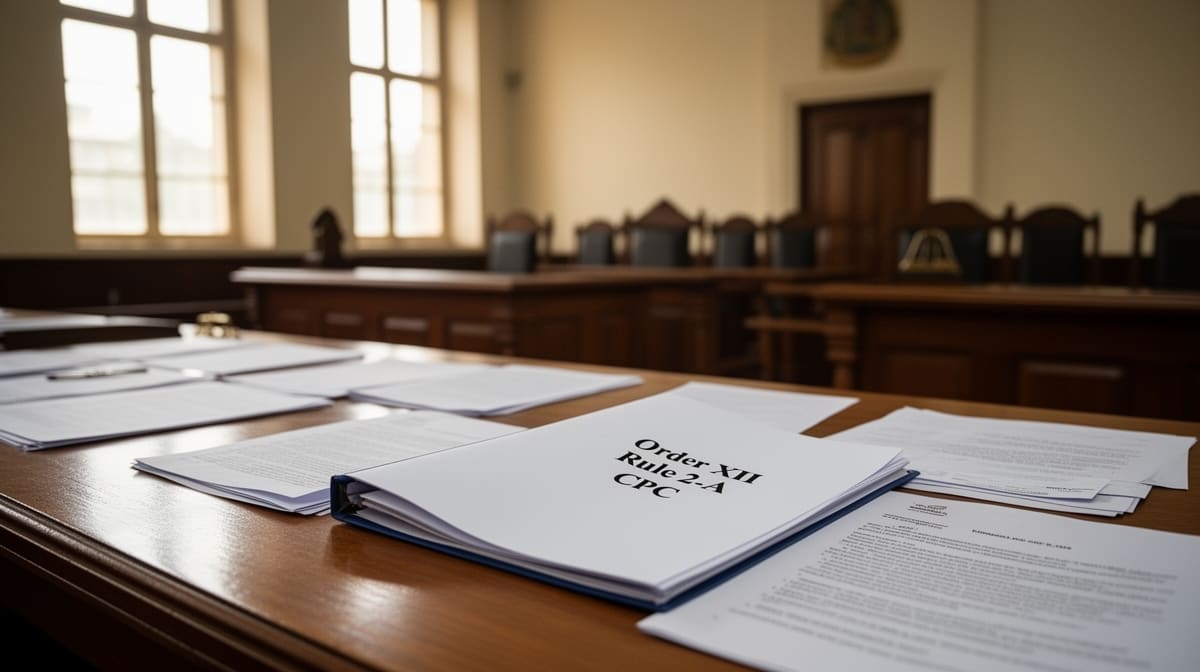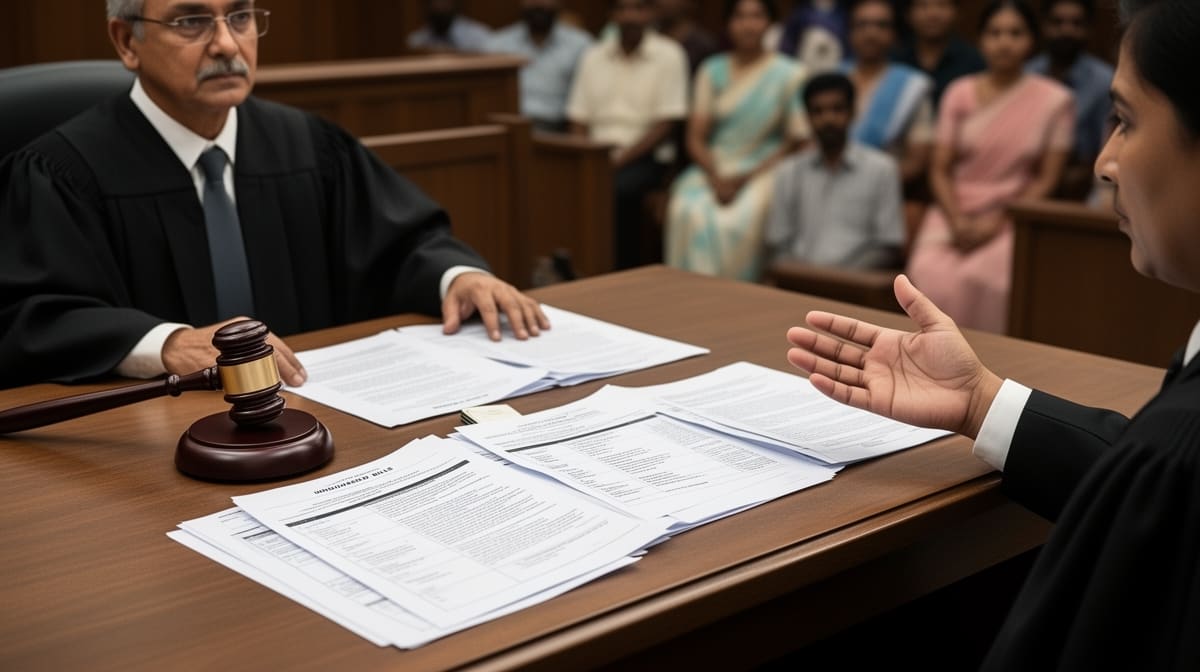
The Punjab & Haryana High Court has reaffirmed that admissions in pleadings or evidence constitute substantive proof under Section 58 of the Indian Evidence Act, making further documentary proof unnecessary in contract disputes. The judgment underscores the limited scope of Regular Second Appeal (RSA) to correct only legal errors, not factual findings, even if allegedly erroneous.
Background & Facts
The Dispute
The plaintiff, a construction contractor, filed a suit for recovery of Rs.22,18,332.66 against the defendant, who operated a sole proprietorship firm. The plaintiff alleged that he executed construction works for the defendant at Hartron Building, Sector-2, Panchkula, over two years (2010 - 2012). Bills totaling Rs.18,93,837/- were submitted, but the defendant made only partial payments of Rs.5,50,000/-, leaving a balance of Rs.20,63,565.26. The plaintiff claimed financial distress due to non-payment, leading to the suit in 2013.
Procedural History
The case progressed through the following stages:
- 2017: The Civil Judge (Junior Division), Chandigarh, partly decreed the suit for Rs.19,07,565.26 with interest, deducting Rs.7,06,000/- paid via cheques.
- 2023: The Additional District Judge, Chandigarh, dismissed the defendant’s appeal, upholding the trial court’s decree.
- 2026: The defendant filed RSA-1572-2023 before the Punjab & Haryana High Court, challenging the concurrent findings.
Relief Sought
The appellant-defendant sought to set aside the decrees, arguing that the bills (Ex.P1 - P9) were unsigned, undated, and unproved under the Indian Evidence Act. The respondent-plaintiff relied on admissions made by the defendant during cross-examination.
The Legal Issue
The central question was whether admissions in pleadings or evidence obviate the need to prove unsigned, undated bills in a contract dispute, and whether RSA can interfere with concurrent factual findings absent a legal error.
Arguments Presented
For the Appellant
The appellant contended:
- The bills (Ex.P1 - P9) were inadmissible as primary evidence under Section 60 of the Evidence Act since they were unsigned, undated, and photocopies.
- No application for secondary evidence was filed, rendering the bills unproved.
- The plaintiff’s witness (PW2) admitted in cross-examination that he did not sign the bills or recall their preparation.
- The trial court misread the defendant’s admissions, which pertained only to the Hartron site, not the disputed bills.
For the Respondent
The respondent argued:
- The defendant admitted in cross-examination that the plaintiff worked at Hartron from 2010 - 2012 and executed works mentioned in bills Ex.P2 - P9.
- Admissions under Section 58 of the Evidence Act are substantive evidence, shifting the burden to the defendant to disprove them.
- The defendant failed to rebut the plaintiff’s claim or substantiate his counter-claim of excess payment.
- The plaintiff’s witnesses withstood cross-examination, while the defendant’s witnesses could not connect the disputed transactions to their testimony.
The Court's Analysis
The High Court dismissed the appeal, relying on the following principles:
- Admissions as Substantive Evidence The Court held that admissions in pleadings or evidence are conclusive under Section 58 of the Evidence Act and do not require further proof. Citing Union of India v. Moksh Builders and Financiers Ltd. (AIR 1977 SC 409), the Court noted:
"Admissions duly proved are admissible evidence irrespective of whether the party making them appeared in the witness box or not."
The defendant’s cross-examination revealed admissions about the plaintiff’s work at Hartron and other sites, rendering the bills’ technical deficiencies (unsigned/undated) irrelevant.
-
Burden of Proof Shifted The Court relied on Vathsala Manickavasagam v. N. Ganesan (SC) to hold that once admissions are made, the burden shifts to the admitting party to explain them. The defendant failed to disprove the plaintiff’s claim or substantiate his counter-claim of excess payment.
-
Limited Scope of RSA The Court reiterated that RSA under Section 100 of the CPC is confined to correcting errors of law or procedure, not factual findings. Citing M/s. Shivali Enterprises v. Godawari (SC), the Court held:
"No matter howsoever incorrect or grossly erroneous the concurrent findings of the learned courts below may be, this Court in the Second Appeal can interfere only where there is an error in law or procedure."
Since no legal error was demonstrated, the RSA was dismissed.
The Verdict
The Punjab & Haryana High Court dismissed RSA-1572-2023, upholding the concurrent decrees of the lower courts. The Court held that:
- Admissions in evidence obviate the need to prove unsigned/undated bills under Section 58 of the Evidence Act.
- RSA cannot interfere with concurrent factual findings absent a legal error.
What This Means For Similar Cases
Admissions Trump Technical Deficiencies
- Unsigned/undated bills may still be enforceable if the opposing party admits their contents in pleadings or evidence.
- Practitioners should emphasize admissions during cross-examination to shift the burden of proof.
RSA: A Narrow Remedy
- Concurrent findings of fact are binding in RSA unless a legal error (e.g., misapplication of law, procedural irregularity) is demonstrated.
- Parties challenging decrees must frame grounds under Section 100 CPC (e.g., jurisdictional errors, misinterpretation of statutes) rather than factual disputes.
Strategic Litigation Takeaways
- For Plaintiffs: Ensure admissions are elicited during cross-examination to preclude technical defenses (e.g., unsigned bills).
- For Defendants: Disprove admissions or demonstrate bona fide mistakes to avoid liability under Section 58.
- For Appellants: Grounds in RSA must focus on legal errors, not factual disagreements.