The Punjab & Haryana High Court has reaffirmed that a defendant’s claim of forged contractual execution cannot prevail when the document is executed on a stamp paper dated after the alleged period of access to the defendant’s signature. This judgment clarifies the evidentiary burden in civil disputes involving alleged fabrication of agreements.
Background & Facts
The Dispute
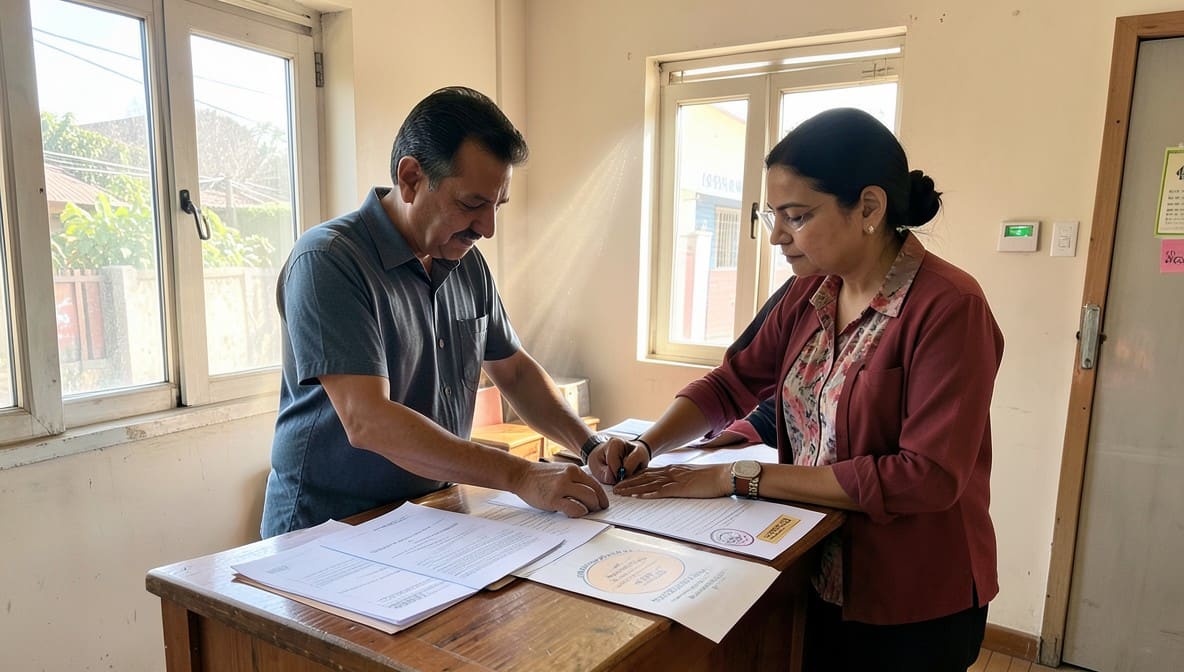
The respondent-plaintiff filed a suit for recovery of Rs. 66,000 as earnest money paid under an Agreement to Sell dated 24.07.1993 (Ex. P2), alleging that the appellant-defendant had agreed to sell 9 kanals 12 marlas of land for a total consideration of Rs. 80,000. The sale deed was to be executed on 25.07.1994. The plaintiff claimed readiness and willingness to perform, evidenced by his appearance before the Sub-Registrar on the stipulated date (Ex. P1). Upon the defendant’s failure to execute the sale deed, the plaintiff sought refund of the earnest money along with Rs. 14,000 as damages.
Key Facts
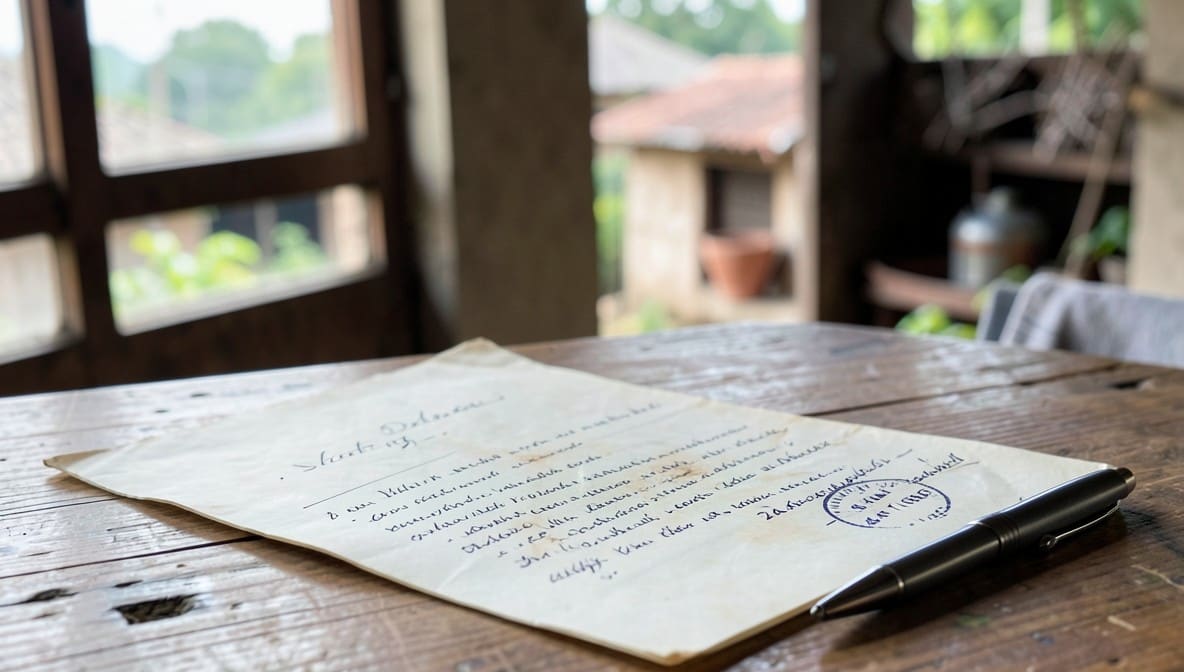
- The Agreement to Sell (Ex. P2) was written on a stamp paper purchased on 24.07.1993
- The defendant admitted his signature on the document, including the endorsement on the reverse
- The defendant claimed his signatures were obtained on blank papers during business dealings as a commission agent, which ceased in 1990
- The plaintiff produced PW-2 (Bagga Singh) as a marginal witness who attested the agreement
- PW-4, the document writer, testified that the agreement was drafted at the defendant’s instance
- PW-3 testified to the payment of Rs. 66,000 as earnest money
- The defendant did not produce any business records, nor did he examine the stamp vendor or file a police complaint regarding misuse of his signature
Procedural History
- 20.02.1998: Trial Court dismissed the suit, holding the agreement was forged and the plaintiff had not come with clean hands
- 07.08.2000: First Appellate Court (Additional District Judge, Ferozepur) allowed the appeal, set aside the trial court’s order, and decreed the suit for recovery of Rs. 66,000 with interest
- 24.03.2026: Regular Second Appeal reserved for judgment
- 08.04.2026: Judgment pronounced by the Punjab & Haryana High Court
The Parties' Positions
Appellant (Defendant): Contended that the agreement was fabricated using his signature obtained on blank papers during prior commission agency dealings that ended in 1990. Argued that the plaintiff failed to prove the source of cash payment, verify Jamabandi, and establish title. Alleged collusion and lack of clean hands.
Respondent (Plaintiff): Maintained that the agreement was genuine, duly executed on a contemporaneous stamp paper, and supported by witness testimony. Argued that the defence of fraud was unsubstantiated, lacked material particulars, and was contradicted by the 1993 stamp paper date.
Relief Sought
The plaintiff sought recovery of Rs. 66,000 as earnest money and Rs. 14,000 as damages. The trial court dismissed the claim. The First Appellate Court decreed the suit. The appellant now sought reversal of the appellate decree.
The Legal Issue
Whether a defendant’s defence of forgery, based on prior possession of blank signed papers, can defeat a plaintiff’s claim when the agreement is executed on a stamp paper dated after the alleged cessation of access to the defendant’s signature?
Arguments Presented
For the Appellant
Counsel argued that the First Appellate Court’s findings were perverse because: (1) PW-2 gave inconsistent testimony on the consideration amount; (2) PW-4 withheld the register of document writers; (3) the plaintiff failed to prove the source of Rs. 66,000 in cash; (4) the defendant’s prior commission agency relationship with the plaintiff (ending in 1990) explained how his signature was obtained on blank papers; and (5) the plaintiff’s failure to verify Jamabandi cast doubt on the defendant’s title and the transaction’s legitimacy.
For the Respondent
Counsel contended that the defendant’s admission of his signature on the document, coupled with the stamp paper’s 1993 date, rendered his defence of forgery factually impossible. The plea of fraud was vague, lacked particulars under Order VI Rule 4 CPC, and was unsupported by any complaint, corroborative evidence, or examination of the stamp vendor. The testimony of PW-2, PW-3, and PW-4 collectively established due execution and payment. Minor inconsistencies in testimony were attributable to the lapse of time and did not invalidate the core evidence.
The Court's Analysis
The Court emphasized that in Punjab and Haryana, a Regular Second Appeal under Section 41 of the Punjab Courts Act, 1918, is not a forum to reappreciate evidence unless the findings are perverse or based on no evidence. The Court noted that the defendant did not dispute the authenticity of his signature on the Agreement to Sell (Ex. P2). The critical fact was that the stamp paper was purchased on 24.07.1993, while the defendant claimed his signatures were obtained during business dealings that ended in 1990.
"Given the admitted cessation of dealings in 1990, the appellant’s plea - that the respondent-plaintiff had the opportunity to secure his signatures on a document non-existent until 1993 - is rendered factually impossible and legally untenable."
The Court held that the defendant’s explanation was not merely improbable but demonstrably false. The burden to prove fraud lay on the defendant, and he failed to provide any material particulars under Order VI Rule 4 CPC. The absence of a police complaint, failure to examine the stamp vendor, and non-production of business records further weakened his case.
The Court found PW-2’s testimony credible despite minor inconsistencies, as he was neither related to the plaintiff nor shown to be hostile. The testimony of PW-4 (document writer) and PW-3 (witness to payment) corroborated the plaintiff’s version. The Court held that the presumption of due execution under Section 67 of the Indian Evidence Act, 1872, was not rebutted.
The Court further observed that even if the defendant lacked clear title, the plaintiff was entitled to recovery of earnest money as the contract was not performed, and specific performance was not sought. The First Appellate Court’s findings were well-reasoned and supported by the evidence.
The Verdict
The appeal was dismissed. The judgment and decree dated 07.08.2000 of the Additional District Judge, Ferozepur, affirming the recovery of Rs. 66,000 as earnest money with interest, was upheld. The Court affirmed the appellate court’s award of interest at 6% per annum from the date of filing of the suit until realization. All pending miscellaneous applications were disposed of.
What This Means For Similar Cases
Signature Admissions Cannot Be Overcome by Vague Fraud Allegations
- Practitioners must now treat admission of signature on a document as a decisive evidentiary point
- A defence of forgery based on prior access to blank papers will fail if the document’s date post-dates the alleged period of access
- Courts will not entertain bald assertions of fraud without material particulars under Order VI Rule 4 CPC
Documentary Evidence Trumps Oral Testimony in Contract Disputes
- The date of stamp paper purchase is a critical objective fact that overrides subjective claims of fabrication
- Failure to produce corroborative evidence (e.g., stamp vendor records, police complaint, business ledgers) fatally weakens a fraud defence
- Minor inconsistencies in witness testimony do not invalidate a contract if core execution and payment are corroborated
Recovery of Earnest Money Is Permissible Even Without Title
- A plaintiff may recover earnest money upon breach of an agreement to sell, even if the seller lacks clear title
- Specific performance is not a prerequisite for recovery of advance payments
- Courts will grant restitution where performance is impossible due to the defendant’s default