
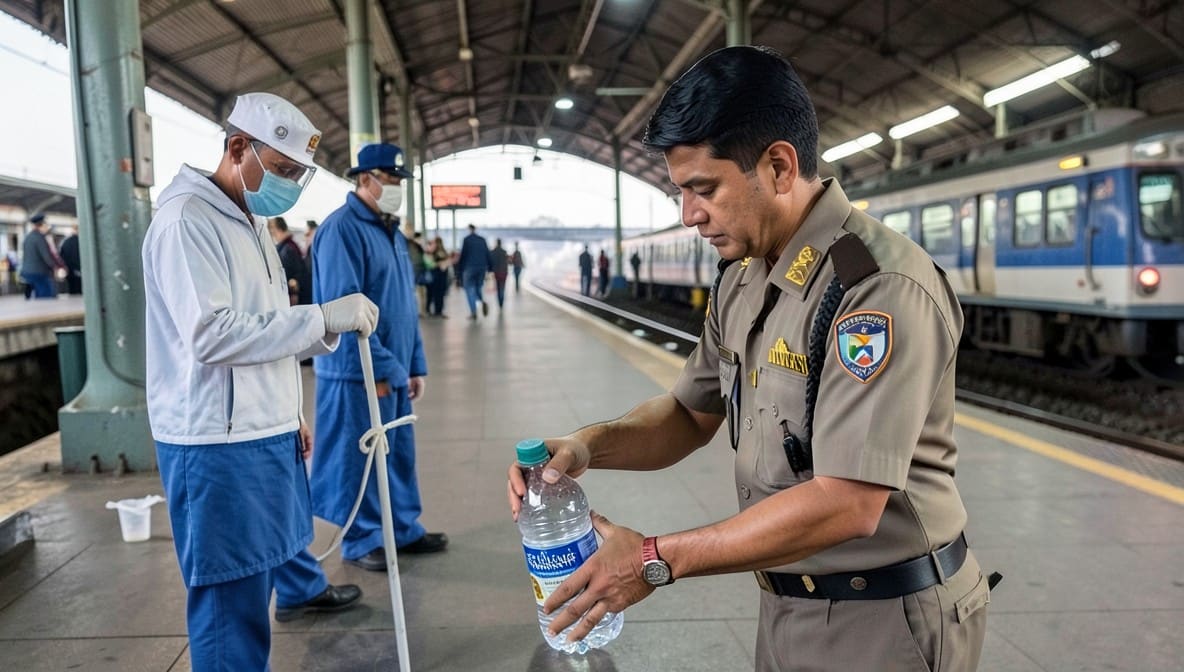
The Supreme Court has clarified the ambit of Section 50 of the Narcotic Drugs and Psychotropic Substances Act, 1985 (NDPS Act) in a recent judgment, holding that the statutory safeguard of being searched before a Gazetted Officer or Magistrate does not extend to searches of objects carried by an accused. The Court upheld the conviction of the appellant under Sections 8 and 21 of the NDPS Act, while reducing the sentence from 14 years to the minimum of 10 years.
The judgment resolves critical questions regarding the procedural safeguards under the NDPS Act and their application in cases involving recovery of contraband from objects rather than the accused's person. It reinforces the principle that compliance with procedural safeguards must be contextually interpreted to avoid miscarriage of justice.
Background & Facts
The Genesis
The appellant, Mehboob Shah, was convicted by the Trial Court under Sections 8 and 21 of the NDPS Act for carrying 100 grams of smack (diacetyl morphine) concealed in a water bottle. The Trial Court sentenced him to 14 years of rigorous imprisonment and a fine of Rs. 1,00,000, with a default sentence of two years in case of non-payment. The High Court affirmed the conviction and sentence vide judgment dated 29.09.2011.
Key Facts
- 23.06.1996: ASI Indrabhan Singh Parihar (PW-9) received confidential information that the appellant was carrying contraband (smack) concealed in a water bottle and was about to board the train DN Frontier Mail towards Delhi.
- 23.06.1996: Acting on the information, PW-9 apprehended the appellant at Shamgarh Railway Station and recovered 100 grams of smack from the water bottle he was carrying.
- 23.06.1996: Two representative samples of 5 grams each were drawn by PW-9 at the spot and sealed in the presence of witnesses. The samples were sent to the Forensic Science Laboratory (FSL), Indore, which confirmed the substance as smack.
- 23.06.1996: FIR No. 302/1996 was registered against the appellant.
- 07.04.1997: The Trial Court convicted the appellant under Sections 8 and 21 of the NDPS Act and sentenced him as above.
- 29.09.2011: The High Court dismissed the appellant's appeal, affirming the conviction and sentence.
- 2026: The appellant preferred the present appeal before the Supreme Court.
Procedural History
- 07.04.1997: Trial Court convicted the appellant and sentenced him to 14 years RI and a fine of Rs. 1,00,000.
- 29.09.2011: High Court dismissed the appeal, affirming the conviction and sentence.
- 2026: Present appeal filed before the Supreme Court under Article 136 of the Constitution.
The Parties' Positions
The appellant challenged the conviction on the grounds of:
- Non-compliance with Section 50 of the NDPS Act, as he was not informed of his right to be searched before a Gazetted Officer or Magistrate.
- Non-compliance with Section 52A of the NDPS Act, as representative samples were not drawn in the presence of a Magistrate.
- Hostility of independent witnesses to the seizure.
- Discrepancies in the weight of the recovered contraband.
The State opposed the appeal, contending that the procedural safeguards were substantially complied with and that the conviction was based on reliable evidence.
Relief Sought
The appellant sought:
- Acquittal on grounds of procedural non-compliance.
- Alternatively, reduction of sentence to the minimum prescribed under the unamended Section 21 of the NDPS Act.
- Extension of the benefit of the 2001 Amendment Act to reduce the sentence.
The Legal Issue
The central question was whether Section 50 of the NDPS Act, which confers a right to be searched before a Gazetted Officer or Magistrate, applies when contraband is recovered from an object carried by the accused rather than from his person. Additionally, the Court examined whether non-compliance with Section 52A of the NDPS Act, which mandates drawing of representative samples in the presence of a Magistrate, vitiates the conviction.
Arguments Presented
For the Appellant
The appellant contended that:
- Section 50 of the NDPS Act applies to all searches, including those of objects carried by the accused, and that the failure to inform him of his right to be searched before a Magistrate or Gazetted Officer vitiated the search and seizure.
- The recovery of contraband from the water bottle was akin to a personal search, and thus Section 50 was applicable.
- The non-compliance with Section 52A of the NDPS Act, as representative samples were not drawn in the presence of a Magistrate, rendered the evidence inadmissible.
- The independent witnesses to the seizure turned hostile, casting doubt on the prosecution's case.
- The discrepancy in the weight of the recovered contraband (5 grams) was fatal to the prosecution's case.
For the Respondent State
The State argued that:
- Section 50 of the NDPS Act applies only to personal searches and not to searches of objects carried by the accused. The appellant was informed of his right to be searched before a Magistrate or Gazetted Officer, as recorded in the Report for Grant of Consent (Exhibit P-1).
- The non-compliance with Section 52A of the NDPS Act was procedural and did not vitiate the trial, as the samples were duly sealed and sent to the FSL for chemical examination, which confirmed the substance as smack.
- The testimony of the official witnesses (PW-3, PW-6, PW-9, and PW-10) was reliable and trustworthy, and the appellant failed to demonstrate any prejudice caused by the non-compliance.
- The discrepancy in the weight of the recovered contraband was minimal and did not affect the credibility of the prosecution's case.
- The appellant was not entitled to the benefit of the 2001 Amendment Act, as the trial had concluded before the Amendment Act came into force.
The Court's Analysis
The Supreme Court examined the scope of Section 50 of the NDPS Act and held that the statutory safeguard of being searched before a Gazetted Officer or Magistrate is confined to cases where the recovery is sought to be effected through the personal search of the accused. The Court relied on precedents such as State of Punjab v. Baldev Singh and State of H.P. v. Pawan Kumar to hold that Section 50 does not apply when contraband is recovered from an object carried by the accused.
"Section 50 of the NDPS Act confers upon an accused a valuable right to have his personal search conducted before a Gazetted Officer or a Magistrate, if he so requires. Such right is sacrosanct and indefeasible which cannot be disregarded by the prosecution except at its own peril. The protection under Section 50 is confined to cases where the recovery is sought to be effected through the personal search of the accused. It has no application where the search is of an article, such as a bag, container, suitcase or any other object, which the accused may be carrying."
The Court further held that even if Section 50 were applicable, the appellant was informed of his right to be searched before a Magistrate or Gazetted Officer, as recorded in the Report for Grant of Consent (Exhibit P-1) and corroborated by the testimonies of PW-6 and PW-9.
On the issue of Section 52A of the NDPS Act, the Court held that the requirement to draw representative samples in the presence of a Magistrate is procedural and that non-compliance with the same does not vitiate the trial unless the accused demonstrates prejudice. The Court relied on Narcotics Control Bureau v. Kashif to hold that the purpose of Section 52A is to ensure early disposal of seized contraband and that procedural irregularities do not vitiate the trial unless they cause serious prejudice to the accused.
"Any lapse or delay in compliance with Section 52A by itself would neither vitiate the trial nor would entitle the accused to be released on bail. The court will have to consider other circumstances and the other primary evidence collected during the course of investigation, as also the statutory presumption permissible under Section 54 of the NDPS Act."
The Court also held that the testimony of official witnesses cannot be disregarded merely on account of their official status or for want of corroboration by independent witnesses. The Court relied on Rizwan Khan v. State of Chhattisgarh to hold that a conviction may be based on the testimony of official witnesses if such testimony is found to be reliable and trustworthy.
The Court further held that the appellant was not entitled to the benefit of the 2001 Amendment Act, as the trial had concluded before the Amendment Act came into force. The Court relied on Basheer v. State of Kerala to hold that the amended provisions apply only to cases pending before the Trial Court or under investigation as on 02.10.2001.
The Verdict
The Supreme Court partly allowed the appeal. It upheld the conviction of the appellant under Sections 8 and 21 of the NDPS Act but reduced the sentence from 14 years to the minimum of 10 years of rigorous imprisonment. The fine of Rs. 1,00,000 was maintained, with a default sentence of one year in case of non-payment. The appellant was directed to deposit the fine within three months.
The Court held that the procedural safeguards under Sections 50 and 52A of the NDPS Act were substantially complied with and that the appellant failed to demonstrate any prejudice caused by the non-compliance. The Court also held that the appellant was not entitled to the benefit of the 2001 Amendment Act.
What This Means For Similar Cases
Section 50 NDPS Act Applies Only to Personal Searches
- Section 50 of the NDPS Act confers a right to be searched before a Gazetted Officer or Magistrate only in cases of personal searches. It does not apply to searches of objects carried by the accused.
- The Court clarified that the statutory safeguard is confined to personal searches and does not extend to searches of articles like water bottles, bags, or containers.
Procedural Compliance Under NDPS Act Is Contextual
- Non-compliance with procedural safeguards under the NDPS Act, such as Section 52A, does not vitiate the trial unless the accused demonstrates prejudice.
- The Court emphasized that the purpose of procedural safeguards is to ensure fairness and not to create technical loopholes. Courts must examine whether the non-compliance caused serious prejudice to the accused.
Reliability of Official Witnesses in NDPS Cases
- The testimony of official witnesses (police officials) cannot be disregarded merely on account of their official status.
- A conviction may be based on the testimony of official witnesses if such testimony is found to be reliable and trustworthy, even in the absence of corroboration by independent witnesses.
Sentencing Under NDPS Act Must Align With Legislative Intent
- The Court reiterated that the 2001 Amendment Act applies only to cases pending before the Trial Court or under investigation as on 02.10.2001.
- Courts must carefully examine the date of the offence and the date of the Amendment Act to determine whether the benefit of the amended provisions can be extended.
Minimal Discrepancies in Evidence Are Inconsequential
- Minor discrepancies in the weight of recovered contraband do not vitiate the prosecution's case if the evidence is otherwise reliable.
- Courts must examine whether the discrepancies are material or merely technical in nature.





