The Chhattisgarh High Court has clarified that mere transportation of a person by a hired driver, without evidence of active participation in an alleged abduction, does not justify denial of regular bail. This ruling reinforces the principle that bail must be granted where the accused’s role is peripheral and no direct culpability is established.
Background & Facts
The Dispute
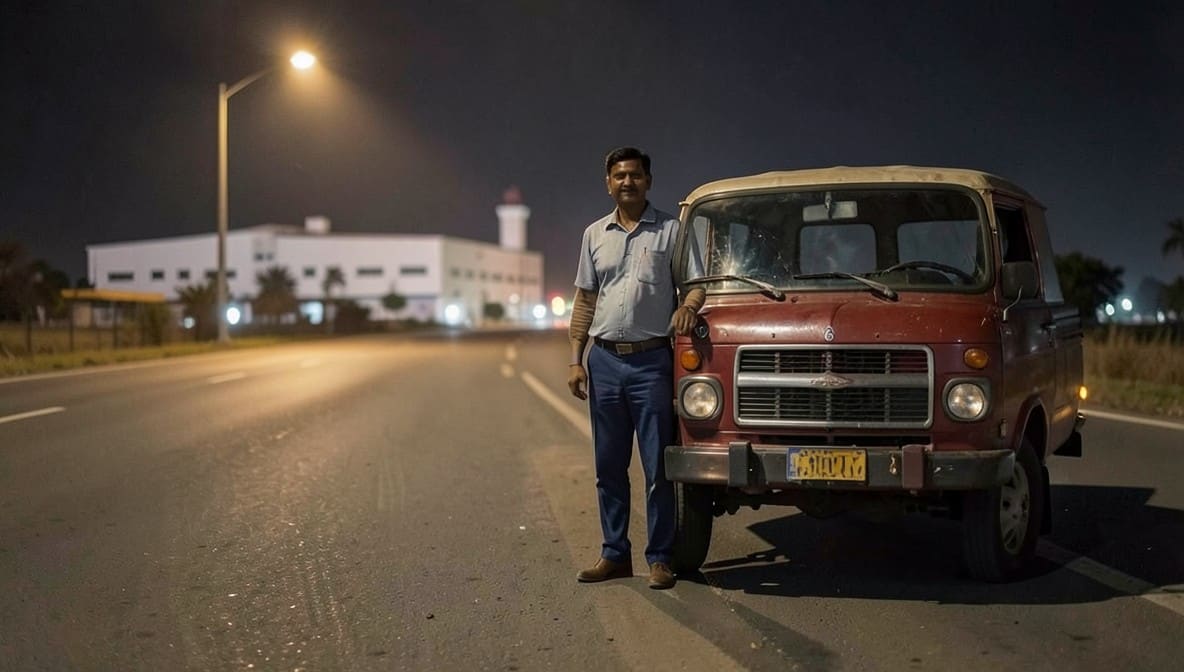
The applicant, Arun Sagarwanshi, a 29-year-old car booking driver from Amleshwar, District Durg, Chhattisgarh, was arrested in connection with Crime No. 918/2025 registered at Police Station Jamul. The case stems from allegations that the victim, a young woman, was forcibly taken from her parental home in Durg to Raipur by her husband, co-accused Hemant Agrawal, and his associates on 19.11.2025. The prosecution alleges that the applicant, while operating his vehicle (CG 04 LV 1810), facilitated the abduction by driving the main accused and others to the victim’s residence and transporting her away.
Key Facts
- The victim and co-accused Hemant Agrawal had married at Arya Samaj, Raipur, in 2023 and lived together as husband and wife.
- The victim reportedly expressed unwillingness to continue the relationship and left Raipur in October 2025, returning to her parental home in Durg.
- On 19.11.2025 at approximately 10:30 AM, Hemant Agrawal and associates arrived at the victim’s residence in two vehicles.
- The applicant’s vehicle, registered in his father’s name, was hired on a rental basis by Hemant Agrawal to transport the victim from Durg to Raipur.
- The applicant claims he was unaware of any dispute between the couple and was merely performing his professional duty as a driver.
- The victim’s statement under Section 183 BNSS names only Hemant Agrawal as the perpetrator; no specific role is attributed to the applicant.
- The memorandum of co-accused Pravin Bhagat corroborates the applicant’s version that the vehicle was hired on booking.
- The applicant has no prior criminal record.
- The charge sheet was filed on or before 14.01.2026, the date of the applicant’s arrest.
Procedural History
- 19.11.2025: Alleged abduction and forcible removal of victim from parental home in Durg.
- 20.11.2025: FIR No. 918/2025 registered at Police Station Jamul, Durg, against Hemant Agrawal and others.
- 14.01.2026: Applicant arrested and taken into custody.
- 05.02.2026: Charge sheet filed before the trial court.
- 18.03.2026: First bail application filed under Section 483 BNSS before the Chhattisgarh High Court.
The Parties' Positions
For the Applicant
The applicant’s counsel contends that he is a professional driver with no prior involvement in the dispute. He was hired on a commercial basis, had no knowledge of the alleged coercion, and no overt act or mens rea is attributed to him in the FIR or victim’s statement. The case against him rests solely on the uncorroborated statement of the main accused and his presence in the vehicle, which is insufficient to establish criminal liability.
For the Respondent/State
The State opposes bail, arguing that the applicant actively participated in the abduction by accompanying the main accused to the victim’s residence and facilitating her forcible removal. The State asserts that the applicant’s role was not passive and that his presence at the scene, coupled with the nature of the offence, warrants continued custody.
Relief Sought
The applicant seeks regular bail under Section 483 BNSS, arguing that his detention since 14.01.2026 is unjustified given the lack of direct evidence against him, the filing of the charge sheet, and the absence of any need for further custodial interrogation.
The Legal Issue
The central question was whether Section 483 of the Bharatiya Nagarik Suraksha Sanhita, 2023 permits the grant of regular bail to an accused whose alleged involvement is limited to providing transportation without evidence of intent, knowledge, or active participation in the commission of the offence.
Arguments Presented
For the Appellant/Petitioner
The applicant’s counsel relied on the principle that bail is the rule and jail is the exception, particularly where the accused has no criminal antecedents and the charge sheet has been filed. He cited Arnesh Kumar v. State of Bihar to argue that mere presence at the scene, without corroborative evidence of active participation, cannot justify denial of bail. He emphasized that the victim’s statement under Section 183 BNSS does not implicate the applicant and that the prosecution’s case is built on speculation and the uncorroborated deposition of the main accused.
For the Respondent/State
The State argued that the applicant’s role was not that of a mere bystander but an active facilitator of the abduction. It contended that hiring a vehicle for the purpose of forcibly removing a person from her parental home constitutes participation in a criminal conspiracy. The State further submitted that the gravity of the offences under Sections 115(2), 85, and 351(3) BNSS, which involve kidnapping and assault, warrants strict scrutiny and denial of bail.
The Court's Analysis
The Court examined the nature of the allegations, the material on record, and the distinction between the main accused and the applicant. It noted that while the FIR and victim’s statement clearly target Hemant Agrawal as the principal actor, no specific act, threat, or direction is attributed to the applicant. The Court observed that the applicant’s presence in the vehicle, without more, does not establish criminal intent or participation.
"The case against the applicant is primarily based on circumstantial material, has no previous criminal antecedents, and the charge sheet has already been filed, with the applicant being in jail since 14.01.2026, and no further custodial interrogation is required."
The Court emphasized that the burden of proof lies with the prosecution to establish active involvement, and mere association or transportation, without evidence of knowledge or intent, cannot sustain continued detention. It distinguished this case from those involving direct perpetrators or conspirators, noting that the applicant’s role was incidental to his profession. The Court also noted that the filing of the charge sheet indicated the investigation was complete, negating any need for further custody.
The Verdict
The applicant succeeded. The Chhattisgarh High Court granted regular bail to Arun Sagarwanshi, directing his release upon furnishing a personal bond with two sureties of like sum. The applicant must remain present before the trial court on all fixed dates, including for opening of the case, framing of charge, and recording of statement under Section 351 BNSS. Failure to appear without sufficient cause may result in proceedings under Section 269 BNSS or initiation of proclamation under Section 84 BNSS, followed by punishment under Section 209 BNSS. The applicant is also barred from seeking adjournments when witnesses are present. The trial court was directed to receive a certified copy of this order forthwith.
What This Means For Similar Cases
Presence Alone Is Not Sufficient for Denial of Bail
- Practitioners must argue that mere presence in a vehicle or at a location, without evidence of intent, direction, or active participation, cannot justify denial of bail under BNSS.
- The burden shifts to the prosecution to prove more than association; corroboration is essential.
Professional Drivers Are Not Automatically Complicit
- In cases involving hired transport, courts must distinguish between professional duty and criminal complicity.
- Absence of prior knowledge, no verbal or physical involvement, and lack of mention in victim’s statement are strong grounds for bail.
Charge Sheet Filing Strengthens Bail Claims
- Once the charge sheet is filed, the need for custodial interrogation ends, making continued detention prima facie unjustified.
- Courts should consider this as a key factor in bail applications under Section 483 BNSS.
Procedural Safeguards Must Be Specific
- The Court imposed clear, enforceable conditions on bail, including mandatory court appearances and restrictions on adjournments.
- Practitioners should draft similar undertakings to ensure compliance and avoid abuse of liberty.
No Criminal Antecedents Are Critical
- A clean record significantly strengthens the bail plea, especially where the accused’s role is peripheral.
- Courts are more likely to grant bail where the accused has no history of violence or criminal conduct.