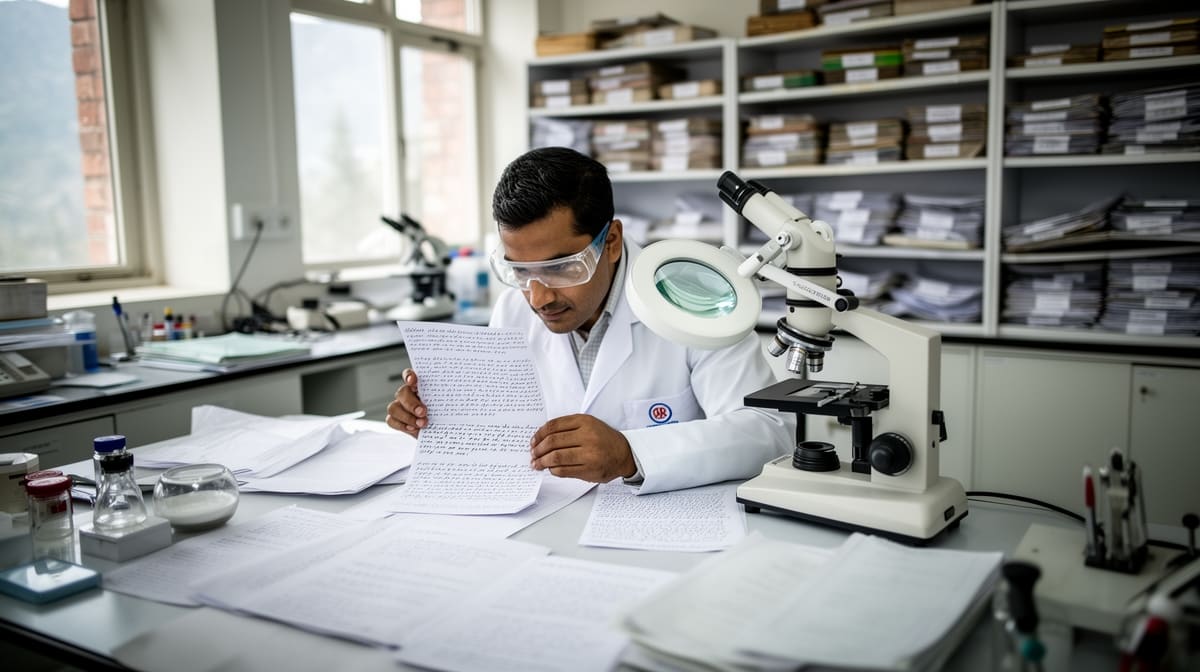
The Supreme Court has reaffirmed that courts must not prematurely terminate criminal proceedings under Section 482 of the CrPC when forensic investigations into forged documents are actively underway. This judgment underscores the principle that allegations of fraud and forgery, supported by pending expert analysis, warrant full investigation rather than judicial intervention at the threshold.
Background & Facts
The Dispute
The appellant, Sharla Bazliel, is the adopted daughter and legal heir of Dr. G.B. Bazliel, who owned ancestral agricultural land measuring 51.2 bighas in Village Katli, District Shimla, Himachal Pradesh. The property originally belonged to Dr. I.R. Bazliel, the appellant’s grandfather, and devolved upon Dr. G.B. Bazliel upon his death in 1986. The appellant had been in possession of the property since 1980 and cared for her father until 2016, following the death of her mother in 2013.
Key Facts
- The appellant’s mother, Dr. Yvonne Bazliel, died on 21.03.2013; her fixed deposit of approximately Rs. 65 lakhs was credited to her husband’s UCO Bank account.
- Around 2016, respondent No. 2, Daljit Singh (with a criminal background), introduced Dr. G.B. Bazliel to respondent No. 3, Jienpuri Kamsuon.
- The appellant objected to this relationship due to her father’s declining mental and physical health, but the respondents allegedly isolated him from the family.
- On 09.03.2017, Rs. 93 lakhs was transferred from Dr. Bazliel’s account to Daljit Singh’s account; another Rs. 25 lakhs was transferred on the same day, totaling Rs. 1.18 crores without any lawful basis.
- A registered Sale Deed No. 366/2017 was executed on 20.03.2017 in favor of respondent No. 1, Baldev Thakur, for 49 bighas and 17 biswas of land, at a purported consideration of Rs. 3.90 crores.
- The sale deed falsely claimed that all legal heirs had given NOC, which the appellant asserts was never obtained.
- The appellant’s father died on an unknown date in 2021 at Hotel Twin Towers, Kufri, owned by respondent No. 1.
- On 04.03.2022, Daljit Singh, claiming to be nominee, closed Dr. Bazliel’s UCO Bank account and withdrew Rs. 5,74,526.
- The appellant discovered that no consideration for the 2017 and 2019 sale deeds had been credited to her father’s accounts.
- Two firearms belonging to Dr. Bazliel went missing after his death.
Procedural History
- 26.08.2022: FIR No. 8/2022 registered at State CID, Shimla for offences under Sections 420, 465, 467, 468, 471 and 120-B IPC.
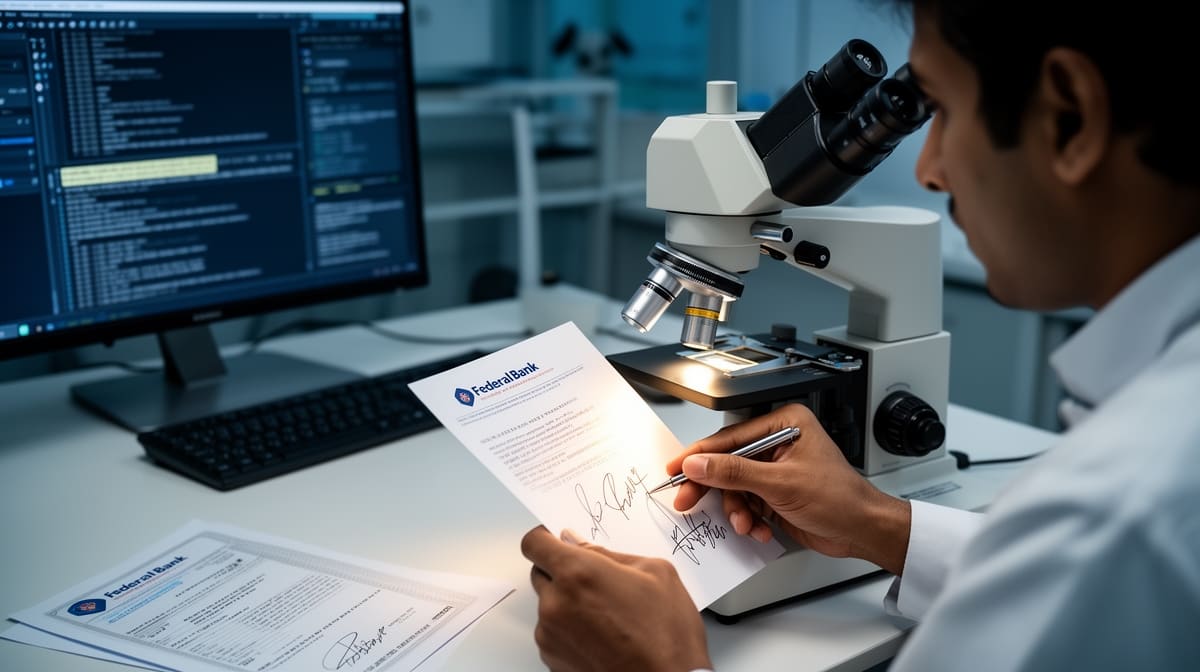
- 27.02.2023: Investigating Officer forwarded disputed documents to State Forensic Science Laboratory (SFSL), Junga, for signature verification.
- 03.07.2023: Investigating Officer filed status report highlighting discrepancy between sale deed values and government circle rates.
- 27.06.2024: SFSL report concluded that signatures on nomination and bank closure documents were forged and were facsimile stamps, not handwritten.
- 31.08.2024: SFSL report confirmed same findings regarding other disputed documents.
- 08.01.2024: High Court of Himachal Pradesh quashed the FIR under Section 482 CrPC in Cr.MMO No. 50 of 2023, holding allegations were speculative.
- 17.03.2026: Supreme Court heard appeals arising from SLP(Crl.) Nos. 3533 of 2024 and 2498 of 2025.
The Parties' Positions
The appellant-complainant alleged a criminal conspiracy involving forgery, cheating, misappropriation, and theft of property and funds. She contended that the respondents exploited her father’s vulnerability, forged documents to assume nominee status, and undervalued property to evade stamp duty.
The respondents argued that the FIR was based on speculation, lacked prima facie evidence of forgery, and that the High Court was justified in quashing proceedings to prevent abuse of process.
Relief Sought
The appellant sought setting aside of the High Court’s order dated 08.01.2024, restoration of FIR No. 8/2022, and continuation of investigation and prosecution. The State of Himachal Pradesh supported the appellant and sought direction for completion of investigation.
The Legal Issue
Can a High Court quash an FIR under Section 482 CrPC alleging forgery and fraud when the Investigating Agency has already forwarded disputed documents to a forensic laboratory for signature analysis, and the results are pending?
Arguments Presented
For the Appellant/Petitioner
The appellant’s counsel argued that the FIR contained specific, credible allegations of forgery, criminal conspiracy, and misappropriation supported by financial discrepancies and pending forensic evidence. They relied on the SFSL’s findings (received post-quashing) confirming forged signatures and false circle rate documents. They contended that Section 482 CrPC cannot be used to stifle investigation at the preliminary stage, especially when expert analysis is underway. They distinguished Mir Nagvi Askari v. CBI by emphasizing that the judgment requires proof of forgery, not pre-judgment of it.
For the Respondent/State
The respondents argued that the allegations were vague, speculative, and lacked concrete evidence of dishonest intent. They claimed the High Court correctly applied the threshold for quashing under Section 482 CrPC, as no prima facie case was made out before forensic reports were available. They contended that the appellant’s prior complaint against her father (regarding her grandfather’s property) indicated a pattern of litigation abuse.
The Court's Analysis
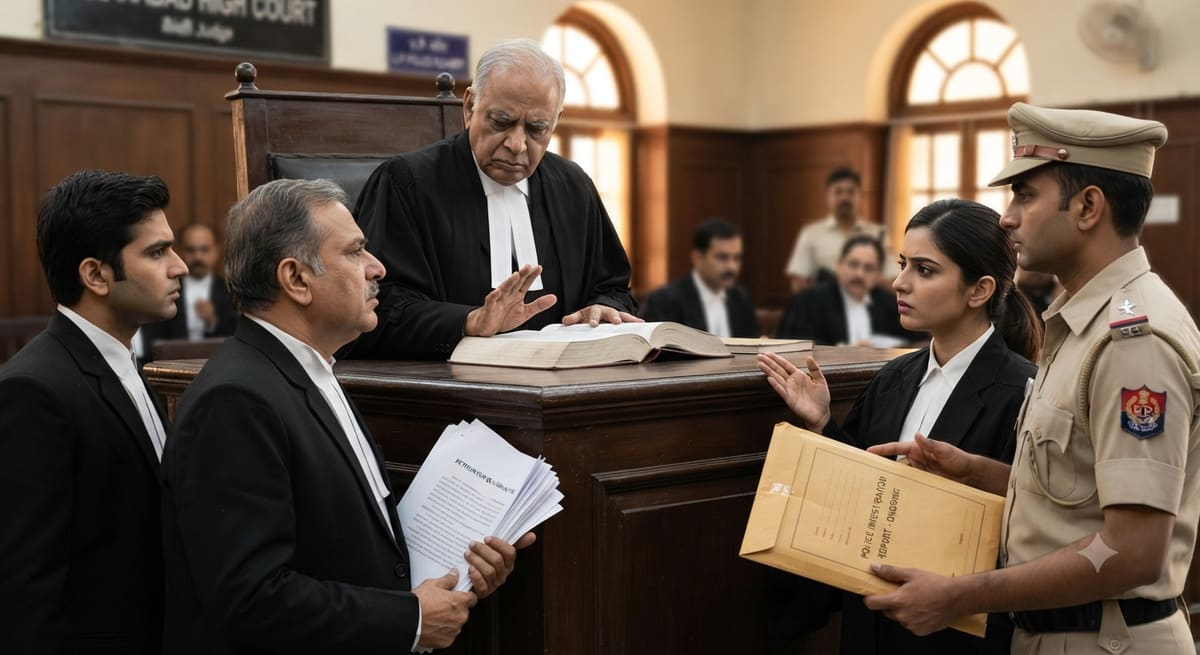
The Supreme Court observed that the High Court erred in quashing the FIR while the investigation was in full swing and critical forensic evidence was under analysis. The Court emphasized that the SFSL had already been tasked with examining disputed signatures on nomination forms and bank closure documents, and the results were pending at the time of quashing.
"Where allegations of forgery are set out in the FIR and Investigating Agency has undertaken the exercise of getting the disputed documents examined through the handwriting expert, an order quashing the FIR without awaiting the outcome of the handwriting expert’s report would be totally unjustified."
The Court noted that the High Court ignored the Investigating Officer’s status report dated 03.07.2023, which flagged significant discrepancies between sale deed values and government circle rates, indicating deliberate undervaluation to evade stamp duty of Rs. 67,91,241, resulting in a loss of Rs. 35,87,242 to the exchequer.
The Court further held that reliance on Mir Nagvi Askari v. CBI was misplaced. That case dealt with a situation where forgery was conclusively disproven at the trial stage. Here, the evidence was still under investigation. The Court stated:
"The aspects relating to the creation of false documents and the commission of forgery were still under investigation when the High Court prematurely proceeded to quash the FIR."
The Court also rejected the argument that the appellant’s prior complaint against her father rendered her allegations suspect, noting that the two matters were entirely distinct. The Court affirmed that prima facie allegations of fraud, forgery, and criminal breach of trust, coupled with financial irregularities and pending forensic reports, are sufficient to warrant continuation of investigation.
The Verdict
The appeals are allowed. The High Court’s order dated 08.01.2024 quashing FIR No. 8/2022 is set aside. The Investigating Officer is directed to conclude the investigation and file the charge sheet under Section 173(2) CrPC without delay. If the charge sheet has already been filed, the trial court shall proceed expeditiously. The findings of the SFSL reports dated 27.06.2024 and 31.08.2024, confirming forged signatures and false circle rate documents, shall be admissible in evidence. The Court clarified that its observations are confined to the quashing issue and do not prejudge the merits of the case.
What This Means For Similar Cases
Forensic Evidence Cannot Be Ignored in Quashing Proceedings
- Practitioners must argue that any FIR involving document forgery, especially where forensic examination is underway, cannot be quashed merely on the basis of pleadings.
- Courts must await expert reports before concluding whether forgery is established.
- The burden on the petitioner seeking quashing is higher when forensic analysis is in progress.
Quashing Under Section 482 CrPC Is Not a Substitute for Trial
- Section 482 CrPC cannot be used to pre-judge the credibility of evidence or to substitute the role of the trial court.
- Allegations of financial fraud, forged signatures, and undervaluation of property are inherently investigatory in nature and require full probe.
- Courts must distinguish between speculative complaints and those supported by material discrepancies and pending expert analysis.
Delay in Forensic Reporting Does Not Justify Termination of Proceedings
- Delays in forensic reports due to institutional backlogs cannot be used to justify premature quashing.
- The court must direct expeditious completion of forensic analysis and not penalize the complainant for delays beyond their control.
- The State’s role in ensuring timely forensic examination becomes critical in such cases.