The Supreme Court has reaffirmed that criminal proceedings cannot be quashed under Section 482 of the CrPC merely because a dispute has civil overtones, especially when a Magistrate has already directed investigation under Section 156(3). This judgment restores the principle that the threshold for initiating criminal inquiry is low, and the role of the High Court at this stage is not to adjudicate title or weigh defence evidence.
Background & Facts
The Dispute
The dispute centers on alleged large-scale fraud involving land transactions in Survey No. 12 of Doddagubbi Village, Bengaluru. The complainant, Accamma Sam Jacob, an NRI resident of Toronto, purchased Plot No. 79 in the "Athina Township - Stage I" layout in 1994 through a registered sale deed from developer Joseph Chacko. The plot was assigned a Gramathana House List number, and khatha records were transferred to her name. Over time, other parties, including K.S. Shankar Reddy, K.S. Balasundar Reddy, K.V. Rajagopal Reddy, George Varghese, and others, allegedly orchestrated a scheme to usurp control of the land through forged and fraudulent documentation.
Key Facts
- The original landowners executed General Powers of Attorney (GPAs) in favor of Joseph Chacko in 1994 for development of the layout.
- The complainant and other NRI purchasers acquired plots as investment properties and did not immediately construct on them.
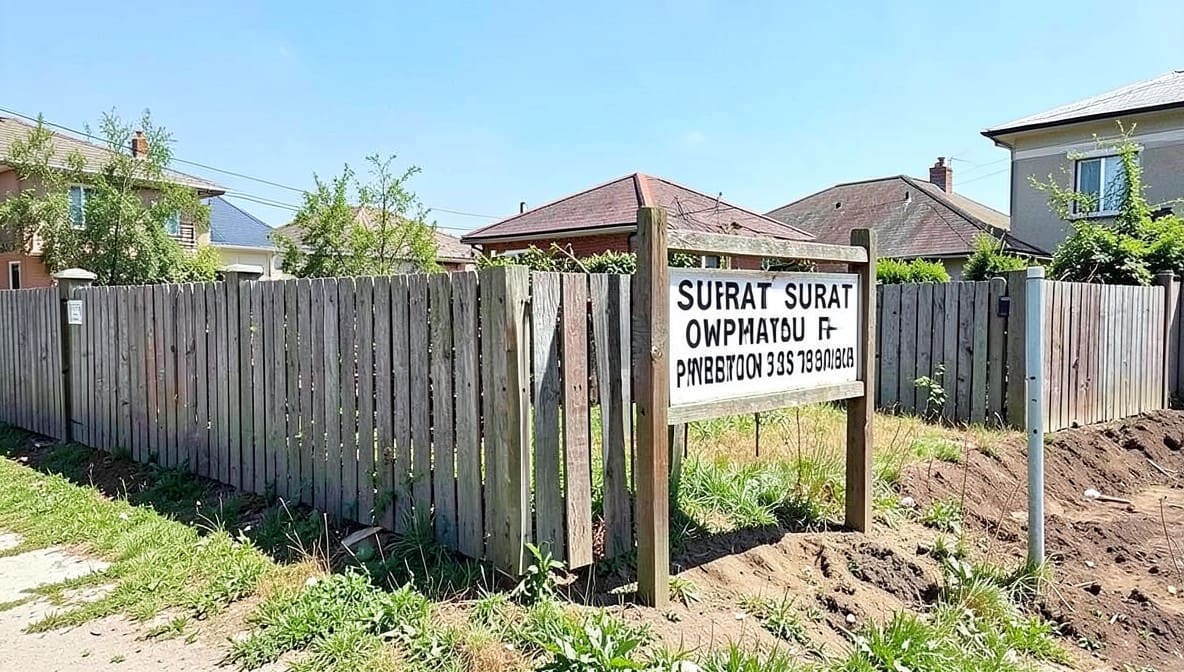
- In late 2006, the complainant was informed that accused persons had forcibly entered the layout, demolished compound walls, storm water drains, and electricity poles, and erected signage for "City Scape Properties."
- In May 2007, George Varghese circulated an MoU seeking authorization from NRI purchasers to represent them before revenue authorities, requesting original title documents under the false pretext of resolving legal complications.
- On 16th June 2009, Joseph Chacko was arrested in unrelated criminal proceedings.
- In July 2009, the complainant was shown a sale deed executed in favor of K.V. Rajagopal Reddy and was induced to sign documents under the false representation that they were for civil litigation purposes.
- Her original sale deed was allegedly taken away for "copying" and returned as a colored photocopy.
- A confirmation deed dated 20th July 2009 (Document No. 975/2009-10), purporting to bear her signature, was registered and used to transfer her plot to K.V. Rajagopal Reddy.
- The complainant asserts she never consented to the confirmation deed, never received any consideration, and never intended to transfer her property.
- The accused allegedly obtained fresh GPAs from original landowners and executed sale deeds in their own favor, creating a fabricated chain of title.
- No independent sale deeds existed reconveying the plots from the NRI purchasers to the accused.
- The cumulative effect, according to the complainant, was to concentrate control of Survey No. 12 in favor of entities linked to K.C. Ramamurthy and the CMR Group of Institutions.
Procedural History
- 1994: Complainant purchases Plot No. 79 via registered sale deed from Joseph Chacko.
- 2006: Alleged forcible entry and destruction of layout infrastructure begins.
- May 2007: MoU circulated to NRI purchasers seeking title documents and monetary contributions.
- 16.06.2009: Joseph Chacko arrested in unrelated proceedings.
- July 2009: Complainant shown sale deed in favor of K.V. Rajagopal Reddy; original sale deed allegedly swapped for photocopy.
- 20.07.2009: Confirmation deed registered as Document No. 975/2009-10, purporting to transfer complainant’s plot.
- 2013: Complainant files private complaint before XI Additional Chief Metropolitan Magistrate, Mayo Hall, Bengaluru.
- 06.11.2013: Magistrate, under Section 156(3) CrPC, directs police to register FIR and investigate.
- 16.11.2013: FIR No. 162/2013 registered against 16 accused for offences under Sections 379, 381, 383, 415, 420, 409, 463, 465, 466, 467, 468, 471, 474, 477, 107, 115, 116(1), 117, 118, 120, and 120-B IPC.
- 28.09.2016: High Court of Karnataka quashes the FIR and proceedings under Section 482 CrPC.
- 25.10.2016: High Court quashes similar FIRs against Joseph Chacko on identical reasoning.
- 28.11.2024: Supreme Court sets aside the 25.10.2016 judgment quashing FIRs against Joseph Chacko.
- 2026: Present appeals filed before Supreme Court against the 28.09.2016 judgment.
The Parties' Positions
For the Appellant (Accamma Sam Jacob)
- Allegations in the complaint, if accepted prima facie, disclose multiple cognizable offences including cheating, forgery, criminal conspiracy, and criminal breach of trust.
- The High Court erred in quashing proceedings at the investigation stage.
- The Magistrate’s order under Section 156(3) CrPC was valid and required no interference.
- The High Court improperly evaluated defence documents (sale deeds) and treated them as conclusive, which is impermissible at this stage.
- Civil remedies do not bar criminal prosecution where fraud is alleged.
For the Respondents (Accused Persons)
- The dispute is purely civil, concerning title and ownership of land.
- The sale deeds in favor of the accused are registered and cannot be declared void without civil court cancellation under Section 31 of the Specific Relief Act, 1963.
- The complainant’s remedy lies against Joseph Chacko, not the accused, who acquired title independently from original landowners.
- The complaint is an abuse of process, designed to harass and pressure the accused.
- The complainant suppressed material facts and delayed filing the complaint.
Relief Sought
The appellant seeks: (1) setting aside of the High Court’s order dated 28.09.2016; (2) restoration of FIR No. 162/2013 and all proceedings arising therefrom; (3) direction for investigation to proceed in accordance with law; and (4) liberty to the accused to raise defenses during investigation and trial.
The Legal Issue
The central question was whether the High Court was justified in quashing criminal proceedings under Section 482 CrPC at the stage where a Magistrate had merely directed investigation under Section 156(3), based on the assertion that the dispute was civil in nature and required prior cancellation of registered sale deeds under Section 31 of the Specific Relief Act.
Arguments Presented
For the Appellant
Learned counsel argued that the complaint disclosed prima facie offences under the IPC, including forgery (Section 463), use of forged documents (Section 471), cheating (Section 420), and criminal conspiracy (Section 120-B). The High Court’s reliance on the validity of the accused’s sale deeds was impermissible at the threshold stage. The Magistrate’s order under Section 156(3) CrPC required only a prima facie assessment, not a full trial. The Supreme Court’s recent decision in State of Karnataka v. Joseph Chacko (Criminal Appeal Nos. 5207-5221 of 2024) had already set aside a nearly identical quashing order, reinforcing that such interference at the investigation stage is unlawful. Counsel cited Neeharika Infrastructure (P) Ltd. v. State of Maharashtra to emphasize that investigation must be permitted to proceed unless the complaint is manifestly baseless or an abuse of process.
For the Respondent
Counsel for the accused contended that the complainant’s grievance was purely about title and possession, which are civil matters. The sale deeds relied upon by the accused were registered and valid on their face. Without a civil court declaring them void under Section 31 of the Specific Relief Act, a criminal court cannot presume them to be forged or fraudulent. The complainant had not challenged the validity of the accused’s title in civil court and had instead used criminal law as a coercive tool. The delay in filing the complaint and the suppression of civil litigation proceedings indicated mala fides. The High Court correctly recognized that criminal proceedings cannot be used to circumvent civil remedies.
The Court's Analysis
The Supreme Court conducted a meticulous review of the High Court’s reasoning and found it fundamentally flawed. The Court emphasized that the power under Section 482 CrPC is extraordinary and must be exercised with extreme restraint, particularly when the investigation has just begun.
"The Magistrate is not expected to undertake an exhaustive evaluation of evidence nor adjudicate upon the merits of the allegations. If the Magistrate arrives at the conclusion that prima facie a cognizable offence is disclosed, then he would be fully justified in directing the concerned SHO to register an FIR and proceed with investigation in accordance with law."
The Court observed that the High Court had improperly ventured into the realm of defence evidence, examining the accused’s registered sale deeds and concluding they could not be challenged without prior civil cancellation. This, the Court held, amounted to conducting a mini-trial at the threshold stage, which is legally impermissible.
The Court reiterated the principle from Neeharika Infrastructure: "...if the facts are hazy and the investigation has just begun, the High Court would be circumspect in exercising such powers and must permit the investigating agency to proceed further with the investigation in exercise of its statutory duty under the provisions of the Code."
The Court noted that the High Court’s reasoning in the present case was identical to that in the Joseph Chacko matter, which it had already set aside. The mere existence of rival narratives - one attributing fraud to Joseph Chacko, the other to the present accused - underscored the necessity of a full investigation to determine truth, not premature judicial closure.
The Court further clarified that the existence of a civil remedy does not oust criminal jurisdiction where the allegations disclose offences under the IPC. Fraud, forgery, and criminal conspiracy are not rendered non-cognizable merely because they arise in a property dispute.
The Verdict
The Supreme Court allowed the appeals and set aside the High Court’s judgment dated 28.09.2016. The FIR No. 162/2013 and all proceedings arising therefrom are restored to the file of the Kothanuru Police Station and the concerned Magistrate for further investigation and trial in accordance with law. The parties are at liberty to adduce evidence during investigation and at trial. No opinion is expressed on the merits of the case.
What This Means For Similar Cases
Criminal Proceedings Are Not Barred by Civil Title Disputes
- Practitioners must argue that allegations of fraud, forgery, or criminal conspiracy in property disputes are independently cognizable under the IPC, regardless of pending civil suits.
- A registered sale deed cannot be treated as conclusive proof of title at the FIR quashing stage.
- Courts must not require cancellation of civil documents under Section 31 SRA as a precondition for criminal prosecution.
Investigation Stage Is Not a Trial Stage
- High Courts must not evaluate defence documents, witness credibility, or title validity when reviewing Section 156(3) orders.
- The Magistrate’s role under Section 156(3) is limited to determining whether the complaint discloses a prima facie cognizable offence.
- Any interference by the High Court at this stage constitutes an illegal pre-judgment of facts.
Abuse of Process Must Be Clear and Manifest
- Mere delay, absence of civil suit, or existence of a civil remedy does not constitute abuse of process.
- Abuse must be evident on the face of the complaint - e.g., fabricated evidence, no prima facie offence, or clear harassment motive.
- Where facts are hazy and investigation has just begun, the default must be to permit police inquiry.