The Andhra Pradesh High Court has reaffirmed that the transfer of a criminal trial cannot be ordered on the basis of unsubstantiated apprehensions of bias or convenience. In a decisive ruling under Section 447 of the Bharatiya Nagarik Suraksha Sanhita, 2023, the Court emphasized that only compelling, material-based grounds - not subjective fears - justify interference with the forum chosen for trial.
Background & Facts
The Dispute
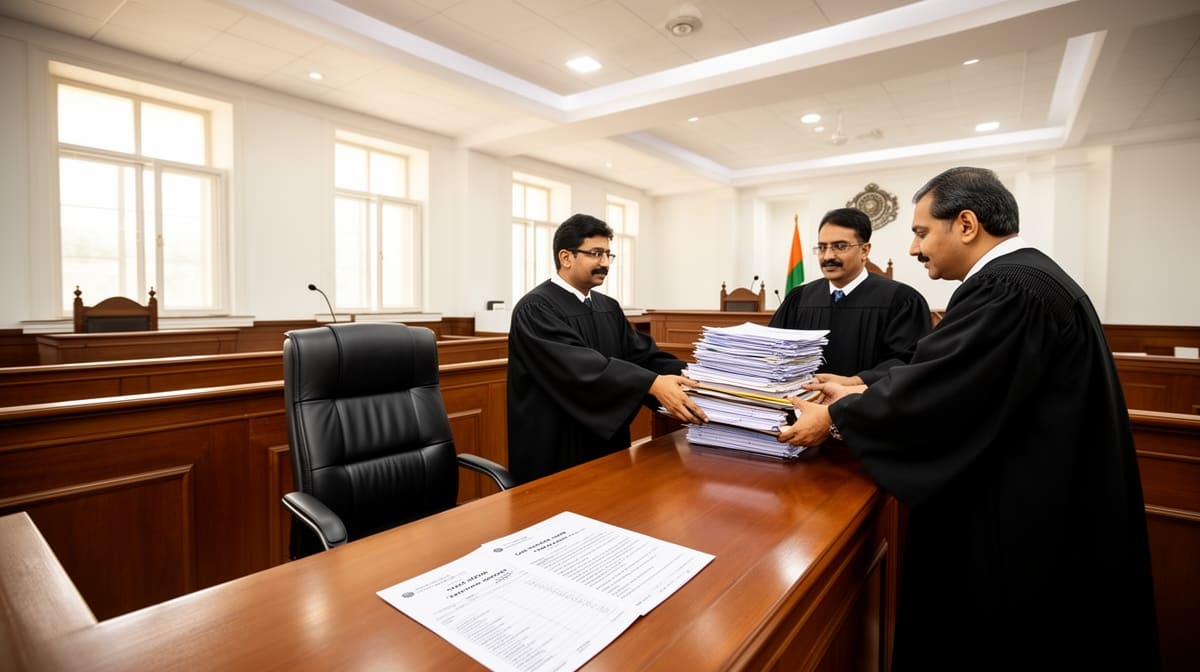
The petitioner, accused No. 1 in Sessions Case No. 315 of 2018 pending before the VII Additional District & Sessions Judge, Gudur, SPSR Nellore District, filed a transfer petition seeking relocation of the trial to Tirupati, Chittoor District. The case involves an offence under Section 302 IPC and has been pending for eight years. The petitioner alleged that the Presiding Officer, after completing the trial evidence, engaged in an unauthorized private discussion with the Investigating Officer in his chambers for over an hour, thereby compromising impartiality.
Key Facts
- The trial commenced in 2018 with the filing of the charge sheet.
- The Investigating Officer’s evidence was concluded prior to the accused being examined under Section 313 Cr.P.C.
- On 12.03.2026, the prosecution filed an application to recall the Investigating Officer to mark a consumer application already filed with the charge sheet as an exhibit; the application was allowed by the Sessions Judge on 13.03.2026.
- The petitioner filed an affidavit on 28.02.2026 alleging that the Investigating Officer entered the Judge’s chambers and discussed the case for more than one hour.
- No documentary evidence, witness statements, call records, or CCTV footage were produced to substantiate the allegation.
- The petitioner admitted that no direct evidence of influence or misconduct was available.
- The trial was scheduled for final arguments on 01.04.2026 at the time of the petition.
Procedural History
- 2018: Sessions Case No. 315 of 2018 filed before VII Additional District & Sessions Judge, Gudur, SPSR Nellore District.
- 12.03.2026: Prosecution filed application to recall Investigating Officer to mark exhibit.
- 13.03.2026: Sessions Judge allowed the application.
- 28.02.2026: Petitioner filed affidavit alleging private meeting between Judge and Investigating Officer.
- 31.03.2026: Transfer Criminal Petition No. 44 of 2026 heard and dismissed by the Andhra Pradesh High Court.
The Parties' Positions
Petitioner (Accused No. 1): Argued that the alleged private meeting created a reasonable apprehension of bias, undermining the fairness of the trial. Relied on Nahar Singh Yadav v. Union of India and Maneka Sanjay Gandhi v. Rani Jethmalani to assert that even perceived partiality warrants transfer.
Respondent (State): Contended that the allegation was a bald assertion without any corroborative material. Emphasized that the trial was nearing conclusion and that the accused had no right to choose the forum. Highlighted that the Sessions Judge had acted within procedural bounds in allowing the recall application.
Relief Sought
The petitioner sought transfer of Sessions Case No. 315 of 2018 from Gudur, Nellore District, to any Additional District & Sessions Judge in Tirupati, Chittoor District, for fair and impartial trial.
The Legal Issue
Can a criminal case be transferred under Section 447 of the BNSS, 2023 solely on the basis of an unsubstantiated apprehension that the Presiding Officer may have been influenced by an extraneous discussion with the Investigating Officer?
Arguments Presented
For the Petitioner
The petitioner relied on Nahar Singh Yadav v. Union of India and Maneka Sanjay Gandhi v. Rani Jethmalani to argue that the appearance of bias is sufficient to invoke the Court’s power of transfer. He contended that the private meeting between the Judge and the Investigating Officer, even if unproven, created a reasonable doubt about the integrity of the proceedings. He asserted that the right to a fair trial under Article 21 of the Constitution demands that even perceived impropriety be addressed by transfer.
For the Respondent
The State countered that the petitioner’s claim was speculative and lacked any corroborative evidence. It emphasized that the Sessions Judge had acted lawfully in permitting the recall of the Investigating Officer to mark an exhibit already part of the record. The prosecution argued that the accused cannot exploit procedural delays by making vague allegations of bias, especially when the trial is at its final stage. The Court was urged to uphold the principle that the complainant has the right to choose the forum and the accused cannot dictate venue.
The Court's Analysis
The Court undertook a rigorous examination of the legal principles governing transfer of criminal cases. It observed that while the right to a fair trial is fundamental, it does not permit the accused to challenge jurisdiction on the basis of subjective fears. The Court cited Nahar Singh Yadav v. Union of India to reiterate that transfer is an exceptional remedy, not a routine option, and must be grounded in material evidence of actual or likely miscarriage of justice.
"An order of transfer of trial is not to be passed as a matter of routine or merely because an interested party has expressed some apprehension about the proper conduct of a trial. This power has to be exercised cautiously and in exceptional situations, where it becomes necessary to do so to provide credibility to the trial."
The Court further relied on Maneka Sanjay Gandhi v. Rani Jethmalani, noting that the touchstone for transfer is not the convenience or hypersensitivity of a party, but whether justice itself is imperiled. The petitioner’s affidavit contained no details - no time, no duration, no witnesses, no corroborating documents - to substantiate the claim of a private meeting. The Court held that such allegations, if accepted without evidence, would open the floodgates to tactical delays.
The Court also noted that the accused had not even named other co-accused as respondents, undermining the seriousness of the claim. The Sessions Judge’s decision to allow the recall of the Investigating Officer was procedural and lawful, as the document sought to be marked was already part of the charge sheet. No prejudice was shown to the accused.
The Court concluded that the petitioner’s grievance was not one of actual bias, but of perceived inconvenience. The law does not permit transfer on such grounds.
The Verdict
The Transfer Criminal Petition No. 44 of 2026 is dismissed. The Sessions Case No. 315 of 2018 shall continue before the VII Additional District & Sessions Judge, Gudur, SPSR Nellore District. All pending miscellaneous petitions and interim orders, if any, are closed. No costs are awarded.
What This Means For Similar Cases
Apprehension Alone Is Not Grounds for Transfer
- Practitioners must now demonstrate concrete, material evidence of bias or influence - not mere suspicion - to seek transfer under Section 447 BNSS.
- Affidavits containing vague allegations without supporting documents will be summarily rejected.
- Courts will not entertain transfer petitions filed at the eleventh hour to delay trial conclusion.
The Burden of Proof Lies with the Petitioner
- The burden to establish a real and reasonable apprehension of bias rests entirely on the petitioner.
- Absence of prima facie evidence renders the petition unsustainable, regardless of the gravity of the offence.
- Courts will not presume bias; it must be proven.
Trial Forum Cannot Be Challenged on Convenience Grounds
- Accused cannot seek transfer to avoid inconvenient locations, proximity to counsel, or perceived hostility of local authorities.
- The complainant’s choice of forum is presumptively valid unless overridden by compelling public justice concerns.
- Transfer petitions must be grounded in systemic risk to justice, not personal inconvenience.