The Madhya Pradesh High Court has reaffirmed that claims to succession rights under the Indian Succession Act must rest on credible, contemporaneous documentary evidence - not posthumous assertions or implausible narratives. In dismissing a revision petition, the Court emphasized that the burden of proving a valid marriage, especially when involving minors and delayed documentation, lies squarely on the claimant and must withstand rigorous scrutiny.
Background & Facts
The Dispute
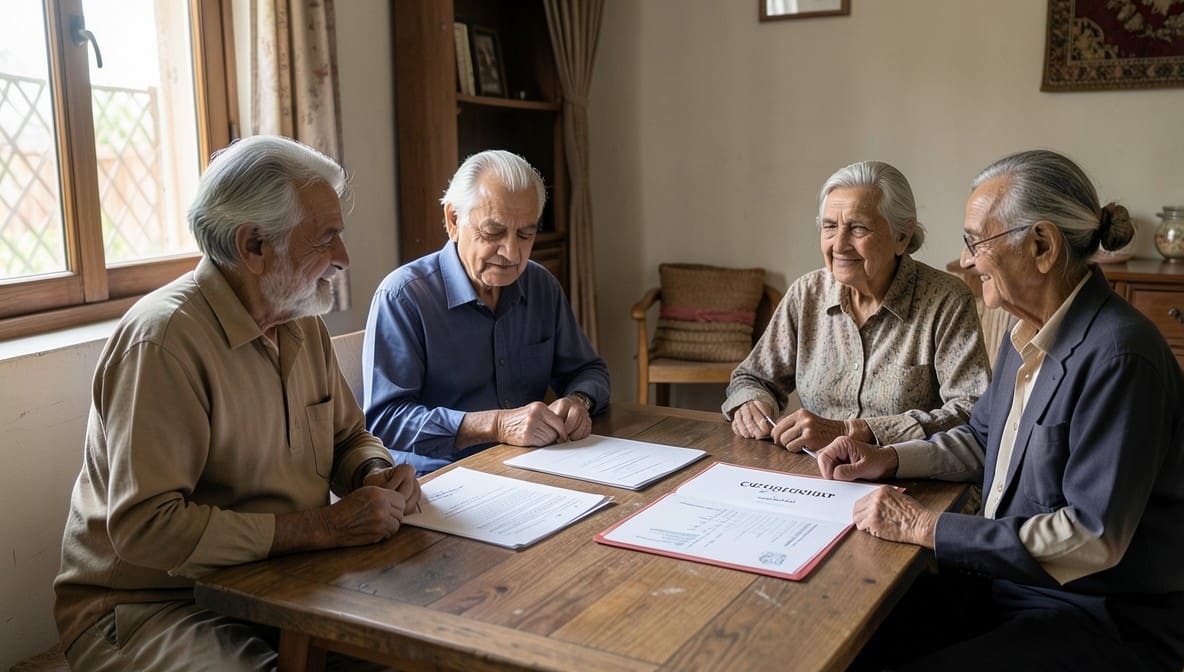
The dispute centers on the succession rights to the service benefits of Shri Harikishore Shukla, a Librarian in Government Chhatrasal College, Panna (Madhya Pradesh), who died on 09.06.2020. The petitioner, Smt. Keshkali Shukla, claimed to be his legally wedded wife, married on 22.04.1980, and sought a succession certificate under Section 372 of the Indian Succession Act. The respondents, Smt. Sushma Shukla (Awasthy) and her adopted daughter, contested this claim, asserting that Smt. Sushma was the lawful wife and that the petitioner was a fabricated claimant instigated by the deceased’s brothers to appropriate his pension and other benefits.
Key Facts
- The deceased was born on 10.06.1964, making him 15 years and 2 months old on the alleged marriage date of 22.04.1980.
- The petitioner claimed to be 10 - 11 years old at the time of marriage, based on her stated age of 50 years at the time of filing the succession application in July 2020.
- The petitioner submitted Ex.P-1 (Ration Card) issued in Banda (UP), listing the deceased as an agriculturalist with a family income of Rs. 12,000 - contradicting his known employment as a government librarian in Panna (MP).
- Ex.P-2 (Death Certificate) did not mention any spouse.
- Ex.P-3 (Family Certificate) and Ex.P-4 (Ash Immersion Certificate) were issued posthumously on 06.07.2020.
- The petitioner relied on a 2020 voter list and a posthumous revenue mutation in Banda (UP) records, neither of which were contested by respondents until 2021.
- The deceased’s service book (Ex.P-8) contained a nomination form signed by him, naming Smt. Sushma Shukla as wife and nominee for family benefits.
- Respondents produced Ex.D-14, a registered adoption deed dated 17.10.1996, executed before the Sub-Registrar, Panna, naming Smt. Sushma as wife and Harikishore Shukla as husband.
- Respondent No.2, the adopted daughter, produced school and educational records from 2006 onwards listing Harikishore Shukla as father.
- Respondent No.1 held an LIC policy naming her as wife and nominee of the deceased.
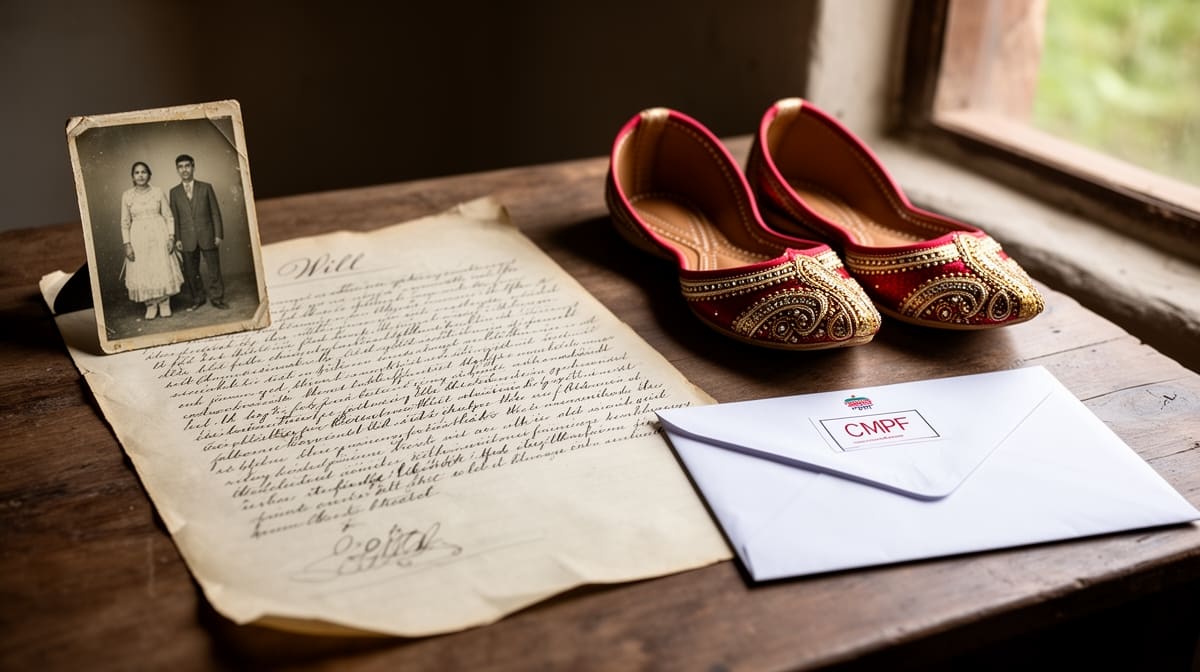
- The petitioner’s photograph (Article-A), claimed to show her marriage, depicted two individuals aged 55 - 60, inconsistent with ages of 10 and 15 in 1980.
Procedural History
- 09.06.2020: Death of Shri Harikishore Shukla in Panna, MP.
- July 2020: Petitioner filed application for succession certificate under Section 372 of the Indian Succession Act.
- 2021: Respondents filed cross objections; trial court heard arguments.
- 2022: Trial Court granted succession certificate to petitioner, holding her to be the legally wedded wife.
- 14.08.2024: Appellate Court set aside the trial court’s order, dismissed petitioner’s claim, and directed issuance of succession certificate to respondents No.1 and 2.
- 17.02.2026: Civil Revision No. 725 of 2024 heard before the High Court of Madhya Pradesh at Jabalpur.
- 17.03.2026: Judgment pronounced dismissing the revision petition.
Relief Sought
The petitioner sought restoration of the trial court’s order granting her the succession certificate, including all service dues, pension arrears, and benefits of the deceased. She also sought to invalidate the respondents’ claim on grounds of void marriage and invalid adoption.
The Legal Issue
The central question was whether a claimant can establish a valid marriage under the Indian Succession Act through posthumous documents, implausible age assertions, and uncorroborated testimony, particularly when the deceased’s own service records and registered adoption deed consistently recognize another person as spouse.
Arguments Presented
For the Petitioner
The petitioner’s counsel argued that marriage under the Hindu Marriage Act is not void merely because parties were minors at the time of solemnization. She contended that the appellate court erred in invalidating her marriage solely on the basis of age, and that the trial court’s findings were well-reasoned and should not have been disturbed. She further argued that the service book’s nomination form was invalid due to lack of a separate nomination form, and that the respondents’ silence on the revenue mutation in Banda implied acquiescence.
For the Respondent/State
The respondents’ counsel argued that the petitioner’s claim was fabricated by the deceased’s brothers to divert service benefits. They emphasized that the petitioner’s age at marriage (10 - 11 years) rendered her narrative implausible. They highlighted the registered adoption deed, the deceased’s nomination of Smt. Sushma as wife in his service book, her LIC policy, and the consistent educational records of the adopted daughter - all of which predated the petitioner’s claim. They further noted that the petitioner’s documents were all posthumous, lacked authenticity, and contradicted known facts about the deceased’s employment and residence.
The Court's Analysis
The Court undertook a meticulous review of the documentary evidence and found the petitioner’s claims fundamentally uncorroborated. It noted that while the Hindu Marriage Act does not render a marriage void ab initio merely because parties were minors, the Court is not bound to accept implausible narratives without credible proof. The Court observed:
"If a story is being put up before the Court that in the year 1980, the bride was around 10 to 11 years old and the groom was around 15 years old, then it requires scrutinising the said assertions with greater circumspection."
The Court rejected the petitioner’s reliance on the Ration Card, noting its contradiction with the deceased’s employment status and the absence of any issuance date or legible authority signature. It held that posthumous documents such as family certificates, voter lists, and revenue mutations cannot override contemporaneous records like the service book and registered adoption deed.
The Court emphasized that the nomination form in the service book, signed by the deceased himself, was a critical piece of evidence. The trial court’s failure to notice this document was a material error. The Court further noted that the respondents’ failure to challenge the revenue mutation in Uttar Pradesh did not imply consent to the petitioner’s claim, especially given their credible fear for personal safety due to family hostility.
Regarding the photograph (Article-A), the Court observed:
"Two persons getting photographed at any point of time in any function together cannot be conclusive proof of the marriage of the two persons."
It dismissed the petitioner’s attempt to use the photograph as proof of marriage, noting the gross inconsistency between the depicted ages and the alleged ages in 1980.
The Court upheld the appellate court’s conclusion that the respondents’ evidence - particularly the registered adoption deed and the deceased’s own nomination - was consistent, credible, and predated the dispute. The Court concluded that the appellate court’s order was well-reasoned and free from legal error.
The Verdict
The petition was dismissed. The High Court upheld the appellate court’s order dated 14.08.2024, directing that the succession certificate be issued in favor of respondents No.1 and 2. The Court affirmed that the deceased’s service benefits, including pension arrears and other dues, shall be paid to Smt. Sushma Shukla (wife) and her adopted daughter, Smt. Sushma Awasthy, as the lawful heirs. No monetary compensation or costs were awarded to either party.
What This Means For Similar Cases
Documentary Evidence Must Predate the Dispute
- Practitioners must prioritize contemporaneous, pre-death documents (service records, nomination forms, adoption deeds, insurance policies) over posthumous affidavits or certificates.
- Posthumous documents, especially those created in litigation, are prima facie suspect unless independently corroborated.
Age and Plausibility Matter in Marriage Claims
- Claims involving child marriage must be scrutinized for factual consistency. Courts will not accept narratives that defy biological and social plausibility without overwhelming evidence.
- The mere assertion of marriage under the Hindu Marriage Act does not override the requirement to prove its existence through credible, verifiable records.
Nomination in Service Records Carries Weight
- A nomination form signed by the deceased in official service records is a strong indicator of marital status for succession purposes, absent evidence of fraud or coercion.
- Courts will not disregard such documents merely because a separate nomination form is not attached if the signature and content are verifiable within the service book itself.
Silence on Mutation Does Not Constitute Consent
- Failure to challenge a revenue mutation in a distant jurisdiction cannot be construed as acquiescence to a claimant’s status as spouse or heir.
- Parties may have legitimate reasons - such as fear of violence or strategic litigation decisions - not to contest proceedings in unrelated jurisdictions.
Adoption Deeds Are Conclusive Unless Challenged
- A registered adoption deed under the Hindu Adoption and Maintenance Act, naming the deceased as father and the respondent as wife, creates a strong presumption of marital status.
- Such documents, especially when supported by educational and insurance records, are difficult to rebut without evidence of forgery or coercion.