The Chhattisgarh High Court has reaffirmed that nominee designation in service records does not confer legal heirship, and that customary marriage must be established through credible, corroborated evidence - not presumption or administrative entries. This judgment clarifies the hierarchy of proof in succession disputes involving informal unions and formal documentation.
Background & Facts
The Dispute
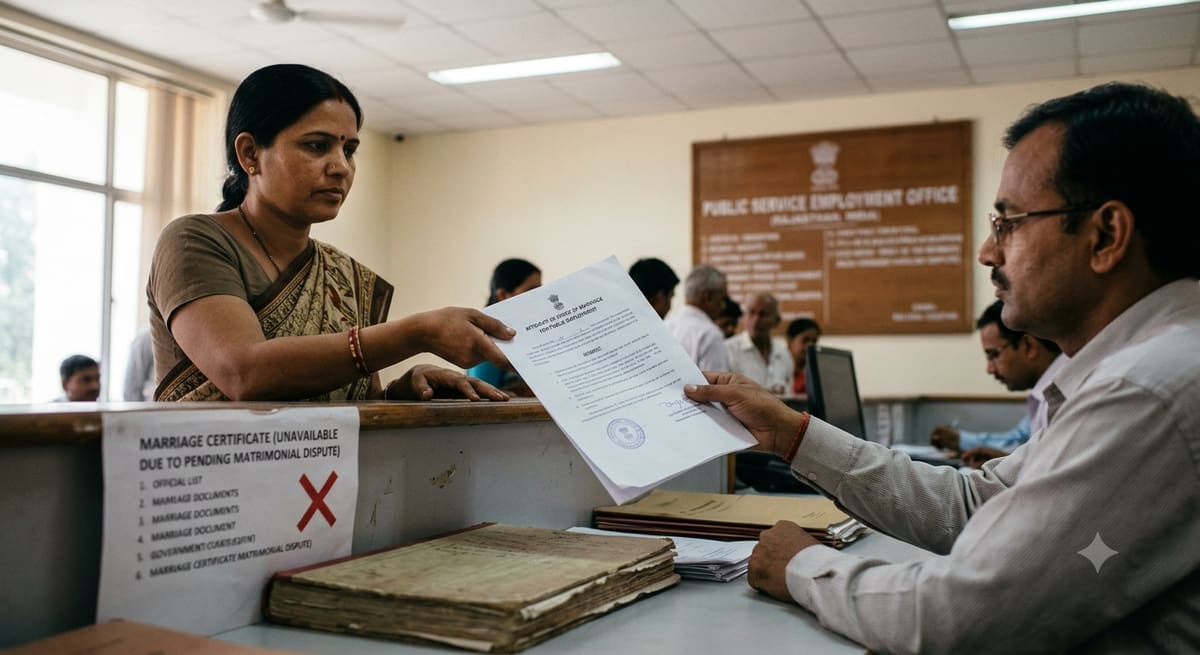
The dispute centers on the identity of the lawful wife and legal heir of Late Ranjit, who died in a workplace accident on 16 December 2000. Two women claimed marital status: Fulbasiya @ Myajo Bai, who alleged a customary marriage 35 years prior, and Kamla Bai, who asserted she was the legally wedded wife and sole beneficiary under a purported Will. The plaintiffs, including Fulbasiya and her three children, sought partition of property and claims to gratuity, provident fund, and insurance benefits. Kamla Bai, as defendant No.6, filed a counter-claim asserting her status as the sole heir and nominee in official records.
Procedural History
- 2011: Civil Suit No. 85-A/2011 filed by plaintiffs seeking partition and declaration of title.
- 4 July 2011: Trial Court dismissed the suit and upheld Kamla Bai’s counter-claim, recognizing her as the lawful wife and beneficiary.
- 27 September 2011: First Appellate Court reversed the Trial Court’s decision, holding Fulbasiya @ Myajo Bai as the legally wedded wife and rejecting the Will.
- 2021: Second Appeal filed under Section 100 CPC before the Chhattisgarh High Court.
Relief Sought
The plaintiffs sought declaration of their status as legal heirs, entitlement to service benefits, and injunction against disbursement to Kamla Bai. Kamla Bai sought declaration of her sole heirship, compassionate appointment rights, and injunction against payment to others.
The Legal Issue
The central question was whether nominee status in service records and an unregistered Will can override established customary marriage proven through oral testimony, maintenance orders, and forensic evidence.
Arguments Presented
For the Appellant/Petitioner
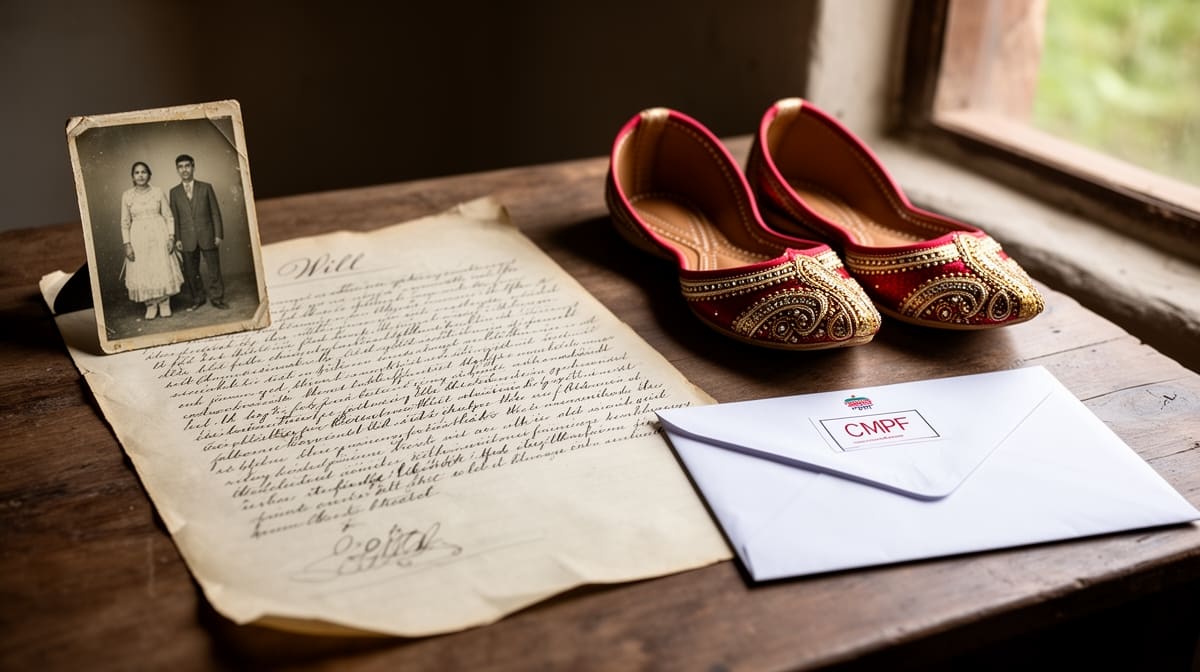
Kamla Bai’s counsel argued that her name was consistently recorded as wife and nominee in SECL service records, CMPF, and insurance policies since 1997. Reliance was placed on Kattukandi Edathil Krishnan v. Kattukandi Edathil Valsan to assert that long cohabitation and official recognition create a presumption of marriage. The Will dated 24 November 2000, attested by two witnesses, was claimed to be duly proved.
For the Respondent/State
The plaintiffs’ counsel contended that Fulbasiya @ Myajo Bai’s marriage to Ranjit was solemnized with customary rites, corroborated by two independent witnesses who attended the ceremony. The maintenance order under Section 125 CrPC (Ex.P-1) and Ranjit’s unchallenged reply admitted their marital relationship. The Will was challenged as forged, with forensic evidence proving the thumb impression on it did not match Ranjit’s known impression from the Section 125 proceedings.
The Court's Analysis
The Court undertook a rigorous evaluation of documentary, testimonial, and forensic evidence. It emphasized that while nominee designation creates a prima facie claim, it does not establish legal heirship under Hindu law. The Court held that presumption of marriage from long cohabitation, as recognized in Shiramabai W/o Pundalik Bhave, is rebuttable by unimpeachable evidence.
"When there is any circumstance that weakens such a presumption, Courts ought not to ignore the same."
The Court found the testimony of Dharmajit (PW-2) and Sohan Singh (PW-3) - both close relatives and village residents - credible and consistent. Their accounts of the marriage ceremony, including saat phere and application of sindoor, satisfied the requirements of customary Hindu marriage. Crucially, Ranjit had not denied this relationship in the Section 125 proceedings, where he responded to Fulbasiya’s maintenance claim without contesting her identity or marital status.
The Court further held that the Will (Ex.D-1) failed to meet the evidentiary standard for proof under Section 63 of the Indian Succession Act. The absence of one attesting witness, lack of explanation for the presence of an outsider (Shivnarayan) at the execution site, and failure to prove that the contents were read over to Ranjit rendered the Will suspect. The forensic analysis by Dr. Sunanda (PW-4) conclusively demonstrated that the thumb impression on the Will did not match Ranjit’s verified impression from the Section 125 reply. The Court noted: "Mere declaration does not create heirship, which flows by operation of law."
The Court rejected Kamla Bai’s claim of long cohabitation, noting her failure to specify the date of marriage, despite claiming to have lived with Ranjit for over two decades. The absence of any corroborative evidence from her side, coupled with the strength of the plaintiffs’ case, led to the rebuttal of any presumption.
The Verdict
The appellant’s appeal was dismissed. The Court held that Fulbasiya @ Myajo Bai was the legally wedded wife of Late Ranjit under customary Hindu law, and her children are his legitimate heirs. The alleged Will was declared inauthentic, and nominee status in service records cannot override legal heirship established by credible evidence.
What This Means For Similar Cases
Nominee Status Is Not Heirship
- Practitioners must distinguish between nominee and legal heir in service, insurance, and provident fund claims.
- Nominee acts as a trustee; legal heirship is determined by succession law, not administrative records.
- In disputes, courts will prioritize proven marital status over form-based nominations.
Forensic Evidence Can Be Decisive in Testamentary Disputes
- Thumb impression or signature comparison can be pivotal in challenging forged Wills.
- Expert testimony, if unchallenged, carries substantial weight under Section 45 of the Indian Evidence Act.
- Always seek forensic verification when authenticity of a Will is in doubt, especially if executed shortly before death.
Maintenance Proceedings Are Critical for Marital Proof
- A Section 125 CrPC maintenance order, even if not conclusive, serves as strong corroborative evidence of marital relationship.
- The respondent’s failure to deny the marital claim in such proceedings constitutes an admission.
- Counsel should always obtain and rely on such orders in succession disputes involving informal unions.